
An enormous English estate and its extensive gardens near Oxford take center stage for Dutch filmmaker Suzanne Raes’ latest feature documentary, Where
Online Feature
In the space of a twelve-year career forging his way as an independent filmmaker, Duncan Cowles has developed a distinctive style of personal
In 2018, to an audience of a dozen or so people at the Spectacle Theater in Brooklyn, Zia Anger gave a presentation of some of her abandoned work

In 2005, Wu Wenguang, a founding figure of China’s independent documentary movement, joined forces with choreographer Wen Hui to create the Beijing
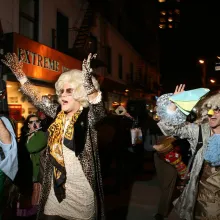
It’s been 23 years since Sandi DuBowski’s groundbreaking Trembling Before G-d, which uncloaked the lives of Hasidic and Orthodox gays and lesbians, made its Sundance debut. Since that time DuBowski has built a career at the intersection of religion and queerness, social activism and filmmaking, always avoiding the binary choice in favor of the “and.” This insistence is a bond shared by the director-producer and the riveting Israeli-American star of his latest feature Sabbath Queen—a doc over 21 years in the making focused squarely on Rabbi Amichai Lau-Lavie, a descendant of 38 generations of Orthodox rabbis.
If you don’t already know what the Swahili word amani means, we won’t spoil it here, as Nicole Gormley and Debra Aroko’s Searching for Amani treats it
“No one enters trucking from charm school,” notes Desiree Wood, star of Nesa Azimi’s long-haul road trip film Driver , which follows the founder of

Tommaso Santambrogio’s Oceans Are the Real Continents (2023), which opens on a black-and-white shot of an older Cuban woman sweeping her doorway

Lance Oppenheim has had a productive year. His new feature Spermworld hit Hulu at the end of March, and now his three-part docuseries Ren Faire is

Chris Wilcha released his breakthrough film, the Slamdance award-winning documentary The Target Shoots First , in 2000. Like so many foundational Gen