-
Chris Thompson, Director/Producer
About the Project
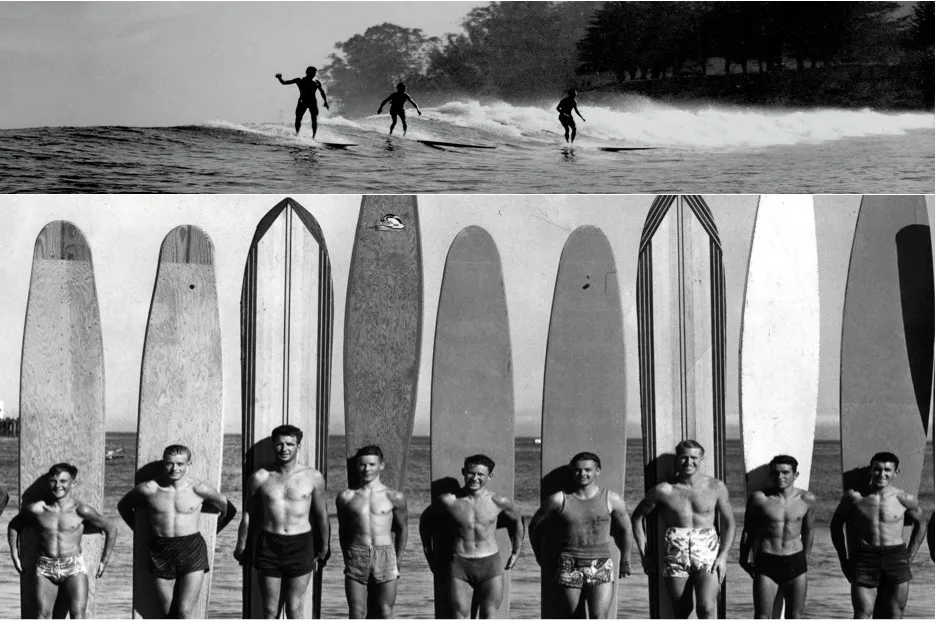
The California Surfing History Film Series documents nearly 200 years of history and culture, dating back to the original Hawaiians who brought surfing to the Mainland for the first time when they were hired to work the ships that sailed between Hawaii and California..
Forty years later, three princes of the Hawaiian king arrived on the Mainland for military school and discovered rideable waves in Santa Cruz, offering the first exhibition of surfing to the public in 1885. However, the sport was never attempted by the Mainlanders until legendary waterman Duke Kahanamoku's arrival in 1912 as an olympic swim champion. His publicity tours and the surfing clinics he held eventually popularized board riding in the various surfing centers along the California coast.
By the 1950's, surfboard design made for lighter equipment that even allowed women and children to get in on the action, creating a new postwar generation of enthusiasts. This marginal subculture even began to establish its own identity, much like American cowboy and biker cultures. The Tex-Mex sound of instrumental "Surf Music" began to impact the airwaves as a robust and legitimate genre in the popular music culture of the late 1950's.
By 1960, the Hollywood film"Gidget" popularized the sport throughout the country, drawing huge crowds for contests, surf music shows, and the coastal highways and cruising boulevards near the beach. Surf fashion and even "Surf Art" also made their presence felt in American mainstream culture by the 1960's.
Contests and surf clothing have made for big business since their humble beginnings. The advent of the professional surfer and the competition for company team rider spots in any given town means that the culture of the surfing spots has changed drastically in the last 90 years as populations of wave riders has increased and contest performance has become so crucial to many of the better riders in any given area. The friendly, lighthearted environment and its Hawaiian influence that had once prevailed eventually gave way to a more competitive and individualistic approach as the surfing areas became overcrowded and territorial. In the face of an increasingly aggressive approach to surfing. Hostilities between locals and outsiders often erupted into violence. By the 1980's, American surf culture had largely aligned itself with the punk movement, along with skateboarding, which gave it a particularly nasty edge. Media reports only reinforced much of the public's image of surfers as an antisocial gang of degenerates who would rather surf than work, often stealing to maintain their lifestyle.
Since that time, many of the prominent figures in the surfing world have done their best to clean up the sport's image. Quite a few of even the top contenders are now recovering drug addicts and have gone on to espouse a sober existence and right livelihood. In several of California's surfing centers, they have banded together to run most of the gangs out of the scene and do their part to set a good example to the younger surfers, especially now that many of them are old enough to have had children of their own.
In the last twenty years, these efforts have combined to have a positive effect on the surfing areas themselves, with a reduction in violence and greater tolerance toward outsiders, beginners, and riders of other surfboards than the high performance shortboards ridden by the professionals on the contest circuit.
Producer/Director Chris Thompson has spent the better part of fifteen years researching and collecting source material for the project, including filming interviews, scanning photos, and transferring film and video footage. This ambitious project will result in two feature-length documentary films that cover the two earlier periods in California's surfing history, along with a ten-part series of hourlong segments that provide a complete overview of the development of California's surfing history and culture, from the mid- 1800's to the present.