
In its work with superstar athletes, Gotham Chopra’s full-service documentary studio maneuvers through tricky questions of access and creative control: Seven projects in production. Dozens more in development. And in the summer of 2024, three high-profile series about game-changing athletes: In the Arena: Serena Williams on ESPN+, Simone Biles Rising on Netflix, and Welcome to the J-Rod Show on FS1. Religion of Sports (RoS) is on a roll, having achieved a scale and consistency quite remarkable for a documentary production company.
Feature

The outcome of the Platform Films meeting was the formation of the Miners’ Campaign Tapes Project, with 13 groups (including Platform; Trade Films in Gateshead and Newcastle; Chapter Community Video Workshop in Cardiff; Amber Films in Newcastle; Birmingham Film and Video Workshop; Open Eye Film and Video Workshop in Liverpool; Active Image in Rothertham and Sheffield; Films at Work in London; and the London Media Research Group) committed to producing footage interviewing miners and their supporters and documenting strike and fundraising activities. The material was then sent for editing down, mainly by Chris Reeves of Platform and Chris Ruston of London Video Arts, into what was originally planned to be 10 shorts and one feature-length work. The final project would consist of six short tapes.

Year after year, TIFF Docs tends to be populated by glossy, formally conventional, commercial fare—occasionally punctuated by works from prolific documentarians and festival award winners. Nonfiction works marked by innovation and ambition are pushed to the periphery, a consistent gesture that betrays what the festival regards as “best” in the arena of nonfiction cinema. Here and elsewhere, I couldn’t help but feel the subtle repositioning of the festival in anticipation of the impending launch of TIFF’s official market in 2026. Invitations to seek hidden, artistically driven gems, to interrogate the collapsing of boundaries between fiction and nonfiction remained open across other programs such as Wavelengths and Centrepiece.

The New York Film Festival (NYFF), now in its 62nd edition, is one of the biggest film festivals in the United States and, along with TIFF, the most important second-run festival in North America. This year’s edition found itself in the intersection of a number of conflicts surrounding the ongoing Israeli bombing of Gaza. These events serve as a reminder, despite the protestation of some donors, that no one can truly shut politics out of the festival. As it happens, protest was itself the subject of many of films in the festival.
This piece was first published in Documentary ’s Winter 2024/2025 issue, with the following subheading: What does the makeup of films awarded at IDA’s
This piece was first published in Documentary ’s Winter 2024/2025 issue, with the following subheading: From film festivals to the Oscars, one writer
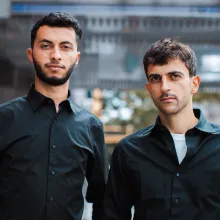
In the Winter 2024/2025 cover essay of Documentary magazine, No Other Land’s collective of Palestinian and Israeli co-directors imagine a reciprocal, shared future in front of and behind the camera.
At the bottom of page 49 in a 1993 edition of the fabled Argentine film magazine El Amante , there is a sidebar titled “Experimental Cinema,” written
New Yorker staff writer Lawrence Wright remembers colleagues asking, “Why do you live in Texas?” when his location shouldn’t have been exceptional
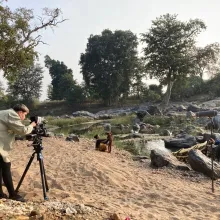
That NoCut has no physical office, that it is registered in Romania and India (unofficially floating into Belgium), and that its members frequently navigate three different time zones to set up meetings, are all appropriate given its origin story. Rothe, Rinaldi, and Hanes met ten years ago as classmates in DocNomads, the Erasmus Mundus master’s program in documentary filmmaking. Run by a consortium of three universities in Portugal, Hungary, and Belgium, DocNomads is a fully funded course for students from all over the globe, with an emphasis on teamwork and coproduction, which explains why many of its graduates often end up working with each other later. Helping each other with student projects, the three women developed a working rapport even as they fell into a thick friendship.