Black Public Media announced a new partnership with The Redford Center for its upcoming 2023 open call for production funding. BPM will award a total of $230,000 in funding for feature-length documentaries and documentary or scripted shorts in all stages of production. This year, the fund is focused on stories of how the climate crisis impacts people of African descent. According to the press release, “eligible projects may focus on how the crisis is being managed, climate education, environmental racism, health impacts, sustainable industries, climate policies, and solutions. We also
Latest Posts
Today, the Berkeley FILM Foundation (BFF) announces that it has awarded a total of $200,000 in its 2023 grant cycle to 20 independent filmmakers and 5 student filmmakers who live, work, or attend school in the East Bay cities of Richmond, El Cerrito, Berkeley, Albany, Emeryville, or Oakland.
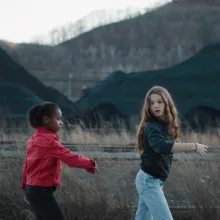
Though staying in her home region of Appalachia, documentarian Elaine McMillion Sheldon departs from her vérité beginnings in her latest feature, King Coal . Coming from three generations of coal miners, Sheldon has a personal interest in the wakes left behind from the industry that built the region, previously investigating the rise of black lung in her PBS Frontline/NPR collaboration “Coal’s Deadly Dust” (2019) or shining a light on the battle against the opioid crisis in her Oscar-nominated short film Heroin(e) (2017). But while collecting footage of rituals surrounding the legend of coal

Film at Lincoln Center’s recent retrospective, “The Dirty Stories of Jean Eustache,” brought more attention to The Mother and the Whore (1973)—the most iconic entry in Eustache’s small canon and short existence—which was recently restored after decades spent in a kind of limbo, with only the very occasional screening. And yet the retrospective is also a demonstration that the cinema of Eustache amounts to more than fiction films with documentary undertones. Perhaps the most vital strain of his work, his nonfiction films, are characterized by rich tension and reflexivity when his camera meets

Gita joined FilmAid as the Director after decades of producing, programming, and fundraising for documentary films. She spent many years with Kartemquin Films, a Chicago-based film collaborative that empowers documentary filmmakers who create stories that foster a more engaged and just society.
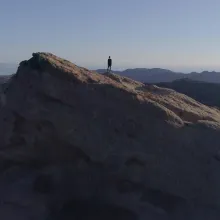
Narcissa Wright is best known for breaking the world record for speedrunning 'The Legend of Zelda: Ocarina of Time' in 2014. Speedrunning, the practice of using glitches in a game to bypass huge segment sections and play through the entire game as quickly as possible, has a huge online fan base and viewership on Twitch, a popular live-streaming platform.
Many media depictions of Chicago don’t resonate with me. As someone raised in its northern suburbs, I’m happy to watch works such as "The Dark Knight" (2008), "Widows" (2018), or one of the Kartemquin documentaries shot in the city. However, most of them focus on the city’s corrupt politics or have a strong crime element in the story. In a saturated media market where (true) crime sells, a story’s criminal and political attention-grabbing subject can overshadow the aspirations of real-life residents.
In films like 'Hoop Dreams' (1994), 'Stevie' (2002), and 'The Interrupters' (2011) and television series like 'America to Me' (2018) and 'City So Real' (2020), Steve James has established himself as one of the preeminent observational documentarians in the US. Over nearly 30 years, he’s chronicled social change in Chicago via various ordinary citizens, from aspiring basketball players to antiviolence activists. In a departure for James, his latest film, 'A Compassionate Spy,' is a real-life espionage thriller about Theodore Hall, a young physicist on the Manhattan Project.

Like other languages, filmmaking is one that is learned but also raised in historical, societal, and cultural patterns. As Augusto Boal posits in his book 'Theatre of the Oppressed,' "By learning a language, a person acquires a new way of knowing reality and passing that knowledge on to others." In May 2023, Kundura DocLab brought together documentary theater- and filmmakers from Turkey and surrounding countries to explore the intersections of the two practices and encourage new languages.
When we think about the traces we usually identify as “surrealist” in cinema, the main reference tends to be the work of French surrealist artists and thinkers from the 1920s. But what would happen if— in search of an alternative history, unexplored forms of thought, and a different way of understanding some artistic gestures—we redirect our gaze to Latin America? In this essay, I try to follow the footprints of an idea that keep appearing, although mostly in a marginal way, in the writings and films of several Latin American authors throughout the 20th century, in order to rethink some recent