

Editor’s Note: In December 2025, Documentary asked IDA members and past contributors to the magazine to pick the “Greatest Docs of the 21st Century.” Documentary tabulated the results and released both a Top 25 list compiled of all the top vote-getting docs, and a curated Singular Picks list made up of projects that garnered a single vote across all ballots. This essay is a companion piece to that endeavor.
Ever since I saw a photo exhibition of Peter Hujar’s work at the Morgan Library back in 2018, “Christopher Street Pier #2 (Crossed Legs)” (1976) has served as the image on my iPhone lockscreen. Unlike his most famous portraits (like those of Candy Darling on her deathbed, Susan Sontag mid-thought, or even his many arresting self-portraits), the black and white photo I stare at every time I receive a new text or go to merely check the time is an unassuming photo of a man at that famed cruising spot in New York City. Wearing denim shorts, boots, and bunched up white striped socks, the man Hujar has captured is all but obscured by the photo’s frame; instead, his crossed legs dominate the shot, framing in turn the cityscape behind him.
Hujar has long been my favorite portraitist. There’s an intimacy in his work that’s irrevocably intertwined with the simplicity of his compositions; there is dignity in the way he looked at his subjects, many of whom were his friends and whom he often photographed in long sessions at his New York City apartment, often waiting hours for them to drop their guard and allow him to capture them with unguarded ease. Hujar’s portraits, his friend Stephen Koch writes, “could be graceful or awkward, pleasing or mortifying, candid or posed. It just had to be real, and it had to be beautiful.” More to the point, they were, in their intimacy, a kind of self-reflection: “Your portrait was always unmistakably you, but only because it was also unmistakably his.”
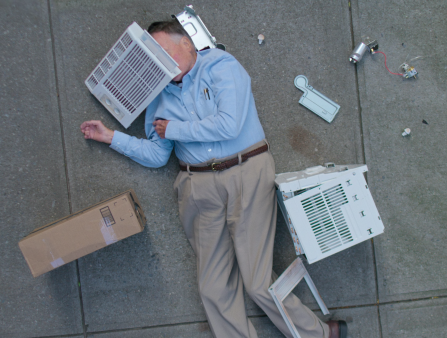
Koch’s words about Hujar have kept ringing in my ears as I saw the lists for our “Greatest Docs of the 21st Century” (both a Top 25 of most vote-getters, and one of “Singular Picks” that singled out one-vote wonders) slowly take shape. The documentary portrait was everywhere on the many ballots submitted and ended up quite well represented in our list of the top 25 docs. From Ezra Edelman’s portrait of O.J. Simpson (O.J.: Made in America, which doubles as a sociological study of and about the American psyche) to Kirsten Johnson’s playful portrait of her father (Dick Johnson Is Dead, which doubles as a study in grief and memory as Dick Johnson’s Alzheimer’s worsens), many of the documentaries on our top list privilege the personal snapshot. Even when these films take on the U.S. carceral system (Time) or Russian political dissidence (Navalny), the focus is on the individual. And, crucially, on said individual’s encounter with the filmmaker.
The list flatters documentary filmmakers. Or rather, it exalts work that, like Hujar’s photography, self-reflexively points to their presence, to the encounter they’ve staged, in ways both literal and figurative. These documentary portraits are about things, yes. But they are most tellingly about their makers. This explains why so much of the formal playfulness at the heart of these portrait films is a winking self-awareness, a statement that insists on the filmmaker’s own distinct way of seeing; a need to make the very construction of said portraits an integral part of the films themselves.
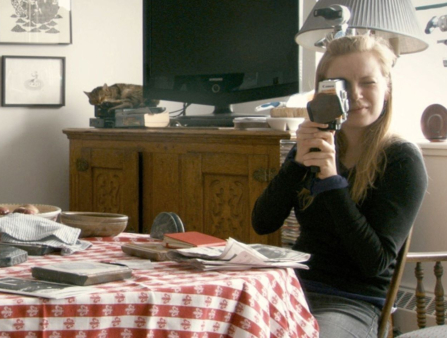
The very title of Sarah Polley’s Stories We Tell stresses the way her documentary is premised on her own active role as a storyteller, even as she makes clear that it is not and cannot be a solitary endeavor. As her father, Michael Polley, puts it, one can only turn one’s experience into a story in hindsight, when you shape it as such for yourself or for somebody else. The “We” in Polley’s title is intentionally expansive; it’s a royal we, perhaps. But in the film itself, it refers to the many members of her family she gathers to reconstruct her mother’s story. Stories We Tell is a family portrait, but it is also a kind of collage in which Polley serves as its formal and structural fulcrum. It is she who is directing Michael as he reads the words he’s jotted down about his life with his late wife Diane (often asking him to go back and re-record a line or two she’s dissatisfied with). And it is she who turns her siblings into collaborators as she paints a portrait of the mother she lost too soon, cribbing the home video aesthetic to stage a number of reenactments meant to color in the moments in Diane’s life she (and few others) were made privy to. The film is very much about Diane Polley, but it is unmistakably a film about Sarah’s own storytelling prowess; it’s fitting that the official still for the doc shows Polley sitting at a dining table, camera in hand, as her biological father eats to her right.
Dick Johnson is Dead. Courtesy of Netflix
Stories We Tell. Courtesy of the National Film Board of Canada
Four Daughters. Courtesy of Kino Lorber
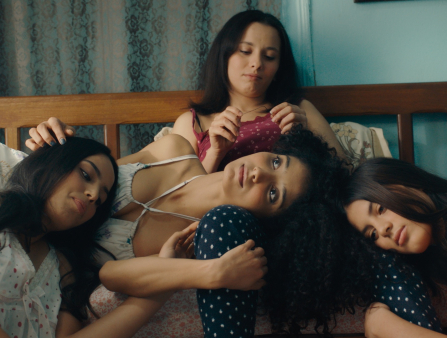
The documentarian as skillful portraitist, one who doesn’t merely capture, but embellishes in order to get at a deeper truth, who understands performance not as anathema to authenticity but as integral to it, is precisely the type found throughout the list. Not just in Polley, who turns a not-so-well-kept secret into a honeyed family portrait, but in the likes of Kaouther Ben Hania, whose Four Daughters similarly uses performance and reenactments as a way to offer a portrait of those who are not (physically) there. From its very first moments, when Ben Hania’s own voice informs us that “in this film, [she] will try to tell the story of Olfa’s daughters,” the Tunisian filmmaker makes clear her own agency; it will be irrevocably tied to the very portrait she’s capturing. Like Polley, who similarly structures her film with a late-in-the-film twist, Ben Hania structures her film around her encounter with Olfa (and her daughters) as the animating structural force. Far from following a tradition in which portraiture merely captures another in a moment in time, exalting their position or standing, Ben Hania’s film instead insists on the constructed nature of what she’s staging.
Four Daughters refuses to merely document or chronicle. It is rarely content to just observe. The documentary is a canny (re)construction of what happened, of what’s remembered, of what’s been lost. And at every turn, you can see Ben Hania’s vision; you watch the tragedy of Olfa’s daughters unfold, but only because of Ben Hania’s sly intervention. Here is the documentarian as literal director, the tricks of her trade made not invisible but unmistakable, unmissable, and therefore pressing, necessary, urgent, even.
It’s not that films like Stories We Tell and Four Daughters do away with any presumption of objectivity or of the very neutrality of the camera’s gaze (though they do, as many documentaries have done before them). It’s that they recast the relationship between subject and documentarian as an intimate encounter worth mining. Theirs are films that put the documentarian—their work and their skills—front and center.
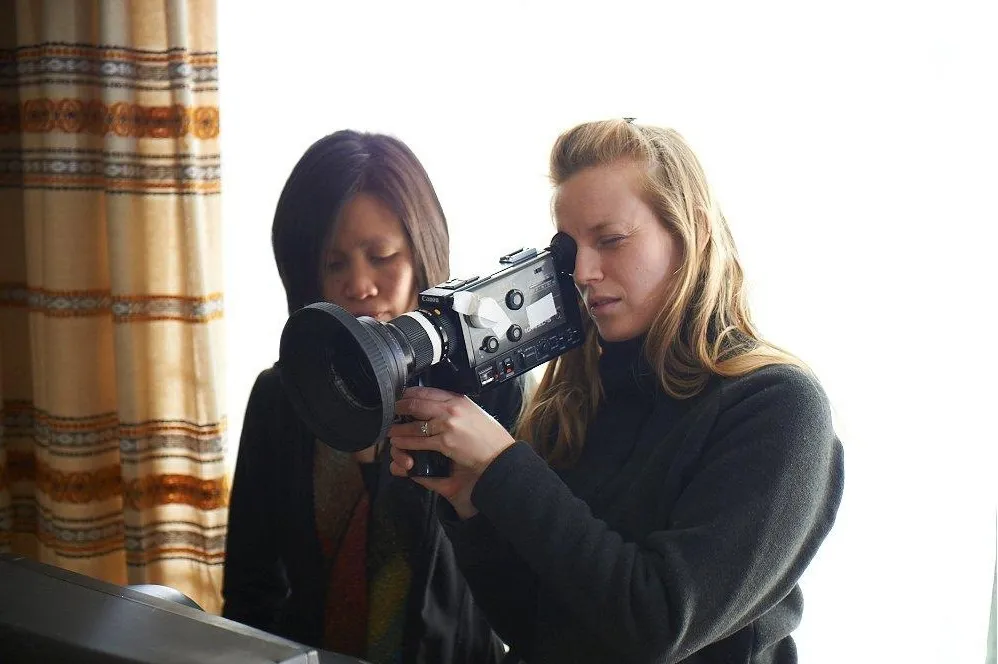
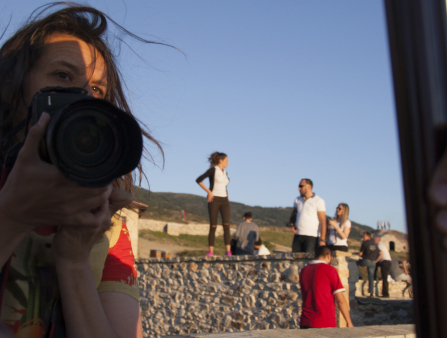
This is what a portrait captures: not (just) another person at any given moment, but a connection between the sitter and the one capturing their likeness. Look no further than Cameraperson to find a documentary that turns that friction into its very thesis. Made up of sequences shot for a number of projects she worked on as a cinematographer, Kirsten Johnson’s fragmented self-portrait (hence its title) is a film about the dignity of the documentary gaze—of her gaze, in fact. Many of these seemingly throwaway scenes hinge on Johnson’s relationship with those she’s shooting, letting viewers witness scenes of negotiating what’s in the frame and what’s left outside it. There’s a curiosity to her camerawork, often focusing on small gestures like worried hands, that insists on her role as active spectator and, later, through the cross-cutting the film depends on (one minute following Muslim women grappling with memories of sexual violence in Foča, later still witnessing her mother suffering from Alzheimer’s in a ranch in Wyoming) as a prime example of the often invisibilized work that goes into shaping these portraits of another.
Behind the scenes of Cameraperson. Photo credit: Majlinda Hoxha. Courtesy of Janus Films
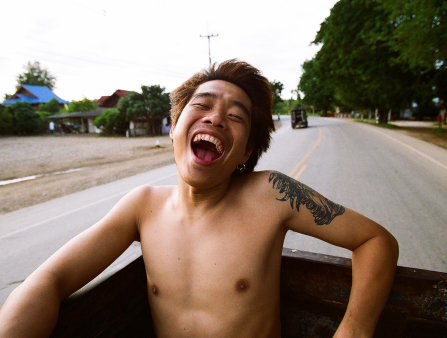
Mobile Men. Courtesy of Kick the Machine Films
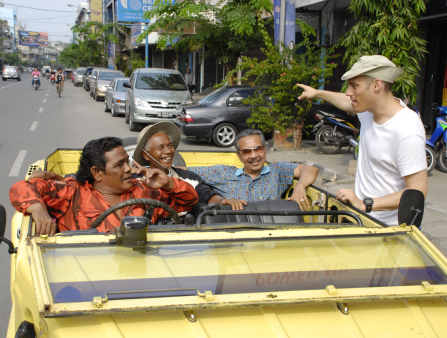
Behind the scenes of The Act of Killing. Photo credit: Anonymous. Courtesy of Final Cut For Real
Even as a curatorial exercise on its own (Johnson has clearly picked these specific scenes for us to see and organized them with attentive care) Cameraperson constantly reminds audiences how the frame is as important as what’s inside it. Documentary portraits quite obviously depend as much on what is shown as on what is withheld, but if there is a throughline that emerges from those singled out by the documentary community itself is an insistence on making such longstanding tenets of documentary visible, commendable, and indispensable. Take Grizzly Man, for instance, which presents a tension between a subject cannily aware of his own self-presentation (Timothy Treadwell, a conservationist who filmed himself living in the wild with grizzly bears) and a documentarian who continually unpacks that on-screen self-fashioning to create, in turn, a portrait of the man in front (yet always holding) the camera.
Herzog may spend much of the film detourning Treadwell’s shot footage, overlaying his own characteristically sardonic commentary over Treadwell’s carefully constructed imagery (including moments when the self-styled conservationist tries nailing a take after flubbing his made-to-seem-impromptu lines), but the filmmaker also refuses to let the audience witness his subject’s death. If the entire film is a kind of provocation about the ethics of representation, the scene where we watch Herzog watch the footage of Treadwell’s death (with headphones on, depriving us even of the audio he’s listening to), Grizzly Man nevertheless finds Herzog drawing a line he dare not cross, in turn offering an educational moment for those watching: the film, at that moment, is as much a portrait of Treadwell as it is of Herzog and his practice.
In tandem, these documentaries insist on the value of the encounter the filmmaker creates. Even as there is a long history of documentary portraiture that bears the mark of its makers, this collection of docs, in its whole, feels like it basks in its own self-importance. It is not enough to see, to capture, to chronicle. It is necessary to remark on what’s seen, how it’s captured, and why it’s chronicled. This is Koch’s vision of Hujar taken, in essence, to its extreme. After all, Hujar feels most present in his photographs in his noticeable absence. You could feel the intimacy he’d created in the eyes of his sitters, in the looseness of their gestures. Even in quieter, less self-reflexive documentary portraits—especially those that appeared on our “Singular Picks” list—the emphasis remains on the filmmakers’ skill.
That is perhaps no more obvious than in Apichatpong Weerasethakul’s Mobile Men. The short film, made of one single take, presents itself as a collaborative endeavor. The two young men’s hands and gestures guide the camera (literally at times), choosing what it is they want to show off (their sneakers, their tattoos), all while the scenario playing out before us (in real time, on the bed of a pickup truck on the move) has been quite explicitly staged by Weerasethakul himself. Of all the films on our list, this may be the purest form of portraiture: four minutes of uninterrupted gazing on its two protagonists. Yet here again, through the changing of lenses and the reveal of taped mics, we see the work of Weerasethakul throughout: it is a portrait of them, but also a portrait of him. The most revealing moment in the short film may be the moment he zooms in on one of the young man’s nipples, his erotic gaze immediately turned (if not outright blunted) by the other young man’s insistence that he got his tattoos to attract girls. Here is a Hujarian self-effacing kind of reflexivity that nevertheless makes visible the role of the documentarian, especially as cocreator and collaborator.
Even as there is a long history of documentary portraiture that bears the mark of its makers, this collection of docs, in its whole, feels like it basks in its own self-importance.
What’s unmistakable in these portraits and one of the reasons why they make such a welcome representation of the twenty-first-century documentary is how they value the very presence of the documentarian. Not as mere witness or as chronicler, but as someone who intimately connects with another. These portraits are on-screen remnants of the encounters they stage and the relationships they build. Here’s where even the film that topped our poll, Joshua Oppenheimer’s The Act of Killing, feels most illustrative of such a vision. As Kirsten Johnson put it while describing the doc for our list, “To watch the film is to enter a bold and treacherous process of co-creation that invents a whole new cinematic way of looking unflinchingly and analytically into the voids of violence.” Oppenheimer’s film presents disturbing examples of what it means to confront another with a camera, not combatively but collaboratively, and to let those increasingly outlandish moments of self-presentation speak for themselves.
If portraiture arguably dominates our Top 25 Greatest Docs of the 21st Century list, it may well be because it exalts an intimacy in which the role and purpose of the documentarian are made, to use Koch’s words to describe Hujar’s work, unmistakable. There is self-adulation here and perhaps even a sense of self-importance. And a kind of insularity, a hall of mirrors where collectively these films are the story doc practitioners want to tell themselves about the value of their work and about how well it is conveyed. There’s value here, but also a welcome type of warning about looking beyond their own existence.
This list is diagnostic as much as it is a celebration. It’s telling that in seeing another, documentarians most readily see themselves. Perhaps the list is most useful then as a self-portrait itself, one which should push its participants and those exalted within it to value not only what they see in one another, but in the act of gazing they’re enshrining. A gaze, one hopes, that can look beyond and far afield, not concerned solely with the subject in front of them but with the very world they carry within them, a reminder that a portrait need not be a mirror but can and should most powerfully be a window, an opening, an invitation.