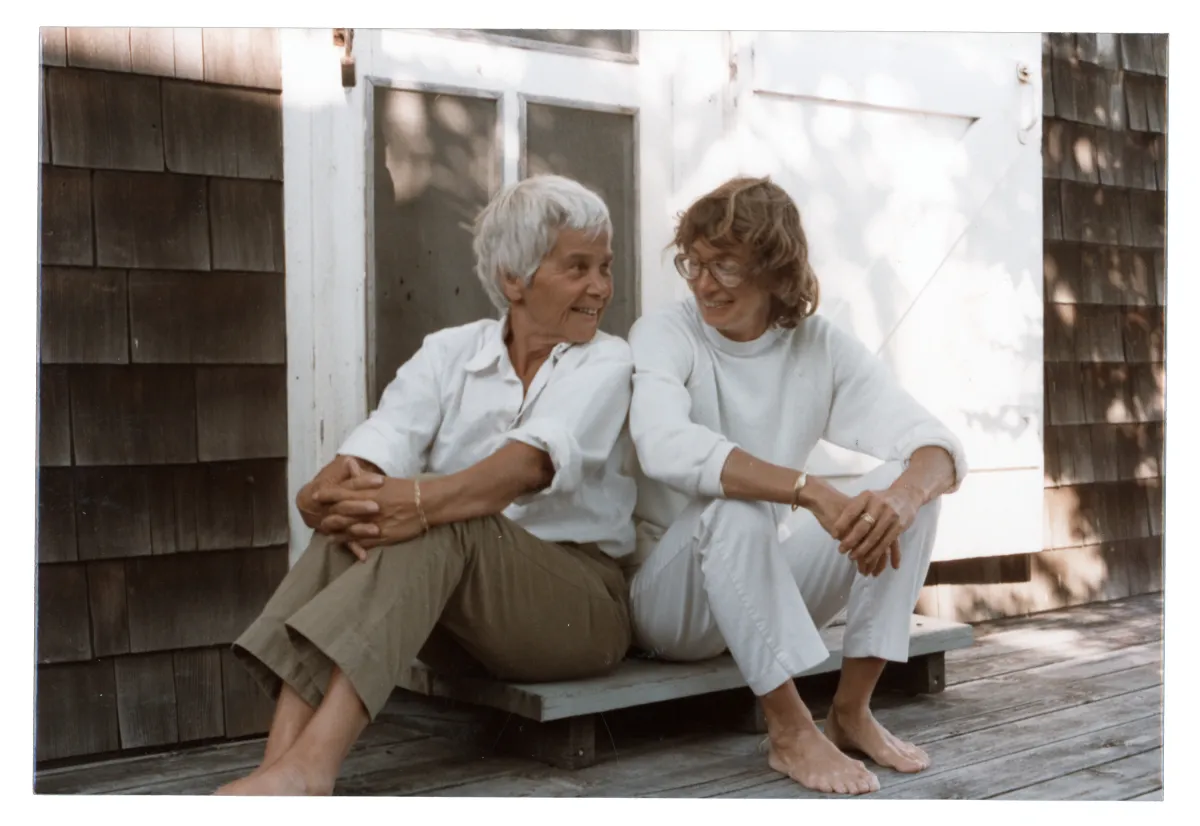


When most people imagine Mary Oliver, it’s rarely her face that comes to mind. Instead, they picture the dark, ripe blackberries of Blackwater Woods, slippery dogfish hunting minnows in tide pools, and wild geese winging home with the season’s change. They think of what they’re planning to do with their one wild and precious life, and that’s just how Oliver preferred it. Before passing away in 2019 at the age of 83, the award-winning poet lived most of her life quietly with her longtime partner, photographer Molly Malone Cook, and their dogs on the edge of the world in Provincetown, where many of her beloved works were inspired and written on its beaches and forests.
The visceral effect of Oliver’s work on friends, fellow poets, and generations of readers is vividly captured in Mary Oliver: Saved By The Beauty Of The World, Sasha Waters’s lyrical new documentary about the writer for American Masters. The film features admirers including Oprah Winfrey, Steve Buscemi, and a verklempt Stephen Colbert reading the poems that changed them, alongside rare photographs, letters, and archival footage of Oliver and Cook. It also draws on the memories of close friends, including John Waters, who helps fill in the blank spaces of the Mary Oliver biography—or, as Oliver herself called them, the “small black holes where there is nothing at all.”
To create her portrait of the elusive Oliver, Waters drew inspiration from the metaphorical visual language of Brett Morgen’s Moonage Daydream (2022) and Todd Haynes’ The Velvet Underground (2021). A moving-image artist trained in photography and 16mm filmmaking, Waters wove together experimental films by friends and feminist filmmakers Joyce Wieland and Gunvor Nelson with found Super 8 home movies from her own collection to evoke Oliver’s interior landscape—from an isolated, sexually abusive childhood in Ohio to helping Edna St. Vincent Millay’s sister organize the poet’s papers at Steepletop, and through years of rejection and financial precarity before finally achieving widespread recognition with her Pulitzer Prize in 1984—while the natural world she chronicled so directly unfolds alongside it.
Documentary spoke with Sasha Waters ahead of Mary Oliver: Saved By The Beauty Of The World’s July 3 opening at IFC Center, followed by a digital, educational, and home video release from Kino Lorber. This interview has been edited for length and clarity.
DOCUMENTARY: At the beginning of this project, what did you know you had to work with?
SASHA WATERS: Having made a film about a photographer who had a huge body of visual work [2018’s Garry Winogrand: All Things are Photographable], this was almost the reverse challenge. Mary Oliver is prolific. I mean, she’s published more than 30 books. There are so many poems. There are the essays, two books on craft—she’s really remarkable in how much work she generated over her long lifetime. But there was a question from the beginning: OK, so what are we looking at in telling this story? And the landscapes of the places that were important to her, we knew, would be really central to telling the story visually. We knew we wanted to include some of the very beloved poems, for lack of a better term, but also poems that people maybe didn’t know as well.
All of her personal materials are in the Library of Congress now, but we were able to get access to them before they were deposited, and that’s because her biographer, Lindsay Whalen, who appears in the film, had all of those boxes—somewhere like 35 to 40 boxes—with her in Connecticut. When they were on their way to the Library of Congress, I intercepted them in Washington, D.C. Bill Reichblum, Mary’s wonderful literary executor, has an office in D.C., so Lindsay sent Mary’s boxes to Bill’s office. I live in Richmond, Virginia, and I was able to make two 10-day-long trips to basically live in Bill’s office, wildly going through these boxes, scanning all her photo albums, reading all her fan mail, reading her correspondence. It was early in the process, so we didn’t know what we might need, and it was a little bit of guesswork, trying to get as much as we possibly could that we thought we might want to include in the film.
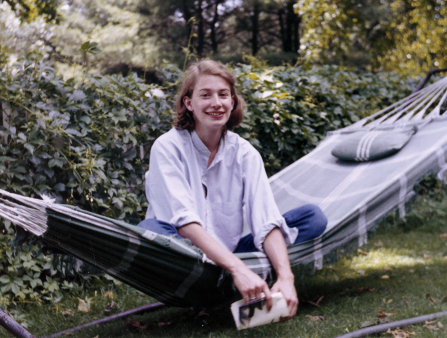
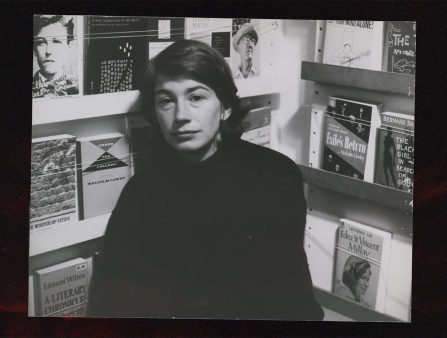
D: How did you approach marrying Mary with shots of the natural world that are so critical to her work and worldview?
SB: We found some really wonderful films that were shot by the National Park Service of Cape Cod in the late 1960s and ’70s, so there is this kind of 16-millimeter magical light, beautiful footage from that area. I have a hand-cranked Bolex camera, and I went to Provincetown and filmed four or five times in different seasons so that we would have Beech Forest, in particular, during the different seasons. I also went to Ohio a couple of times and filmed there. And then, of course, we used stock footage. We had wonderful archive producers who helped us to find what I don’t have the acumen or the, or the lens length to get, like a beautiful slow motion shot of an owl flying away.
I collect industrial films and other kinds of films as well, but mostly old home movies. We used a lot of those, thinking about the poems and the landscapes, wanting them to be a conversation, but also trying not to be too literal and on the nose in illustrating the poems. The idea was to try to use the image track more metaphorically. If it were not a film for television, I would have had more black. There’s part of me that wants to sort of just invite the audience to close their eyes and listen, and see their own image track. But you can’t really do that in a film for public television, right? People would turn their TV off. It’s a little too experimental, so we tried to bring in images that would evoke people’s own relationship to the poems.
D: How did you see your experiences as an experimental filmmaker flourishing in this film?
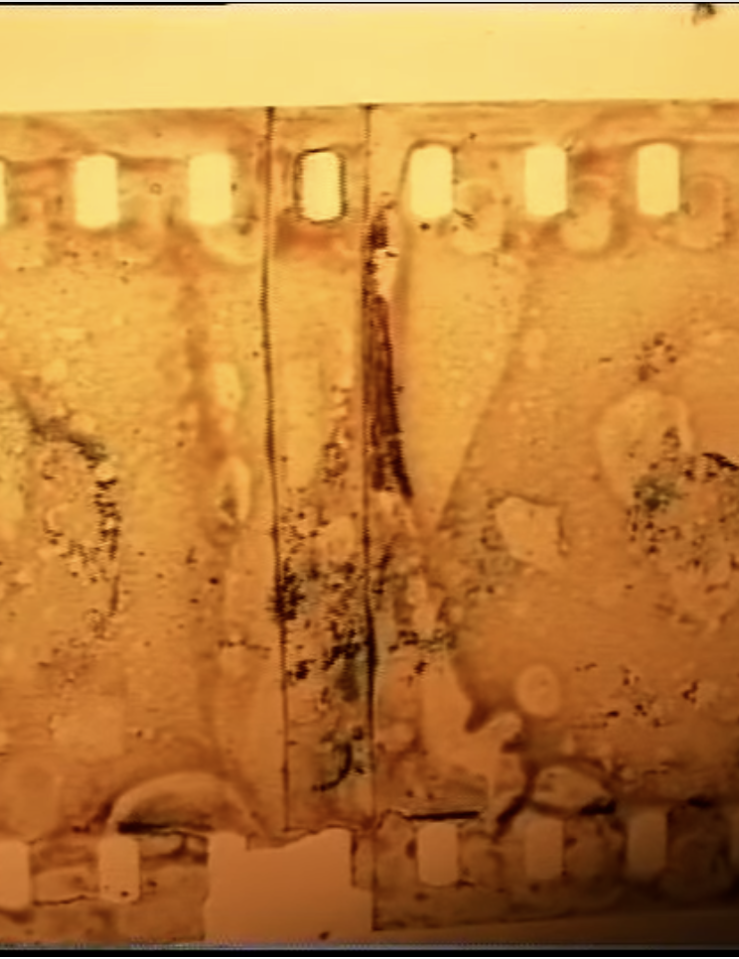
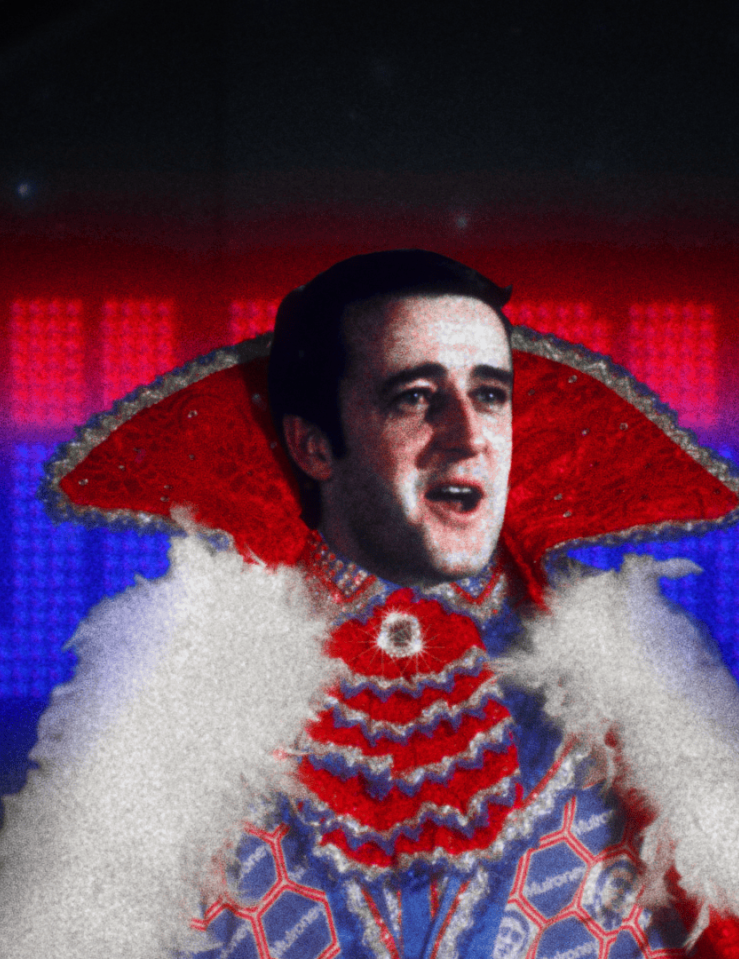
SB: I was really inspired by the use of experimental films from the canon of the experimental film as metaphoric imagery in films like Moonage Daydream, the Brett Morgan film about David Bowie, and also Todd Haynes’ The Velvet Underground film uses tons of kind of experimental films. So I wanted to do that, and I did to some extent. There are these filmmakers whom I love, these feminist experimental filmmakers like Joyce Wieland and Gunvor Nelson, and I use footage from them in the film. I also used footage from filmmaker friends of mine and my mentor, Franklin Miller. If I had more time, I would have done even more of that.
But I think also, just in terms of my own practice, that shooting with 16 millimeter is a huge part of the lineage and tradition of experimental film that I work in. I’m very committed to it as a material and as a practice. Sometimes you know you’re looking at archival footage, like if it’s a home movie and it’s Super 8, and it obviously looks like it’s from another decade, but that visual space where you’re not sure if what you’re looking at is contemporary or archival is a really interesting space for me.
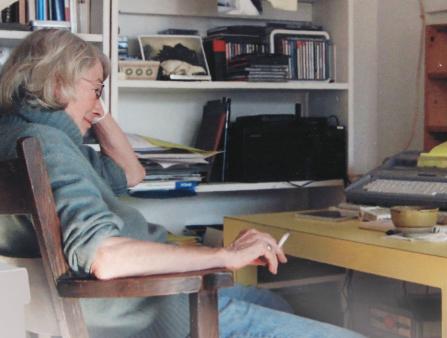
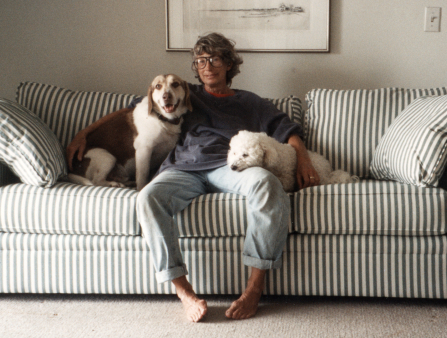
D: The film has several public figures sharing a Mary Oliver poem that is special to them, and quite often, they experience a visceral emotional reaction while reading on camera. Was that something you expected, or was that a surprise?
SB: We wanted to include people who had an authentic connection to Mary Oliver. So, for example, we were in the middle of production when Stephen Colbert happened to say on his show, in early April of 2024, that he sent the poem “The Summer Day” to his children every year on the first day of summer. We wanted to include, of course, friends and people who knew her, but in terms of people who were reading the poems, we wanted to include people who were genuinely fans. Helena Bonham Carter has a TikTok of herself reading the poem “Wild Geese,” so that’s how I knew that she was a fan of Mary Oliver. So, I think having that personal connection was very important.
There’s very little footage of her in existence, so what there is is in the film, and we were so lucky to be able to use it. But we have footage of Mary Oliver just giving this incredibly moving reading of “Wild Geese.” I’ve probably watched that reading more than a hundred times, and it just stops me in my tracks. I find it so moving and so powerful. So, it’s not totally a surprise that people become emotional when they’re reading her poems. In some cases, when you see someone looking directly at the camera and reciting a poem, they’re reading off a teleprompter. And then in other cases, we’re in the middle of an interview, and someone says, “Oh, let me share this poem with you,” and they grab a book off the shelf, or they’re looking on their phone, or they brought the book with them. So there is a mix of different kinds of readings in the film because that’s how people encounter her work.
D: When and how did you start to get a sense of Mary Oliver, the human being?
SB: I’m not totally sure I feel that way even now. Mary was a really big fan of biography, and she writes about biography in one of the essays in Upstream. She has this line near the end of the essay about the limits of biography and how every biographer has to face these black holes and question marks. And so, with everyone who knew her personally, I read that quote toward the end of the interview and asked them, “What black holes am I missing?” And that’s when John Waters, for example, says, “If there was something Mary wouldn’t want me to tell you, I wouldn’t tell you.” Which, I love that moment so much, because up until that point, he’s dished quite a bit. One might easily think, Oh, he’s sort of gossiping about her, but, in fact, everything that he’s told us is, for the most part, things that some people already knew that were part of her life, and that he felt like would be okay to tell us.
People have asked me in Q&A’s about certain revelations in the film, and whether or not the film crosses a line, for example, with her substance disorder around alcohol, which she writes about in a letter to her friend. My response to that is anything that’s in the film or in the archive, Mary knew that someone would find it. She knew someone was writing a biography of her. She knew her papers were going to the Library of Congress, and that everything would be available to readers, or anyone who was interested, in the future. So she kind of controlled her legacy, and if there are things we don’t know, it’s because she didn’t want us to know. I think if she didn’t want us to know, we wouldn’t know.
Unlike a lot of writers, she didn’t leave any works in progress: there are no manuscript drafts of the poems or the essays. There’s no version three, version seven, or version 45 of “Wild Geese,” and we don’t have any other drafts of it. And that’s unusual, I think. So she didn’t leave any work in progress for future poets, or kind of literary-minded scholars to look at and think about that process.
D: She was intentional.
SB: She was very, very intentional about what she left behind. I think she’s complicated, but she’s also really human, and that’s the most important thing. But also, she told us this over and over while she was still alive: “Don’t pay attention to me—pay attention to the work.” So I think, to the extent that the film directs its audience to the work after they watch it, right? So if you watch the film and you feel like, Oh, I really want to go read some Mary Oliver now, then it’s a success. She wants the work to be front and center, not her own story, even though we’re all so fascinated by her.