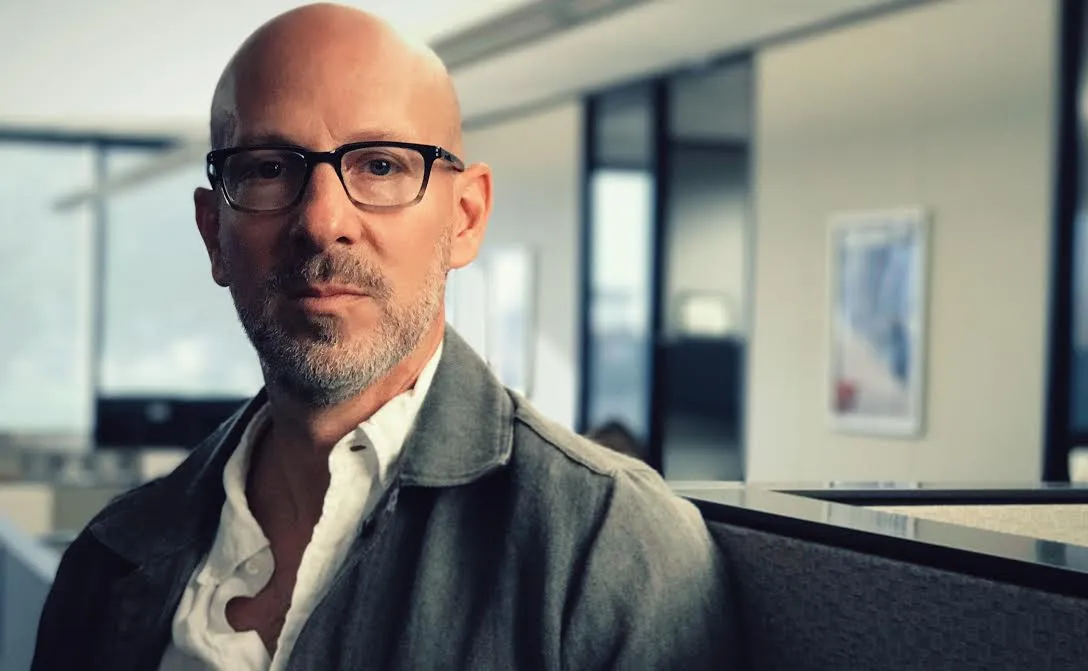
Joshua Seftel
Welcome to IDA Member Spotlight, a monthly interview series highlighting IDA members and showcasing the depth and diversity of our community. This month, we had the pleasure of speaking with Joshua Seftel.
Joshua Seftel is an Oscar-nominated and Emmy-winning director driven by the conviction that storytelling can promote empathy, connection, and change. That thread can be seen throughout his work, going back over 35 years.
His latest documentary, nominated for a 2026 Oscar, All The Empty Rooms (Netflix, 2025), executive produced by Adam McKay and Steve Kerr, follows veteran CBS correspondent Steve Hartman on a secret project photographing the bedrooms left behind by children killed in school shootings. The result is a deeply emotional film that brings to life who these kids were and reframes gun violence from a political issue to a human issue.
Seftel received an Academy Award nomination for Stranger at the Gate (The New Yorker, 2022), executive produced by Nobel Peace Prize Laureate Malala Yousafzai, which tells the story of a US Marine who planned to blow up an Indiana mosque, and how the kindness of the Muslim worshipers transformed the direction of his life.
Over the years, Seftel has been drawn to stories about ways we can better connect, understand, and ultimately help one another. In 1990, he made his first film, Lost and Found (PBS), which told the story of Romania’s abandoned children. Since then, his documentary work has ranged from the political (Taking on the Kennedys, POV, 1996), to the intimate (The Many Sad Fates of Mr. Toledano, NYT Op-Docs, 2015), to the empowering (his Peabody Award-nominated series Secret Life of Muslims, 2016), to the joyful (his Emmy-winning original Queer Eye for the Straight Guy, 2003-2007), to the satirical (2008’s War, Inc. starring John Cusack, Marisa Tomei and Ben Kingsley). Seftel is also a contributor to This American Life, CBS Sunday Morning, and the New York Times.
Seftel lives in Brooklyn with his wife, filmmaker Erika Frankel, and their two young daughters.
IDA: Could you share a bit about your background and the experiences that shaped who you are as a storyteller?
JOSHUA SEFTEL: I grew up in upstate New York and experienced antisemitism at a young age. That included name-calling, kids throwing pennies at me, and even someone throwing a rock through the front window of our house. It was an early lesson in what it feels like to be othered, and it stayed with me.
As I became a filmmaker, I found myself drawn to stories about people who are often misunderstood, overlooked, or reduced to a single narrative. Across my work, whether in documentaries, short film series like The Secret Life of Muslims, or TV series like Queer Eye for the Straight Guy, I have been interested in creating space for people to be seen as fully human and complex.
I am especially drawn to underdog stories and stories with purpose. Not to lecture or persuade, but to build understanding. At its core, my approach has always been about listening, earning trust, and using storytelling to help bridge the distance between people.
IDA: When did you begin working in the documentary field, and what initially inspired you to pursue it?
JS: I didn’t originally plan on becoming a filmmaker. Early on, I actually planned to go into medicine. I dreamt of joining Doctors Without Borders and traveling the world helping those in need. More than anything, I wanted to do something that felt useful, something that helped people directly.
When I was in my early twenties, I put med school on hold and went to Romania to make a film about abandoned children there. When communism fell, it was revealed that more than 100,000 children were living in orphanages across the country. In Romania, I lived in orphanages, documented the conditions these kids were living in, and made my first documentary, Lost and Found (1992), from that footage. The film aired on public television, and, unexpectedly, it helped lead to the adoption of thousands of Romanian children in the United States.
Seeing that connection, I realized I might be able to achieve my goals through filmmaking. In many ways, I’ve been chasing that impact that my first film made on the world ever since. I want to use filmmaking to create change and help people.
IDA: Congratulations on the Oscar Nomination for your deeply moving and impactful film, All the Empty Rooms. Could you tell us a little about the film?
JS: Thank you. I’m really grateful that the film, and especially the parents who trusted us with their stories, are getting this kind of attention. All the Empty Rooms follows veteran CBS News reporter Steve Hartman as he travels the country visiting the empty bedrooms of children killed in school shootings. These are rooms that were once full of life and personality and are now frozen in time.
By spending time in these bedrooms, we begin to know the children through their objects: their clothes, drawings, trophies, and unfinished plans. The rooms become a way to meet the children as they were, not as headlines or statistics. Instead of focusing on the violence or the politics surrounding these tragedies, the film brings the focus back to the families who have been affected. We approached the film in a quiet, vérité style, allowing the rooms and the parents’ memories to speak for themselves.
For me, the film is about allowing ourselves to fully feel the weight of this crisis. Before we can talk about solutions or argue about what should be done, we have to sit with what has been lost. My hope is that the film creates space for that reckoning and moves people to care deeply enough to act.
IDA: When did you begin working on All the Empty Rooms, and what drew you to the project?
JS: About three years ago, I got a call from Steve Hartman. We hadn’t spoken in more than twenty years. Back in the late 90s, I was Steve’s producer as he became nationally known for telling deeply human stories.
Steve told me that he had begun writing letters to every family since the Sandy Hook shooting that had lost a child in a school shooting. He had been traveling around the country, visiting families who agreed to participate and documenting the children’s bedrooms through photographs as part of a final news report he was working on. Hearing that stopped me in my tracks. As a parent of two young kids, I had found myself growing numb to the issue, almost as a form of self-protection, and this cut straight through that.
I immediately felt this needed to be a documentary. Not because it was timely or political, but because of the power of the approach. These rooms tell you who these children were, and the absence they leave behind is undeniable. Following Steve on this journey felt like a way to confront something I had been avoiding, and to do so with care and respect for the families who chose to let us in.
IDA: What has been the film’s reception, and does it resonate with the impact you hoped it would inspire?
JS: The response has been meaningful, especially in where the film has traveled and how it’s being used. Since premiering at Telluride, All the Empty Rooms has screened at festivals and in community, educational, and policy spaces, including at the U.S. Capitol, and has been widely covered by national news outlets. In many cases, those screenings have been paired with conversations involving parents featured in the film and advocacy organizations, public health institutions, schools, and galleries, using the film as a way to open conversations that are often hard to begin.
The film’s acquisition by Netflix expanded that reach in a significant way, making it available to more than 300 million members across 190 countries and 37 languages. Knowing that these rooms and these children are being seen and remembered far beyond the places where the tragedies occurred has been incredibly meaningful.
For me, the most important measure of the film’s reception has been the parents themselves. From the beginning, our responsibility was to portray their children honestly and with care, and to create something that could be of service to them. Hearing parents say the film reflects who their children were and that it helps keep their memory alive is the clearest confirmation that the film is doing what we hoped it would.
IDA: For our members who are eager to watch All the Empty Rooms and stay connected with your work, what’s the best way to see the film and follow your upcoming projects?
JS: All the Empty Rooms is currently streaming on Netflix, but I also encourage people to see it in theaters. It will be touring with the other nominated films soon. And you can find me or my company, Smartypants Pictures, on Instagram to keep tabs on new developments and efforts around the film project, as well as upcoming projects.
IDA: Looking ahead, what’s next for you? Are there any upcoming projects you can share with us?
JS: We have a lot of exciting projects coming up. Nothing I can mention in detail, but there’s one I especially like that centers on a well-known sports figure. It’s a story about personal transformation, our fame-obsessed culture, and how choosing goodness can lead to a more meaningful legacy. It’s a “nice guys finish first” story, which I think people are craving at this moment in history.