Screen Time is your curated weekly guide to excellent documentaries and nonfiction programs that you can watch at home. To commemorate International Women's Day and Women's History Month, Women Make Movies is hosting a virtual film festival that highlights the new releases in the organization's Transnational Feminist Film collection. Throughout March, festival attendees will receive free access to select films about women from around the globe. Now streaming on American Masters, UNLADYLIKE2020 showcases 26 short films and one feature-length films profiling diverse and little-known American
Latest Posts
This year's True/False Film Festival fought off COVID-19 with gallon jugs of hand sanitizer, outrageous costumes, and endless cocktails of creativity. Tucked into improbable venues throughout the college town of Columbia, Missouri, the festival showcases a wide range of documentary styles. It also attracts visual and musical artists throughout the Midwest, who showcase their art at the fest’s many venues. Now in its second year of post-founder operations, the festival’s theme was "Foresight," a capacious umbrella for a host of issues and approaches. Launched in 2003, True/False has a well
The swan song for John Cooper, following his stellar, three-decades-long tenure at the Sundance Film Festival, including 11 years at the helm, was overshadowed in the doc space by two bookended happenings: The wedding, apparently officiated by filmmaker Sam Green, of Sundance Documentary Film Program Director Tabitha Jackson and filmmaker Kirsten Johnson, to kick off the festival (the couple was introduced at the DFP party by DFP associate head Kirsten Feeley, to tumultuous applause), and, at festival’s end, the anointment of Jackson as Cooper’s successor. And in between those mighty paroxysms
Through a collection of 20 essays written over two decades, Patricia Zimmermann, Professor of Screen Studies at Ithaca College and co-director of the Finger Lakes Environmental Film Festival, expands, questions and reflects upon our notion of documentary. In Documentary Across Platforms, she considers and analyzes the myriad approaches to documentary work that go far beyond the limited models of feature-length and television projects. To be clear, Zimmermann’s mission is not to present some alternative ways to make a documentary so that it is cutting-edge, or a how-to book for people who could
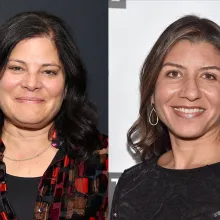
The International Documentary Association (IDA) announced the appointment of Bonni Cohen and Jannat Gargi as new members of its Board of Directors.
Essential Doc Reads is our curated selection of recent features and important news items about the documentary form and its processes, from around the internet, as well as from the Documentary magazine archive. We hope you enjoy! Following the cancellation of SXSW, The New York Times' Ben Sisario and Julia Jacobs assess the damage. Austin effectively canceled South By Southwest with declarations of disaster from Austin's mayor and Sarah Eckhardt, the Travis County judge, a position akin to chief executive of the county. Ms. Eckhardt said she signed a declaration disallowing festival gatherings
Psychologist Silvan Tomkins wrote about "the tendency of jobs to be adapted to tools, rather than adapting tools to jobs." The job of recording observational sound is unique in that being an empathetic presence is as important as being technically competent. Sound gear choices are too often made without concern for the nuances of this very social kind of filmmaking. If you are a solo shooter or have a creative partner instead of a professional doing sound, equipment choices have a considerable effect on your access, camerawork, available content and your ability to be either engaged or
From cover to cover, Say What Happened: A Story of Documentaries is, just like its author, Nick Fraser, a class act. Fraser is a formidable presence in the international documentary scene, with over 20 years as a top commissioning television editor. He created the BBC documentary strand Storyville in 1997 (its precursor on BBC, Fine Cut, was produced by André Singer), and oversaw it until 2016, when he left to found the streaming company now known as Docsville. In 2017 he suffered blood clots to the brain while giving a lecture and screening the film The English Surgeon, about the British
Subpoenas demanding that documentary filmmakers reveal confidential sources, or disclose their outtakes, notes or other unpublished work product pose a serious threat to the exercise of First Amendment rights. The risk of such compelled disclosure can chill communications with sources and film subjects, making them less likely to come forward or speak freely. And, in criminal matters, subpoenas run the risk of forcing investigative documentary filmmakers to act as an unwilling investigative arm of government, jeopardizing their independence. No documentary filmmaker wants to be forced to hand
What is the role of a documentary filmmaker in a country that has been largely devoid of images of itself on the big screen? Acclaimed Singaporean filmmaker Tan Pin Pin, who has tirelessly set her sights on the national identity of the Southeast Asian city-state, addressed this question, among many others, during her masterclass, which took place in the framework of last fall's International Leipzig Festival for Documentary and Animated Film ( DOK Leipzig). The festival also paid homage to Tan, featuring more than a dozen works from her oeuvre, assembled into four programs. Tan's adolescent