Screen Time is your curated weekly guide to excellent documentaries and nonfiction programs that you can watch at home. In the IDA Award-winning series Making A Murderer, filmmakers Moira Demos and Laura Ricciardi followed, for over a decade, the twists and turns of the cases of Steven Avery and his nephew Brendan Dassey, two Wisconsin men convicted of the brutal murder of photographer Teresa Halbach, uncovering along the way the possibility of a massive miscarriage of justice. The filmmakers are back for Making A Murderer Part 2, premiering October 19 on Netflix. Demos and Ricciardi have
Latest Posts
Essential Doc Reads is a weekly feature in which the IDA staff recommends recent pieces about the documentary form and its processes. Here we feature think pieces and important news items from around the Internet, and articles from the Documentary magazine archive. We hope you enjoy! Rebecca Day reflects on Getting Real '18 and the 'Therapeutic Interventions in Documentaries' panel ahead of World Mental Health Day in the Scottish Documentary Blog. When IDA first asked me to host a panel at Getting Real, coming up with the title seemed to be the hardest part. Remarkably, this could have been
I work as both a cinematographer and a director/cinematographer; I find the latter to be especially challenging. I need to be able to have the tools I feel most comfortable with, physically and technically, since my mind is working on lots of things at a time—not just what’s happening in the picture. I prefer to work with small crews. The part of my job I hate the most is carrying stuff, so I’ve figured out a setup that works for me on most films, where I have as little as possible. There are two things I cannot live without on a shoot. One is a padded camera strap. This strap costs about $20
Long-term success in documentary-making is best supported by a good grasp of legal basics. This Legal Q&A answers one question: What are some of the key areas of legal understanding that are important to a sustained career as a documentary producer? Creating a Business Entity Producers often form business entities to run all of their productions, rather than doing so as an individual person. Or, they might set up a single-purpose business entity for each production, or a combination of both. These entities employ individuals (often including the individual who founded the entity), and they
For 14 years, the fall season has meant, for me, the Camden International Film Festival (CIFF) in Camden, Rockport and Rockland, Maine—three picturesque small towns nestled between the mountains and the sea, just 17 miles south of where I grew up. Camden specifically has long thrived as a gathering place for the meeting of the minds, away from it all and in an environment that naturally encourages inward contemplation and a shedding of social trappings and pretense. Since 1988 the Camden Conference has lured foreign affairs experts to brave the harsh Maine winters to discuss pressing issues of
"Documentary editing is perhaps one of the most challenging intellectual feats on the planet…How does anyone do it?" Author, educator and film editor Jacob Bricca asks the question in the introduction to this how-to book on editing the documentary and then spends the next 240 pages providing a very satisfying answer. He clearly reminds us of the difference and relative ease of editing a narrative fiction film, in which "by and large, we already know the intention of every scene and the approximate purpose of every shot." Compare that to the twists and turns that often occur in the filming
Screen Time is your curated weekly guide to excellent documentaries and nonfiction programs that you can watch at home. The Circus, a four-hour series from Sharon Grimberg, tells the story of one of the most popular and influential forms of entertainment in American history. The Circus , not to be confused with the Showtime series on contemporary American politics. airs and streams on American Experience. Capturing the most intimate moments of her story, Rx: Early Detection, A Cancer Journey with Sandra Lee highlights the importance of early detection and informed decision-making in regards to
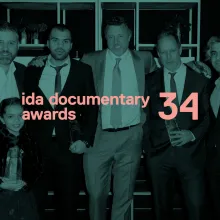
For the first time, the International Documentary Association (IDA) has unveiled the shortlists in the Shorts and Features categories for their annual IDA Documentary Awards.
Essential Doc Reads is a weekly feature in which the IDA staff recommends recent pieces about the documentary form and its processes. Here we feature think pieces and important news items from around the Internet, and articles from the Documentary magazine archive. We hope you enjoy! IndieWire's Chris O'Falt covers Showtime's secret documentary on President Trump's Tax Evasion. When the New York Times editors hit publish on yesterday’s exhaustive report detailing how Fred Trump fraudulently funneled millions to his son — President Donald J. Trump — Showtime’s cameras were rolling. A holdover
Ross McElwee’s brilliant Sherman's March was a revelation when I first saw it in 1987. I had never seen anything like it—a one-man band filming his own tumultuous, heartbreaking, hilarious journey through the South, and searching for love while trying to make a documentary about General William Tecumseh Sherman’s March to the Sea during the Civil War. I was newly out of film school, trying to get my first screenplay produced with the help of the Sundance Institute, and writing scripts for others. I didn’t know it then, but the lessons I learned from Ross’ film would inform my own journey years