Screen Time is your curated weekly guide to excellent documentaries and nonfiction programs that you can watch at home. Making its VOD premiere, A Greater Society, from Stacy Goldate and Craig A. Colton, follows the 2014 midterm elections through the perspective of the residents of a South Florida retirement community, who, aware of the power of America's largest swing state, mobilize to get out the vote. Although the 20-hour, 10-part documentary series Basketball: A Love Story doesn't premiere on ESPN until October 9, you can get the ESPN App on September 18, which will grant you access to
Latest Posts
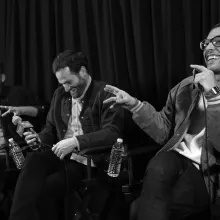
The IDA announced today the lineup of their annual curated screening series, which opens Wednesday, September 12 with a screening of one of this year’s film festival favorites, Won't You Be My Neighbor?, from Academy Award-winning director Morgan Neville launches the series.
Next week at Getting Real ‘18, the IDA will introduce a cohort of 12 films receiving the IDA’ Enterprise Documentary Fund production grants.
Essential Doc Reads is a weekly feature in which the IDA staff recommends recent pieces about the documentary form and its processes. Here we feature think pieces and important news items from around the Internet, and articles from the Documentary magazine archive. We hope you enjoy! Filmmaker Magazine releases their 25 New Faces of Film list for 2018. Since I first worked at Filmmaker 10 years ago, I have been passionate about the 25 New Faces list, its importance and its ability to transform the career of filmmakers who truly deserve it. The list has also spawned an event that is an antidote
As a secular Jew who resided for over a decade in pre- Girls Brooklyn, I'm not sure which Williamsburg community proved more inscrutable to my eyes—hipster or Hasidic. Both appeared isolated in secret echo-chambered societies, living blocks away—and worlds apart—from one another. And the notion of a feminist Hasid would strike me as outlandish as a hipster sporting payot. Enter Rachel "Ruchie" Freier to upend my preconceived notions. Freier is the pigeonhole-avoiding star of filmmaker Paula Eiselt's 93Queen, a fascinating look at America’s very first all-female EMT corps—started in the heart
For the past 40 years, Icarus Films has been Jonathan Miller's vehicle for showing films that may not have found an audience any other way. If you want to know something about Miller's tastes, you only need to review the 1000+ titles accumulated in their current catalog, as he is the sole arbiter of what becomes an Icarus film. The folks at Metrograph, New York’s relatively new theater/hangout for cinephiles, have made getting to know Icarus—and by inference, Miller—easier, by curating 56 titles from the collection to screen at their Ludlow Street location from September 14-30. Although Miller
Screen Time is your curated weekly guide to excellent documentaries and nonfiction programs that you can watch at home. Forty-five years after it revolutionized abortion law in America, the landmark 1973 US Supreme Court case Roe v. Wade is once again at a crossroads. In their timely new documentary Reversing Roe, which premieres September 13 on Netflix, filmmakers Ricki Stern and Annie Sundberg present a deeply illuminating look of the state of abortion and women's rights in America. Drawing from a wealth of historical footage, it charts the period leading up to the Roe decision—and documents
Essential Doc Reads is a weekly feature in which the IDA staff recommends recent pieces about the documentary form and its processes. Here we feature think pieces and important news items from around the Internet, and articles from the Documentary magazine archive. We hope you enjoy! Marisa Guthrie speaks with female directors about gender bias in the documentary field for The Hollywood Reporter. At a time when the market for nonfiction film and television is exploding, THR gathered Blair Foster, Alison Ellwood, Sarah Dowland and Stacey Offman, as well as Caroline Suh — who is directing the
Screen Time is your curated weekly guide to excellent documentaries and nonfiction programs that you can watch at home. The geographical dead center of North America and the beloved birthplace of Guy Maddin, Winnipeg, is the frosty and mysterious star of Maddin’s My Winnepeg, which streams this month on Mubi. Fact, fantasy and memory are woven seamlessly together in this work, conjuring a city as delightful as it is fearsome. RBG, which continues to rack up impressive numbers at the box office, airs on CNN this Sunday, September 9, in a special encore broadcast. The film, directed by Betsy
Essential Doc Reads is a weekly feature in which the IDA staff recommends recent pieces about the documentary form and its processes. Here we feature think pieces and important news items from around the Internet, and articles from the Documentary magazine archive. We hope you enjoy! Daniele Alcinii, news editor at Real Screen breaks down the 27 documentary films set to screen at TIFF. An extensive slate of documentaries will be in the limelight during the 43rd edition of the Toronto International Film Festival, with 27 feature films set to screen as part of TIFF Docs across the city. As we