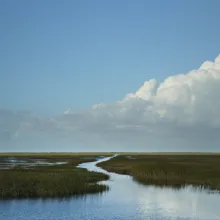
Documentary is happy to debut an exclusive clip from Sasha Wortzel’s debut feature River of Grass, which has been on a tear since its premiere at True/False in March. The film continues its festival run this week at Hot Docs and Margaret Mead. The genre-bending documentary chronicles Wortzel’s engagement with Marjorie Stoneman Douglas’s influential conservation screed The Everglades: River of Grass in the present day. On the clip, Wortzel explains, “This moment takes place around 10 minutes into the film where we are transported to the Florida Everglades, a vast region of interconnected
Latest Posts
This article will be updated regularly as the situation unfolds with news and calls to action. July 30, 2025 The recent vote to eliminate federal funding for public media was a significant setback and disheartening for all US residents, and especially our documentary community. Despite the outcome, a record number of Americans voiced their opposition to these cuts, and lawmakers have taken notice – offering an opportunity to begin the process of restoring vital Corporation for Public Broadcasting (CPB) funding through the Fiscal Year (FY) 2026 appropriations process. On Thursday, July 31, the

We Live Here delves into the present-day reality of the Semipalatinsk nuclear test site—known during the Soviet era as the Polygon—and the enduring devastation it has wrought on those who still live there. Director Zhanana Kurmasheva centers the story on Bolatbek, an elderly man who has spent his entire life in a village just 30 kilometers from the Polygon. While the tragedy of the Polygon has been chronicled before, often in government-backed, TV-style documentaries, Kurmasheva’s work approaches the subject differently, elevating it to a kind of myth—a legacy that strangely defines who Kazakhs are. We Live Here is steeped in a sense of foreboding. We Live Here premiered at CPH:DOX. Ahead of the film’s North American Premiere at Hot Docs, Documentary spoke to Kurmasheva about what makes residents stay in such a contaminated area, the genius loci of the steppe, and the interplay of beauty and violence embedded within it.
In December 2023, as part of the series Making a Production, Documentary profiled Meerkat Media, the New York-based cooperatively owned production company and media arts collective. As a radical experiment in shared authorship and ownership, Meerkat built a sustainable framework for making the kind of films they cared about, while still providing steady paychecks, health insurance, and medical leave to their members. Since the publication of their profile, the group has faced industry-wide challenges, including tightening budgets and shrinking opportunities. At the same time, they’ve experienced major creative high points. Over Zoom, Documentary caught up with Sterrenberg to talk about Meerkat’s recent creative highs, the challenges of balancing freelance work with collective production, and how Emergent City, which opens at DCTV tomorrow and will be broadcast on POV later this year, took shape within the group.
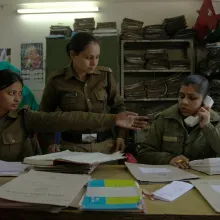
A cramped room inside which most of Marriage Cops takes place becomes an effective metaphor for not only the stifling sensation of being trapped in an unhappy marriage but also the limited scope within which the police can work. The Hot Docs-premiering documentary follows sub-inspectors Sandhya Rani and Krishna Jayara, who run the Women’s Helpline in Dehradun, India, listening to sparring couples and attempting to work through their marital issues along with a psychologist, a lawyer, and a volunteer. Behind them lie voluminous bags of paperwork and cobwebbed files. What unfolds is a bleak

Marking its 20th anniversary this edition (March 27–30, 2025), Berwick Film & Media Arts Festival has established itself as one of the UK’s most boundary-defying festivals for the moving image. This commitment to dismantling hierarchies extends to the festival’s structure. Many of the featured works explore the body’s mnemonic capacities—how gesture, movement, and touch might commune with history, or reimagine how to engage with the unknowable: Underground, Black & Arab Encounters on Screen, Bounded Intimacy, an Eri Makihara program, and Nightshift.
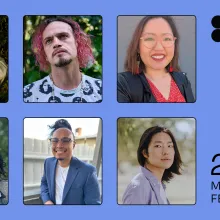
Today, BAVC Media announces the 2025 cohort of its longstanding MediaMaker Fellowship, which is known for betting on emerging artists and early projects as a “first-in” supporter. Selected filmmakers will receive US$10,000 in unrestricted funding, mentorship, industry access, feedback sessions, and workshops over the next 9 months. The Fellowship kicks off with an in-person intensive convening in San Francisco in April before continuing at select film festivals across the U.S.

Over the past several years, when discussing the audience exodus to large platform streamers, I’ve encountered exhaustion from filmmakers, arts workers, funders, broadcasters, distributors, and exhibitors. Everyone wants to help fix the problem, but no one knows where to start. That’s because there are real issues that stack the deck against documentary filmmakers and our audiences. They can be classified into three main categories: funding, discoverability, and unequal market power.

This month, we have the great opportunity to highlight three rising stars and Northwestern University Documentary Media program graduate students: Blake Knecht, Gríma Eir Geirs Irmudóttir, and Shawn Antoine II. The Northwestern University Documentary Media Program is a member of IDA’s educational membership program , an essential program for higher education institutions that want to provide their students, faculty, and staff with access to the documentary industry. If you are interested in joining our educational membership program, please reach out to Anisa Hosseinnezhad, IDA Membership
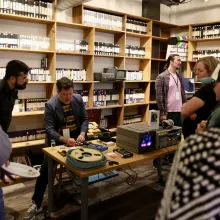
Access to archival media is often the result of the invisible work of teams of archivists and technicians who preserve content on fragile media and provide it to the public. Accessing archival media can be a financial challenge for documentary filmmakers because preservation of media is as time consuming and expensive (sometimes more) as shooting new footage. Logistically, making this material available is time consuming, expensive, and requires skilled team members to coordinate. Our upcoming research study, Mapping the Magnetic Media Landscape, a project of BAVC Media, examines U.S. collection holders’ needs and how we might support them. Because of our decades of work with and for filmmakers, we can put it bluntly: All of these costs are ultimately passed on to the filmmaker.