Greatest Docs of the 21st Century: Singular Picks
A collection of projects that earned just one vote across all ballots, curated by Documentary magazine and blurbed by their voters.
Aquí se construye (o ya no existe el lugar donde nací) [Under Construction (or The Place I Was Born No Longer Exists)], Ignacio Agüero, 2000
Jenin, Jenin, Mohammad Bakri, 2002
S21: The Khmer Rouge Killing Machine, Rithy Panh, 2003
Mimi, Claire Simon, 2003
Route 181: Fragments of a Journey in Palestine-Israel, Michel Khleifi and Eyal Sivan, 2003
The 3 Rooms of Melancholia, Pirjo Honkasalo, 2003
A Letter From Greenpoint, Jonas Mekas, 2005
Lá-bas (Down There), Chantal Akerman, 2006
Jogo de Cena (Playing), Eduardo Coutinho, 2007
My Winnipeg, Guy Maddin, 2007
Mobile Men, Apichatpong Weerasethakul, 2008
Xiànshí Shì Guòqù de Wèi Lái (Disorder), HUANG Weikai, 2008
Kony 2012, Jason Russell, 2012
The Last of the Unjust, Claude Lanzmann, 2013
Homeland: Iraq Year Zero, Abbas Fahdel, 2015
Qióngdǐng Zhī Xià (Under the Dome), FAN Ming and CHAI Jing, 2015
Tempestad, Tatiana Huezo, 2016
Komunia (Communion), Anna Zamecka, 2016
The Task, Leigh Ledare, 2017
The Other Side of Everything, Mila Turajlić, 2017
Talking About Trees, Suhaib Gasmelbari, 2019
How To With John Wilson, John Wilson, 2020-2023
If From Every Tongue it Drips, Sharlene Bamboat, 2021
The Spectacular Failure of the Star Wars Hotel, Jenny Nicholson, 2024
Listen to the Voices, Maxime Jean-Baptiste, 2025
Aquí se construye (o Ya no existe el lugar donde nací) [Under Construction (or The Place I Was Born No Longer Exists)]
2000 | Chile | Dir. Ignacio Agüero | Producer: Francisca Alburquerque
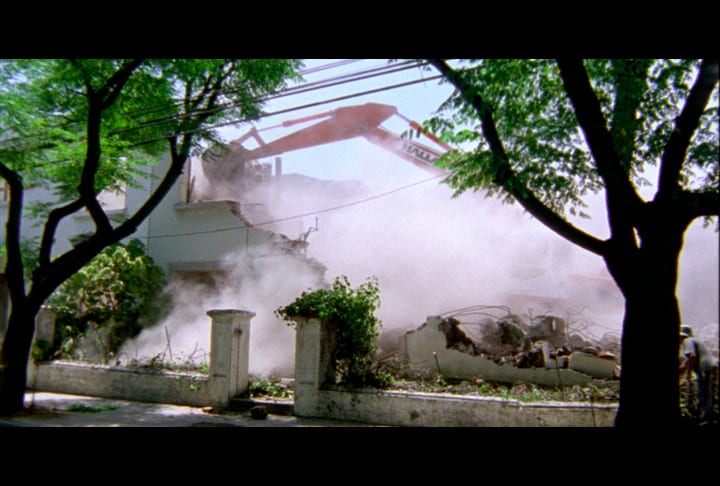
The modernization of the 1990s descends upon Santiago in the form of bulldozers. It is violent to hear, violent to accustom one’s ear to that deafening roar—and violent, too, is the silence that follows. The aim of demolition is to leave nothing in its wake. From a glass-enclosed balcony, a couple looks out, already inhabiting the future that erased them. Below stands a dapper bourgeois professor of biology, who conducts us to the demolition of his mother’s house, an ongoing scene that frames Ignacio Agüero’s documentary, which stresses the class dichotomy between those who own and those who lay bricks for homes they will never inhabit. As an architect of images, Agüero subverts the gesture of erecting and replaces it with disordering, entering the homes of those who build the homes of others, granting them an intimacy not always afforded. The periphery ceases to be periphery. The structure endures.
—Lucía Requejo, critic
Jenin, Jenin
2002 | Palestine | Dir. Mohammad Bakri | Producers: Iyad Tahar Samoudi, Mohammad Bakri
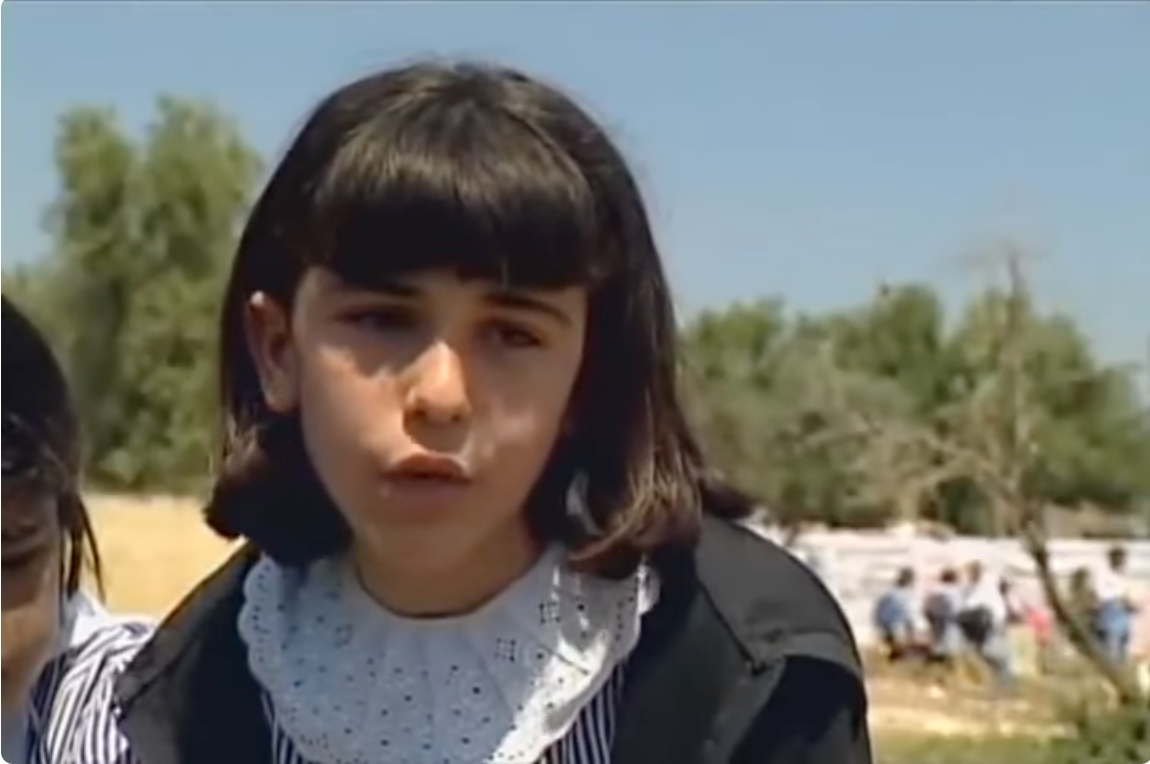
This 54-minute act of witness has outlived bans, lawsuits, and now its maker. Following Mohammad Bakri’s recent passing, his monumental advocacy endures through this film, his most courageous work. Jenin, Jenin chronicles the aftermath of the Israeli army’s Operation Defensive Shield in the Jenin refugee camp, assembling testimonies from survivors to document destruction, loss, and the emotional aftermath of violence. Incendiary in its clarity, the film resists assimilation into dominant Western media frameworks, a condition that has only intensified its vilification and necessity. It has survived repeated attempts at erasure, circulating despite censorship and legal persecution. Two decades later, and amid ongoing genocide, the film becomes even more urgent: an enduring act of Palestinian memory that insists on presence, testimony, and the right to be seen.
—Ruun Nuur, programmer
S21: The Khmer Rouge Killing Machine
2003 | Australia, Belgium, Cambodia, Canada, Czechia, Finland, France, Switzerland | Dir. Rithy Panh | Producers: Cati Couteau, Dana Hastier
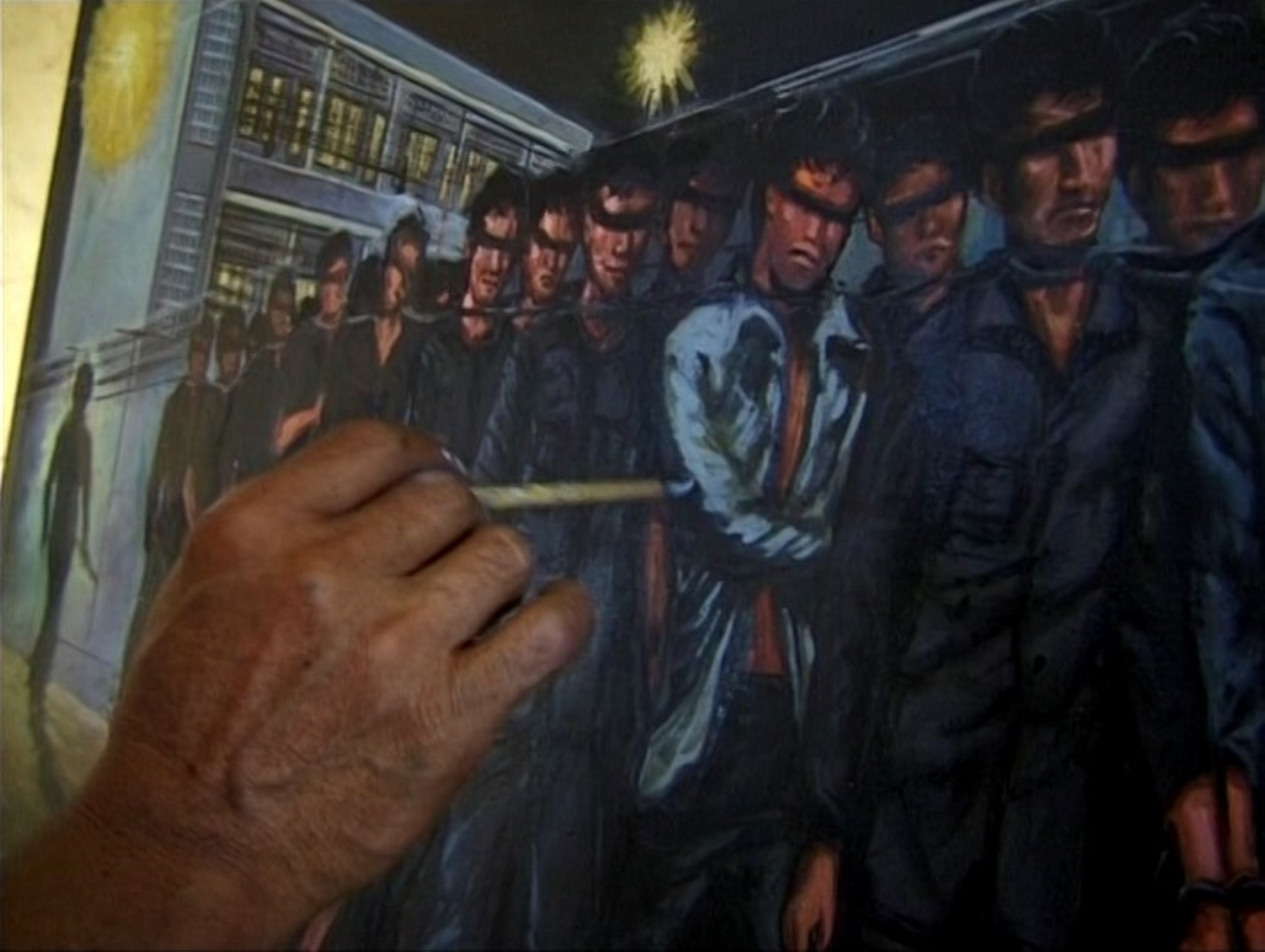
Rithy Panh brings two survivors of the Khmer Rouge regime back to the prison S21, now a museum preserving how more than 15,000 prisoners were killed there. But memory demands something greater than preservation. Instigated by one of the survivors, their captors—former guards and staff who were mostly teenagers during the Khmer Rouge—reenact, devoid of fantasized spectacle, what they actually did in the same rooms where they tortured prisoners and falsified justifications for mass execution. Alongside a detailed sketch of the mechanics of genocide, what emerges is the staggering failure of realization. Only one perpetrator approaches genuine reckoning. The rest insist they too are victims, their bureaucratic logic intact. This is documentary’s duty beyond entertainment or absolution: to confront injustice not as history but as the world we still move through.
—Abby Sun, writer and producer
Mimi
2003 | France | Dir. Claire Simon | Producers: Gilles Sandoz, Humbert Balsan, Paulo Branco
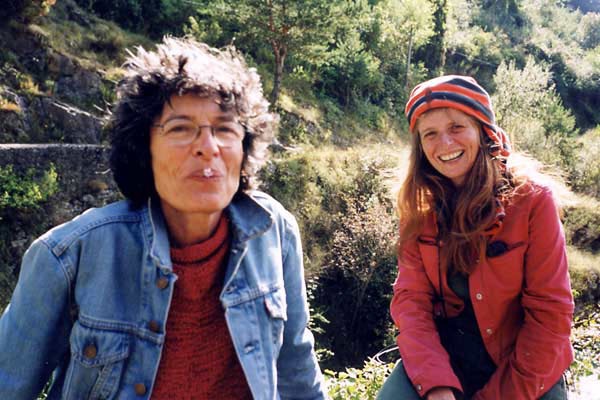
In this casually transfixing masterclass in portraiture, director Claire Simon trains her camera on her friend Mimi Chiola as she strolls the streets of Nice. Sometimes we get the sense that Mimi, a magnetic monologist, is guiding us to specific locations from her youth to process formative life experiences. Other times, it’s as if she and Simon are aimlessly wandering, when a sense memory suddenly overtakes her and unlocks a poignant anecdote. The magic of Mimi is that even though the sunlight and location shift indicate otherwise, it feels as though it were recorded over one magnificent day. This intoxicating spell is partly a result of Simon’s ingenious design, like her decision to ask Mimi to wear the same costume throughout the weeks of production. But it’s really a testament to Simon’s camerawork, which demonstrates how time can stop when you’re in the hands of a virtuosic listener/observer.
—Chris Boeckmann, documentary writer
Route 181: Fragments of a Journey in Palestine-Israel
2003 | UK, Belgium, France, Germany | Dir. Michel Khleifi and Eyal Sivan | Producers: Michel Khleifi, Eyal Sivan, Werner Dütsch, Omar Al-Qattan, Alain Bottarelli
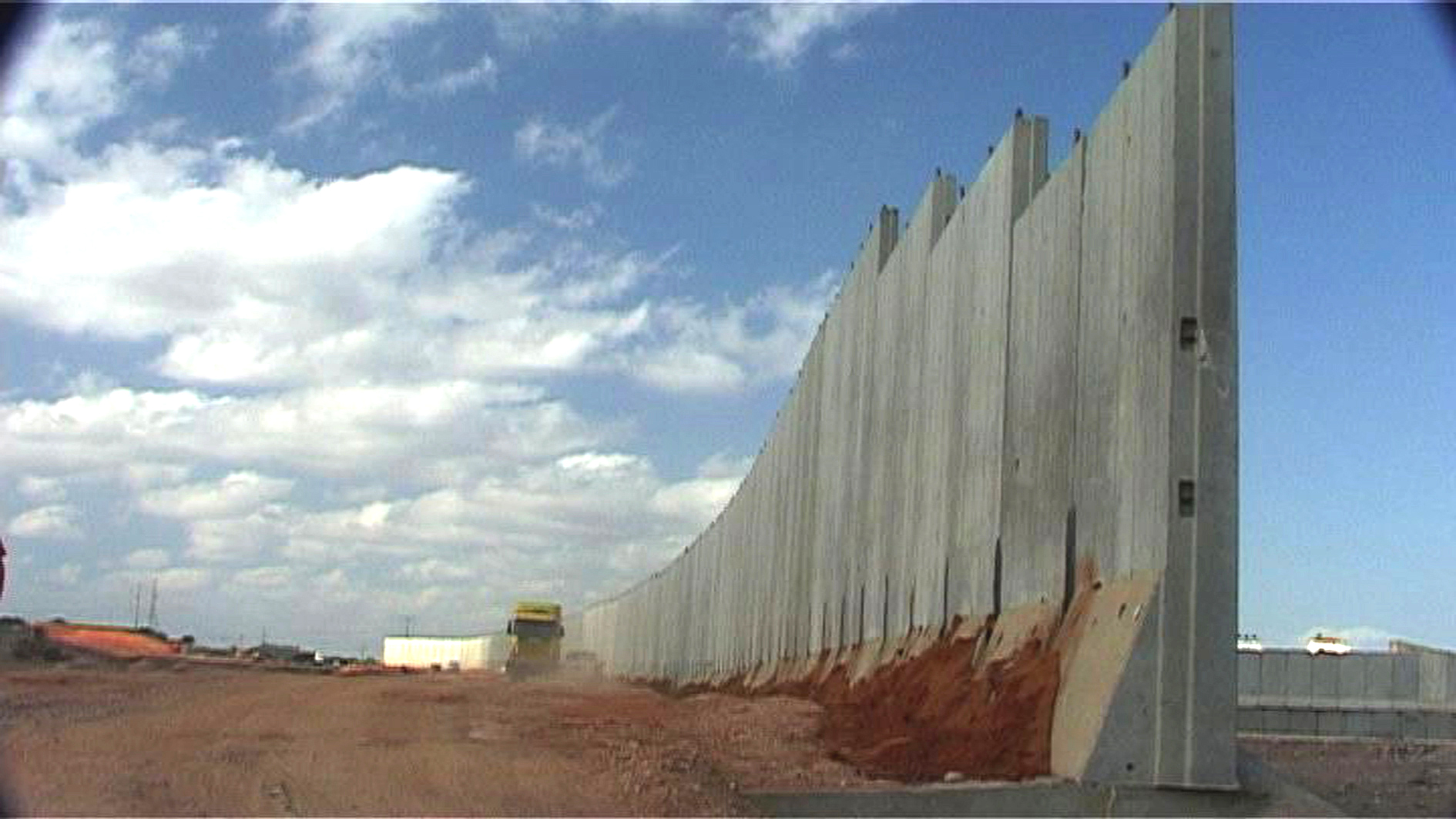
Michel Khleifi once argued that his debut film, Fertile Memory (1981), the first feature made in the occupied West Bank, inverted the militant cinema produced by the PLO in the 1970s by focusing on the lives of everyday people rather than fedayeen. “It is more important,” he wrote in 1996, “to show the thinking that leads to the political slogan rather than [its] expression.” Route 181 offers the most expansive realization of this mission: a massive cartographic undertaking to film the border proposed by the 1947 UN Partition Plan for Palestine during the Second Intifada. Across four and a half hours, Khleifi and co-director Eyal Sivan trace the landmarks standing on the ruins of former Palestinian villages—military outposts, checkpoints, cafes, museums—all while interrogating the attitudes of those who live there today. In a century like ours, defined by borders more than ever before, this is a necessary work.
—Jonathan Mackris, critic
The 3 Rooms of Melancholia
2003 | Denmark, Finland, Germany, Sweden | Dir. Pirjo Honkasalo | Producers: Heino Deckert, Lisbet Gabrielsson, Lise Lense-Møller, Kristiina Pervilä, Pirjo Honkasalo
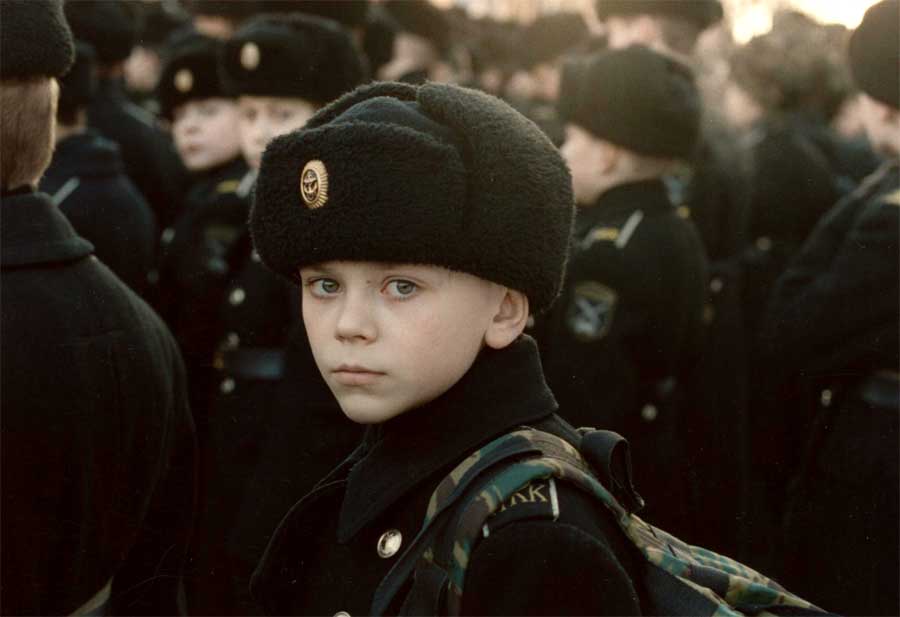
How can a child grow and survive through a war that obliterates innocence? There are neither proper answers to war nor any individual who survives it without scars, especially when it is naturally cruel on both sides, as in the Second Chechen War with Russia. Longing, breathing, and remembering are the concepts that Pirjo Honkasalo’s masterpiece The 3 Rooms of Melancholia brings forth in order to delve into the stories within the tale: children preparing to become soldiers, a woman who gives her life to ease the pain in a ruined city, and a shelter for those orphaned by the chaos and atrocities of war. With marvelous and refined filmmaking, Honkasalo opens our eyes to an ambiguous reality: the horrors faced by children in war, and the astonishing use of cinematographic language that allows us—if only for a moment—to step into the shoes of those innocents enduring war.
—Rodolfo Castillo-Morales, filmmaker, curator, and programmer
A Letter From Greenpoint
2005 | USA | Dir. Jonas Mekas | Producer: Jonas Mekas
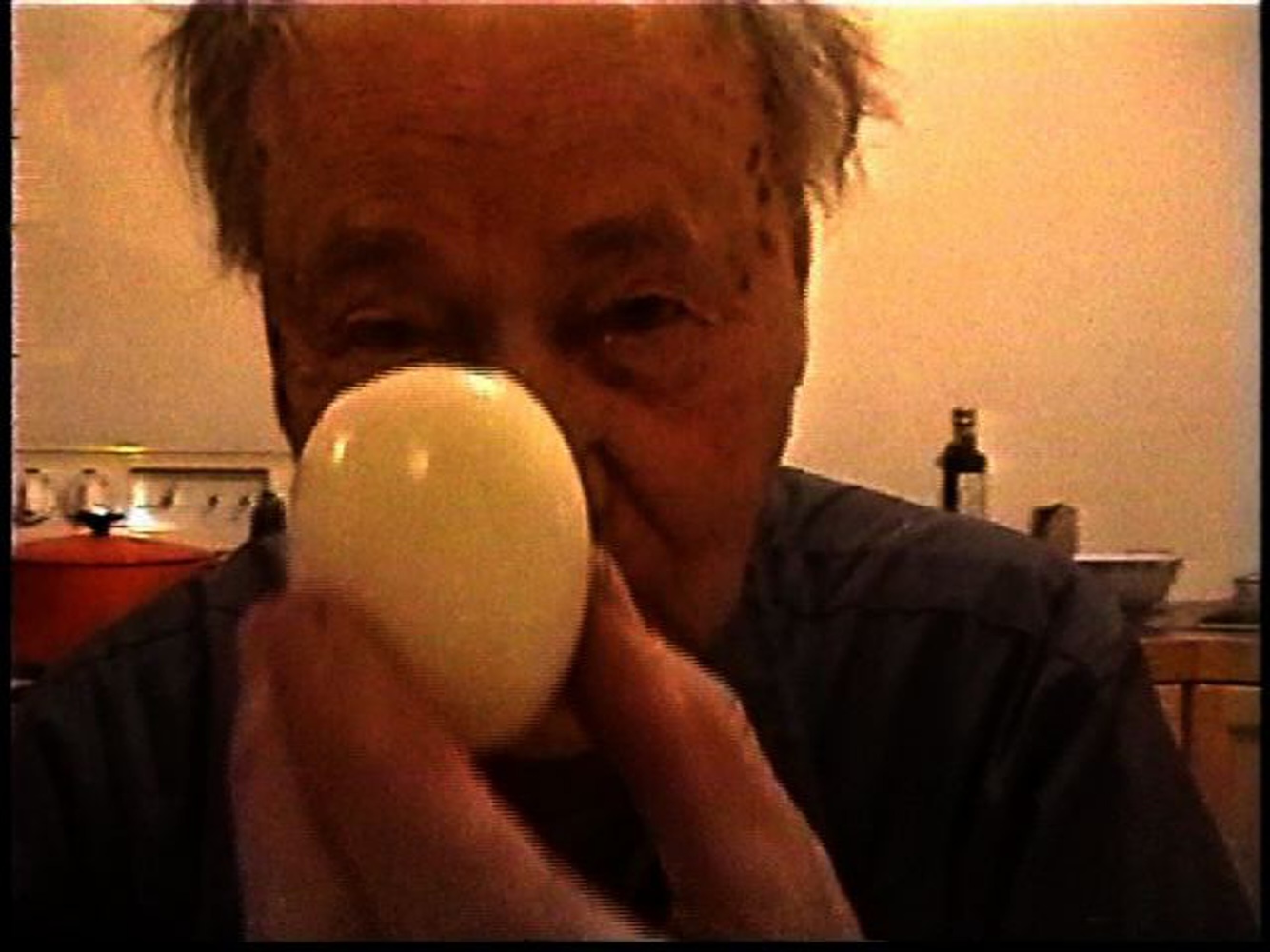
In A Letter From Greenpoint, the Super 8 and 16mm “brief glimpses of beauty” that Lithuanian filmmaker Jonas Mekas became known for give way to digital duration. Shot in 2004 amidst the backdrop of the U.S. presidential election, the elderly Mekas films himself while being priced out of his lower Manhattan apartment, just as many other artists were pushed out of the urban spaces they helped revitalize (there’s a hint of retrospective irony in seeing him land in a Brooklyn neighborhood that would soon meet that same gentrifying fate). Mekas’s contemplative departure from his more exuberant work offers a glimpse into the increasingly prolix world of vlogging and streaming enabled by the shift toward digital technology. The old man is isolated from his generation in this strange new world, trying to spend time with younger people who still have energy. Late at night, the director sadly serenades himself: “My friends don’t sing anymore.”
—Alex Lei, writer and filmmaker
Là-bas (Down There)
2006 | Belgium, France, Israel | Dir. Chantal Akerman | Producers: Xavier Carniaux, Marilyn Watelet
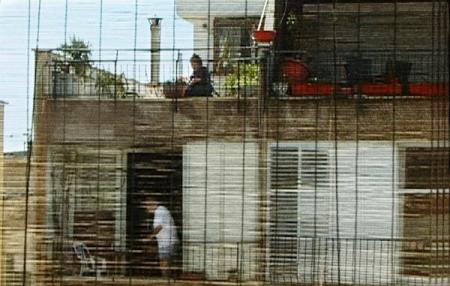
If one way to think of Michael Snow’s Wavelength (1967)—one of very few films Chantal Akerman acknowledged as an influence—is as the subordination of space and narrative to time, one can think of Là-bas as the subordination of time to sound. Incident arrives only through Akerman’s off-screen narration: she is depressed in Tel Aviv and hardly leaves her apartment; she contemplates the suicides of her aunt and Amos Oz’s mother; she wants an answer to “the Israel question” but cannot find one. The images offer little. Almost all are shot from inside her residence through drapes, as if Akerman has no place in the life the camera tries to capture. Indeed, she remains offscreen. Depressive withdrawal is a subject of many Akerman films, but Là-bas depicts it at its most formalized and abstract. When images lose their ability to signify, what happens is only what is heard.
—Forrest Cardamenis, critic
Jogo de Cena (Playing)
2007 | Brazil | Dir. Eduardo Coutinho | Producers: Bia Almeida, Raquel Freire Zangrandi
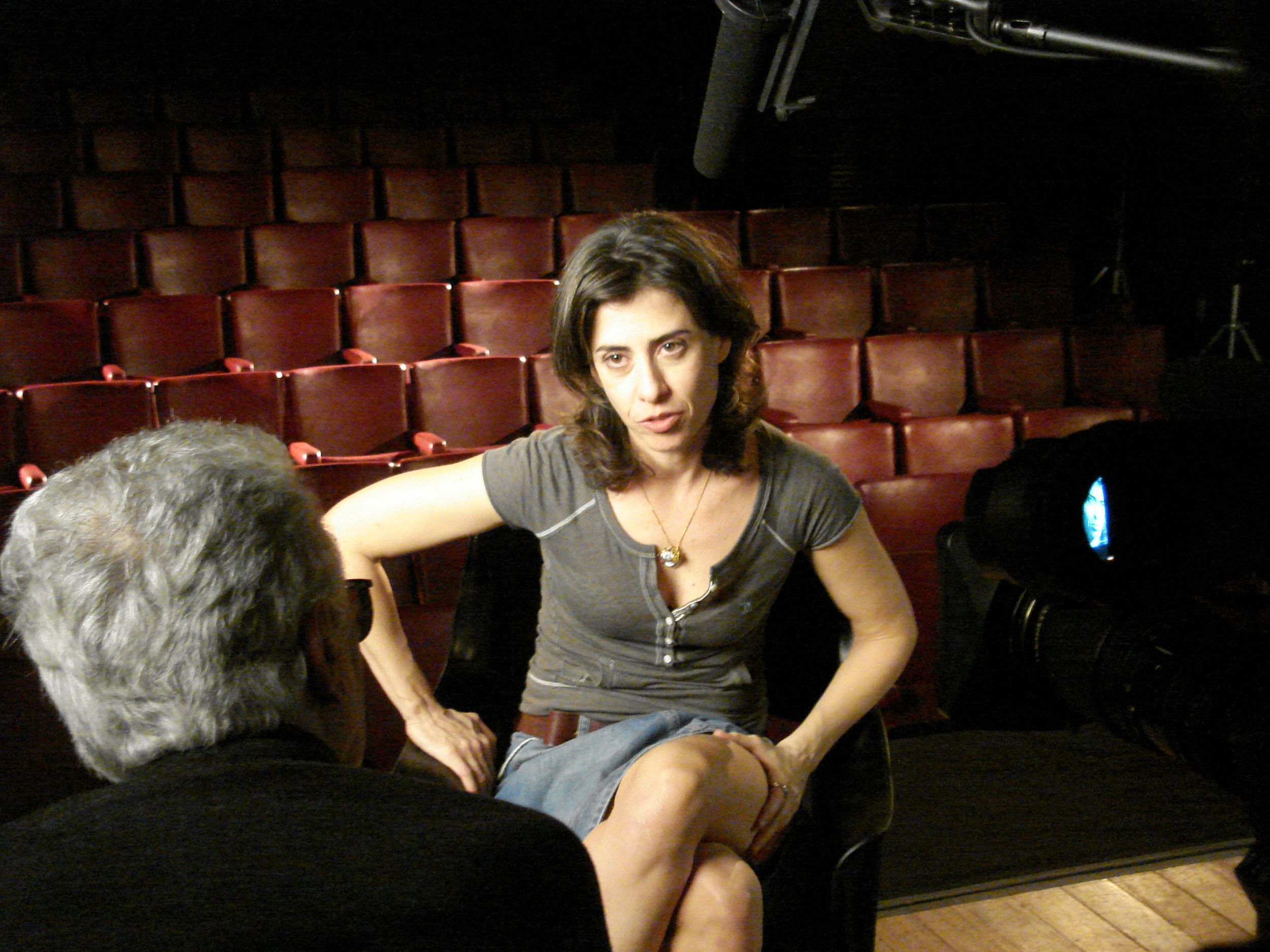
Throughout the 20th century, documentary cinema often justified itself through the evidentiary power of the image. But what happens when Eduardo Coutinho—a filmmaker who built his entire career on a firm belief in the interview as a cinematic form—chooses to implode his own method? He does so by devising a highly provocative structure in which life stories are told by ordinary women and then retold by actresses on a stage, generating a proliferation of displacements that ultimately collapses into indiscernibility. In the 21st century, we inhabit a post-truth world in which the boundaries between fact and fiction are increasingly eroded. The artistic response, however, cannot be a nostalgic reinstatement of clear distinctions, nor an unproblematic relationship with the viewer. In a world of fake news, we need faker news, too; in a world of deepfakes, we need deeper fakers. Coutinho’s film stands as a milestone for a new era.
—Victor Guimarães, critic and programmer
My Winnipeg
2007 | Canada | Dir. Guy Maddin | Producers: Phyllis Laing, Jody Shapiro, Guy Maddin
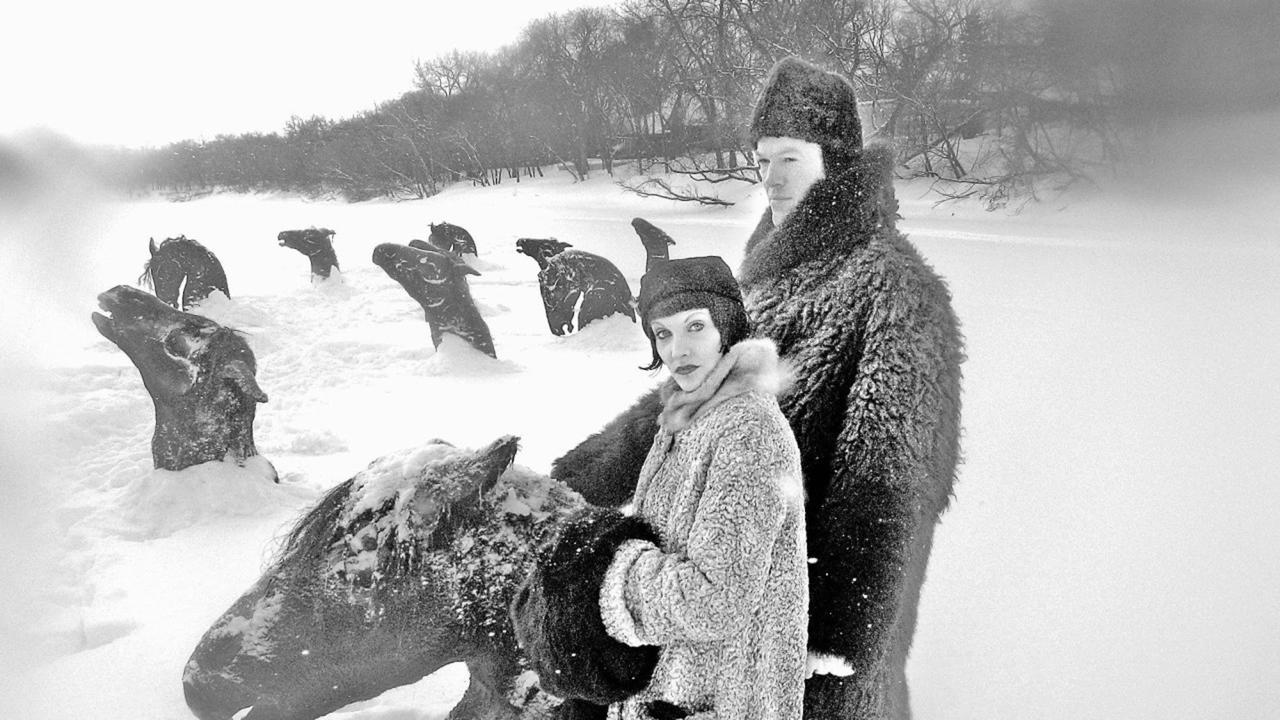
Guy Maddin’s avant-garde mockudrama (termed docu-fantasia) about his hometown defies categorization. Maddin mythologizes this grayscale city with an eldritch affection, featuring horse heads frozen into the Red River, a father seen only as a lump under a carpet, a suicidal TV hero, and heavy-knit snowfall. The conceit is exciting precisely because it obliges documentary cinema’s potential to collapse the flimsy membrane between fact and fiction, memory and imagination. At a recent screening of My Winnipeg, live narrated by Maddin, the director divulged his love of spinning lies about the film, including a game he played at audience Q&As in which he would alternate between telling the truth and lying, never letting on where he had hidden his fabrications. Caught between a rock and a hard place while showing the film in Iceland, Maddin had to lie to a soft-spoken audience member who turned out to be Björk. Or so he said.
—Saffron Maeve, critic
Mobile Men
2008 | Thailand | Dir. Apichatpong Weerasethakul | Producer: Apichatpong Weerasethakul
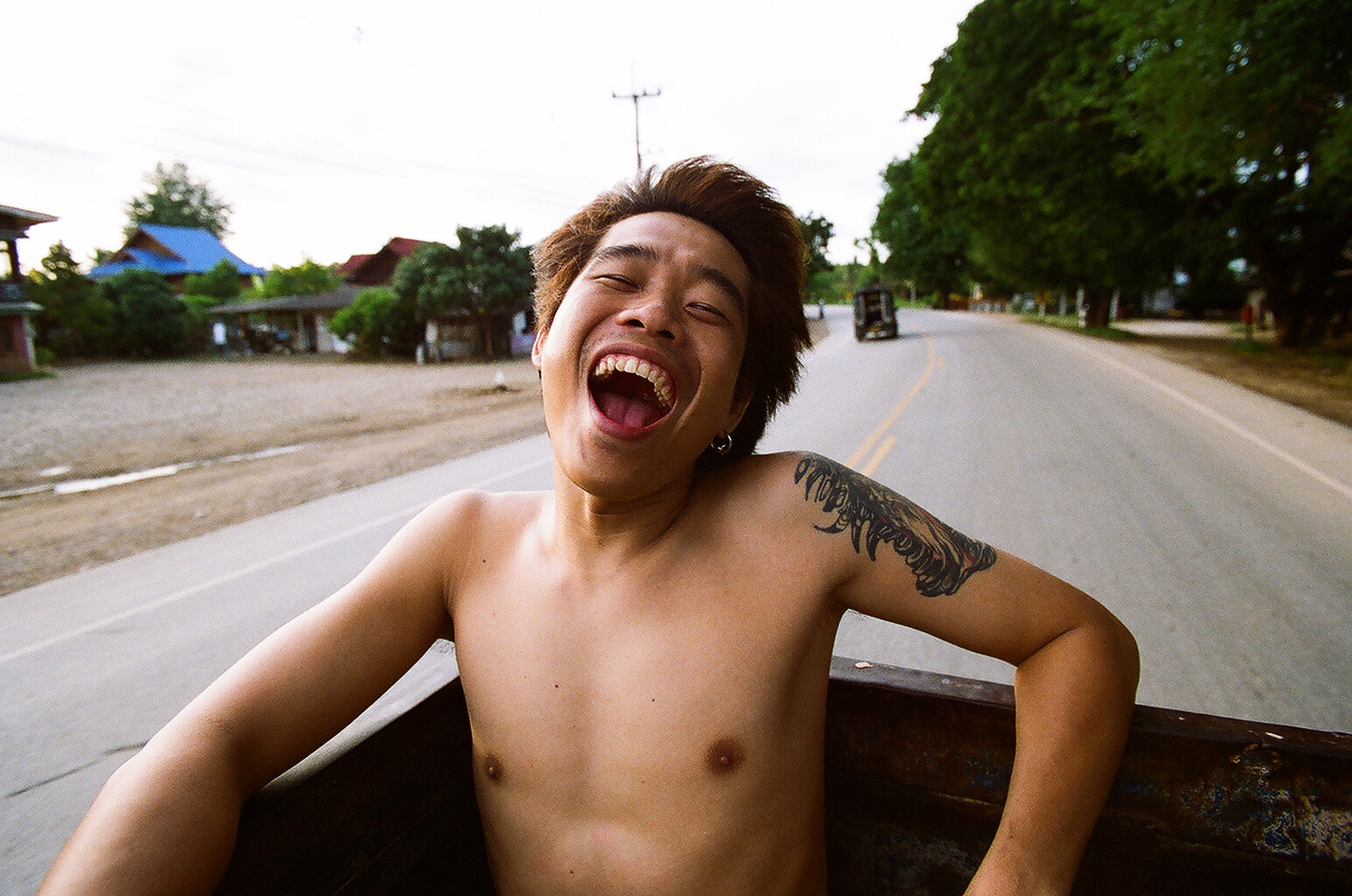
I regularly return to Mobile Men, particularly when life feels dreary and hopeless. The vitality it condenses into little more than three minutes is unlike that of any film I’ve experienced. But I’m not writing to convince you to feel the same. To do so would be anathema to the film, which is not at all needy or demanding, but rather gentle and inviting. I simply suggest you allow its two young men to convey you back and forth (everything is at once kinetic yet casually in repose, an apt description of adolescence) as they flex, preen, and mug for each other and for us. These movements carry an electric current of youthful desire: playful, curious, and ingenuous, but also performative, impulsive, and a little dangerous. It’s an invitation into a small, momentary world of delirious synesthesia, in which skin itself can speak, however ineloquently, of its pleasures and pains.
—Carmine Grimaldi, filmmaker and historian
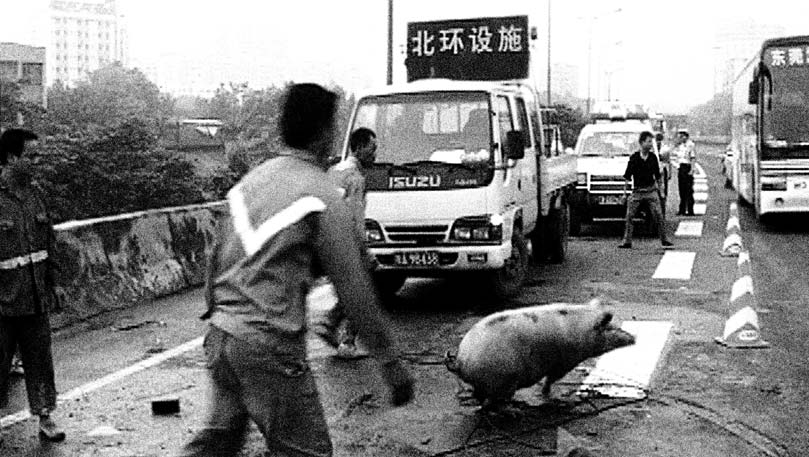
Xiànshí Shì Guòqù de Wèi Lái (Disorder)
2008 | China | Dir. Huang Weikai | Producer: Huang Weikai
Huang Weikai’s 2009 Disorder is a hypnotic masterpiece that explodes every convention of collective filmmaking and the city symphony. Through frenzied, rhythmic editing of black-and-white found-footage scenes that unfurl the hysteria, bureaucratic rot, and strange beauty of life in early-2000s Guangzhou, Disorder produces an experience that shocks the viewer into a continuous spectacle of chaos, shapes, movement, and power. I recognize the brilliance of the English title Disorder—a word that speaks to confusion, mess, and malady. But I prefer the original Chinese title. It roughly translates as Reality Is the Future of the Past, a declaration of the surreal poetics that make this a film I visit over and over to feel a sense of the absurd and sublime as the myth of an ordered world dissolves around us.
—Maya E. Rudolph, producer
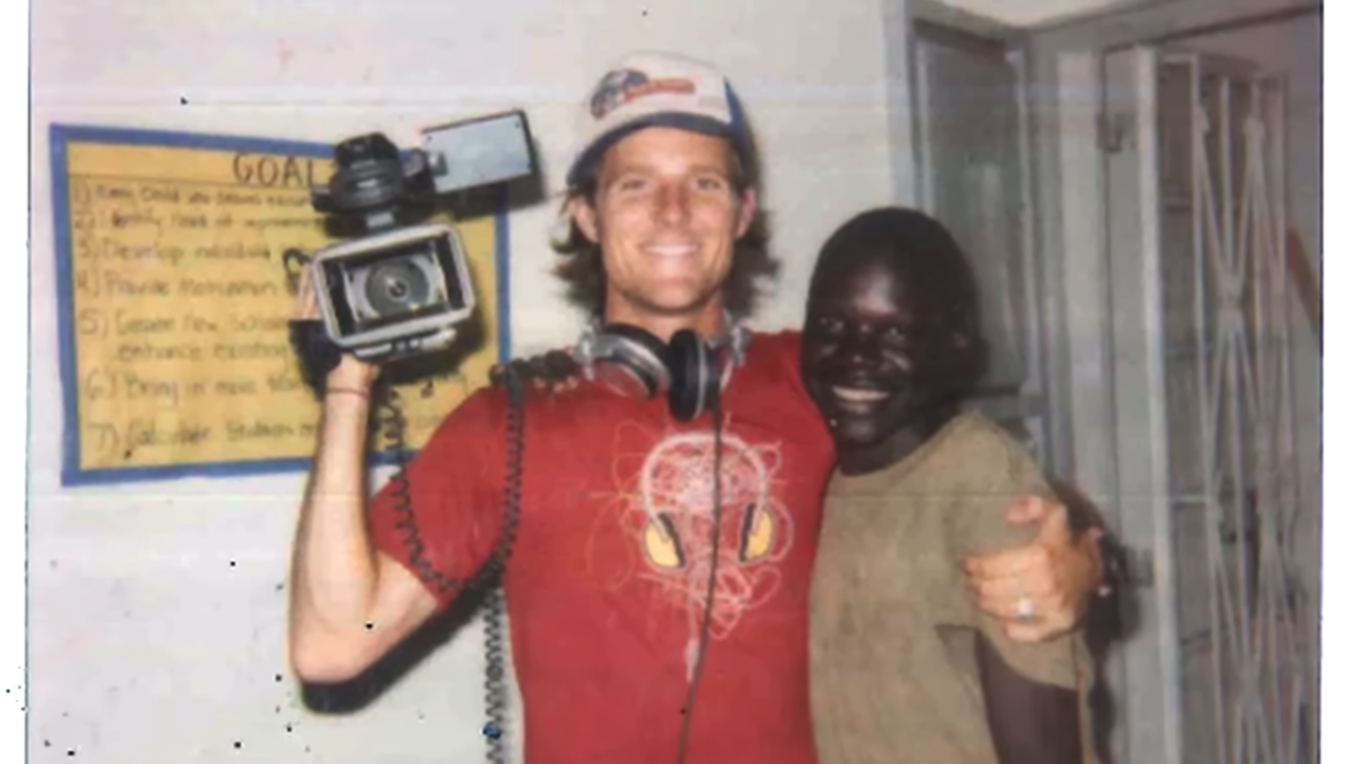
Kony 2012
2012 | USA | Dir. Jason Russell | Producers: Kimmy Vandivort, Heather Longerbeam, Chad Clendinen, Noelle Jouglet
Formally poor yet historically unavoidable. Built on a simple call to action, the film mobilized mass altruism and participation, but did so by rehearsing a flattening, dangerous narrative of Africa as a singular site of crisis. Its virality was unprecedented. Now sitting at over 103 million views on YouTube alone, it remains one of the most-watched documentaries of the 21st century, transforming spectators into distributors and collapsing documentary into campaign. The afterlife matters as much as the film itself: backlash, critique, and lasting residues expose how easily global attention can be manufactured and misdirected. In this way, Kony 2012 reshaped documentary circulation in the digital age, proving that impact, however flawed, can eclipse form.
—Ruun Nuur, programmer
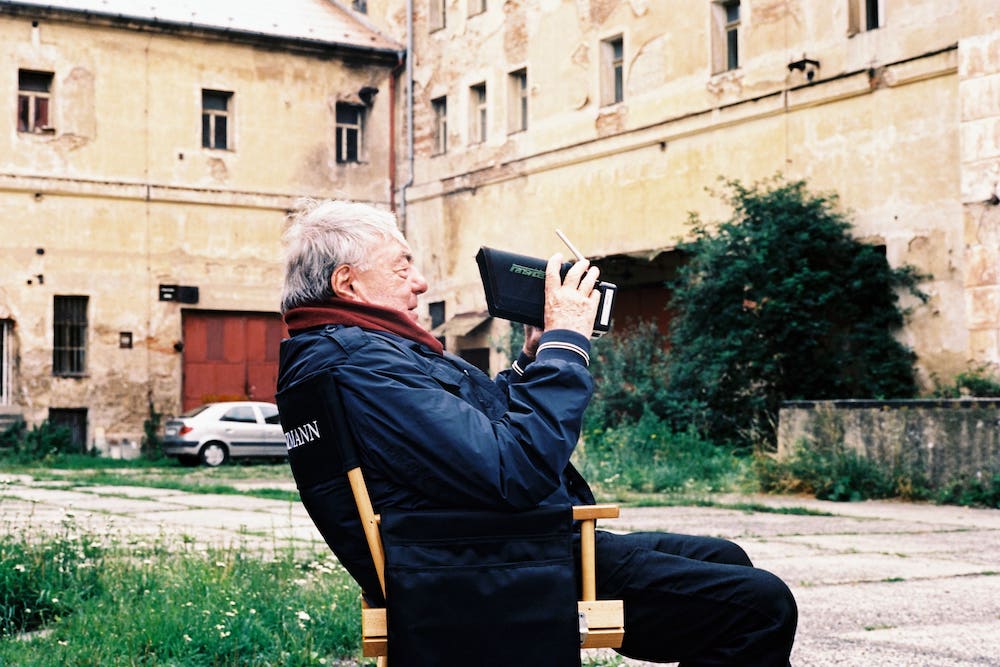
The Last of the Unjust
2013 | Austria, France | Dir. Claude Lanzmann | Producers: David Frenkel, Jean Labadie, Danny Krausz, Kurt Stocker
Claude Lanzmann’s genius lay in his rigorous deployment of the present tense to accentuate the ever-widening distance between three dimensions of time: the always contemporary time of the spectator, the once contemporary time of a film’s making, and the unrecoverable past time of the Holocaust. The Last of the Unjust, the greatest of Lanzmann’s Shoah postscripts, adds a retrospective dimension to this scheme. Revisiting interviews he conducted with the controversial Jewish elder Benjamin Murmelstein in 1975 from the vantage point of 2013, Lanzmann returns with cinematographer Caroline Champetier to Theresienstadt, where—in stark contrast to William Lubtchansky’s original, ruggedly grainy, compact 16mm—they capture the countless Nazi crime scenes implicated in Murmelstein’s account in their present-day state on crisp, widescreen 35mm. One vanished present thereby speaks to another—itself now vanished—of a past from which they both, and we, are irrevocably removed. An aesthetic embodiment of the tragic failure of historical memory.
—Edo Choi, critic and curator
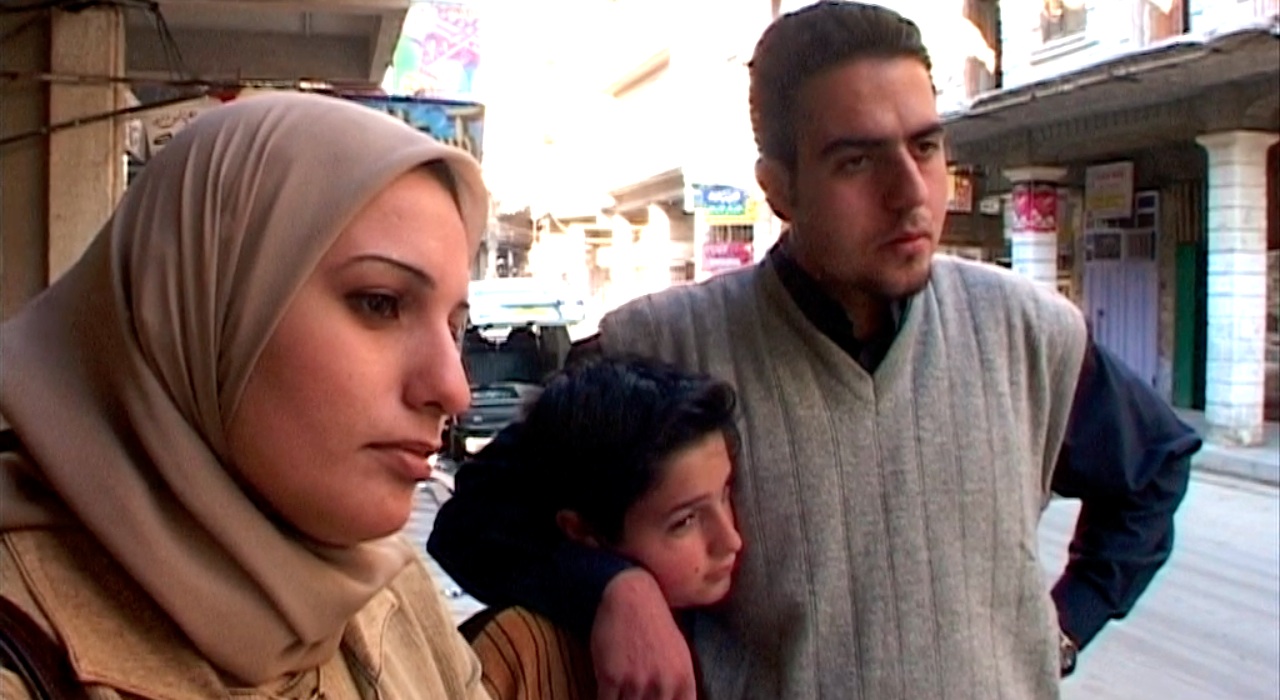
Homeland: Iraq Year Zero
2015 | Iraq, France | Dir. Abbas Fahdel | Producer: Abbas Fahdel
Every great pain has a before and an after. In any war, such pains are relentless in number. In February 2002, Abbas Fahdel, back in his native Iraq from Paris, started filming relatives as they dug wells and taped windows in preparation for an invasion. They’re filled with good humor, but prior bombings and embargo hardships mean they have few illusions about what’s to come. Spanning more than five hours and filmed with the unembellished sensitivity of a poet’s eye in crisis mode, Homeland: Iraq Year Zero brings us inside one family’s reality, not to argue ideology but rather to transmit bone-deep truths about humanity. It’s divided into two parts, one before Baghdad’s fall, with Saddam’s visage omnipresent in television propaganda, and one following, in a lethal chaos of American occupiers, ruins, and bandits. The forewarning of a tragedy sets the tone for heartache; the home-movie format extends an almost intolerable intimacy.
—Carmen Gray, film programmer, journalist, and critic
Qióngdǐng Zhī Xià (Under the Dome)
2015 | China | Dirs. Fan Ming, Chai Jing | Producers: Wu Hao, Yu Chenchao, Chai Jing
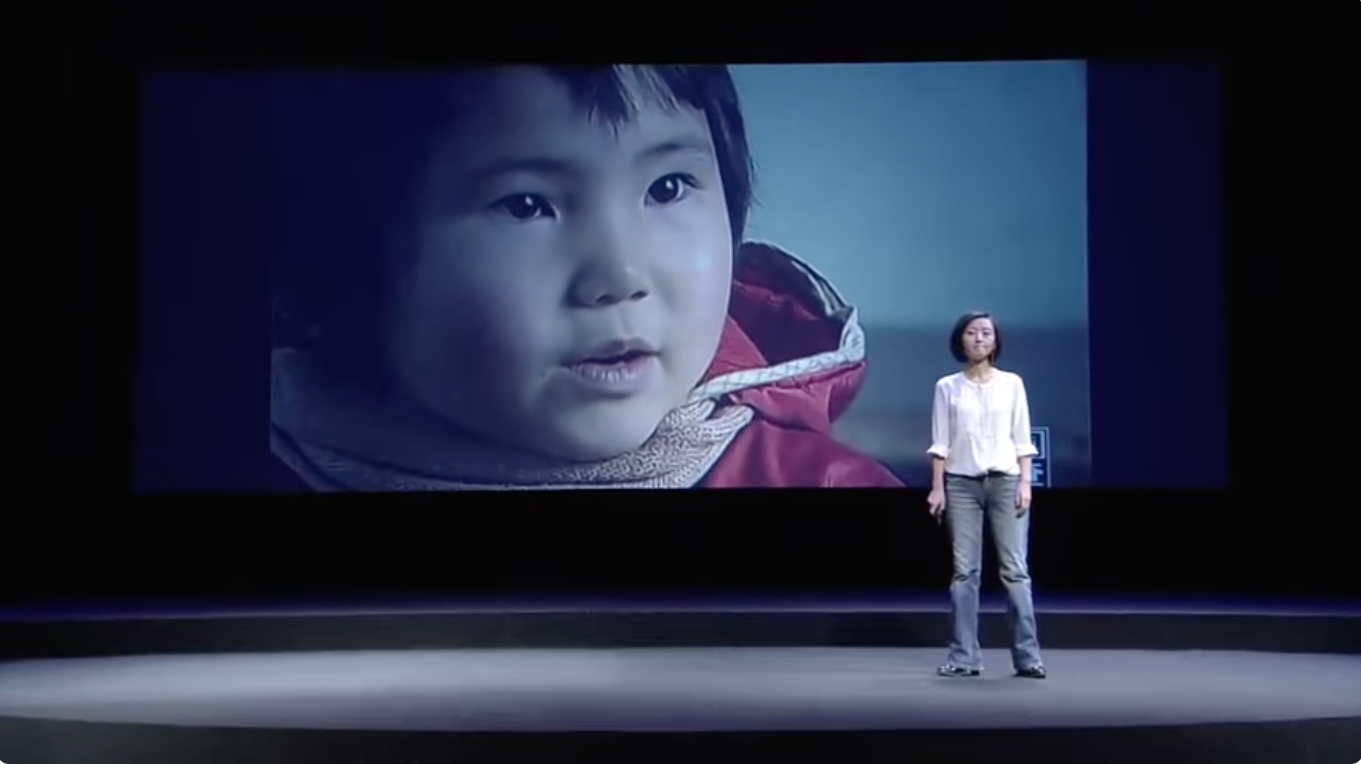
Self-financed, narrated by former CCTV investigative journalist Chai Jing, and released online, Under the Dome endures as one of the most consequential documentaries for China and social-issue filmmaking. Sometimes compared to An Inconvenient Truth, the film blends TED-style presentation with personal and news archives to expose and criticize state-owned energy giants and the government’s regulatory failures. Though it bypassed festivals entirely, its impact was explosive: after being first released on the website of the state-run People’s Daily newspaper, it was then released on Youku, Tudou, and Tencent, garnering 200 million views in three days, praise from China’s new environment minister, and a wave of mainstream coverage in Chinese and English—before it was swiftly censored and scrubbed from the Chinese web. While not the sole driver of China’s subsequent improvements in environmental policy, its brief, blazing life also marked a turning point for Chinese documentary just as censorship tightened.
—Kathy Ou, critic
Tempestad
2016 | Mexico | Dir. Tatiana Huezo | Producers: Nicolás Celis, Sebastián Celis, José Cohen, Joakim Ziegler, Øyvind Stiauren
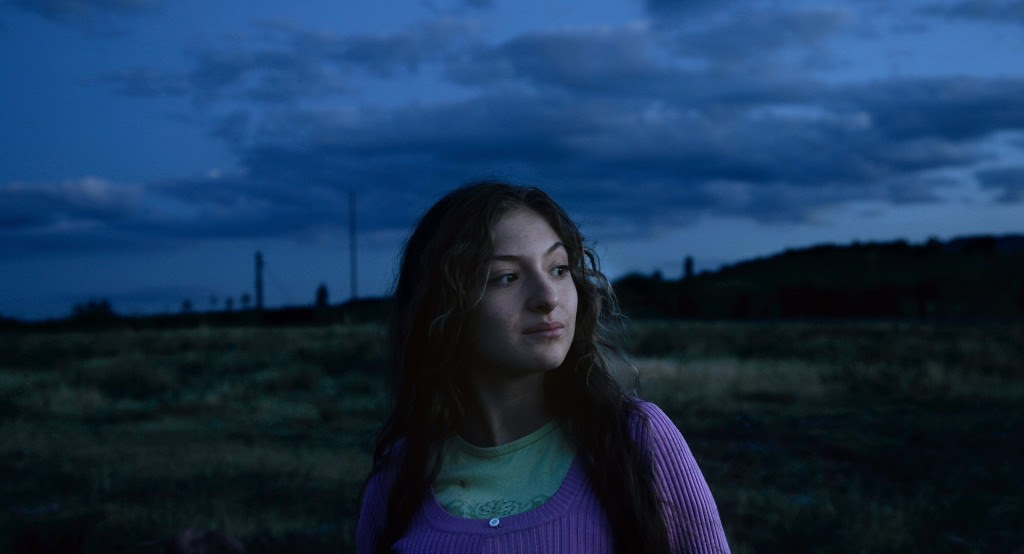
Tempestad threads together two seemingly disparate stories: Miriam has just been released from prison (after unfounded charges tied to human trafficking were dropped) and is embarking on a journey back home; meanwhile, Adela, a circus clown, spends her free time searching for her daughter who went missing over a decade prior. Their stories are offered up in voiceover as images of Mexican landscapes (mirroring Miriam’s travels) swirl in front of us. Their voices are the story, as is their visual anonymity; the two are emblematic of larger issues women face in Mexico (but, really, all over the globe). By the time the film arrives at its arresting final image, it’s clear Tatiana Huezo has carefully crafted a lyrical portrait of resilience whose political and emotional power comes not from didactic exposition but from imagery that captures the way these women weather a culture and a country built on cruel indifference.
—Manuel Betancourt, critic
Komunia (Communion)
2016 | Poland, Czechia | Dir. Anna Zamecka | Producers: Anna Zamecka, Zuzanna Król, Izabela Łopuch, Anna Wydra, Hanka Kastelicová, Mateusz Wajda
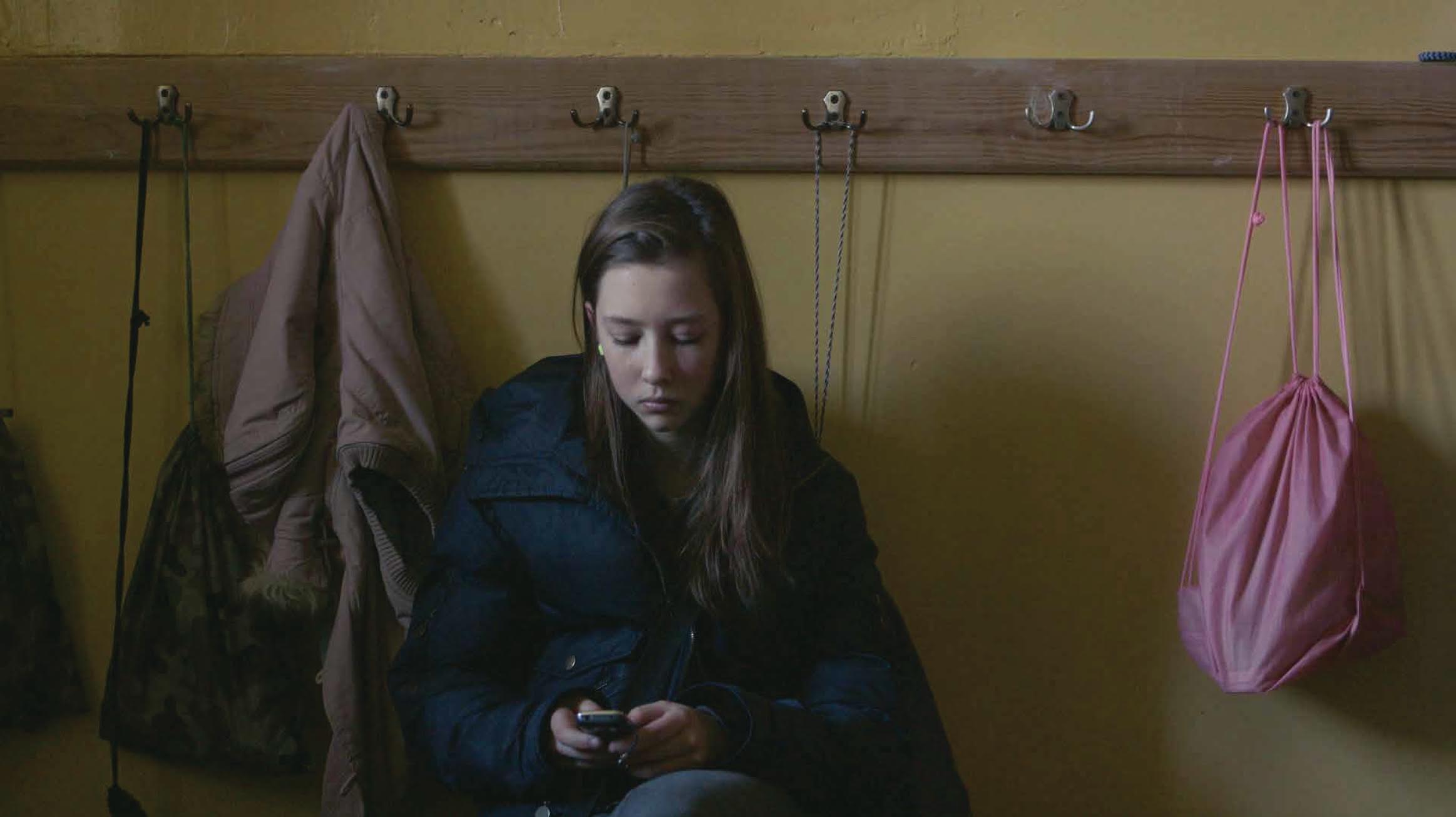
This very intimate Polish documentary, beautifully directed by a woman filmmaker and shot in a vérité style, follows an autistic boy as his sister prepares him for his First Holy Communion. The film is almost hypnotic in the way it draws the audience into the world of this extraordinary child. The main character is deeply charismatic and utterly absorbing on screen. Blending humor, tenderness, and emotional depth, the film offers a moving portrait of family bonds and of how a small family navigates a challenging yet profoundly meaningful moment in their child’s life. This is the kind of honest, unadorned storytelling I love, so rich with insights, and a powerful example of how much can be achieved with minimal resources.
—Basia Myszynski, filmmaker
The Task
2017 | USA | Dir. Leigh Ledare | Producer: Mindy Goldberg
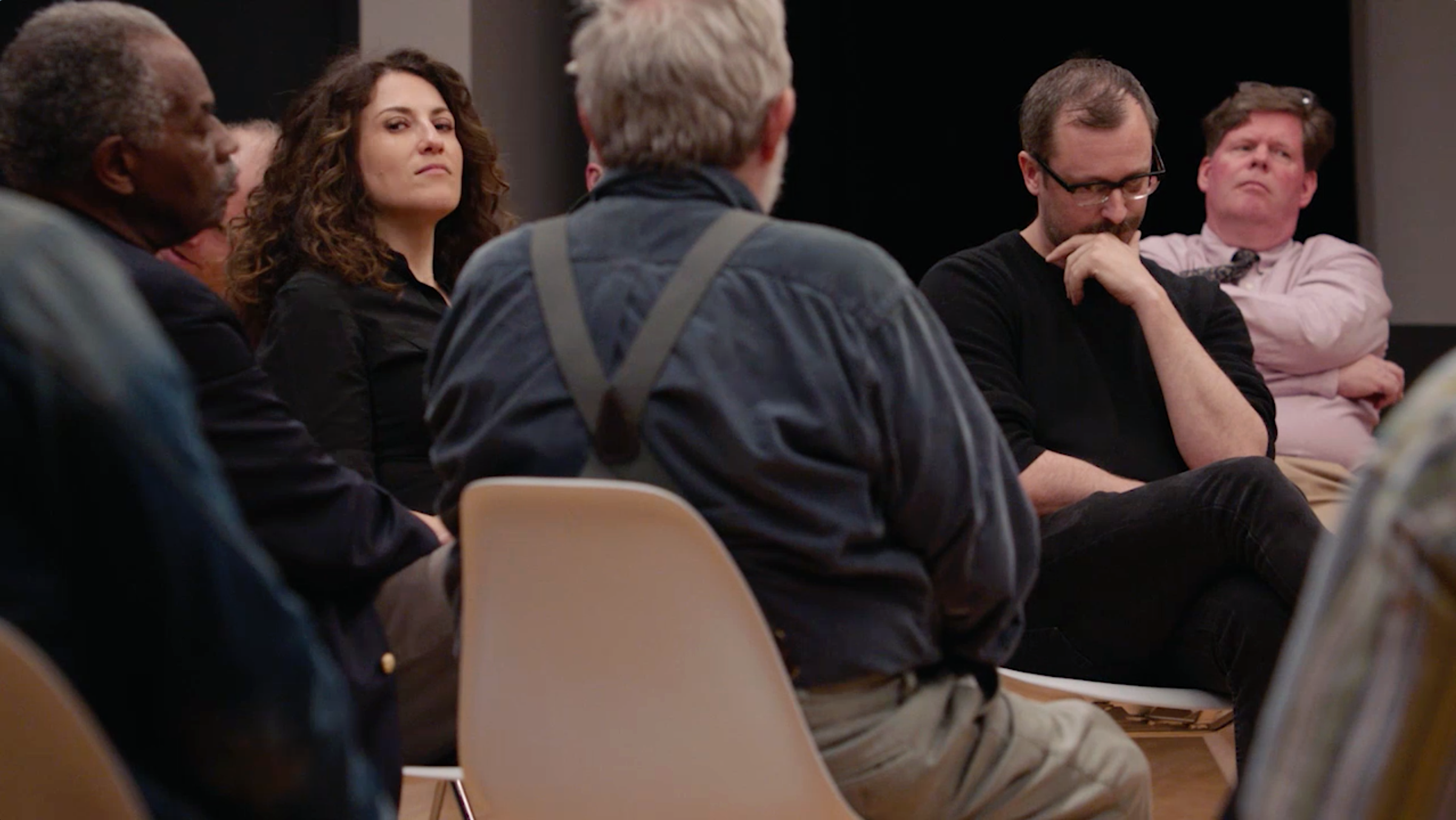
“The task is to examine one’s own behavior in the here and now,” informs one of the participants in the “group relations” conference filmed by Leigh Ledare for his 2017 film. Ledare drops the viewer into a large room at the Art Institute of Chicago—where 40 people (including participants, silent observers, and trained psychologists) are ostensibly interrogating group dynamics—and forces us to discover “the task” as we watch The Task, while editing his footage to feature maximum conflict. These formal choices ultimately serve to illustrate contemporary social distress. Ledare’s film, intentionally or not, captures America in a state of communication breakdown, where contemporary discourse among informed citizens serves only to reflect an unstable society in decline. The Task reveals an insidious truth about the modern world: language may have matured, but people have regressed, possibly rendering conversation a permanent dead end.
—Vikram Murthi, writer and critic
The Other Side of Everything
2017 | France, Germany, Hungary, Qatar, Serbia | Dir. Mila Turajlić | Producers: Mila Turajlić, Carine Chichkowsky, Hanka Kastelicová
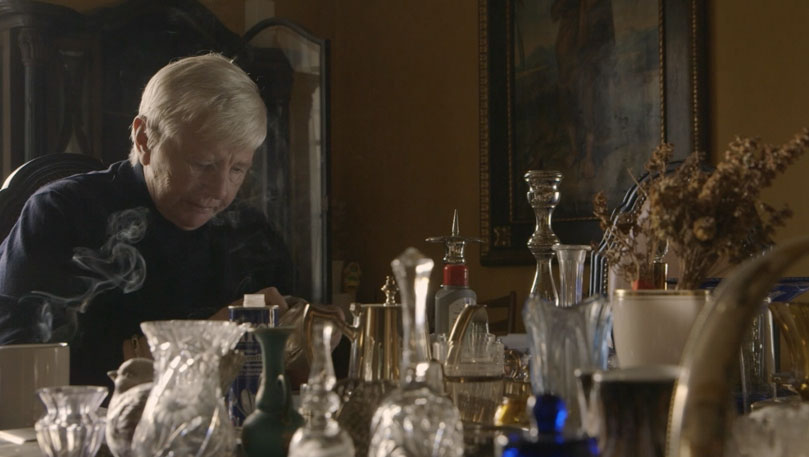
Mila Turajlić’s second feature-length documentary covered a decade of Serbia’s tumultuous recent history, addressing its more distant past through not only the Serbian filmmaker’s exquisite sense for the archive but also intimate interviews with her mother, a political activist and university professor who was herself the granddaughter of a political figure in the 1920s. The Other Side of Everything is a film that intertwines the personal, the political, and the historical in a way that transcends this cliché. Opening with a shot of the locked door in their family apartment (which was split in two by the communist government in 1946 to make way for another family) and spanning events in the new century, the film has not lost any sense of relevance—neither for modern-day Serbia nor for the many other countries that have undergone successive changes of government and political systems in a relatively short span of time.
—Vladan Petković, critic and programmer
Talking About Trees
2019 | Chad, France, Germany, Qatar, Sudan | Dir. Suhaib Gasmelbari | Producers: Marie Balducchi, Mahamat-Saleh Haroun, Melanie Andernach, Jeremy Delpon, Benjamin Delboy
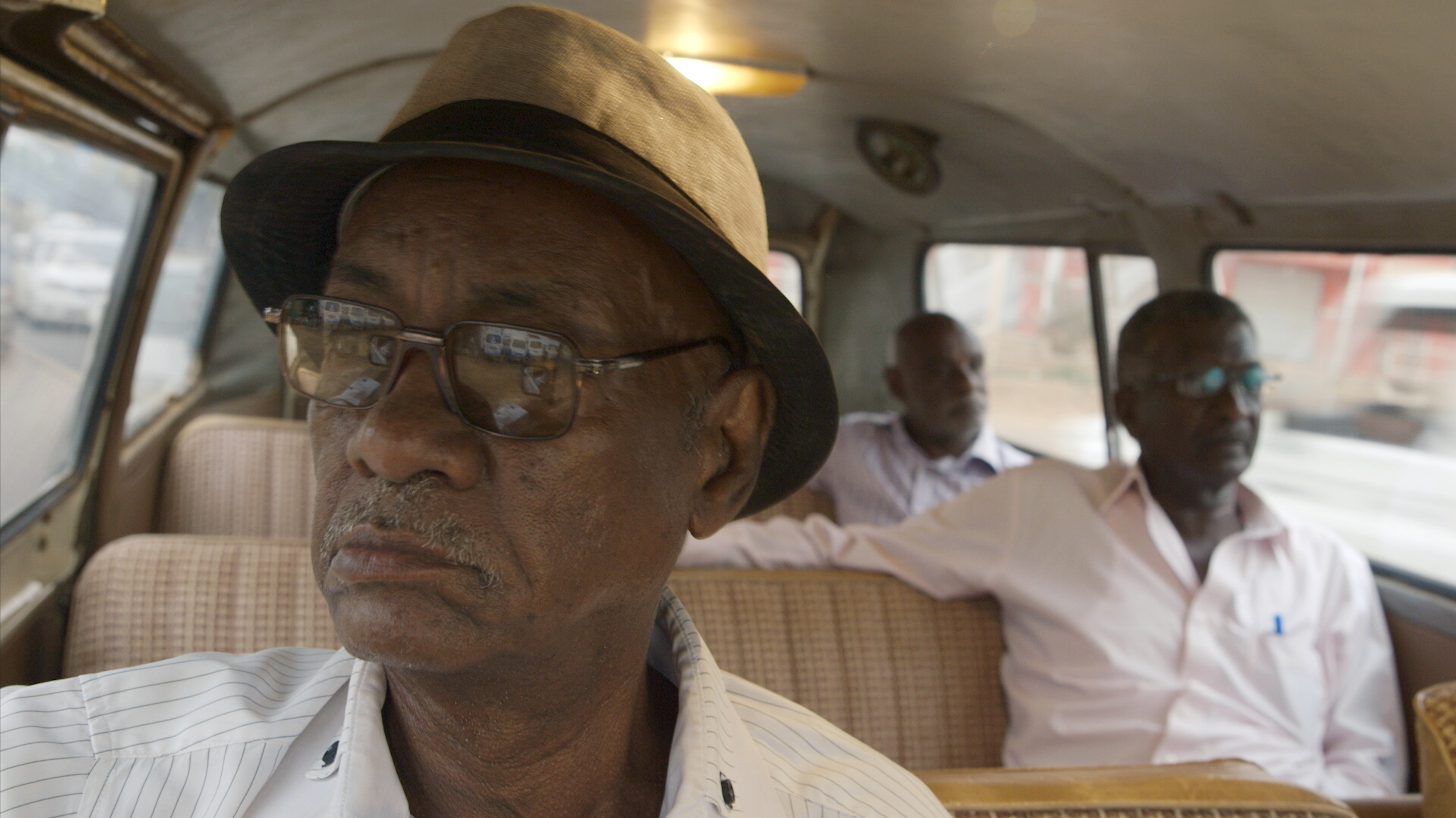
“Cinema in Sudan may be dead, but it did not die a natural death,” proclaims acclaimed filmmaker Ibrahim Shaddad at the start of Talking About Trees. Ibrahim and his comrades Manar, Altayeb, and Suleiman have been friends for nearly four decades. Together they comprise the Sudanese Film Group, a club where they spend more time talking about the future of cinema than they do lamenting the past. With a mix of historical archive of their past films and a quiet observational vérité filmmaking, Sudanese director Suhaib Gasmelbari deftly follows these legendary filmmakers through their intimate moments of friendship, persistent dark humor, and stubborn optimism as they work to revive an aging theater and breathe new life into the culture of cinema in Sudan in spite of a fraught political reality. At once meditative and rousingly hopeful, this documentary is one of the best films about cinema and the enduring love of film.
—Assia Boundaoui, filmmaker
How To With John Wilson
2020–2023 | USA | Dir. John Wilson | Producer: Brendan McHugh
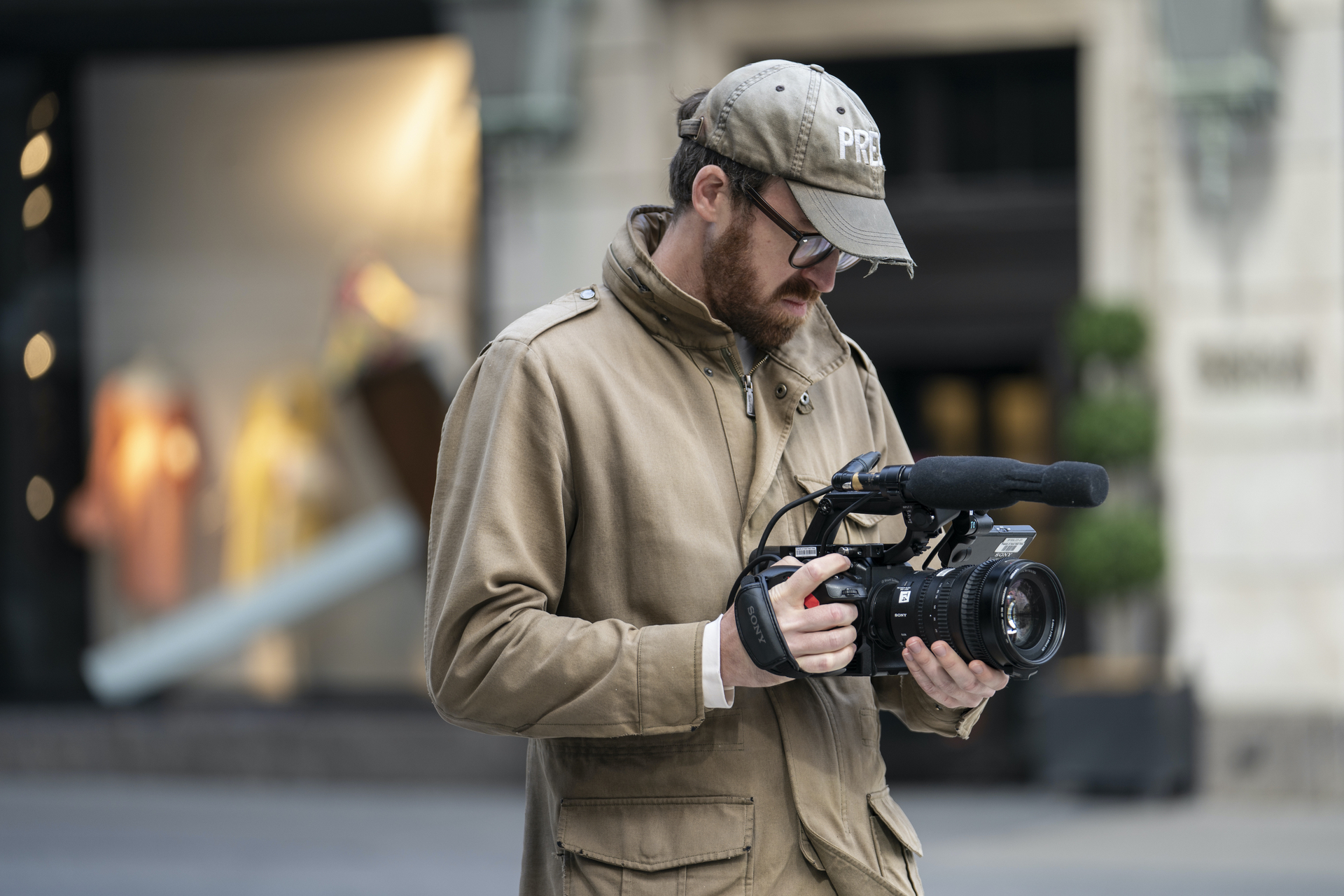
A group of Avatar superfans who ache to be ethnically Na’vi. A convention of referees that paradoxically doesn’t play by the rules. A man who believes foreskins can be regrown by using sheer gravity—and isn’t afraid to demonstrate it on camera. These are just some of the singular subjects featured in How To With John Wilson, though they’re never the actual focus of this sprawling, sociological three-season HBO series. Conceived by the titular compulsive shooter, each episode is framed as a tutorial for tackling quotidian issues: “How to Remember Your Dreams,” “How to Clean Your Ears,” “How to Make Small Talk.” The DNA of several iconic documentarians is legible here. Frederick Wiseman’s institutional eye; George Kuchar’s lo-fi video diaries; Penelope Spheeris’s subcultural fascinations. Yet the filmmaker’s monotone voiceover cadence, impeccable comedic timing, and trove of peculiar NYC B-roll distinguish How To as a work that’s distinctly Wilsonian.
—Natalia Keogan, critic
If From Every Tongue It Drips
2021 | Canada, Sri Lanka, UK | Dir. Sharlene Bamboat | Producer: Sharlene Bamboat
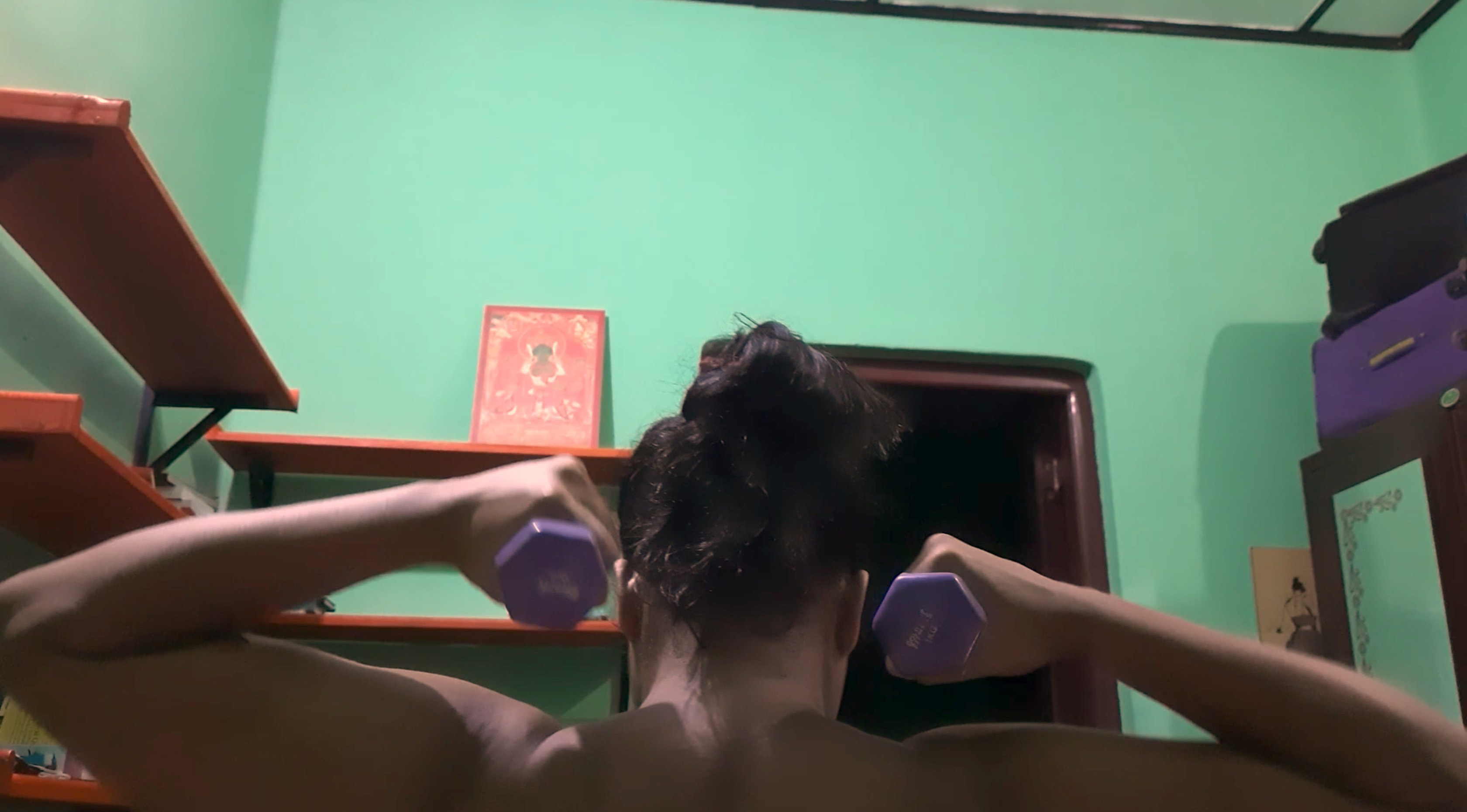
I often tell people I’m a documentary filmmaker who makes documentaries because I don’t like documentaries. Yet Sharlene Bamboat’s If From Every Tongue It Drips is one of the few films that makes me like documentary. It starts out in the intimacy of a relationship between two queer women in Sri Lanka filming their daily lives, who sometime directly address Bamboat, their friend in Canada, who is then heard speaking with her sound editor in Scotland, all of which is then captioned to hear many things at once, including the voices of crows. The film shows us that a documentary can actually render what it feels like to be in a friendship mediated by the act of filmmaking, which is also to say, to be entangled at a quantum level. Both a reminder and a forecast of what it’s like to touch at a distance, the film presents us with an actual sharing of intimacy.
—Jordan Lord, filmmaker

The Spectacular Failure of the Star Wars Hotel
2024 | USA | Dir. Jenny Nicholson | Producer: Jenny Nicholson
Jenny Nicholson’s film allows us to experience the now-shuttered Halcyon Starcruiser (“the jewel of the Chandrila Star Line”) in all its ambition and absurdity. Billed as a “voyage to the far reaches of the galaxy in legendary comfort and style,” the much-hyped Star Wars Hotel was actually a grey industrial building with windowless cabins costing about $2,400 per person for a two-night stay. Nicholson’s granular post-mortem balances deeply researched archival footage and boots-on-the-ground first-person reporting. Her doc is both a hilarious, hyper-obsessive look at an extremely niche corner of fandom as well as a sobering prophecy of the strange new varieties of late-stage capitalism still to come. Despite its four-hour runtime, the doc has amassed over 15 million views since its YouTube release in 2024. Every day I hear another cautionary tale about the difficulties indie docs have reaching their audience, so despite my own personal investment in the theatrical experience, Nicholson’s success here is plainly inspiring.
—Rodney Ascher, filmmaker
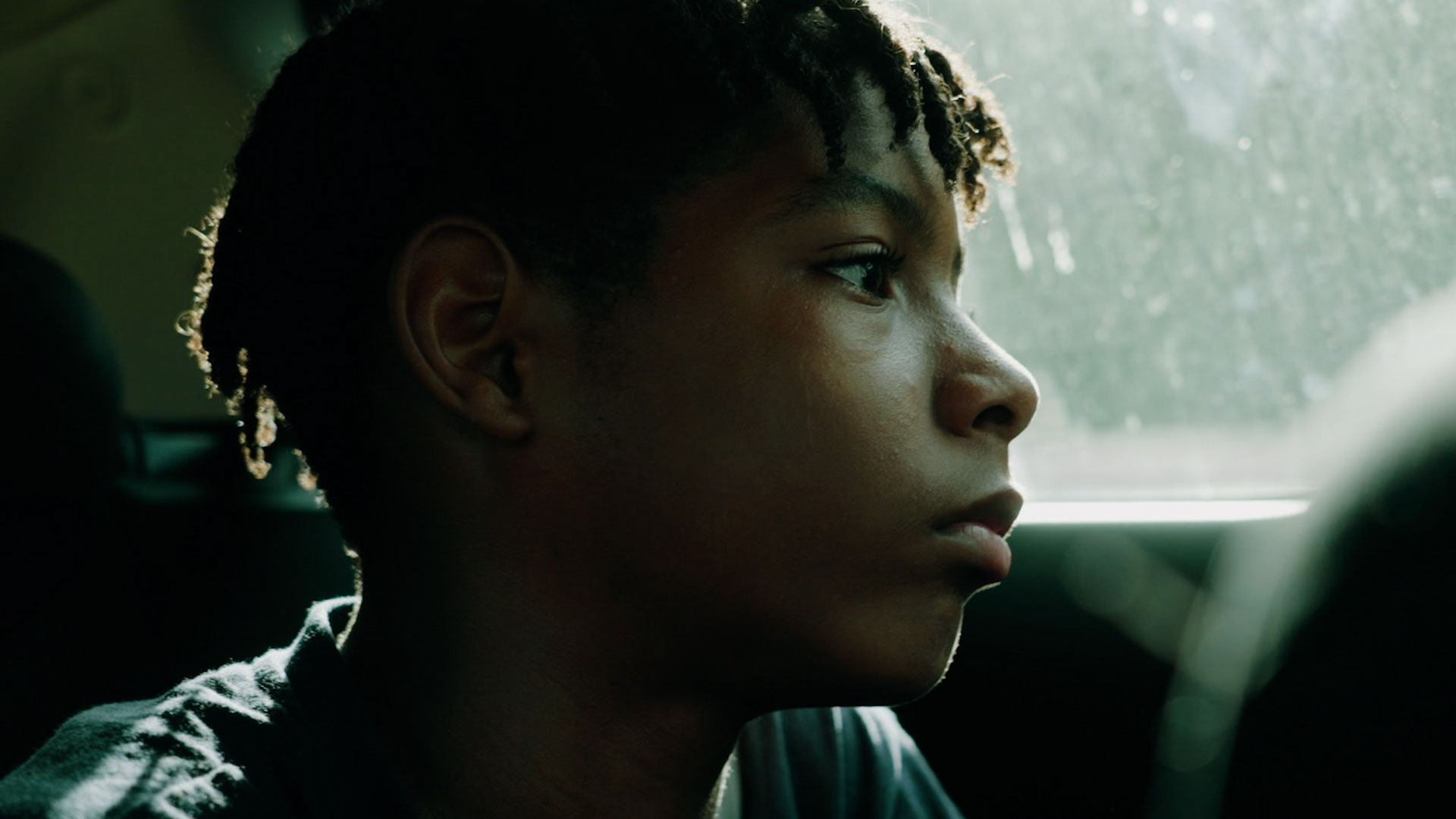
Kouté vwa (Listen to the Voices)
2025 | Belgium, France, French Guiana | Dir. Maxime Jean-Baptiste | Producers: Rosa Spaliviero, Olivier Marbœuf, Ellen Meiresonne, Damien Riga
Listen to the Voices is a quiet, penetrating film that gently unfurls before the viewer. At its center are a grandmother and her grandson in the wake of a family tragedy, as life transitions to a “new normal.” In beautiful French Guiana, the young boy visits his grandmother for the summer. Here we witness the depth of his relationship to her, to this land, and to the community that gathers around him. It’s a gorgeous and tender exploration of collective grief, mourning, and healing in the present that stretches across time and space. I have rarely seen a film so intimate and so deep, spiritually, intellectually, and emotionally. Maxime Jean-Baptiste has shown us what filmmaking as an act of accompaniment can look like. It is a place of learning, a place to rest, a portal. This is simply a stunning film.
—Sahar Driver, impact producer