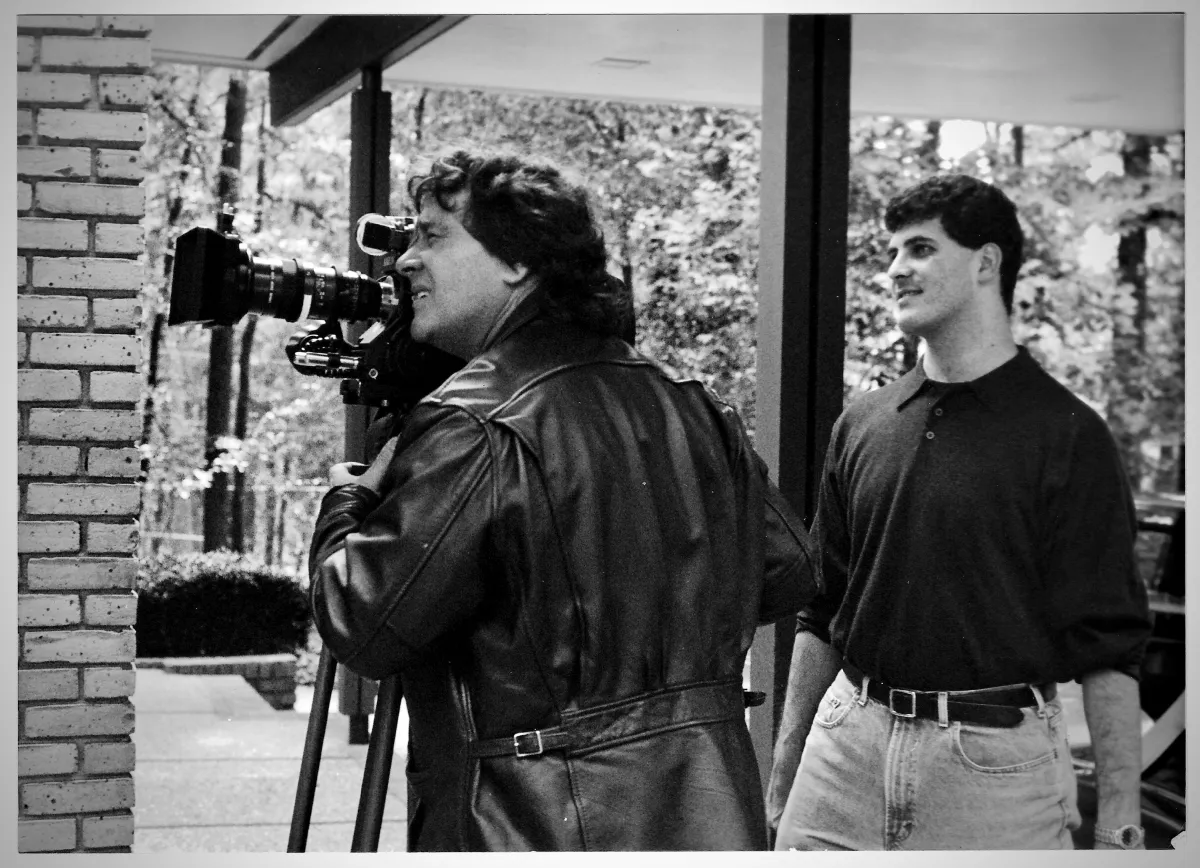


Kevin Keating, a leading documentary cameraman and fierce radical for almost five decades, died on May 3, 2026, of cardiopulmonary arrest in Brooklyn, after a brief incapacitating illness. He was 81 years old.
Starting in the 1960s, Keating worked on some of the best-known and best-loved documentaries of the era, including both Gimme Shelter (dirs. Albert and David Maysles and Charlotte Zwerin, 1970) and When We Were Kings (dir. Leon Gast, 1996).
Part of a cohort that first merged Direct Cinema observation and political advocacy, Keating is best remembered for his collaboration with director Barbara Kopple on two Oscar-winning features, Harlan County, USA (1976) and American Dream (1990). He continued in that vein with films like Fidel (dir. Estela Brava, 2001) and his own directorial debut, Giuliani Time (2006).
Richard Kevin Keating was born July 25, 1944, to Maureen Hallam of Mamaroneck, NY. He graduated from Morris Harvey College in West Virginia (later renamed University of Charleston). After college, he worked in the advertising department of the New York Daily News and for a commercial and industrial film producer in Manhattan. He married twice; both marriages ended in divorce.
Keating started doing documentary camerawork in the late ‘60s, including on photographer Bruce Davidson’s debut film Living Off the Land (1970). A career breakthrough came in 1969 when the Maysles hired Keating to help film the Rolling Stones at Madison Square Garden. Keating had mastered the Locam, a high-speed 16mm camera created for industrial applications, and used it to film Mick Jagger perform. Bowled over by the results of Keating’s ingenuity, the filmmakers created a slow-motion sequence set to “Love in Vain” that is a linchpin of Gimme Shelter’s first half. In his 1971 Rolling Stone film review, Ralph Gleason called the scene “a ballet … one of the most exquisite moments of film and music I have ever seen.”
A larger-than-life figure himself, Keating could recount decades’ worth of memorable encounters. Many stemmed from his documentary work: Keating had unfettered access to Nelson Mandela during his post-prison tour of America, and to Muhammad Ali during preparations for Zaire’s “Rumble in the Jungle.”
Not all his tales were work-related, though. Keating once brought a Manhattan jury around to acquitting a murder suspect, à la Henry Fonda’s character in 12 Angry Men. He spent a night partying with Jimi Hendrix. He was shot by a stranger in Puerto Rico, and shortly before his death revealed that the bullet was still lodged in his body.
Some of his stories mixed work and private life, such as the honeymoon, when Keating and his new wife drove around Belfast with Sinn Féin leader Gerry Adams, a potential documentary subject.
Keating’s no-holds-barred approach to life contributed to his success as a documentary cameraman. When shooting a film, Kopple recalled, “There was no way to stop him from doing what he needed to do—he cared so much about the people.”
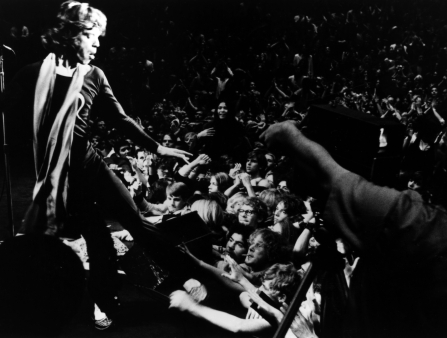
Gimme Shelter. Courtesy of Janus Films
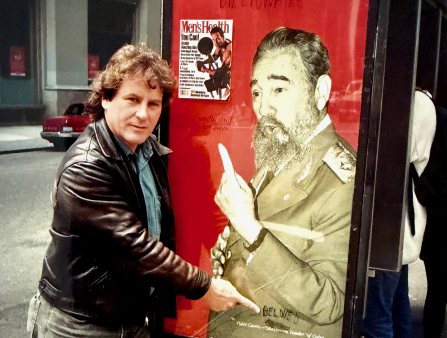
Kevin Keating on the streets of New York in 1995, with a Men's Health ad featuring Fidel Castro. Courtesy of photographer Elizabeth Beer
Filmmaker Tommy Walker (God Grew Tired of Us), a collaborator and one-time mentee, lauded Keating’s graceful camerawork: “He was Steadicam before Steadicam.” But Walker also cited the deep understanding of politics, story, and film that often allowed Keating to film without a director present and to capture extended, revealing scenes in a way that required no editing.
Keating’s film work was inextricable from his left-wing convictions. He could launch into political analysis of almost any situation, sometimes addressing a friend or colleague as “Comrade.” His radical self-education grew constantly, through his work and through voracious reading of both newspapers and books.
These intertwined commitments culminated in his sole directorial outing, the feature documentary Giuliani Time. A passion project begun early in Rudy Giuliani’s tenure as mayor and shot over many years, the film was released in 2005 as he was considering a run for president. The New York Times called it “nothing less than a full frontal assault on the civic deification of … Giuliani that occurred in the days after September 11,” and The Village Voice deemed it “an incisive portrait of power seizure and class combat.” For Tommy Walker, who worked on it, the documentary was a manifestation of Keating’s ability to navigate New York from the perspective of an underclass usually ignored by the mainstream media.
By some accounts, Keating’s political commitment was not without its costs, leading to clashes with colleagues and missed opportunities. “It was a very bittersweet life,” said Kopple. “He lived every day to the fullest, sometimes with wonderful things happening, sometimes with very raw things happening.”
Keating’s two daughters, Nuala Beer and Orla Keating-Beer, recall their father’s radicalism extending into his parenting. “Our bedtime reading was usually either something about the Irish potato famine or a selection from Karl Marx,” said Beer. The two reeled off a list of causes they protested about alongside their parents: police brutality and the shooting of Amadou Diallo, the contested election of George W. Bush, the Iraq War, and more. They remembered, as children, wondering how anyone could ever bring themselves to cross a picket line.
But Keating-Beer also recalled that her father, despite being a committed atheist, took them to many churches, synagogues, and mosques. “He went out of his way to help us understand things and connect to people,” she said, in a sentiment that could just as easily be applied to Keating’s film work. “He could appreciate the beauty in things… In some ways, that trumped everything else.”