Sound designers María Alejandra Rojas and Arturo Salazar put the ineffable into words
Feature
Well-regarded as a champion of independent and alternative cinema, South Korea’s second-largest festival proudly tackles the contemporary political
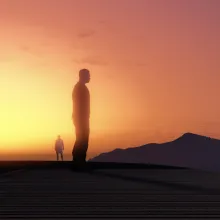
Pinny Grylls and Sam Crane’s Grand Theft Hamlet (2024) is the latest in a wave of documentaries shot entirely inside Grand Theft Auto or other video games. Playing a game is often no longer a solitary exercise but a social one, and we can understand games not as experiences separate from the “real” world but as an extension of it. Within that new paradigm, it makes sense that we’re seeing more documentaries explore game spaces as if they are physical ones. Professional filmmakers and computer engineers alike recognized games’ potential as playgrounds for formal experimentation years before this trend.

“C” is for Censorship: PBS Cuts ‘Art Spiegelman’ Doc and Other Dubious Acts at Embattled Broadcaster
Twelve days before Art Spiegelman: Disaster Is My Muse (2024) was set to broadcast on April 15 across PBS stations nationwide as part of its strand American Masters, the filmmakers were told that a 90-second sequence—which shows the famous artist discussing an anti-Trump cartoon he created for the 2017 Women’s March newspaper—would be cut from the documentary.
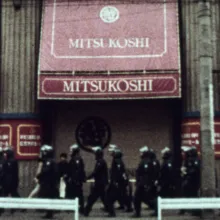
On October 8, 1968, a .22 caliber Rohm RG-10 handgun––colloquially known as a “Roscoe”––was stolen from a U.S. Naval Base in Yokosuka. Over the course of the next month, four shootings took place in Tokyo, Kyoto, Hokkaido, and Nagoya. The perpetrator, Norio Nagayama, was arrested and imprisoned the following April, two months shy of his 20th birthday. The cold, hard facts of this teenage murderer’s case served as the basis for Masao Adachi’s pioneering, hauntological landscape documentary A.K.A. Serial Killer, completed in 1969 but not shown publicly until 1975.

Over the past several years, when discussing the audience exodus to large platform streamers, I’ve encountered exhaustion from filmmakers, arts workers, funders, broadcasters, distributors, and exhibitors. Everyone wants to help fix the problem, but no one knows where to start. That’s because there are real issues that stack the deck against documentary filmmakers and our audiences. They can be classified into three main categories: funding, discoverability, and unequal market power.
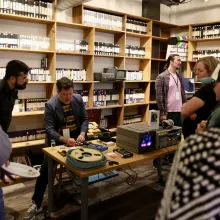
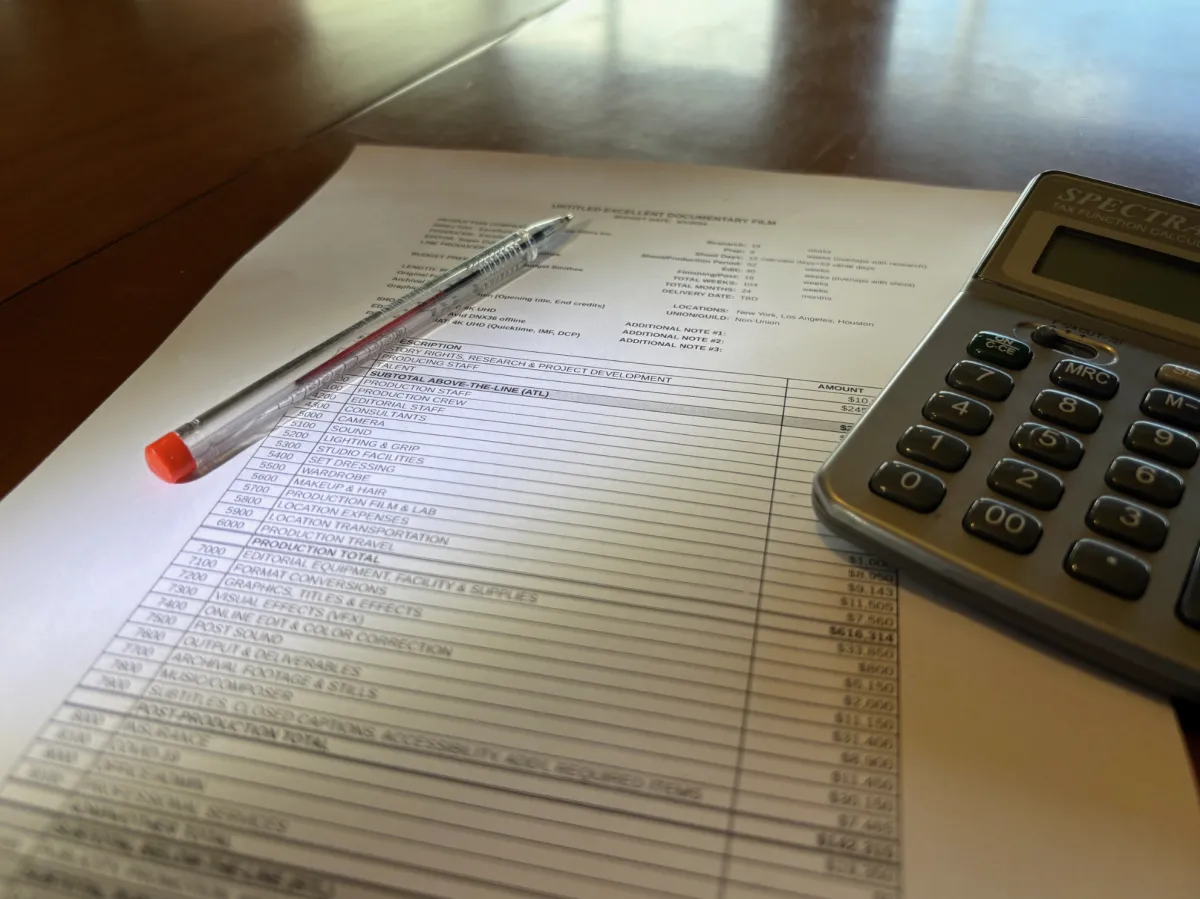
Access to archival media is often the result of the invisible work of teams of archivists and technicians who preserve content on fragile media and provide it to the public. Accessing archival media can be a financial challenge for documentary filmmakers because preservation of media is as time consuming and expensive (sometimes more) as shooting new footage. Logistically, making this material available is time consuming, expensive, and requires skilled team members to coordinate. Our upcoming research study, Mapping the Magnetic Media Landscape, a project of BAVC Media, examines U.S. collection holders’ needs and how we might support them. Because of our decades of work with and for filmmakers, we can put it bluntly: All of these costs are ultimately passed on to the filmmaker.
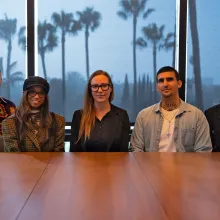
The narrative content division of independent music rights company Concord develops unique fare in a sea of music documentaries: Although any project about Stax Records or featuring their music would legally and logistically require Concord to be involved, 'Stax: Soulsville U.S.A.' is unique in that it actually originated from the company itself. Officially launched in 2021, Concord Originals produces and develops projects based upon the million copyrights the company owns and represents, such as the music of Creedence Clearwater Revival, Rodgers & Hammerstein, and Cyndi Lauper.

No summary could ever do justice to what Belgian filmmaker Johan Grimonprez has created through his audiovisual-textual collage Soundtrack to a Coup d’État (2024). The year 1960, famously called the “Year of Africa,” serves as the political, social, and cultural matrix on which Grimonprez builds his manifold narrative—moving back and forth in time and space, layering sound, image, and text with texture and depth. Now an Oscar nominee, the documentarian comes well-prepared, armed with the quintessential skills of an avid researcher and a seasoned orator, opening new tabs in our minds with each question while anticipating potential criticisms with humility and curiosity. Documentary magazine sat down with Grimonprez to discuss Soundtrack to a Coup d’État in his format of choice: a dialogue.

Although few people outside China have heard of it, the West Lake International Documentary Festival—locally known as IDF, which stands for “I Documentary Fact”—has quickly become the country’s leading documentary festival since its inception in 2017. The 2024 edition of IDF was held on the last weekend of October at the Xiangshan campus of CAA on the outskirts of Hangzhou, the city whose iconic lake inspired the festival’s name. Over the past few years, IDF has made a name for showcasing formally innovative and thematically diverse works from around the world. This dispatch covers: Anĝelo in 1948, Flames, White Snow, Yellow Roses, Blanket Wearer, and The Dream of Super Bridge.