The Hellenic Documentary Association (Hellas Docs) has asked IDA to add our voice to their "Culture Absent" initiative, and we are glad to do so. This week, IDA joined European documentary organizations at the Thessaloniki Documentary Festival to build stronger, more coordinated support for filmmakers around the world. The need for public investment in documentary — from broadcaster funding to institutional support — was a part of those conversations. Public media exists to serve the public. Documentary filmmaking is central to how societies document themselves, preserve collective memory, and
Latest Posts

IDA announced that Jonathan Gray, attorney and producer, Susan Margolin, producer and a pioneer of digital distribution, Jennifer Tiexiera, filmmaker and co-founder of co-founders of Lady & Bird, and Katie Townsend, litigator and previous Deputy Executive Director & Legal Director of the Reporters Committee for Freedom of the Press, have joined its board.
The following Glossary and Key Takeaways, organized as answers to 5 specific questions, were collected from the February 5 IDAinsight titled “Beyond the Distributor: Theatrical Exhibition for Independently-Released Films.”
Acquisition of Warner Bros. Discovery jeopardizes the future of documentary filmmaking.
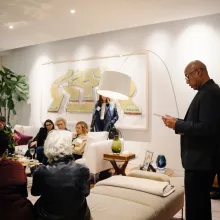
Late last year, IDA gathered documentary field leaders and friends, along with our Impact Circle community, at a private home in New York City for an intimate conversation about the state of our field. Raoul Peck spoke. You very likely know his work — including I Am Not Your Negro , which drew from James Baldwin’s writings to make one of the most compelling accounts of race and power in documentary, and most recently Orwell: 2+2=5 , an investigation, via George Orwell, into how authoritarianism corrodes language and reality itself. I’d had the chance to interview Raoul and producer Alex Gibney
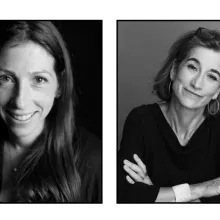
Welcome to IDA Member Spotlight, a monthly interview series highlighting IDA members and showcasing the depth and diversity of our community. This month, we had the pleasure of speaking with Yael Melamede and Hilla Medalia. Hilla Medalia is an Academy Award-nominated and Peabody Award-winning documentary filmmaker, producer, and writer whose work has been celebrated worldwide for its emotional depth, cultural insight, and narrative boldness. She has received six Emmy nominations for her films, and her projects have screened internationally in theaters and on major platforms, including HBO, MTV
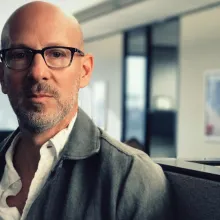
Welcome to IDA Member Spotlight, a monthly interview series highlighting IDA members and showcasing the depth and diversity of our community. This month, we had the pleasure of speaking with Joshua Seftel. Joshua Seftel is an Oscar-nominated and Emmy-winning director driven by the conviction that storytelling can promote empathy, connection, and change. That thread can be seen throughout his work, going back over 35 years. His latest documentary, nominated for a 2026 Oscar, All The Empty Rooms (Netflix, 2025), executive produced by Adam McKay and Steve Kerr, follows veteran CBS correspondent
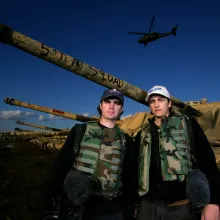
Welcome to IDA Member Spotlight, a monthly interview series highlighting IDA members and showcasing the depth and diversity of our community. This month, we had the pleasure of speaking with Craig Renaud. Craig Renaud and his late brother, Brent (aka the Renaud brothers), are best known for their vérité documentaries that tell the stories of people caught in the middle of conflicts around the world. Brent Renaud was pursuing this very mission when he became the first American journalist killed in Ukraine in 2022. The Renaud brothers learned how to survive in war zones while working with
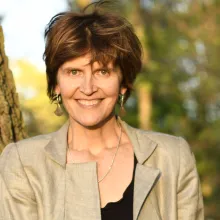
Welcome to IDA Member Spotlight, a monthly interview series highlighting IDA members and showcasing the depth and diversity of our community. This month, we had the pleasure of speaking with Alison McAlpine. Alison began her career as a published poet, playwright, and theatre director. The success of her commission to write a TV opera inspired Alison to make her first film, the award-winning mid-length Second Sight (2008). The BBC commissioned two versions. Ghostman of Skye (BB2, 2009) was “Pick of the Day” or “Critics Choice” in every major UK newspaper. Cielo , Alison’s award-winning first
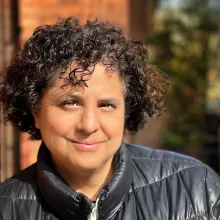
Welcome to IDA Member Spotlight, a monthly interview series highlighting IDA members and showcasing the depth and diversity of our community. This month, we had the pleasure of speaking with Rose Arce. Rose develops and produces films for Soledad O’Brien Productions, which elevates untold stories from marginalized communities. For her journalistic work, she was recognized with the Pulitzer Prize, three Emmys, the Peabody, the Cine, and other accolades. Her recent documentary work included the Oscar-nominated films The Devil is Busy (HBO, 2025) and The Perfect Neighbor (Netflix, 2025), which