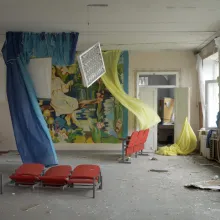
Documentary brings you capsule reviews of some highly anticipated films: Intercepted, The Last Republican, Night Is Not Eternal, and Nocturnes.
Latest Posts
As representatives of the Art House Convergence and International Documentary Association (IDA), we find the threat made by the mayor of Miami Beach to pull the funding and lease of O Cinema gravely concerning.

Biljana Tutorov is a writer, director, and producer of feature and documentary films, video works, and performances focused on women-driven stories that examine contemporary political reality, the state of democracy, and environmental protection. After graduating with a degree in Art History, Biljana studied Film Anthropology and Acting. She is the founder of Wake Up Films , an independent production company, as well as the founder and Program Director of CIRCLE , a training initiative that has been supporting women and gender-expansive filmmakers since 2018. Biljana is an IDA, Chicken & Egg
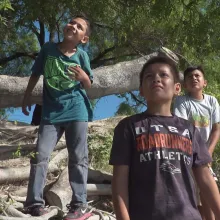
Following the death of one of her brothers, filmmaker Robie Flores returns to her hometown, Eagle Pass, on the Texas/Mexico border, wanting to turn back time. She collides with unruly experiences of adolescence that invite her to soak up the details of the home her late brother adored, and she ignored. 'The In Between' premiered February 10, 2025, on 'Independent Lens.'

Cinematographer and director Zac Manuel captures reality without the barriers of bulky equipment.

In its work with superstar athletes, Gotham Chopra’s full-service documentary studio maneuvers through tricky questions of access and creative control: Seven projects in production. Dozens more in development. And in the summer of 2024, three high-profile series about game-changing athletes: In the Arena: Serena Williams on ESPN+, Simone Biles Rising on Netflix, and Welcome to the J-Rod Show on FS1. Religion of Sports (RoS) is on a roll, having achieved a scale and consistency quite remarkable for a documentary production company.
In the weeks since the National Endowment for the Arts announced major changes to its application criteria, many nonprofits across the country have been anxiously awaiting clarity regarding what this might mean for their prospective Fiscal Year 2026 grants. In particular, in recent weeks nonprofit managers and filmmakers are scrutinizing how the NEA applies two recent Executive Orders aimed at shutting down DEI and LGBTQ+ programs.
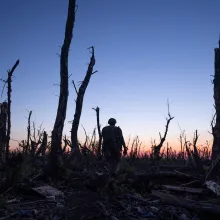
The lineup of the 2025 Sundance World Documentary section was more expansive in its geopolitical interest than last year’s. This year the dissenting subtext assumed functional pointedness, with each work making a broader statement against hostile governments. The theaters went packed and audiences cheered as the snow-clad Park City lent an otherworldly, almost mythical safe space to the independent makers and their works. Although there is speculation of the festival moving out of state in 2027, it is difficult to imagine a setting more suited to Sundance than Utah. The inconveniences, like the high altitude and the extreme dry weather, somehow added to the charm and made me feel, albeit perversely, like I had earned the right to be an attendee.

The outcome of the Platform Films meeting was the formation of the Miners’ Campaign Tapes Project, with 13 groups (including Platform; Trade Films in Gateshead and Newcastle; Chapter Community Video Workshop in Cardiff; Amber Films in Newcastle; Birmingham Film and Video Workshop; Open Eye Film and Video Workshop in Liverpool; Active Image in Rothertham and Sheffield; Films at Work in London; and the London Media Research Group) committed to producing footage interviewing miners and their supporters and documenting strike and fundraising activities. The material was then sent for editing down, mainly by Chris Reeves of Platform and Chris Ruston of London Video Arts, into what was originally planned to be 10 shorts and one feature-length work. The final project would consist of six short tapes.
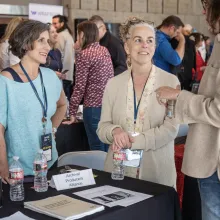
APA members Debra McClutchy and Eugen Bräunig are eager to discuss the comprehensive new guidelines they’ve co-authored, “Working with Archival Producers.” From breaking down their roles during various stages of production to ideal onboarding scenarios, the document is, first and foremost, a means to advocate for a tangible job description and reasonable workloads. Despite the desire to establish concrete parameters for this work, there is also ample room for adjustment. In our conversation below, McClutchy and Bräunig discuss how they came to co-author this new guideline, how it complements the APA’s previous document on GenAI best practices, and member feedback.