Tallinn Black Nights will be celebrating its first documentary competition, Doc@PÖFF, featuring 11 titles—all of them international or world premieres. Ahead of the festival, running this year from November 8-24, I spoke to Marianna Kaat, curator of this brand-new section. Kaat is a prominent documentary director and producer in Estonia and founded her own firm, Baltic Film Production, in 1998. Alongside filmmaking and programming, she wears many other hats, including that of documentary lecturer at Tallinn University’s Baltic Film and Media School. In this interview, Kaat unpacks the line-up of this year’s competition, its raison d’être, and the work she has carried out with her fellow programmers.
Latest Posts
Congratulations to the IDA grantees premiering at IDFA and DOC NYC this month! Be sure to catch their screenings if you happen to be in attendance at these festivals.

As a great-grandchild of Armenian genocide survivors uprooted from their indigenous lands, director Sareen Hairabedian carries a deeply personal connection to experiences of displacement and exile. This familial history of survival and loss has echoed through her work, informing her recent directorial focus on Nagorno-Karabakh, where ethnic Armenians continue to fight for their identity and self-determination amid a relentless cycle of conflict. In her assured debut feature, My Sweet Land , the filmmaker portrays this experience of limbo by turning her lens toward an 11-year-old ethnic
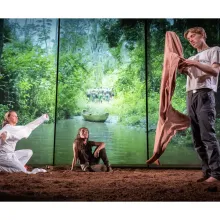
I first encountered the work of Milo Rau back in 2020, when his reimagining of the story of Jesus, The New Gospel, premiered in Venice. Set in the Italian town of Matera, where both Pasolini’s The Gospel According to St. Matthew and Mel Gibson’s The Passion of the Christ were likewise shot, the project was an on-the-ground collaboration with local residents, specifically African migrants locked in a real-life battle for human rights. Blurring fact and fiction, the film notably featured Enrique Irazoqui (Pasolini’s Jesus) and Maia Morgenstern (Gibson’s Mother Mary) alongside newcomer Yvan
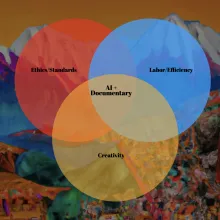
Welcome to The Synthesis, a new monthly column exploring the intersection of Artificial Intelligence and documentary practice. Over the next year, co-authors shirin anlen and Kat Cizek will lay out ten (or so) key takeaways that synthesize the latest intelligence on synthetic media and AI tools—alongside their implications for nonfiction mediamaking. Balancing ethical, labor, and creative concerns, they will engage Documentary readers with interviews, analysis, and case studies. The Synthesis is part of an ongoing collaboration between the Co-Creation Studio at MIT’s Open Doc Lab and WITNESS.
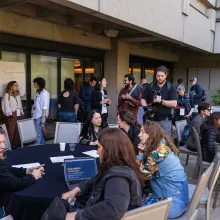
Fundraising for films is notoriously time-consuming and opaque. It can often seem like the dull but necessary part of making a film, a chore that some filmmakers worry about only after their film is already shot, when they realize they have to pay for finishing or recover costs. Others need start-up money to even get started. With sales growing more and more tenuous and grants being ultra-competitive, we look to learn from documentarians who recently funded their projects through donations and other more grassroots means. Documentary spoke with five projects in IDA’s Fiscal Sponsorship Program
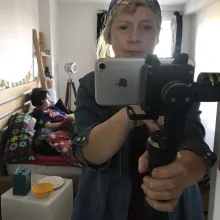
After spending her early career making documentaries for British television, primarily for the public service broadcaster Channel 4, Victoria Mapplebeck’s life took a sharp turn. Finding herself unexpectedly a single mother, she left the all-consuming job of a TV director and became a full-time film professor at Royal Holloway University as she raised her son Jim. With the advent of the smartphone camera, and the possibilities it held for telling intimate stories without the need for a big crew, Mapplebeck returned to filmmaking after a break of 12 years. In her first smartphone short, 160
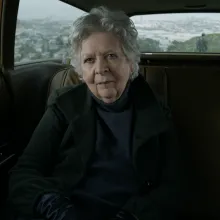
In 1975, an unusual would-be presidential assassin emerged. Sara Jane Moore, a middle-aged five-time divorcee and mother of four, a suburbanite turned informant for the FBI on various radical groups turned radical herself, attempted to shoot Gerald Ford. She served more than 30 years in prison before being released in the late 2000s. Robinson Devor is no stranger to unusual subjects. He’s previously profiled Los Angeles billboard queen Angelyne, the denizens of the Coachella Valley in Pow Wow (2017), and most infamously, a secret group of zoophiles in his debut doc feature Zoo (2007). In his
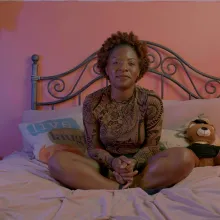
In Jessica Chaney’s I Am, five Black women directly address the audience to discuss their personal struggles with mental health—a therapist and a holistic life coach are both also on hand to help contextualize their stories, to demonstrate that no one need truly be alone in their personal journeys in anxiety, depression, and more. The film seeks to break down barriers in communication around how Black women specifically suffer these issues in this country. In collaboration with the 2022 Indie Memphis Film Festival, IDA presented a work-in-progress DocuClub screening of I Am.
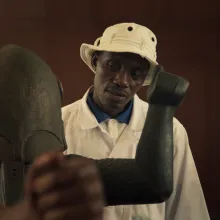
On March 15, 1990, French author and ethnologist Jacques Kerchache published a manifesto in Libération signed by 150 artists, scholars, and dignitaries imploring the Louvre Museum to open an eighth section devoted to the art of non-European civilizations, chiefly, Africa, Asia, Oceania, and the Americas. Developing upon the efforts of French intellectuals before him, who advocated for such inclusion of Indigenous art in cultural institutions, Kerchache wrote, “The masterpieces of the entire world are born free and equal.” The impact of the manifesto, neatly summarized by this adage, persuaded