Documentary is happy to debut an exclusive clip from Leslie Buchbinder’s 3D documentary Westermann: Memorial to the Idea of Man If He Was an Idea ahead of its premiere at Art21 at the Movies this weekend. The film profiles H.C. “Cliff” Westermann, a marine veteran whose anti-war stance and social commentary are humorously transformed in his art practice, and who influenced a generation of renowned artists. The film features interviews with Westermann’s friends, including Ed Ruscha, Frank Gehry, William T. Wiley, and Billy Al Bengston, along with his sister Martha Westermann Renner. Commenting
Latest Posts
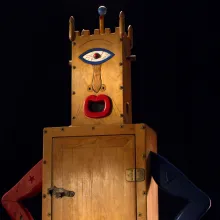
Exclusive: Clip from Leslie Buchbinder’s ‘Westermann: Memorial to the Idea of Man If He Was an Idea’
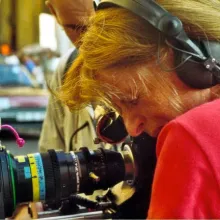
The two-night event, “ Documentary Presents Claire Simon in Conversation,” relaunches IDA’s longstanding Conversation Series with the most acclaimed documentary filmmakers of our times. On August 1, 2023, French filmmaker Claire Simon sat down with me in a free-wheeling discussion of her extensive body of work, its formal fluidity between documentary and fiction, and her belief in the capacity of every person to be the center of the story. The masterclass was followed by a sneak preview screening of her latest documentary, Our Body , before it opened in theaters in NY and LA. Both events were
Breakwater Studios is the first spotlight of Making a Production, our new strand of in-depth profiles featuring production companies that make critically-acclaimed nonfiction film and media in innovative ways. Mark Jonathan Harris digs into the company's history from its founding by Ben Proudfoot to its recent support of other directors, its branded content division, and the key creative characteristics of their award-winning short films.
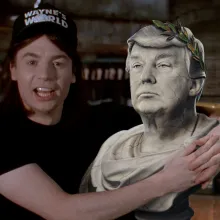
In Hello Dankness, the opening scenes of Joe Dante’s 1989 film The ’Burbs play out as usual—except Tom Hanks’s character has a “Bernie 2016” sign in his yard, while his neighbor has GOP elephant stickers on his windows. Annette Bening’s character from American Beauty (1999) drives by, an “I’m With Her” bumper sticker on her van. Wayne and Garth from Wayne’s World (1992) are now Donald Trump supporters rather than harmless, rock-loving goofballs. Trump’s election hits this world as a literal cataclysm, rendered via apocalyptic scenes from the apocalypse comedy This Is the End. These characters and many more from myriad film and television sources—ranging from Napoleon Dynamite to Jesse Eisenberg’s portrayal of Mark Zuckerberg in The Social Network (2010) sometimes crossing over with his character from Zombieland (2009)—collectively experience the 2016 election, Trump’s presidency, the COVID-19 pandemic, and the chaotic 2020 election.

María Luisa Santos is a Costa Rican director, editor and writer. She’s interested in stories about place, memory, and personal loss. Her latest short documentary, Direcciones, won Best Short Documentary at SFFILM 23’. She produced and edited the feature film Stay Here Awhile , which PBS acquired as part of the ReelSouth 2023 Series. Her work has been shown in The New Yorker , SXSW, PBS, Slamdance, New Orleans FF, SFFILM, and others. Read and see more of María Luisa’s work at www.marialuisasantos.com IDA: Please tell us a little about yourself and your profession or passion. María Luisa Santos
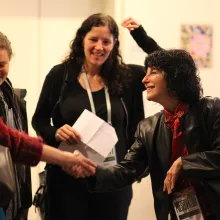
Over the past week, IDA collected tributes to Nancy Buirski from those who knew her and were supported, inspired, and encouraged by her artistry, infectious energy, and skill in creating spaces to bring together documentarians and uplift our work. These written memorials are introduced by Simon Kilmurry, who wrote a piece that outlines Nancy’s many contributions to the documentary field, from founding of Full Frame to her insightful filmmaking and deep interpersonal generosity. Nancy Buirski was a visionary in the documentary field—a champion of countless filmmakers when she founded Full Frame
Dear Readers, We are gearing up for the fall festival and awards bonanza soon, but we’re also doing our best to resist that gravitational pull and focus on films that are made in a defiantly independent spirit.
Black Public Media announced a new partnership with The Redford Center for its upcoming 2023 open call for production funding. BPM will award a total of $230,000 in funding for feature-length documentaries and documentary or scripted shorts in all stages of production. This year, the fund is focused on stories of how the climate crisis impacts people of African descent. According to the press release, “eligible projects may focus on how the crisis is being managed, climate education, environmental racism, health impacts, sustainable industries, climate policies, and solutions. We also
Today, the Berkeley FILM Foundation (BFF) announces that it has awarded a total of $200,000 in its 2023 grant cycle to 20 independent filmmakers and 5 student filmmakers who live, work, or attend school in the East Bay cities of Richmond, El Cerrito, Berkeley, Albany, Emeryville, or Oakland.
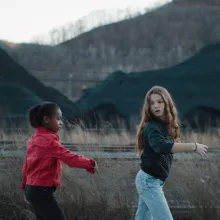
Though staying in her home region of Appalachia, documentarian Elaine McMillion Sheldon departs from her vérité beginnings in her latest feature, King Coal . Coming from three generations of coal miners, Sheldon has a personal interest in the wakes left behind from the industry that built the region, previously investigating the rise of black lung in her PBS Frontline/NPR collaboration “Coal’s Deadly Dust” (2019) or shining a light on the battle against the opioid crisis in her Oscar-nominated short film Heroin(e) (2017). But while collecting footage of rituals surrounding the legend of coal