
Mia Stewart’s upcoming 15-plus-years-in-the-making documentary, Searching for Onoda, deflates the heroic myth of Japanese holdout soldier Hiroo Onoda and tells the other side of the story. Both Arthur Harari’s 2021 Cannes-premiering narrative feature, 'Onoda: 10,000 Nights in the Jungle,' and Werner Herzog's debut 2022 novel, 'The Twilight World,' perpetuate the old myth.
Latest Posts

My name is Zaferhan “Zaf” Yumru (he/she/they), and I am the Director of Communications at IDA. Greetings to all IDA members, including those who joined us recently, welcome!
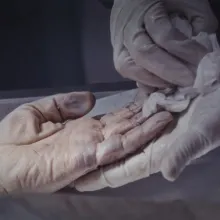
The new documentary by Italian directors Valentina Cicogna and Mattia Colombo, Pure Unknown, has its North American premiere at Hot Docs this week after bowing at Visions du Réel in Nyon. The co-directors follow Dr. Cristina Cattaneo, a forensic pathologist and anthropologist, founder, and director of LABANOF, the Laboratory of Anthropology and Forensic Odontology at the University of Milan.

During Ranell Shubert’s first eight-year span on staff at IDA, she has had the opportunity to work across many departments, giving her a unique perspective of the Association as a whole. From IDA Awards coordinator and coordinating education programs to overseeing the awards competition and education department, Ranell was also an integral part of the organizing team with Getting Real from its beginnings in 2014 and was the lead programmer for GR 2018. Ranell has since returned to IDA as the Nonfiction Access Initiative (NAI) Funds Program manager. IDA developed NAI to serve our mission of

The Black Association of Documentary Filmmakers West (BADWest) was formed in July of 2003 by iconic filmmaker St. Clair Bourne as a collective of documentary filmmakers of African descent working and residing on the West Coast. In 2004, BADWest hosted its first major event, a seminar on grants and proposal writing conducted by ITVS, held at Raleigh Studios in Los Angeles.
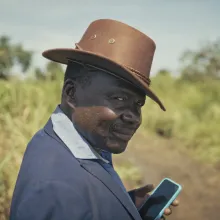
The new Danish-German production Theatre of Violence, co-directed by Denmark’s Emil Langballe and Poland’s Lukasz Konopa, recently had its world premiere at CPH:DOX in Copenhagen. This gripping, thoroughly researched documentary follows the Hague trial of Dominic Ongwen, the only Ugandan war criminal to be apprehended by the International Criminal Court (ICC). Alongside this main narrative, the filmmakers expand into connected issues, including the way European colonial powers exploited interethnic grievances by splitting African countries between themselves, the nature of crime and guilt, the
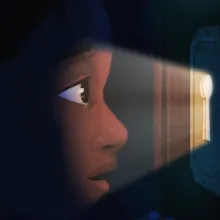
In 1993, Chuck Schultz received a call from an actress named Sharon Washington, who had been told by a friend that he could help her tell the story of how she grew up in a New York City library. He didn’t make a film at this time, but three years later they started dating. A few years after that, they got married. Then, in 2017, as Sharon began writing a one-woman show based on her life, Chuck thought this was finally the perfect opportunity to make a film. A mix of interviews, animation, and verité, When My Sleeping Dragon Woke follows Sharon as she faces the difficulties of creating a play
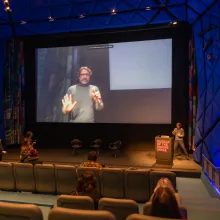
First Look, the Museum of the Moving Image’s (MoMI) film festival, annually introduces New York audiences to new cinematic talent and audacious experiments with form. Faithful to this mandate, this year’s 12th First Look, which ran from March 15 to March 19, showcased more than two dozen adventurous works spanning across geographies and genres. Two well-known fiction titles were the 2022 Belgian-French drama by the Dardenne brothers, Tori and Lokita, which also had its theatrical release in the United States in March, and Lola Quivoron’s Rodeo (2022) . The selection of short films also

Dear Documentary Magazine Readers, I’m Abby, the Director of Artist Programs at IDA, and I’m writing to introduce myself as the interim editor of Documentary magazine. First up: in this newsletter, you will find links to pieces from Documentary magazine’s winter 2023 issue, which focuses on reverberations from Getting Real '22. They include new provocations building off of conversations started at our biennial conference, attendee reports, and the publication of all three inspiring keynote talks from documentary stalwarts Nanfu Wang, Anand Patwardhan, and Erika Dilday.
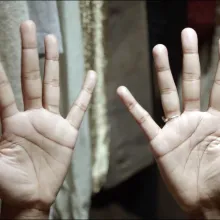
A caption in Alison O’Daniel’s film The Tuba Thieves (2023) refers to “quiet air”—a description of sound but also of sensation and (shared) substance, reattuning what it means to listen away from hearing and toward the material means by which listening occurs. When I experienced the film at MoMA’s Doc Fortnight 2023, fresh from its premiere at Sundance, the way I listened to this quiet air was not just through my ears. Balloons were distributed to each audience member, conducting vibrations into our hands. Held together with a room full of other people holding balloons, literally holding their