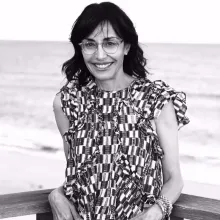
The documentary world lost a bright light on April 12, when Andrea Blaugrund Nevins died of breast cancer. Nancy Kates details her legacy as a tenacious, compassionate filmmaker who brought her optimism to every project.
Latest Posts
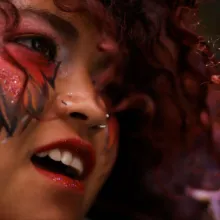
Documentary is happy to debut an exclusive clip from directors Vickie Curtis and Doug Anderson’s 'Comparsa'(2025). Is is the story of teenage sisters Lesli and Lupe in Ciudad Peronia, Guatemala as they rally other neighborhood teens to participate in a Comparsa, or series of performances similar to a carnival, to protest violence against women and children in their community.
It is all too easy to overlook nonfiction film at Cannes, where documentary is, if you go by institutional classification, largely a vehicle for chronicling the history of cinema. This year, the most compelling documentaries were found in the parallel festival showcases. The winner of the Œil d’Or (Golden Eye for the best documentary at Cannes) Imago, from Deni Oumar Pitsaev, was in Critics’ Week. Likewise, ACID had the most formally challenging documentary this year at Cannes, Sepideh Farsi’s Put Your Soul on Your Hand and Walk, and it was Directors’ Fortnight that premiered a Ukraine documentary with stunning and often inventive cinematography, Militantropos, by the Tabor Collective.

Documentary is happy to debut an exclusive clip from longtime creative and life partners Beth Stephens and Annie Sprinkle’s Playing With Fire: An Ecosexual Emergency, the third film in the pair’s trilogy of queer environmentalist documentaries. Forced to evacuate a fire in the Northern California redwood forest sanctuary where Stephens and Sprinkle live, they channel their energy into their “ecosexual” art, a conceptual activist framework that reframes human relationships to nature to emphasize reciprocity. Playing With Fire premieres at Frameline, San Francisco’s LGBTQ+ film festival, this Friday.
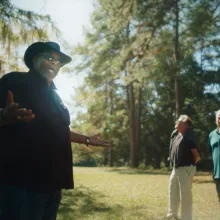
Suzannah Herbert’s Natchez is a multilayered, character-driven look at the titular town in Mississippi (U.S.), which is wholly dependent on a declining industry. In this case, the manufacturing is of whitewashed tales that have turned into hardened history. For generations, Natchez has been financially dependent on its antebellum tourism industry, in which hoop-skirted docents in grand mansions regale visitors with, as one knowing character puts it, a “Southern construct” that’s “used to sell tickets.” Just prior to the film’s Tribeca Documentary Competition premiere, Documentary caught up with Herbert (Wrestle) to learn all about her stellar sophomore feature. Last week, Tribeca announced that Natchez won not only the best documentary feature prize but also special jury awards for cinematography (to Noah Collier) and editing (Pablo Proenza).
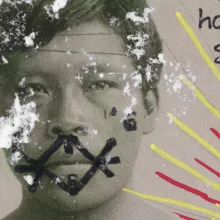
Close to the start of her hypnotic documentary The Memory of Butterflies, director Tatiana Fuentes Sadowski describes the moment that inspired the film. While looking through a selection of propaganda images taken by a company operating in the Amazon during the late 19th-century rubber boom, Sadowski came across a posed portrait of two young Indigenous men. In the image, the pair stands hand in hand dressed in Western clothes, stiff suits and ties, gazing at the camera with solemn, unreadable expressions: Omarino and Aredomi. Documentary spoke to Sadowski shortly after the film’s premiere at the Berlinale, where the documentary jury awarded the film a special mention, about the ethics of colonial archive, cinematic speculation, and sound as a threshold. This interview has been edited for length and clarity.
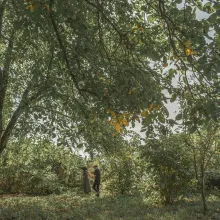
In Imago, the Chechnya-born filmmaker Déni Oumar Pitsaev journeys to a Chechen enclave in Georgia named Pankissi, where his mother has secured a plot of land for him to settle down. He spends time with his mother, with whom he’s close, and a hearty cousin and a friend, but he has barely seen his father since his parents divorced when he was nine months old. That’s on top of a childhood marked by his and his mother’s stays in Kazakhstan, Chechnya, and—when the Russians attacked Grozny in 1996—St. Petersburg, where she changed his Chechen name for his protection. After Imago won L’Œil d’Or, the best documentary prize of Cannes, Documentary interviewed Pitsaev about starring in a film about his life journey and the balance between pre-planning and responding in the moment.

This past March, we announced the launch of the Nonfiction Core Application 3.0, an update to the application template created to ease the application burden on filmmakers while reflecting evolving artistic and ethical practices. In our launch post, co-authored with Keisha Knight, we described the Nonfiction Core Application 3.0 not only as a shared resource, but also as a living document that should evolve with the field. Today, we are continuing that evolution.
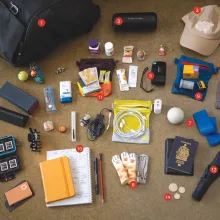
Cinematographer Iris Ng seeks meaningfulness in her experiences on set, on and off-camera.

Documentary is happy to debut an exclusive clip from Edivan Guajajara, Chelsea Greene, and Rob Grobman’s environmental documentary We Are Guardians (2023), which kicks off a U.S. theatrical screening tour this Friday in Los Angeles. The film, produced by Academy Award winner Fischer Stevens’s Highly Flammable in collaboration with Appian Way, Leonardo DiCaprio’s production company, is a comprehensive examination of the ongoing deforestation crisis in the Amazon Rainforest.