Essential Doc Reads is our curated selection of recent features and important news items about the documentary form and its processes, from around the internet, as well as from the Documentary magazine archive. We hope you enjoy! This one’s not about documentaries specifically, but Hyperallergic’s Nadine Smith writes an excellent piece documenting the evolution of military recruitment ad films in the USA, which often borrow from documentary practices. Though military newsreels and documentaries from past eras were their own kind of advertising, the film industry began producing literal
Latest Posts

IDA has announced grants, totaling $105,000, to five films through its Pare Lorentz Documentary Fund on the theme, “Challenging White Supremacy.” IDA also revealed the 2021 recipients of the Logan Elevate Grants to filmmakers Ilse Fernandez and Rintu Thomas, with a grant of $25,000 each.
Screen Time is your curated weekly guide to excellent documentaries and nonfiction programs that you can watch at home. The National Film Board of Canada’s annual American Indian Film Festival is back, and is running November 5–13, 2021. In its 46th year, all the films in the virtual program will be available for streaming in the US. While everything on the program is recommended viewing, don’t forget to check out the nominated doc features: Elle-Máijá Tailfeathers’ Kímmapiiyipitssini: The Meaning of Empathy, Campbell Dalglish, Dr. Henrietta Mann’s Savage Land, Tanya Talaga’s Spirit to Soar
Essential Doc Reads is our curated selection of recent features and important news items about the documentary form and its processes, from around the internet, as well as from the Documentary magazine archive. We hope you enjoy! Hyperallergic’s Peter Kim looks at two recent films—one documentary and a fictionalized narrative—and wonders why and how consent stops being a priority for filmmakers telling these stories. The one unanimous sentiment seems to be that this controversy has marred a meaningful opportunity for raising awareness and activism. However, the film’s political messaging is so

The 59th New York Film Festival, which ran from September 24 to October 10, was back home at Lincoln Center this year, as in-person screenings and talks took over Alice Tully Hall, Walter Reade Theater and the Elinor Bunin Munroe Film Center, along with nearby Damrosch Park. Partner venues, spread across the city and beyond, included Maysles Documentary Center, BAM Cinemas, Anthology Film Archives, Pleasantville’s Jacob Burns Film Center—all of which played selections of the festival’s lineup of narrative and documentary features and shorts, revivals, and experimental works. This year’s

Conceived by a group of high school students in 1997, the Jihlava International Documentary Film Festival (Ji.hlava IDFF) marks its 25th anniversary this year, having emerged as Czech Republic’s most important documentary film festival and one of the largest such events in Central and Eastern Europe. Committed to its motto, "Thinking through Film," Jihlava has been championing creative documentary cinema, bringing to audiences some of the best artistic and socially relevant films that both question and reflect on the current state of the world. Over the past quarter-century, Ji.hlava IDFF has

Screen Time is your curated weekly guide to excellent documentaries and nonfiction programs that you can watch at home. It’s the season for scary movies! Even as real life continues to be scarier than fictional tales of ghosts and ghouls, David Stubbs’ Belief: The Possession of Janet Moses manages to spook the most steel-hearted of audiences. The film follows the 22-year-old Janet Moses who, believed to be cursed, is made to undergo a most horrific exorcism ritual that later came to be known as “the Wainuiomata exorcism.” Watch it on Apple TV with the lights on. Although “The Rumble in the

37th Annual IDA Documentary Awards Announces 2021 Shortlists for Feature and Short Documentary Films
Introducing the shortlist for Best Feature and Best Short categories at the 37th Annual IDA Documentary Awards.
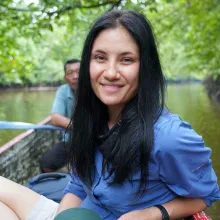
Allison Carden Hanes is a primatologist and an environmental filmmaker. Her work focuses on human-wildlife conflict, community-based conservation, ecotourism, deforestation, and Indigenous rights. Her Masters study of disease transmission between mountain gorillas and tourists in Uganda at Oxford Brookes University inspired her journey into filmmaking and Gorilla Trekking Film (Uganda). She also has a decade of experience in the nonprofit world and runs a women-led production company, One Health Productions. Hanes’ mixed European and Filipino heritage lends her a unique sense of empathy with
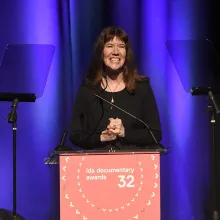
Diane Weyermann left us last week, but what she left behind—a staggering body of work that she oversaw, that has transformed the conversations on so many social issues; a formidable documentary program at Sundance; the preeminence of Participant Media as an impact strategist—has inspired the community to share their memories of her, and express their gratitude for her indefatigable fusion of passion, wisdom, verve and kindness that she brought to the hundreds of films and filmmakers she worked with. Diane traveled many thousands of miles in her career, seeking out the next wave of