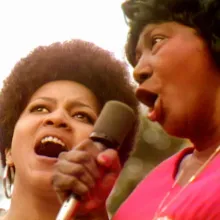
Summer of Soul (…Or, When the Revolution Could Not Be Televised) is the directorial debut of Ahmir "Questlove" Thompson about the Harlem Cultural Festival of 1969, which came to be known as "Black Woodstock." Six weeks. Six free concerts. 300,000 people. A feast for the soul, the concert featured otherworldly performances by Sly and the Family Stone, Stevie Wonder, Gladys Knight & the Pips, the Staples Singers, Mahalia Jackson, B.B. King, and Nina Simone, among other legendary artists. The footage from the Harlem Cultural Festival had lain dormant in a basement in New York; the late filmmaker
Latest Posts
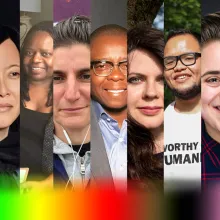
My queerness is the foundation of my creativity, political orientation and values. Being queer means being free and centering liberation in all actions and interactions. As a producer, every film I make is queer—even if it doesn’t center queer lives on screen. In this way, queer producing means centering liberation in all aspects of filmmaking: casting participants, crew and funder contracts, hiring, financial models, production, editing, publicity, sales and impact. When I talk about Multitude Films as a queer-led team, it doesn’t only mean that our three principal producers (myself, Anya

Screen Time is your curated weekly guide to excellent documentaries and nonfiction programs that you can watch at home. If you need to transport yourself to somewhere cooler amidst this hot summer we suggest heading to the theaters (only if you feel safe to do so) and watching Óskar Páll Sveinsson’s Against the Current. Follow the awesome Veiga Grétarsdóttir’s 103-days-long adventure as she becomes the first person in the world to attempt to kayak over 2,000 kilometers around Iceland, counter-clockwise and "against the current." This is a journey that is perhaps a little less difficult than
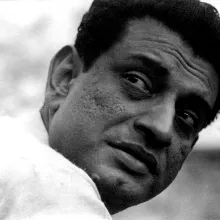
"On the 7th of August 1941, in the city of Calcutta, a man died," begins Satyajit Ray’s 1961 documentary Rabindranath Tagore (1961). The eponymous Bengali polymath—the "man" in question—was the first non-European to win the Nobel Prize in Literature and assumes a God-like spectre over the cultural conscience of Bengalis all over the world. As does Ray—the first Indian to ever win an Honorary Academy Award, in 1992. He directed 36 films, authored books, scored music, sketched, invented fonts, and wrote essays on film criticism, among other things. Lesser known among the many hats he donned, Ray

Elodie Edjang is a documentary story consultant and cinematographer from Atlanta, Georgia. She holds an MFA in Documentary Media from Northwestern University and earned a BA in Anthropology and a BAJ in Advertising from the University of Georgia. She is currently directing a short documentary about Kartemquin Films co-founder Gordon Quinn and working on an IDA fiscally-sponsored project, Queer Christians (working title), a feature-length documentary about queer Christian women of color. Elodie is a 2019 NeXt Doc Fellow and currently serves on the mentorship committee for the Alliance of

Essential Doc Reads is our curated selection of recent features and important news items about the documentary form and its processes, from around the internet, as well as from the Documentary magazine archive. We hope you enjoy! Business Doc Europe’s Nick Cunningham catches up with Sheffield DocFest director Cíntia Gil and talks all things documentary and film festivals. Closer to home, Gil is both amazed and dismayed that Black British docmakers have been generally overlooked within domestic festival programs and across distribution outlets. "I mean, I’m not British…but from a foreign

Michael Barnett’s Changing the Game, now streaming on Hulu, is a deep dive into the lives of three teenage athletes—Mack Beggs, Andraya Yearwood and Sarah Rose Huckman—each fighting to make their marks in their chosen sports—wrestling, track and skiing, respectively—while also having to fight for the right to compete on teams comprised of peers who share their gender identity. It’s a battle that would seem laughably nonsensical if it wasn’t so heartbreaking. This is perhaps best exemplified by the Kafkaesque vilification of Texas State Champion Beggs by the parents of female wrestlers, furious
Screen Time is your curated weekly guide to excellent documentaries and nonfiction programs that you can watch at home. For those of us who spent our summers poring over the comic strip Peanuts, the new documentary Who Are You, Charlie Brown? (director: Michael Bonfiglio; producer: Marcella Steingart) promises to be a trip down memory lane. Narrated by actor Lupita Nyong’o, the documentary makes for perfect multi-generational viewing and releases on Apple TV+ on June 25—just in time for summer vacations. In celebration of Pride Month, watch Ronald Chase's Cathedral (1971) and Parade (1972)

If CPH:DOX is any indication (and it usually is), 2021 seems set to see a transformation in sociopolitical nonfiction cinema. Rather than, say, merely probe the psychological motives behind intriguing bad apples, a slew of films are now choosing to use their characters as conduits—as a means to explore the systems enabling said individuals, and to instead hold our collective actions and inactions accountable. As Ed Snowden notes in Sonia Kennebeck’s United States vs Reality Winner (which screened in the "Justice" section), "There are going to be people, in every time and every place, who see
Screen Time is your curated weekly guide to excellent documentaries and nonfiction programs that you can watch at home. When filmmaker Sean Wang wasn’t sure of the whole adulting thing, he decided to call his middle-school friends. The result is an extremely well-edited collage of voices, animation, yearbook photos, and a lot of laughter. The New York Times Op-Docs' H.A.G.S. (Have a Good Summer) will make you laugh, cry, and feel nostalgic about what we thought were the best years of our lives. Or not. If you haven’t had a chance to watch Frederic Wiseman’s City Hall yet, head over to MUBI