Since the very dawn of documentary film, BIPOC have held immense value as documentary subjects, yet meaningful commitment to BIPOC filmmaker and executive careers has been fleeting. That discrepancy, which has become more pronounced in this corporate age of documentary, is unjust and unsustainable. It robs our community, the industry and audiences of the wider promise of creative potential and cultural impact. As the COVID-19 global pandemic rages on, the very possibility of who can be a filmmaker is further threatened. In this moment of existential uncertainty, BIPOC artists not only suffer a
Latest Posts
I’ve spent most of my career arguing that Mexicans should make Mexican films. I’ve felt angry whenever others made films about us because we were often misrepresented, misunderstood and reduced to cliché. I believe that the form of artwork—in particular, film—is a reflection of identity, and have fought to defend my work when it did not follow dominant trends. I still stand behind these ideas, but in 2016, my first son was born in San Francisco, and I decided to make a film about the world I was now in: a culture immersed in technology. I began my first “non-Mexican” film feeling guilty that I
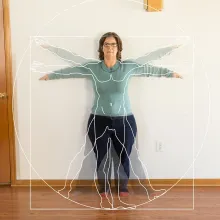
Julie Wyman is an award-winning filmmaker, performer, writer, and professor. Her previous works include Buoyant (2005), A Boy Named Sue (2000) and STRONG! (2012), all which have been showcased globally. Her current work, Untitled Dwarfism Project (in development), is one of the latest projects granted funding by the IDA Enterprise Documentary Fund. Wyman holds an MFA from the University of California, San Diego. She is currently an Associate Professor of Cinema and Digital Media at UC Davis. IDA: Your portfolio of work has primarily focused on the cultural and media constructions of body image
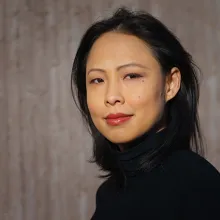
Poh succeeds Carrie Lozano who joined the Sundance Institute as Director, Documentary Film Program in Fall 2020.
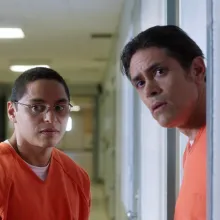
On the night of November 14, 2018, I was at LAX when my phone rang. Programmer Dilcia Barrera was calling to say that The Infiltrators would premiere at the 2019 Sundance Film Festival. It was a deep thrill. Cristina Ibarra and I had been working on our documentary for almost eight years and the call guaranteed, at a basic level, that The Infiltrators would be seen. Like all filmmakers, our goal was always to make a story visible. With this particular film, we believed that visibility might even make the difference between freedom and deportation, perhaps between life and death—but we never
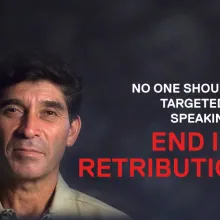
Dear Documentary Community: In 2019, many of you joined our call to federal immigration leaders to release Claudio Rojas, the protagonist of the Sundance Award-winning documentary The Infiltrators , from immigration detention in Florida. Claudio had been detained by ICE after the release of the film in early 2019, in which he spoke critically of US immigration policy. His detention and subsequent deportation were clear retribution for his constitutionally-protected use of political speech. Claudio’s lawyers continue to fight in court for his right of return to the United States, where he lived
Today’s documentary filmmakers are pitted against each other in fiercely competitive structures for funding, platforms, exposure and distribution. As a result, we tend to imagine our future in the context of a zero-sum fight for resources. Instead of merely asking for recognition from those structures, it is time to begin constructing something altogether new. Just like radical farmers once did. Modern-day community land trusts originated in an experiment during the civil rights era to build power and wealth among poor Black farmers. The idea was to collectivize land and resources for shared
As we sit in the “golden age of documentary,” the actual gold for many filmmakers, and especially for BIPOC, LGBTQ and disabled filmmakers, is specious. We glean this through a lot of anecdotes and what little data we have. The documentary field needs more researchers and policy makers to gather, demand, and make transparent hard data to reshape inequities in our field. If we cannot firmly identify what is fundamentally broken, our rebuild will be structurally unsound. In a 2018 “State of the Documentary Field” survey, the Center for Media & Social Impact found that 56 percent of respondents
I am here to provide a China perspective and a feminist point of view, raising some questions about the face of working women, and rather than addressing what we are concerned about as filmmakers, distributors and human beings in a COVID 19 pandemic and politically chaotic era.
IDA also announced that filmmaker Manuel Acuña would be the first recipient of the IDA Netflix Global Emerging Filmmaker Award - a grant of $25,000.