Screen Time is your curated weekly guide to excellent documentaries and nonfiction programs that you can watch at home. Premiering November 23 on Independent Lens, Erika Cohn’s Belly of the Beast tracks down a previously little-known story about enforced—and illegal—sterilization of female inmates in California's correctional facilities. For nearly 40 years after a 1979 law was passed in California banning enforced sterilization, this practice continued with impunity in prisons. Premiering November 17 on WORLD CHANNEL, Drew Nicholas’ Blood Memory follows Sandy White Hawk, who at age 18 months
Latest Posts
Essential Doc Reads is our curated selection of recent features and important news items about the documentary form and its processes, from around the internet, as well as from the Documentary magazine archive. We hope you enjoy! The New York Times’ Holland Cotter reviews two concurrent shows featuring the work of Indigenous American filmmaker Sky Hopinka. The video suggests that Mr. Hopinka finds himself, despite his ethnicity, having doubts about his role here. Supporter? Recorder? Critic? His panoramic shots of sprawling camps and wide-open landscapes catch the epic tenor of the occasion
I attended my first conference in yoga pants and a t-shirt with snacks and a coffee mug on my desk, a cat and dog, and stretch breaks whenever I wanted.
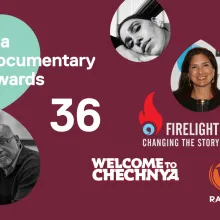
The International Documentary Association (IDA) has announced the 36th Annual IDA Documentary Awards honorary awards recipients.
Screen Time is your curated weekly guide to excellent documentaries and nonfiction programs that you can watch at home. November is Native American Heritage Month, and WORLD Channel and Vision Maker Media are commemorating with a rich showcase of work from the Indigenous community, entitled We Are Still Here. Among the films in the showcase include Warrior Women, by Getting Real 2020 Programmer Christina D. King and Elizabeth Castle, which, through the stories of Indigenous rights activists Madonna Thunder Hawk and Marcy Gilbert, explores what it means to balance a movement with motherhood as
Essential Doc Reads is our curated selection of recent features and important news items about the documentary form and its processes, from around the internet, as well as from the Documentary magazine archive. We hope you enjoy! The New York Times Magazine’s David Marchese profiles teenage climate change activist Greta Thunberg, in conjunction with Nathan Grossman’s forthcoming documentary, I Am Greta. I hope it can be a bridge for people to understand that we are in a crisis. I would maybe like it if the movie was less focused on me and more focused on the science. But I understand that it’s

The International Documentary Association (IDA) announced the appointment of five new members to its Board of Directors: Hallee Adelman, Grace Lee, Al Perry, Amir Shahkhalili, and Marcia Smith.
Director Zeshawn Ali and producer Aman Ali premiered their first feature-length documentary Two Gods at Hot Docs in June in the midst of a global pandemic and a swath of uprisings for racial justice. The film takes you to Newark, New Jersey, where Hanif, a Muslim casket-maker and ritual body-washer, finds purpose and spiritual grounding in his work. He transforms that purpose into mentoring younger men in the community, specifically his son, as well as two other charges, Naz and Furquan. Together they learn from each other about life and life’s lessons and what the future may hold. Two Gods
Screen Time is your curated weekly guide to excellent documentaries and nonfiction programs that you can watch at home. The Washington Post presents America’s Pandemic, a three-part documentary series by Whitney Shefte and Jorge Ribas that explores a failed response to the coronavirus pandemic that has claimed the lives of over 225,000 Americans, despite decades of preparation in Washington, DC. Making its broadcast premiere November 8 on National Geographic, Ron Howard’s Rebuilding Paradise takes viewers back to the morning of Nov. 8, 2018, when a devastating firestorm engulfed the
Essential Doc Reads is our curated selection of recent features and important news items about the documentary form and its processes, from around the internet, as well as from the Documentary magazine archive. We hope you enjoy! On her website shondaland.com, TV superstar showrunner Shonda Rhimes interviews filmmakers Dylann McGee and Sara Wolitzky, the duo behind the new PBS series Not Done: Women Remaking America, about the power of the women’s movement over the past five years. But because this documentary was covering a chunk of recent history, we kind of we knew what we were taking on