

If you come upon David Borenstein and Pavel Talankin’s film Mr Nobody Against Putin (2025) on Facebook and Instagram, you might be confused by a small quirk in the title. Posters and hashtags for the film spell it out as Mr Nobody Against Put_n or Mr Nobody Against Put*n—as if the Russian president’s name is a dirty word. Well, according to Meta’s ad restriction guidelines, it is.
According to digital film marketing experts, there are many keywords and images, particularly on Meta’s Facebook and Instagram, that will automatically raise red flags in paid promotional posts across social media platforms, requiring users to go through extra hoops or appeals to be approved, if at all. In addition to names of heads of state, democracy and abortion are also major flags, while war, fascism, and genocide may be problematic, too. To be clear, paid promotions are posts that filmmakers or companies pay extra to elevate through Meta’s ad manager, whereas organic posts—an individual’s or companies’ unboosted content—do not face the same level of scrutiny.
Such restrictions, in varying capacities, have been in place for years. They were particularly robust in response to the rise of misinformation that occurred around the 2016 U.S. presidential election and during the COVID pandemic. Content moderation and advertising regulations on social media platforms have existed ostensibly to protect users. However, it has also presented challenges to documentary filmmakers, whose work has repeatedly gotten caught in the crossfire of the algorithmically driven restrictions.
Even though Meta declared an end to “fact-checking” and “censorship” across its platforms in January 2025, it continues to have strict policies in place that limit paid promotional content that is at the core of a lot of documentary filmmaking: what Meta labels “social issues.” By all accounts, Meta remains one of the most rigid platforms, especially compared to Google and YouTube, while TikTok is particularly sensitive to any material that could be construed as violent or sexual. (In contrast, many marketers have left X, formerly known as Twitter, for a host of reasons, including “brand safety concerns” related to the presence of pornography and malinformation that could appear beside their content.)
“We see that the Meta landscape is changing, but it’s not always logical,” says Joanna Solecka, co-owner of the European digital marketing agency Alphapanda, which worked on the campaign for Mr Nobody Against Putin. “If human rights and democracy are flagged more than hate speech, that raises questions,” she continues. “Why does something get past the filters and why does something not get past? You often never know, and at Meta, you never get to talk to people to find out why.”
The automated Meta messaging can also get “nasty,” she says. While working last year on the promotion of Viktor Nordenskiöld’s The Eukrainian (2025), which follows Ukraine’s deputy prime minister, “we had such a strong reaction from Meta that they blocked us as a company,” she says. The two individuals responsible for placing ads in the Meta Business Suite for Alphapanda were locked out of their accounts for a few weeks. “We tried to change the copy, but nothing worked,” says Solecka. “The title itself was definitely a flag for them, so after this lesson, we were not going to use the word Putin.”
“You really have to be inventive,” she continues. While marketing another documentary called Girls for Tomorrow (2025), a French film about female college students at Barnard College, Solecka says, “We had female power as a hashtag, because it’s more acceptable than women’s rights, for example,” she says. “You never know when the censorship is going to happen.”
While such obstacles, and the workarounds that marketers have used to get around them, may sound like a mere annoyance, the roadblocks can be particularly challenging for small distributors or filmmakers working on their own grassroots release campaigns.
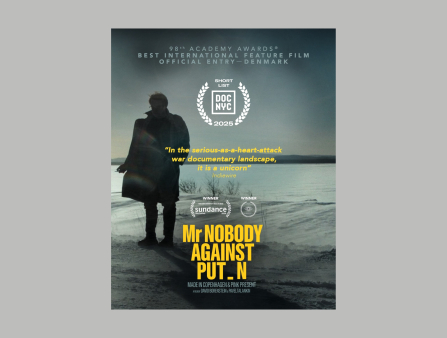
Approved ad for Mr Nobody Against Putin. Courtesy of Alphapanda

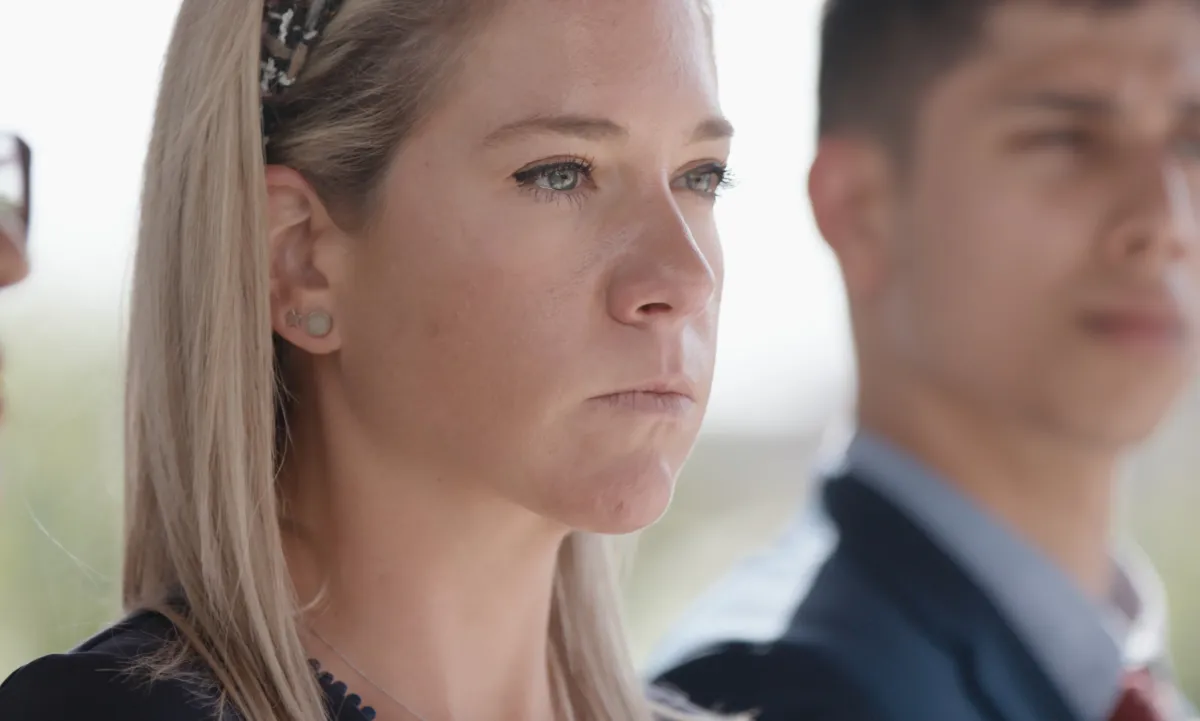
Still from Mr Nobody Against Putin. Photo by Pavel Talankin. Courtesy of Kino Lorber
Meta Treats Social Issue Docs Like Campaign Ads
Meta’s ad policy specifically lumps together “ads about social issues, elections or politics” into one category, which presents challenges for social-issue documentaries, because the platform treats political ads—for example, those that are made to support a particular candidate—exactly the same as ads that support a social issue or cause. Though all advertisers need to adhere to basic Meta’s Community Standards, ads about “social issues, elections or politics” require further restrictions.
In the United States and most countries around the world, the list of social issues that are considered in determining whether ads require additional authorization include “Civil and social rights,” “Crime,” “Economy,” “Education,” “Environmental politics,” “Guns,” “Health,” “Immigration,” “Political values and governance,” and “Security and foreign policy.” (In the European Union and some other countries, the list is slightly different, with Education and Guns not included.) Even though Facebook has policies in place that outline an ad authorization process in these cases—which sometimes require additional steps, such as “paid for” election-style disclaimers, requiring users to verify their identity and include such identifying information in their ads—some digital marketing strategists say their content still gets blocked even after following all the rules.
Connie Field, director of the documentary Democracy Noir (2024), who had an ad for her film rejected in December 2025, was surprised to discover democracy was flagged as a “dirty word,” she says, and that Meta had deemed the promotion “somehow about political campaigning rather than a definition of a political system.”
For Meta’s algorithms, there’s also often a lack of distinction between a film that sets out to address a political issue and the controversy itself.
For example, the promotional campaign around the documentary Another Body (dir. Sophie Compton and Reuben Hamlyn, 2023, an IDA Enterprise Fund grantee), about a college student who uncovers the dangers of deepfake pornography, was continually rejected by Meta for alluding to deepfakes, even though the film and its materials are critical of them.
According to Kyle Greenberg, head of marketing and distribution at Utopia, which released Another Body, they preemptively blurred out a lot of the material from the theatrical trailer that implied any nudity or pornography, but even their self-censored trailer was rejected by Meta for violating ad policy. “It was at that point that we got a very stern notice from Meta that said our ad manager could be disabled or suspended if the ad was rejected again following an appeal,” he says.
The film’s producers went back to the drawing board and produced a new 30-second spot that was approved by Meta for the theatrical launch, but the same piece was then rejected weeks later during the digital release campaign, according to Greenberg. Rather than face a complete shutdown of their advertising abilities, as had happened to Alphapanda, they decided not to appeal the flag.
For Meta’s algorithms, there’s also often a lack of distinction between a film that sets out to address a political issue and the controversy itself.
“It’s often a fricking crapshoot,” says Lauren Jacob, head of the Toronto-based film and TV marketing agency Tylite Digital, referring to what gets approved and what doesn’t. “I don’t think it’s accurate to say you can’t publish any political content, because it’s not true,” she says, listing such controversial films about Israel as the documentaries October 8 ( 2025) and The Road Between Us (2025). “No issues, no flags,” she says.
According to digital marketing strategist Matt Delman, other recent hot-button documentaries about Israel and Palestine such as Holding Liat (2025) and Coexistence, My Ass! (2025) didn’t require much additional preparations, such as political disclaimers, or face much pushback, either. As such, Gaza and Palestine do not currently appear to be flaggable keywords.
While the fickle nature of Meta’s ad-blocking algorithms remain, the new changes at Meta instituted in January 2025 may have made the restrictions a little less sensitive, at least for certain topics. “It used to be a way bigger headache,” says Delman. “Since Trump was elected we have had very few political ad flags.” These days, he says, the flags more often come from human users, not algorithmic filters. For instance, the theatrical release of the documentary The Librarians (2025) went smoothly, by and large, but they did get one flag for a screening in Texas, he says, “but this was probably some people in Texas who saw the ad and didn’t like it.”
For the release of another recent Palestinian documentary, Put Your Soul on Your Hand and Walk (2025), distributor Kino Lorber anticipated some flagging. But the only obstacle they ran into had to do with the heated comments that accompanied the ads, so they were able to simply run the promotions with the comments disabled.
But Kino Lorber’s SVP of theatrical distribution and marketing Nicholas Kemp says Meta’s flagging “can be very flukey to the point that the same exact post—with the same combination of copy and image—can be used once and it’s fine, and then another time, it gets flagged,” he says, so those using Meta’s ad platform need to come prepared.
While working on the release of another political documentary, Riefenstahl (2025), about the infamous Nazi filmmaker, Kino Lorber prepared various options and combinations of text and visuals with some that avoided images of swastikas or Hitler, which remain potential red flags on the platform. “We knew going into the release that we had to be careful,” says Kemp. “While you can always appeal the [flagging] decisions, film advertising is time sensitive, so it can be more efficient to have more options ready to go, because it might take days for the appeals to go through.”
This, of course, creates more work for companies and teams with already limited resources. “It’s wasting a lot of time and money to create all the copy and different ads,” says Together Films’s Sarah Mosses. “And it can really mess you up if the advertising is being pulled down every three to four days. And sometimes they come back with a decision, and sometimes by the time they get back to you, the event can be over.”
Around the 2024 election, Mosses remembers trying some 15 different ads with varying texts and images during the launch of Zurawski v Texas, a documentary about Amanda Zurawski’s lawsuit against Texas’s severe anti-abortion laws. Even though Mosses is familiar with getting around Meta’s bots—spelling potentially flaggable words differently; choosing an image that will seem neutral alongside the copy; making sure the video doesn’t include any trigger words or materials—none of the ads worked on Meta.
Working with Tylite Digital last fall, director Nathaniel Lezra’s immigration documentary Roads of Fire (2024) also found its trailer rejected by Meta for its political content. Lezra isn’t sure what triggered the ban—possibly, he suggests, the inclusion of news footage from CNN—but he says the blocking “had a radical impact on our strategy,” he says. Without Meta to reach audiences interested in the issue, “we relied more on our impact producers than we would have otherwise,” he says, “and it put more pressure on us to do more grassroots marketing.”
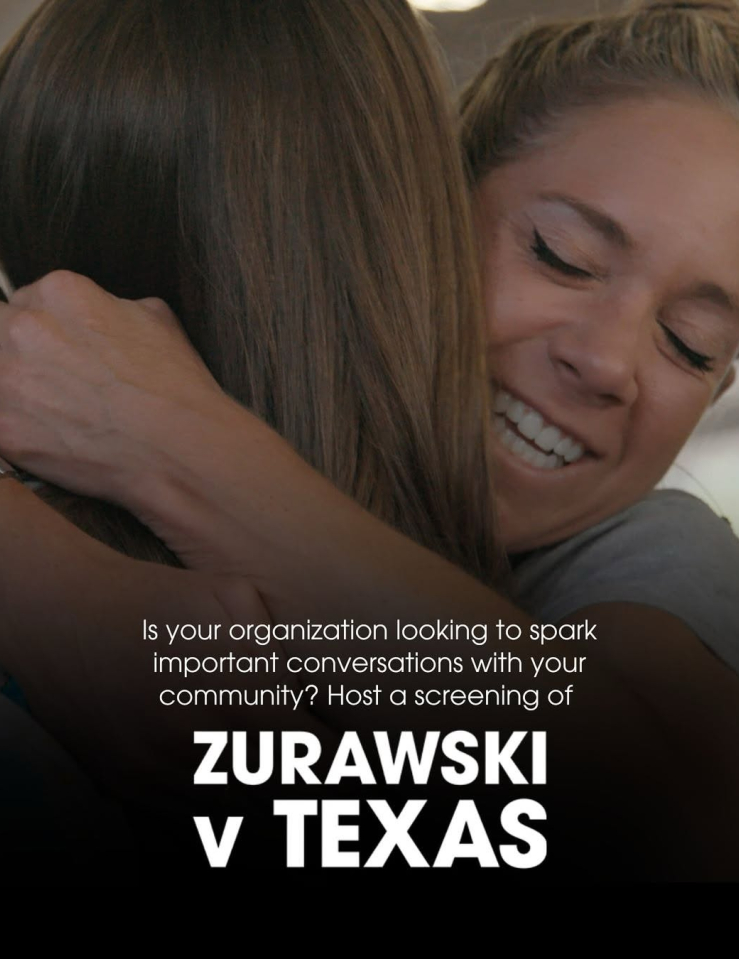
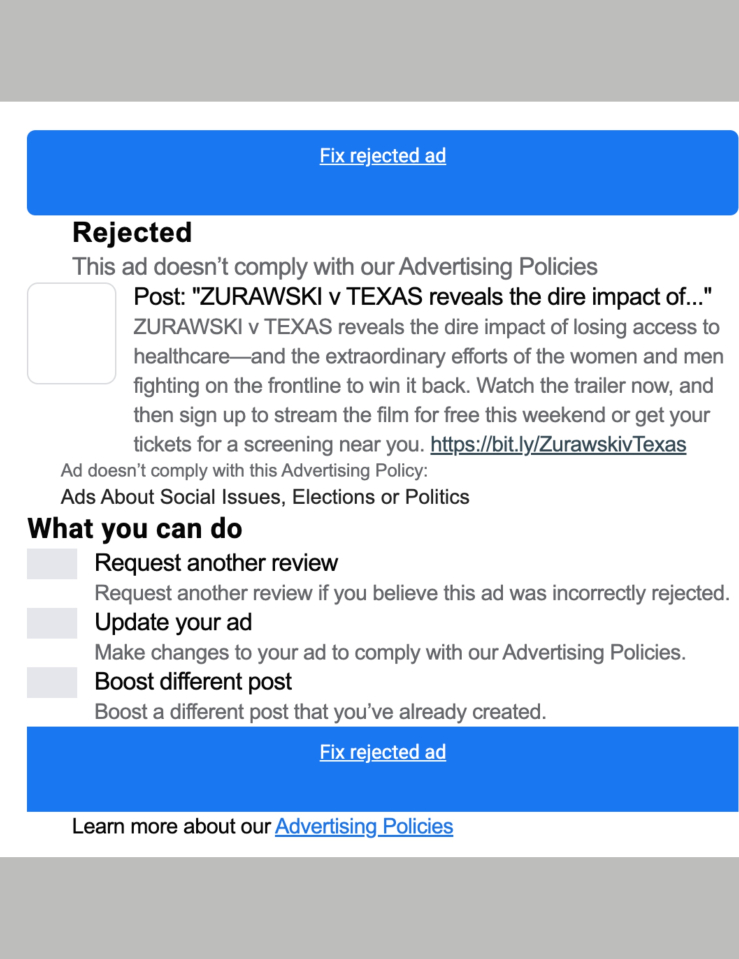
Screenshot of Meta‘s “rejected” email for the promoted post of Zurawski v Texas.
Even When Ads Work, They Don’t Work
Relying less on Meta, however, may not be such a bad thing. According to Tylite’s Lauren Jacob, the media company has recently initiated changes that reduce the efficacy of the platform’s ability to connect with specific demographics.
“You can no longer choose to target your ads to specific affinity groups,” she says. For instance, Jacob enumerates past examples when they chose to target ads for queer films to users with LGBTQ cultural affiliations or by sexual orientation, or target people interested in sustainability and climate issues for environmental films, or connect to people of color for projects with racial themes, “which made their targeting so fantastic for niche projects,” she says. “But all of that has really been stripped away on Meta. You can’t enter those keywords anymore.”
“Meta has really become more for people with their own data,” explains Jacob. Companies or advertisers that have a track record with particular audiences can retarget those same audiences for a subsequent project, but Meta only saves that audience data for a single year, according to Jacob. “It makes it harder for people to do this on their own, which sucks,” she adds.
Daniel Cantagallo, vice president of the sales and distribution company Cargo Film & Releasing, agrees that Meta has become less worthwhile for small businesses and boutique distributors. “Because they phased out a lot of the precise targeting, removing what they call ‘sensitive topics,’ such as causes or identity,” he says, “we’ve moved off of paid advertising to focus more on organic marketing and working with built-in audiences and networks.”
Market shifts have also made ad spending on Meta less useful, according to Cantagallo. Users clicking on ads that take them to Amazon or Apple TV don’t pay to watch them as much as they used to. “Because of the general decline in TVOD [transactional video-on-demand],” he says, “what’s the point of paying for all of this advertising to drive people to these streaming platforms, and then the audiences are like, ‘What, now I have to pay for this film?’”
For all of these reasons, documentary filmmakers, marketers, and distributors are simply resorting to using Facebook and Instagram the old-fashioned way: posting to their accounts organically and spreading the word among their communities without going through the rigmarole of algorithmic ad protocols. In that way, as Zurawski v. Texas co-director Abbie Perrault says, “We were freer to use whatever language was suitable.”
This piece was first published in Documentary’s Spring 2026 issue.