

It will surprise nobody that the nonfiction selection at Cannes leans into Francophone and/or celebrity-friendly documentary. Those with any sort of buzz this year, for different reasons, were Steven Soderbergh’s John Lennon: The Last Interview, an actually charming chat intended for radio but here filled out with stills and AI animation and promptly savaged by critics, and Gabin, a gentle portrait of a French farm boy across the years that maybe puzzled perusers expecting a tribute to Jean Gabin a la Cannes Classics. That section, incidentally, does reliably offer appreciations worth a look, because why not take a break from the Competition with stem-winding tales from a New Hollywood original (Dernsie: The Amazing Life of Bruce Dern) or a clips buffet of panoramic postwar classics on the big screen (Maverick: The Epic Adventures of David Lean)?
That said, the headliners in Cannes can distract from the possibility of adventurous finds in the independent parallel showcases, such as ACID. That’s where Claire Simon’s work and Sepideh Farsi’s Put Your Soul on Your Hand and Walk have premiered (as well as early fiction features by Justine Triet and Radu Jude). My standout this year was Detention from Guillaume Massart, whom I interviewed in these pages about his philosophically minded account of France’s national school for prison officers. For that reason I won’t go on about it, but its incisive vérité coverage of classroom seminars and training sessions is consistently selected with an analytical eye toward fundamental questions of authority, free will, and the social contract. Massart cited Wiseman’s Basic Training (1971) when we spoke, though I also thought of the classrooms of Missile (1988), as these student guards’ absolute sway over inmates’ lives means that every bit of procedure or admin opens up another tension point around how government manages and constructs a society.
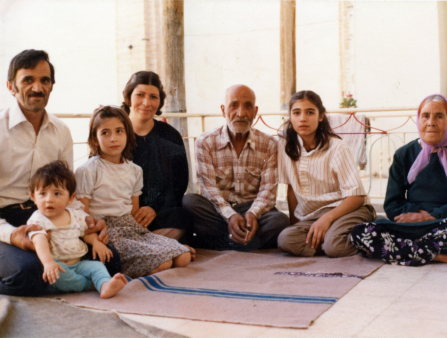
Rehearsals for a Revolution. Courtesy of Cannes Film Festival
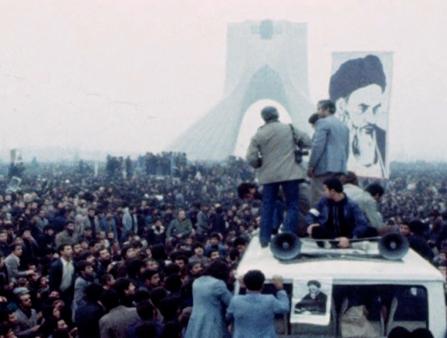
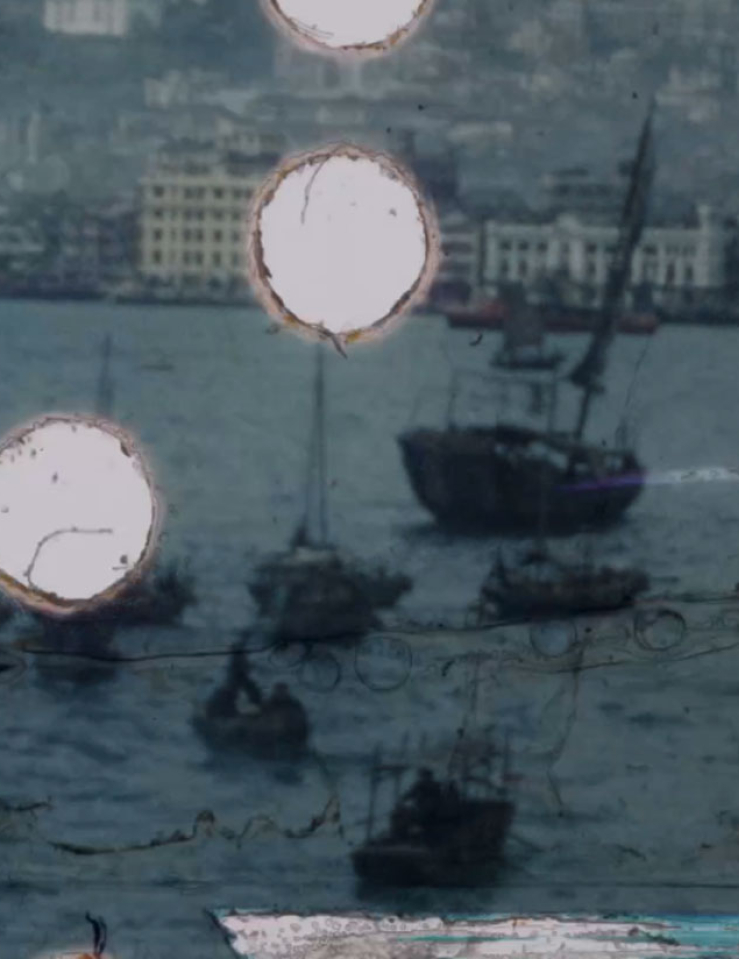
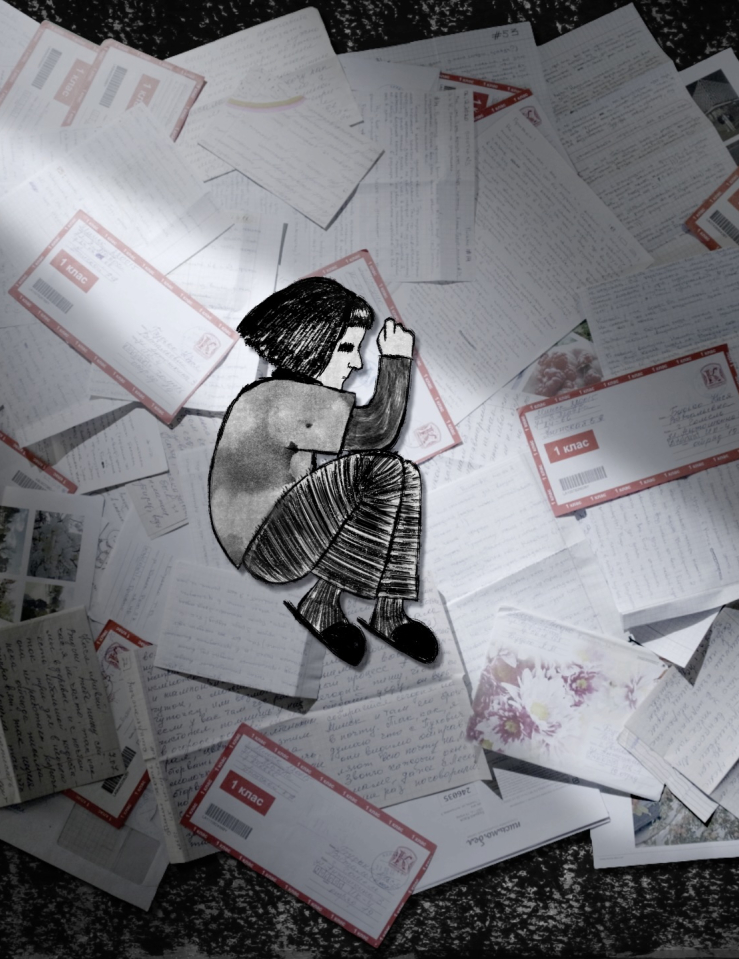
The L’Oeil d’Or award for best documentary at Cannes however went to an official selection of the Cannes festival, Pegah Ahangarani’s Rehearsals for a Revolution, honored by a jury lead by Mstyslav Chernov and further awarded by getting acquired by Sony Pictures Classics. Arriving mere months after the Iranian government’s massacre of tens of thousands, Rehearsals brings a renewed charge to a recent subgenre, the post-Iranian Revolution rumination on home and exile, laced with faded home movies and often rooted in a cherished house. Ahangarani, who is also an actress, brings a storyteller’s knack to the past 40 years, filtering her own growth and Iran’s besieged history through five well-rounded vignettes told with dramatic flair. Narrating with a part lyrical, part droll voiceover (“In the grey days of school, she was a new color”), she delves into her relationship with her war-veteran father, recalls the grade-school teacher she adored and inadvertently got fired over snapshots of her without a headscarf, pays tribute to her trailblazing filmmaker mother, Manijeh Hekmat, and shares harrowing footage from protests in 1999 and 2011, at one point lingering on a shot of herself, frozen in fear. The London-based filmmaker speaks from a diaristic and perhaps privileged standpoint, but never loses sight of the fundamental horror of a homeland whose government is essentially conducting permanent warfare on its own general population.
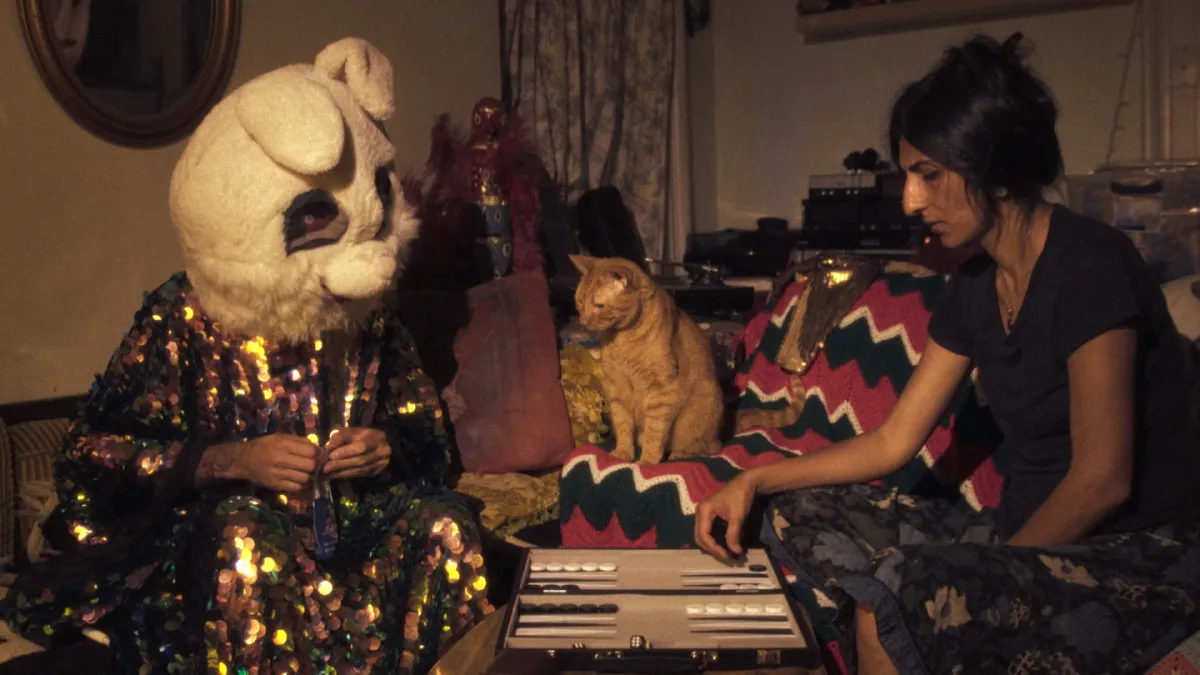
An immediate companion piece to Rehearsals lurked in ACID: Dans la gueule de l’ogre (Into the Jaws of the Ogre), the debut feature from Iranian-French director Mahsa Karampour. Karampour’s subjects—herself and her Brooklyn rock dude brother, Siâvash—are adults, of course, but her inquiry into the past lies in sibling divergence and the love and labors of reconnecting. It’s partly just a feature-length marvel or head-scratch at Siâvash’s matter-of-fact bohemian existence, a decade-plus after his band Yellow Dogs suffered the freak murders of two members by a friend. Footage from over the years shows him content to noodle on his guitar and buy fabric for costumes, apparently sleeping with an eerie, floppy white mannequin that Karampour obviously twigs as a kind of symbol of doubledness and exile. The film’s loose road-trip structure—the odd couple traversing America together after years apart—lends itself to noticeable longeurs. But her respect for her brother’s idiosyncrasy is touching, and an anecdote about a French colleague who says she should make a film about Iranian poetry underscores her own ambivalence toward any totalizing statement about exile.
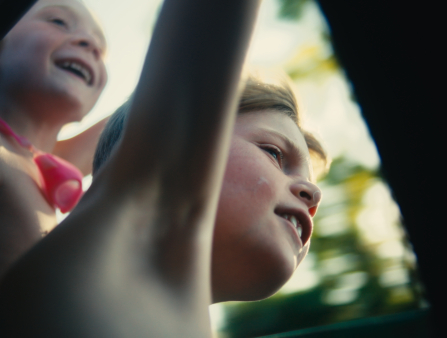
Tin Castle. Courtesy of Samson Films
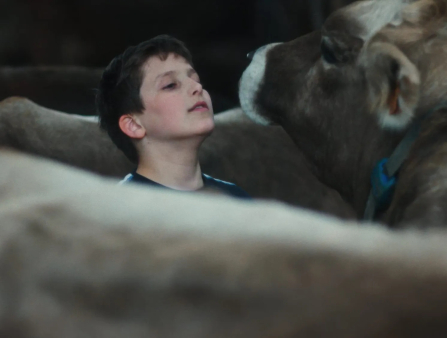
Gabin. Courtesy of Lightdox
The runner-up L’Oeil d’Or went to Tin Castle from Irish-French filmmaker Alexander Murphy, who filmed the O’Reilly couple and their 10 children, a family of Irish Travellers who live in a trailer by the side of a road. It’s mostly buoyed by the family’s bustle among play, chores, chats, and horse- and dog-related work, with a truly tirelessly supportive mother who is unbowed by the evidently rigid gender roles. Meanwhile, occasional shots of the father sitting, looking vacant and perhaps depressed, suggest masculinity as precarious, and when he has a prison stint for unspecified reasons, Murphy stages a somewhat haunting shot on a road, outstripping a family horse carriage until it disappears. The family’s resilience and warmth are always impressive, but the documentary does feel somewhat incomplete in showing just how they manage, and not looking at their connections to a much-referenced larger Irish Traveller community, or further exploring their forays into the rest of the world (or even naming all the children until a credit sequence). Consequently, its luxuriantly shot pictures of children at play in the fields or hanging laundry on a road guardrail can have an air of cheap-and-cheerful romanticism.
Shot in 1.33, Maxence Voiseux’s Gabin zeroes in on just one boy, Gabin Jourdel, in the northern French region of Artois and sticks with him from ages 8 to 18. That’s quite a daunting commitment or gamble for a debut feature, but Voiseux had previously made a short and mid-length film on the family. He opens with the heart-full understatement that typifies the film at its best: 8-year-old Gabin and his father at the breakfast table, laconic Dad peering at him, until the boy finally asks why: “Because you are my son.” From there, the film glides along—105 minutes for 10 years, leaping into puberty in a single cut—mostly aligned around the good-natured kid’s leaning naturally towards helping his mom on her dairy farm rather than training to take over his father’s butcher shop. (He even plays a computer game called Cattle Trader in his free time.) Gabin dotes on his mother and a neighbor girl who’s his best friend and seems eminently well-adjusted, though state-funded counseling sessions must help. If this is partly a picture of eras changing in rural France, it’s overshadowed by Gabin’s own abiding innocence and earnestness (and friendly goofiness). The absence of his two siblings creates a certain void, but Voiseux clearly sees and structures the film through the prism of Gabin’s parental relationships, as the boy unselfconsciously charts his own identity, showing that one generation may always be foreign to the last.
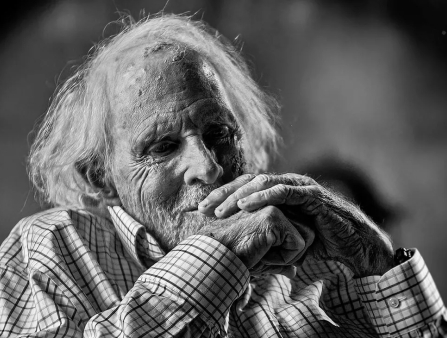
Dernsie. Courtesy of Cannes Film Festival
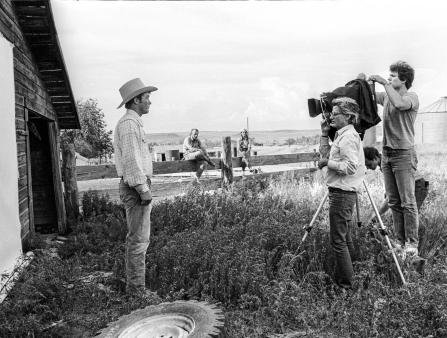
Avedon. Courtesy of Cannes Film Festival
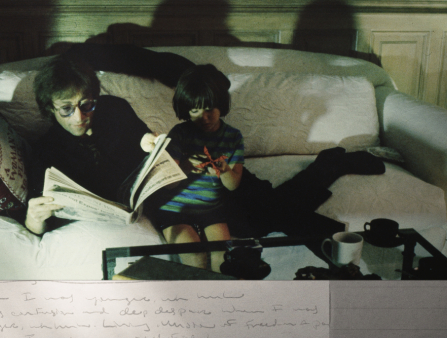
Lennon. Photo credit Kishin Shinoyama. Courtesy of Cannes Film Festival
Gabin premiered in Directors’ Fortnight, just before a screening of Alain Cavalier’s valedictory statement, Thanks for Coming—a film so utterly effortless and spry in its 60-odd minutes of observations and pensees that it felt almost unfair. I found it delightful, a both typical and successful late (or last) film, pirouetting around mortality (and not requiring knowledge of Cavalier’s prior installments). Thanks for Coming oddly came to mind when I prepared to interview Bruce Dern (which, full disclosure, I did) on the occasion of Dernsie, a tour of a 70-year career that aptly dwells on the indefatigable actor’s love of running: acting longevity as a long-distance feat of stamina. Rather than a nickname, the title is a term among Dern’s friends and admirers for his improvisational flourishes. But I was more fascinated by the steely-glared actor’s transition from specializing in 1960s TV Western villains to starring in a string of New Hollywood portraits in disaffection. The career pivot suggests that his sheer intensity was interpreted as malevolent in one era, and therefore suited to good-and-evil genre work, but was then recognized by a new generation of directors as an acceptable expression of alienation and part of a natural spectrum of our sometimes inconvenient emotions.
Two other career considerations were Avedon and the Lennon documentary. I’ll stay with Avedon because its surehanded treatment illuminates the life of someone many experienced as an institutional voice, culminating in his stint as house photographer for Tina Brown’s New Yorker. His portraiture on stark white backgrounds arose from a job in the Marines taking hundreds of ID photos, also on white. At least, so suggests Avedon in a voiceover apparently distilled from audio interviews—the archival composite voiceover that, in recent years, has grown more and more common, and not unwelcome (though the practice can present artists as homogenized, unchanging beings by effacing the dates of its source materials). With open archives and apparently financing from The Richard Avedon Foundation, Ron Howard (who last tackled a Jim Henson doc) ably illustrates Avedon’s postwar Paris magazine period (like “paper cinema,” someone says) and other work as “a great magazine man” (per Brown). But there’s also a political case for such work as the Nothing Personal book collaboration with James Baldwin (in 1964!) and quietly provocative photos, like a portrait of out-of-touch Daughters of the Revolution society women.
Finally, was John Lennon: The Last Interview really that bad? Funded by Meta, its AI filler evoked, yes, animated stock photography or old WinAmp skins. But then again, the point of the film is what Lennon is saying, and he is disarmingly earnest and endearing in his last interview before his murder, recorded in his Dakota apartment on Manhattan’s Upper West Side, alongside Yoko Ono. Edited into essentially a kind of personal monologue on life and art (except for cutaways to comments from his still-living interviewers), its flow is arguably of a piece with Soderbergh’s Spalding Gray series of films. It’s a flood of young dad chat, with Lennon “rabbiting on,” as he puts it, and fondly declaring to his interlocutors, disavowing his celebrity remove: “I’m a fan of people, too, you know”—a comment with a tragic note, given the homicidal stranger lurking outside. Granted, I’d definitely like some of the energy that’s devoted to the Beatles industry to be directed to artists of, oh, the past 30 years, but a shot of love and brainstorming from Lennon was not my first target for outrage at Cannes.