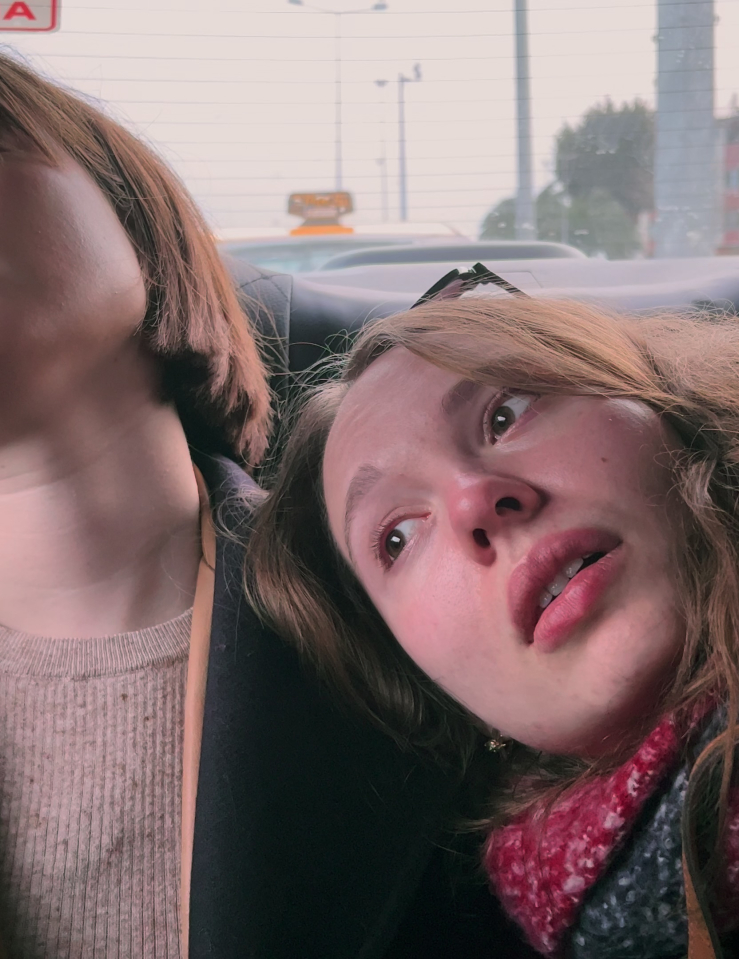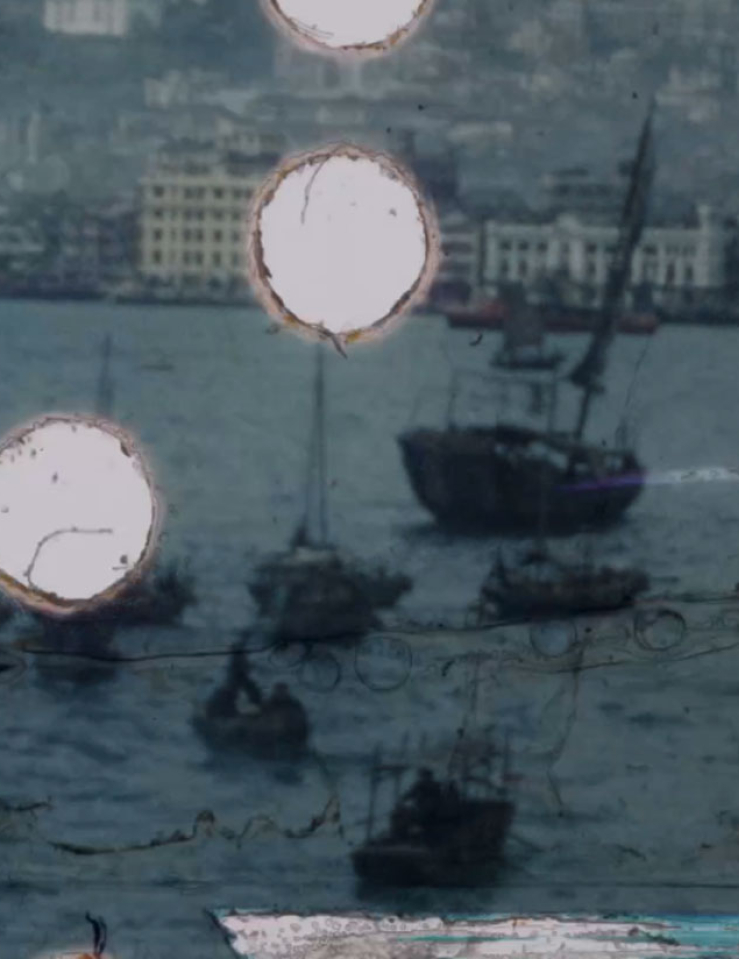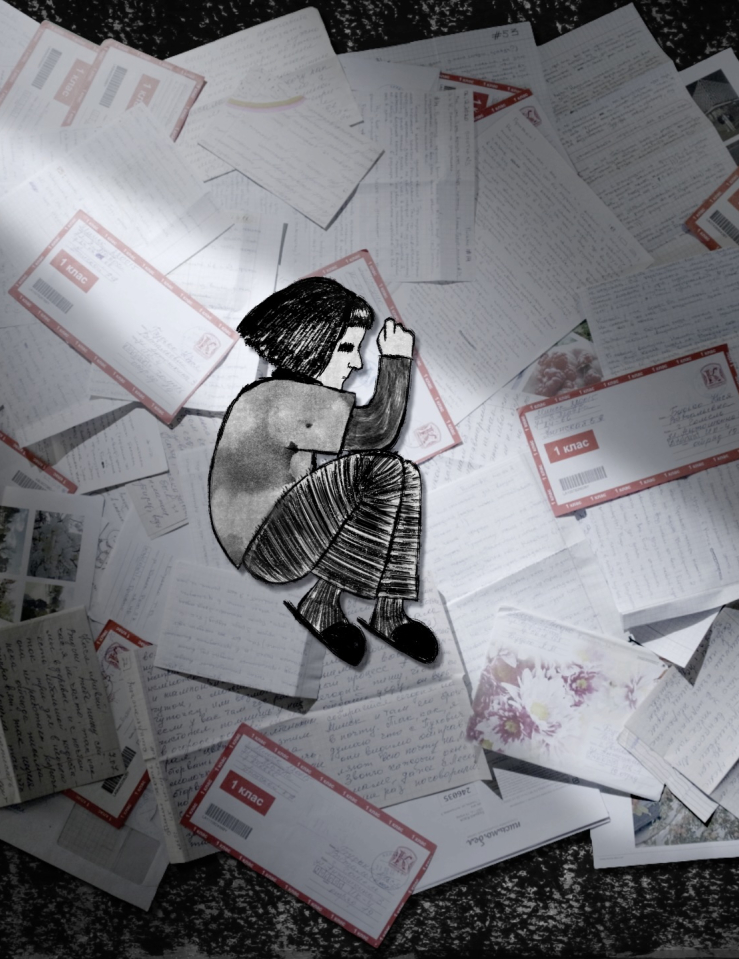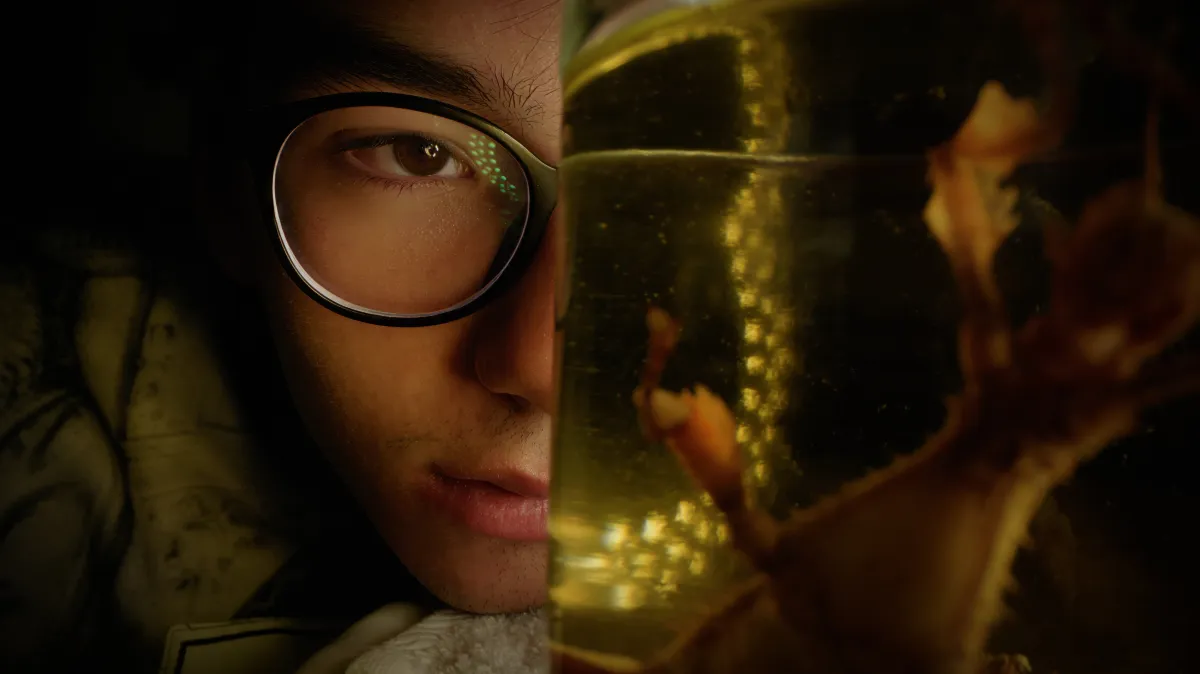


Premiering in the International Competition of the Thessaloniki International Documentary Festival (March 5-15, 2026), Bugboy marks the latest feature by Greek filmmaker Lucas Paleocrassas. The documentary follows George, a shy teenager navigating adolescence, loneliness, and a complicated family situation after his parents’ divorce. George finds refuge in an unusual passion: insects. His deep bond with a cricket named Isabella becomes both emotional anchor and narrative thread, turning what might seem like an eccentric hobby into the center of an intimate portrait of transformation.
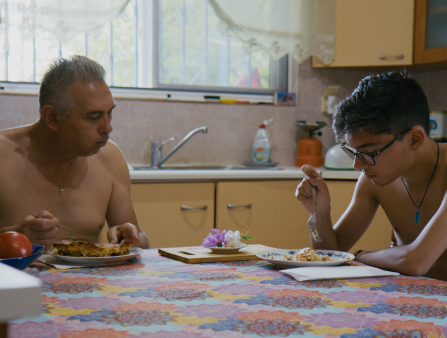
Shot over two years and edited over the course of a third, Bugboy blends observational documentary with poetic nature filmmaking, often drifting between the microscopic and the deeply personal. Paleocrassas and cinematographer Carlos Muñoz Gómez-Quintero juxtapose macro images of insects with quiet moments from George’s daily life—spending time with his father, hanging out with a few friends, going to school, and attending medical appointments ahead of corrective eye surgery—constructing a delicate cinematic language where biology, imagination, and adolescence intertwine. The result is a coming-of-age story that unfolds both in the natural world and within the mind of a teenager searching for belonging.
At Thessaloniki, Paleocrassas spoke about discovering George’s story, building trust with his family, and shaping a film that balances intimacy, humor, and ecological awareness. The following interview has been edited for clarity.
DOCUMENTARY: How did you first encounter George, and what made you realize his story could become the subject of a documentary?
LUCAS PALEOCRASSAS: I first read about George in an online article that had collected a series of his Facebook posts about his relationship with Isabella, the cricket. The posts read almost like a diary about the two of them spending the summer together. I remember thinking, What am I reading? There was so much tenderness in his point of view. At the same time, you could sense a certain loneliness in the way he talked about her as a friend and companion.
That immediately made me curious. I felt the urge to explore this relationship and to understand George better. The moment I realized this could become a feature documentary came when I read how Isabella eventually died of old age. At the end of his posts, George wrote that he had kept her eggs and was planning to raise the newborn crickets himself. Suddenly, it became clear to me that if I followed him, I could witness that cycle—the relationship he had with Isabella—beginning again. I wanted to see how he tried to fill the space that Isabella had occupied in his life. At the same time, I was very curious about what was happening inside him—why this hobby mattered so much, and what role it played in his emotional world.
D: Watching the film, it feels like several genres coexist at once: a coming-of-age story, a nature documentary, and something more poetic. How did you approach the narrative construction of the film?
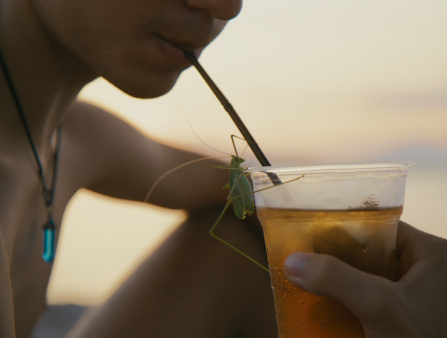
LP: For me those layers were never really separate. They emerged organically. My main goal was to try to depict George’s inner world—the way he perceives insects and the microcosm where he finds solace. As I started following him more closely, the coming-of-age dimension appeared naturally. It became clear that his fascination with insects was not just a hobby but also a reflection of his own transformation. I also wanted the film to adopt an observational approach that mirrored the way George observes insects. Insects are often treated as invisible creatures—we think of them as unpleasant or unnecessary—but in reality, they are everywhere and absolutely essential to the ecosystem. That parallel interested me a lot. George’s story could emerge in the same way: something that might initially appear strange or marginal gradually reveals its importance and strength. In the end, what might seem like an odd passion becomes a source of empowerment for him.
I also wanted the film to adopt an observational approach that mirrored the way George observes insects. Insects are often treated as invisible creatures—we think of them as unpleasant or unnecessary—but in reality, they are everywhere and absolutely essential to the ecosystem. That parallel interested me a lot.
—Lucas Paleocrassas
D: Your relationship with George—and with his family—clearly plays a major role in the film. How did that trust develop?
LP: It happened gradually. When we first met, George was a very shy and closed teenager, so building a relationship took time. At the beginning, it was just me, without a camera. We would go together on his trips to the mountains, where he explores and collects insects. I wanted to show him that I truly valued what he was doing, that his passion was interesting and meaningful. That this was why I wanted to make the documentary. Eventually, I started spending time with his whole family. They welcomed me into their home, and little by little, we became very close. I would visit almost every weekend. We ate together, went on trips together—it became a very natural relationship.
Besides, transparency was crucial. I was always very clear about what we were doing and why. Over time, the camera became less and less important. They simply forgot it was there, and that allowed me to witness very intimate moments.
D: Working with a teenager—especially one who was underage at the start—must also have raised ethical questions. How did you navigate that aspect of the filmmaking process?
LP: Yes, absolutely. Because George was underage when we began filming, we maintained close communication with his father, who was present for about 90%of the shoot. We made sure to create an environment where George felt comfortable. Especially at the beginning, we were very careful to ask him whether certain things felt okay or whether we were getting too close. It was important for him to understand that he could always say no. As the trust between us grew, that became more intuitive. I knew that if something felt too much for him, he would tell me. But our principle was always the same: the filmmaking process should never interfere with his well-being. It was our responsibility to adapt to him, not the other way around.
D: Did you consult teachers, psychologists, or other specialists during the process?
LP: No, not in this case. But I do have a lot of experience working with teenagers. My previous documentary [2022’s Telos hronou] also dealt with young people facing difficulties at school. I followed them for their final two years until graduation. Many of my television projects have also focused on children dealing with learning disabilities or other kinds of challenges. So I’m very interested in stories about young people trying to find their place in the world. Over time, I’ve learned how to listen carefully and give them space to feel seen and heard. That experience helped me build a healthy relationship with George.
D: The film’s visual style is striking, particularly the close-up images of insects. Can you talk about your collaboration with cinematographer Carlos Muñoz Gómez-Quintero?
LP: Our goal was to continue the intimate vérité style that I’ve been working with in my previous films, but to shape it with a more cinematic language. We wanted to preserve authenticity and spontaneity while also constructing a visual world that reflects the way George sees things. That meant creating a microcosm through macro photography. We used special lenses to capture the insects in extreme close-up, which allowed the audience to enter their world. At the same time, we tried to maintain the natural, observational energy of documentary. It was always about balancing those two elements.
D: Sound also plays a very important role. How did you approach that dimension?
LP: We were very lucky. George is incredibly comfortable handling insects. He can get very close to them, which allowed us to record sounds that are normally very difficult to capture. For example, we recorded the mating calls of the crickets and other subtle sounds that bring the insect world to life. Those recordings became an important narrative element. They help the audience experience the insects not just visually but sonically as well. Of course, we also enhanced some elements during postproduction, but a lot of the sounds come directly from what we captured during filming.
D: You mentioned that editing took about a year. How much footage did you end up working with?
LP: In total, we shot around 70 hours of footage. That gave us a lot of material to work with and many possible directions. However, this wasn’t the kind of documentary where you completely discover the story during editing. At the very beginning, the process is more abstract because you’re still figuring out where the story might go.
But when George decided to undergo surgery to correct his vision and when the new cricket—Ferdinand—entered the story, we understood that the film was really about transformation. George’s life was changing, and we needed to follow that evolution. So even though we had many possibilities in the editing room, we remained very focused on that arc.
D: The film is a coproduction between Greece, Denmark, and France. How did that international collaboration influence the project?
LP: From the beginning, we were very interested in finding a Nordic co-producer. Danish editors in particular have a strong tradition of working on films for younger audiences, and we wanted to explore that. Our goal was to find a balance between creating a film that younger viewers could connect with and making something that would resonate with adults as well. The story deals with family relationships, identity, and personal growth—topics that are universal.
The coproduction structure helped us enormously. It allowed us to collaborate with fantastic professionals and receive valuable feedback at different stages. For example, we worked with composer Florencia Di Concilio and editor Estephan Wagner, both of whom brought a lot of experience to the project. In practical terms, it also helped us financially, making it possible to work with well-established collaborators.
D: Finally, how do you imagine the life of Bugboy beyond festivals? Are you planning any educational or impact initiatives?
LP: Yes, definitely. Our Greek production company [Anemon Productions] has a lot of experience organizing screenings in schools, and we’re very interested in reaching young audiences. We hope that students will see themselves in George—or recognize someone like him in their own lives. The film can spark conversations about difference, empathy, and how people cope with loneliness.
At the same time, the film also has an environmental dimension. It encourages audiences to rediscover their connection with nature and to look more closely at the small creatures that share our world. Sometimes we live at such a fast pace that we forget to pay attention to these details. George reminds us to slow down and notice the invisible friends around us. If the film can inspire even a small shift in perspective, then I think it will have achieved something meaningful.