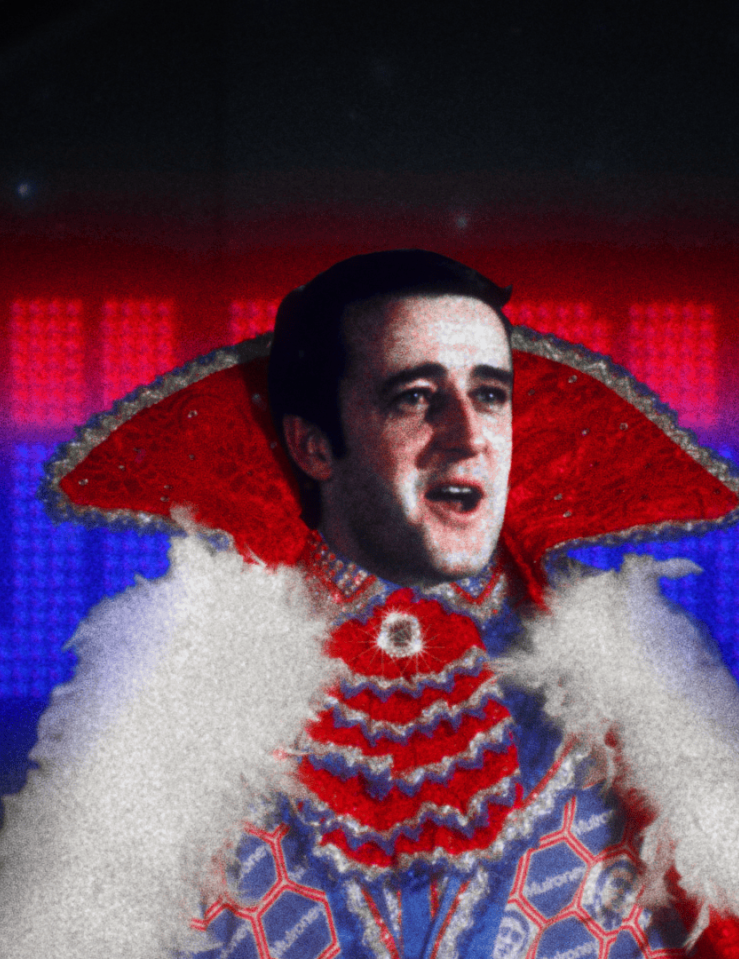


In 1952, then vice presidential hopeful Richard Nixon’s back was against the political wall after being accused of financial impropriety, and the campaign of his running mate, Dwight D. Eisenhower, effectively left him to fend for himself. Hollywood producer-director Edward “Ted” Rogers, an acquaintance of two years, quickly convinced Nixon that TV was the answer. With 48 hours to write and prepare the “Checkers” speech, in which he pushed back against the allegations and insisted he came from modest but honest means, coordination was limited: Nixon would not rehearse with director John Claar, while Rogers got only half an hour to coordinate with the candidate on the afternoon of the broadcast.
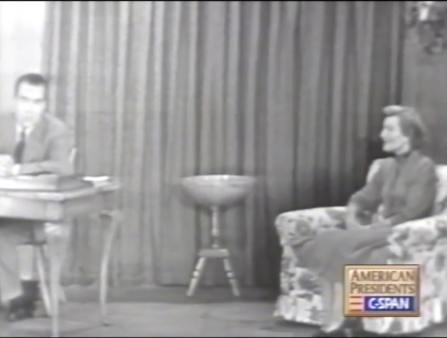
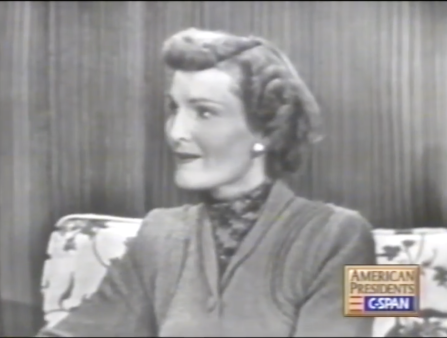
That was when he first learned that Nixon wanted his wife, Pat, to be on-set: Claar’s camerawork had to be improvised and necessarily focused on the candidate, with the occasional pan or cutaway to her conveying silent adoration when mentioned.
Though Pat was not thrilled about the contents of the speech, complaining, “Why do you have to tell people how little we have and how much we owe?” and Variety labeled the half-hour speech “schmaltz,” Nixon’s gambit worked. He changed the conversation and resecured his place in the campaign in an early demonstration of TV’s political possibilities.
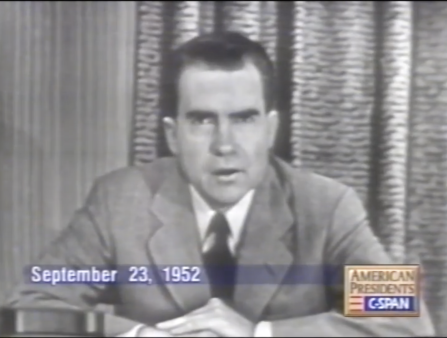
Richard Nixon’s September 23, 1952, “Checkers” speech screenshots from C-SPAN.
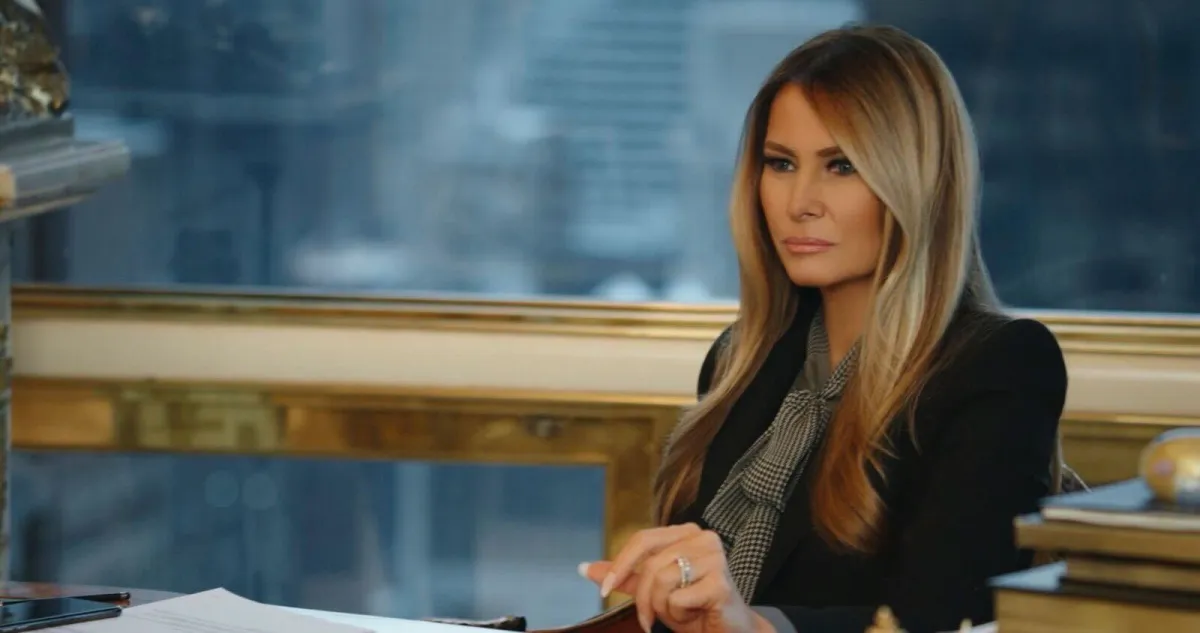
Nearly 75 years later, to a similarly skeptical critical response, Amazon MGM Studios’s Melania takes an entirely different approach to image burnishing. Not just for its titular figure but also on behalf of its director: despite possessing no documentary experience, Brett Ratner (best known for the Rush Hour trilogy) has used this project to restart a stalled career following a long list of sexual assault accusations. The First Lady is center stage in what is presented as a vérité portrait of the 20 days up to and including the second presidential inauguration of Donald J. Trump. Befitting its title, this documentary stays close to the First Lady: Trump, who first appears more than 20 minutes into the movie, is seldom seen and only occasionally heard after. He is effectively relegated to the role of First Man.
In this presentation, everyman poverty is, predictably, out. “It’s not just positioning her as a luxury brand,” producer and longtime Melania advisor Marc Beckman told Breitbart News Daily of the film. “It’s positioning America as a luxury brand.” Melania narrates the film herself, reading text authored by an anonymous source. Whatever story editors and writers were involved are among the many crew members who requested not to be credited.
Those anonymous writers were tasked with much more than a voiceover throughline; protestations that this is a nonpartisan document are almost immediately belied by the text. In the early January run-up to reinauguration, Melania admits to being distraught as the anniversary of a painful date approaches—that date being not January 6 (now irrevocably connoting the Capitol riots in 2021), which does not exist in this film’s universe, but instead January 9, when her beloved mother passed away back in 2024. The film encourages viewers to cross out one date and replace it with another nearby. In doing so, it aligns its project with a cult of executive personality rather than shared cultural memory.
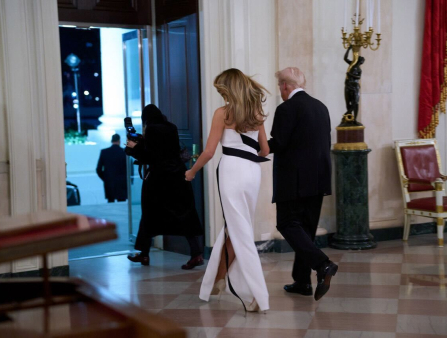
Melania. Photo by Regine Mahaux. Courtesy of Amazon MGM Studios
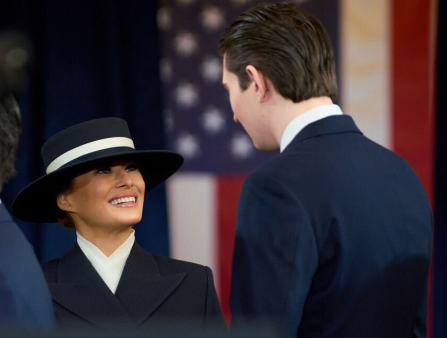
Melania. Photo by Regine Mahaux. Courtesy of Amazon MGM Studios
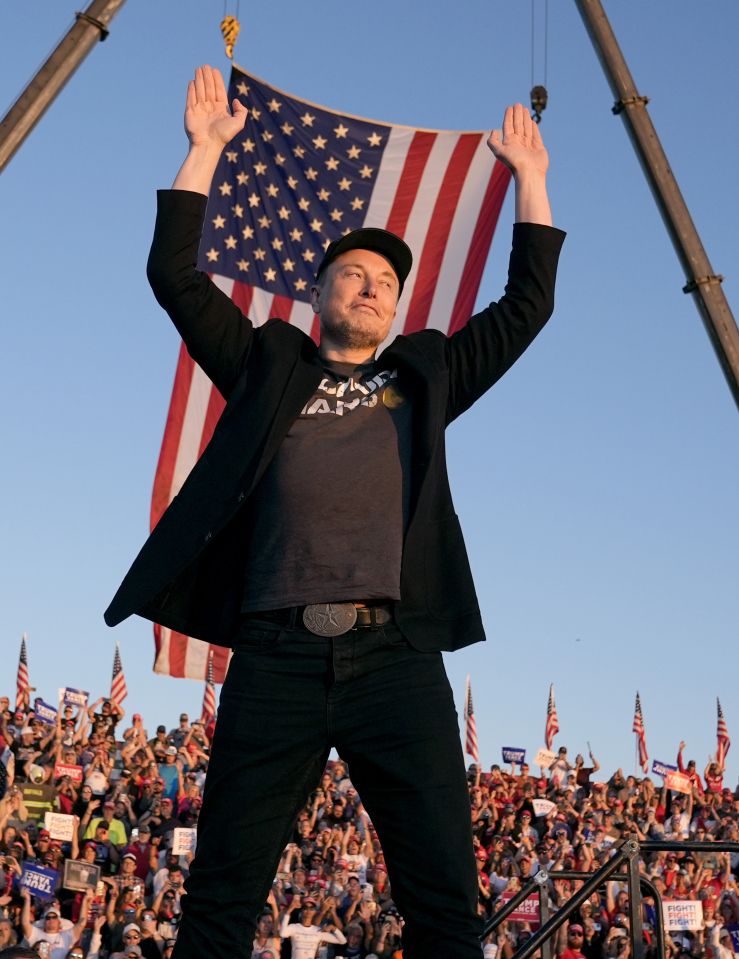
Presumably to placate conservatives peeved that she came out as pro-abortion in her 2024 memoir, Melania visits St. Patrick’s Church in New York City. There, she lights a candle in memoriam and is blessed by the Catholic officials on hand. After the intermission of an online meeting with Brigitte Macron, focused on cyberbullying and cutting down on phone use in schools, more ideological red meat follows. We witness Melania meet with a former Israeli Hamas hostage whose husband is still a captive. Increasingly, Melania’s voiceover speaks of the persecution and violence Trump faces. Film and First Lady alike position him as victim rather than oppressor before the film anticlimaxes with multiple inaugural balls. These scenes largely consist of classical music pasted over cues of Trump supporters chatting amongst themselves, and the effect is strictly b-roll. Watching Elon Musk (and Amazon’s Jeff Bezos, this movie’s patron) still happily among the courtiers seated alongside a cabinet not yet at odds with itself must feel like a prelapsarian dream to the president’s admirers. Barely a year later, such a scene is already a historical document, if not in the intended sense.
Melania shows more conviction in its political agenda setting than while extolling its subject’s fashion bona fides. Wearing a coat with the words “I Don’t Really Care, Do U?” en route to visit migrant children remains the former model’s most famed moment, noted more for its contextual contempt toward the public than the sartorial particulars. At Breitbart, contributor John Binder runs a sporadic “Fashion Notes” column on Melania’s outfits and, upon the film’s trailer dropping, described it as “our Super Bowl” for First Lady fashion watchers, a concept that seems to exist more out of ideological necessity than genuine conviction, in the same spirit as pretending Kid Rock’s counter-halftime Super Bowl concert was actually more popular than Bad Bunny’s official set. If close-ups of Melania’s signature stilettos rival Luis Buñuel in their fetishism, the subject is not so much fashion as the celebration of money in the mode described by Tom Wolfe as “plutography”: depicting and celebrating the acts of the rich.
That includes the film itself, famously acquired by Amazon for US$40 million, and whose production cost has been cited as, variously $59 or $70 million. Money should always trickle upwards: US$28 million of the acquisition is understood to have gone directly to Melania, with the remainder presumably going into production. Those expenses included three credited cinematographers in three different cities, with DP Dante Spinotti claiming to have had 12 crews covering Inauguration Day. The visuals are nonetheless underwhelming, defaulting to aimlessly following the First Lady with a Steadicam, with Melania nearly always center-frame. Alongside those cinematographers, Ratner contributes Super-8 footage he shot personally on the day of Trump’s second inauguration. Ratner is certainly not the kind of celebrity narrative filmmaker who lets underlings do the dirty documentary work and then signs his name to it. He is reported to have lived at Mar-a-Lago prior to production and kept shooting at the White House after the period covered here, producing material for a forthcoming three-episode Amazon miniseries.
The subject is not so much fashion as the celebration of money in the mode described by Tom Wolfe as ‘plutography’: depicting and celebrating the acts of the rich.
More so than the visuals, the film’s most conspicuous costs are in the soundtrack. Its most expensive needle drops include “Everybody Wants to Rule the World,” linking Donald J. Trump with the valedictory final song cue of the Timothée Chalamet–starring tribute to ambition Marty Supreme, and “Billie Jean,” which Melania declares is her favorite Michael Jackson song. Opening drone shots of Mar-a-Lago take place to “Gimme Shelter.” The choice is not just a deliberate misreading of the Rolling Stones’s dystopic desperation (in this use, the Florida resort serves to literally give much-needed shelter from a strangely hostile world), but also a nose-thumbing at the band themselves. Both in 2016 and later in 2020, the band objected to Trump’s use of “You Can’t Always Get What You Want” at his campaign rallies. In forcibly annexing their work regardless, the movie proves otherwise.
With its would-be iconic fashion moments set to a top 40 soundtrack, Melania’s project is putatively populist and nonpartisan, rooted in tradition and respect for the office. Per producer Fernando Sulichin: “This isn’t a political film at all—it’s recording the transition from one president to another, from a lady turning into First Lady again. It’s not anti- or pro-MAGA.” That is meant to differentiate this from low-rent faux-documentary conservative polemics, many of which followed the breakout success of Dinesh D’Souza’s 2016: Obama’s America. That 2012 film grossed US$33.4 million in the U.S. on a $2.5 million budget, encouraging D’Souza to release wildly conspiratorial tirades at increasingly close intervals. A presumably appreciative Trump issued a pardon to the pundit-turned-filmmaker for campaign donation improprieties, whose resulting prison time and release were dramatized in 2020’s Trump Card. But Trump did not personally appear; instead he was conjured via a voiceover impersonator.
Even as it does not wear that lineage so blatantly, part of Melania’s agenda dates back to the right-wing cranks D’Souza was addressing and inflaming, who insisted variously that Barack and Michelle were both queer and covering for each other; that the latter was actually a man; and that if neither were true, the First Lady was still ungracious and inelegant. These flagrantly racist messages require positioning Melania Trump as a countermodel of class, a 21st-century Jackie Kennedy. One of the film’s oddities is that a closing montage of paintings of the First Lady includes only Eleanor Roosevelt, Mamie Eisenhower, and Kennedy, after which the lineage apparently meaningfully ceased—until now.
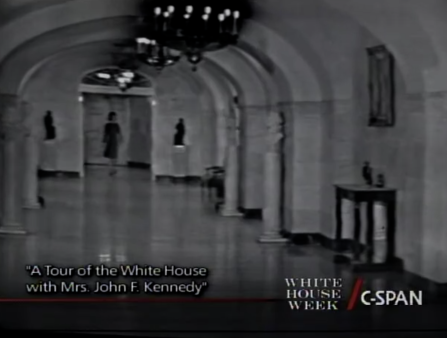
A Tour of the White House with Mrs. John F. Kennedy screenshots from C-SPAN.
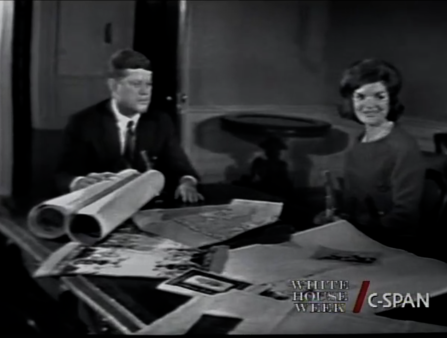
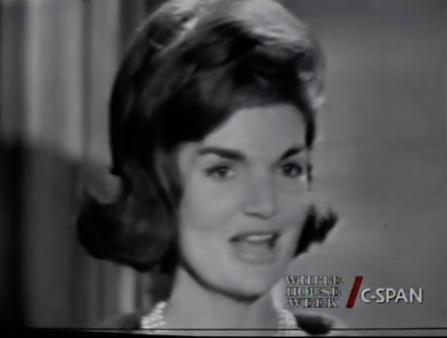
That means Melania is ideally picking up where 1962’s TV special A Tour of the White House with Mrs. John F. Kennedy left off. The hour-long special focused on Jackie’s restoration efforts to the White House. Shot in eight hours after six months of preparation, with the First Lady drinking scotch and smoking off-camera to relieve her nervousness, the special showcased a highly poised First Lady. On air, Jackie demonstrated a thorough command of the White House’s history and the objects therein. Part of her goal was, as journalist Helen Thomas later wrote, a “war of independence from the press,” sparked in part by the embarrassment caused by a CBS broadcast featuring her Parisian hairdresser discussing a hairpiece. The special represented Kennedy’s preferred self-positioning, leading with erudition fueled by a true love for history. “It just seemed to me such a shame when we came here to find hardly anything of the past in the house, hardly anything before 1902,” she explains at the beginning of the broadcast. “I know when we went to Colombia, the presidential palace there has all the history of that country in it […] every piece of furniture in it has some link with the past. I thought the White House should be like that.”
Kennedy’s enthusiasm for her subject and location is palpable, standing in sharp contrast with the current president’s well-known antipathy toward the city he is forced to live in and lack of conservationist instincts when it comes to his residence, to which Trump is currently adding a US$400 million ballroom. By design, Melania is primarily set in cities other than D.C. as Trump prepares to move back in, but the movie’s chosen time frame also seems like an excuse to firmly divorce the first couple from traditional White House iconography. There is a striking absence of expected views of the residence’s exterior or of the Lincoln Memorial and other ceremonial markers of the federal capital.
Like Melania, Jackie’s White House special was made by a director whose background was not political—in this case, Franklin J. Schaffner, whose future Patton was repeatedly watched by Nixon before deciding to bomb Cambodia. And, like Melania, ulterior financial motives were ascribed to A Tour’s production: The morning after its broadcast, a New York Herald Tribune front-page story suggested that Jackie had agreed to do the broadcast with the tacit understanding that the three broadcast networks working together to air her special would contribute to the Fine Arts Committee Fund, a pet cause of hers. President John F. Kennedy was angered by the story, and CBS’s representatives rejected its charges, but ABC’s James Hagerty thought that such a donation was an implicit charge for the broadcast and one he refused to make, declaring that “under no conditions will ABC make a donation to the government.” Likewise, when Melania had its premiere at the recently renamed (and currently shuttered for renovation) Trump Kennedy Center, Trump was asked about the oft-raised question of whether Amazon’s outsized purchase of the documentary was not in fact bribery. Or, as New York Times reporter Shawn McCreesh phrased it at the premiere, “corporate corruption.” (“Fake news!” the president responded.)
‘Some have called this a documentary,’ Melania told the audience at the premiere. ‘It is not. It is a creative experience that offers perspectives, insights, and moments.’
Corporate corruption or not, Melania has a hard time justifying its own existence as anything more than an aesthetic placeholder. “Some have called this a documentary,” Melania told the audience at the premiere. “It is not. It is a creative experience that offers perspectives, insights, and moments.” This vagueness is characteristic of the movie itself; throughout, Melania’s voiceover simulations of candor are terminally generic. The effect is a little like Sissy Spacek’s deadened voiceover in Badlands, affectlessly floating over the obviously horrific without ever acknowledging it.
Despite the production team’s claims that the movie is a gift for the president’s MAGA base, Melania is a decidedly chilly piece of messaging that encourages knowing your place. All of the costumers, interior designers, and other workers address the film’s subject, after all, as “Mrs. Trump.” Melania exemplifies “condescension,” a word that in the 17th century was a positive term denoting kindly treatment of one’s social inferiors but which, by the 18th century, had shifted to its present disapproving meaning; she aspires to the latter. One of the very few people in the film who addresses Melania directly by name is its director, who is occasionally heard off-camera firing softball questions and, near the end, even wishing Trump goodnight: “Sweet dreams, mister president!”
With its lack of any kind of presentational buffer or the remotest pretense of journalistic distance, Melania attempts to bypass the meddling interventions of coastal-elite journalists just as directly as Nixon’s cynical appeal to public bathos, but for even more venal ends. Where Nixon was fighting for political survival, Melania’s true goal, visible in plain sight, is the further enrichment of its already wealthy subject and her spouse. In this case, that is made possible by up-front payments ostensibly in service of dubious production costs, producing revenue to be slotted alongside presidentially branded crypto-meme-coins. It is conventional wisdom that the only nonfiction features getting financing now are celebrity profiles and true crime. Inadvertently, Melania combines both into one package.
This piece was first published in Documentary’s Spring 2026 issue.