After presenting A Brief Excursion in 2017, Igor Bezinović returns to Rotterdam to showcase his latest documentary, titled Fiume o Morte!, in the Tiger competition. The Croatian director uses dramatic reconstructions and nonfiction interludes to explore the complex figure of Italian poet, playwright, and army officer Gabriele D’Annunzio (1863–1938). In his conversation with Documentary, Bezinović unpacks the making of his long-gestated project, its peculiar aesthetic choices, its ambitions, and its worryingly timely connections between past and present.
Latest Posts
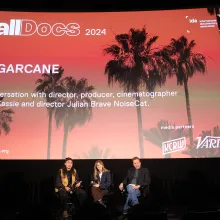
This year, the 2025 Academy Awards have spotlighted a remarkable selection of documentary features, each offering profound insights into complex global narratives. Notably, all of these nominated films were screened at FallDocs (and IDA award nominees and winners!). We were lucky to sit down this fall with each director and film a Q&A about their process and their film’s journey thus far.
This piece was first published in Documentary ’s Winter 2024/2025 issue, with the following subheading: What does the makeup of films awarded at IDA’s Documentary Awards tell us about the history of documentaries? Though it’s tempting to try to glean the trajectory of notable cinema from the history of a film awards show, the shows ultimately reveal more about the changing tastes of its voting body, as well as broader trends within the industry. This isn’t all that damning of awards shows, though cinephiles and commentators may enjoy grousing about how much awards bodies like the Academy of
This piece was first published in Documentary ’s Winter 2024/2025 issue, with the following subheading: From film festivals to the Oscars, one writer traces changes in how topicality, commercial success, and critical acclaim lead to documentary awards. The war-torn streets of a besieged Ukrainian city. An exiled Russian opposition leader. A cultural festival celebrating Black pride in the 1960s. A curriculum of history lessons is not the thing that connects these descriptions. Rather, they’re chapters in the unfolding legacy of documentary storytelling—a form that has grown increasingly
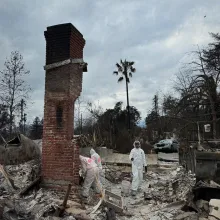
Sometimes, when I'm not crying, I joke that my life has become its own nightmarish version of The Twilight Zone: the ostensibly well-intentioned documentary filmmaker gets a dark cosmic reality check when he becomes the subject of one of his own films. In the twenty years I've worked in documentary, nearly every independent film I've made was about people losing their homes and their sense of community. And now that my home, my neighborhood, and my community were engulfed in the Eaton Fires, everything feels both horribly new and strangely familiar.
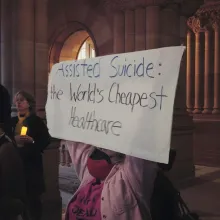
I interviewed Reid Davenport for the Doc Star of the Month column in 2022, the year the Stanford-trained TED fellow nabbed the Directing Award for U.S. Documentary at Sundance for his remarkable debut feature, I Didn’t See You There , which he termed a doc “about disability from an overtly political perspective.” Now the award-winning director returns to Park City with Life After , another doc about disability from an overtly political perspective—though the politics are complicated when the subject is assisted dying. As Davenport himself put it in his director’s statement: “I’m a filmmaker in
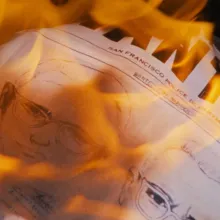
Prolific documentary essayist Charlie Shackleton’s latest film focuses on one of America’s most notorious criminals, the Zodiac Killer. Or rather, it’s a film about the documentary he would’ve made about the serial killer, had he been able to secure the rights to California Highway Patrol Officer Lyndon E. Lafferty’s 2012 true-crime book, The Zodiac Killer Cover-Up. As he describes the project that didn’t materialize, Shackleton pokes fun at the tropes that have come to define modern true crime shows. For Documentary, Shackleton spoke about weighing art against artifice and the ethical considerations of true crime.
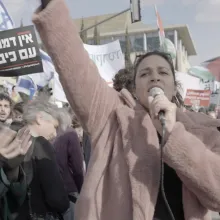
Noam Shuster Eliassi’s standup comedy show “Coexistence, My Ass!” is now the basis for a documentary of the same name, Coexistence, My Ass!, in which Lebanese Canadian filmmaker Amber Fares follows her through the COVID-19 pandemic, the anti-corruption protests in Israel, and the aftermath of the October 7th attack and Israel’s brutal retaliation in Gaza. Ahead of the film’s premiere at Sundance, we sat down with Fares over Zoom to discuss its long filming process and how October 7 shifted the tenor of the project.

For 15 years, Amy Berg wanted to make a film on Jeff Buckley. The joy of watching It's Never Over, Jeff Buckley then resides in witnessing Berg’s commitment to telling a known story and using rare archives, of the singer’s aching voice in elaborate voice messages he sent his loved ones. The film premiered at the Sundance Film Festival and after, Berg spoke to me about the making of the documentary and whether her love for the artist altered in the process.

Isabel Castro’s sophomore feature centers the family band that catapulted Mexican American singer Selena into pop stardom. Given voice as never before through “hundreds, potentially thousands” of hours of archival footage, Selena Quintanilla constantly gushes about her band—sister Suzette on drums, brother A.B. on bass/producing duties, eventual husband Chris on guitar, and parents Marcella and Abraham as just about everything in between—as the key to her fame. I spoke with Castro a week before her film’s Park City debut, which was yesterday. We discuss the herculean process of combing through the Quintanillas’ archives, paying homage to Gregory Nava’s 1997 biopic and the filmmaker’s favorite Selena song.