
Working from the late 1960s to the early 2000s, Mexican director Paul Leduc (1942–2020) built a multifaceted oeuvre, ranging from agitprop pamphlets to unconventional biopics of Frida Kahlo and John Reed; from self-funded militant documentaries to sumptuous period pieces; and from monumental ethnographies to computer animations. Leduc remains very little known outside Latin America, though his films were selected for Cannes and Berlinale several times. In October, in partnership with Cinemateca Portuguesa, Doclisboa organized a huge retrospective of his work. The Portuguese international
Latest Posts
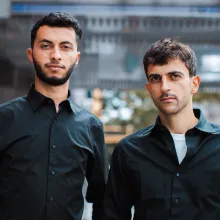
In the Winter 2024/2025 cover essay of Documentary magazine, No Other Land’s collective of Palestinian and Israeli co-directors imagine a reciprocal, shared future in front of and behind the camera.
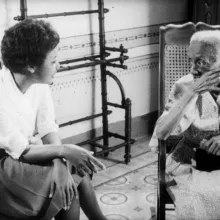
“ As filmmakers we do not set out in search of definition. We consider that the daily life of these men, their stories and the culture they have created... are more important. ” These words appear close to the beginning of De bateyes , Sara Gómez’s poetic 1971 short about the lives of workers on Cuba’s sugarcane plantations. Spoken in voiceover by the director herself, they serve as a kind of mission statement for a filmmaker whose short but remarkable career was built on empathy and curiosity. Across the span of approximately a decade, from the early 1960s up until her untimely death in 1974
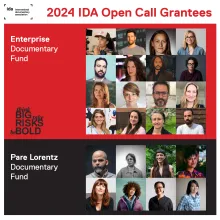
International Documentary Association (IDA) announced the recipients of the 2024 IDA Open Call that included IDA Enterprise Documentary Fund and IDA Pare Lorentz Documentary Fund. In addition to cash grants, IDA provides artist support and professional development guidance to all grantees.
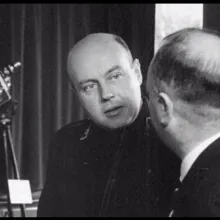
In The Propagandist , Luuk Bouwman walks us through how Jan Teunissen, a wealthy Dutch scion, went from directing the first feature film in the Netherlands to Nazi collaborator and propagandist. Bouwman’s ace in the hole is a long oral history with Teunissen from the mid-1960s in which he holds forth with smarmy candor about his life as a civilian and then as a Nazi official in the Netherlands. Excerpts are nimbly interwoven with other vividly preserved materials—home movies, letters—and the reactions of the historian who conducted the interview, Rolf Schuursma. It’s a jaw-dropping story of

For the past eight years, the making of Shiori Ito’s feature debut, Black Box Diaries, has consumed the majority of her life. A riveting portrait of the journalist’s pursuit for some semblance of justice after her sexual assault by powerful colleague Noriyuki Yamaguchi, the film also broadly critiques Japan’s deeply ingrained rape culture. The film’s edit took four years, which entailed sifting through troves of Ito’s intimate video diaries, courtroom footage of the lengthy legal battle against her assailant, covert recordings of a guilt-ridden detective and, in one of the film’s earlier

In the deluge of recent documentaries made by streaming platforms, it appears that production timelines have sped up in an attempt to fuel the conversation surrounding the topics they portray. For example, we’ve been privy to two documentaries about Aaron Carter, the little brother of Backstreet Boy Nick Carter and a pop star in his own right, since his untimely death from accidental drowning in 2022: the first was ABC News Studio’s The Little Prince of Pop (streaming on Hulu) six months later, and Investigation Discovery’s 2024 docuseries Fallen Idols: Nick and Aaron Carter , which also
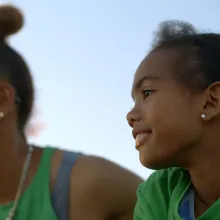
Laurie Townshend’s A Mother Apart allows Staceyann Chin to tell the story of her abandonment by her mother, Hazel. Chin proudly identifies as Caribbean, Black, Asian, lesbian, a woman, and a resident of New York City, as well as a Jamaican national who has spent her entire career speaking candidly about her own life. In our interview, we talked about the genesis of the film, shooting remotely during the pandemic, mothering oneself, and the ethics of care while working on A Mother Apart.
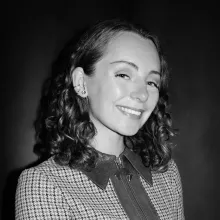
Berry Hahn is a French-Malagasy sales agent, independent consultant, and international liaison. Previously, she was a film programmer and documentary producer. A Getting Real fellow (2024), she is also a Realness Institute alumna and participated in U30 (2023) with Locarno Pro and the Southern Africa-Locarno Industry Academy (2021). Berry is a member of the European Film Academy, Documentary Association of Europe, and International Documentary Association. IDA: Please tell us a little about yourself, your profession, or your passion. My nickname is Berry, although my full name is Bérénice. I

About a Hero is set to have its world premiere as the opening film at IDFA tomorrow. It’s based on a script generated by an AI trained on Werner Herzog’s interviews, voiceovers, and writing. The resulting film, full of ironic self-reflection, explores themes of originality, authenticity, common sense, and the human soul in an era shaped by machine-human relationships. The filmmakers employ a variety of AI tools—from scripting to voice synthesis to image experimentation. The film is also intercut with documentary interviews with various artists about AI. We spoke with Piotr Winiewicz, the film’s director, in advance of the film’s premiere over Zoom and email.