
The Academy of Motion Pictures of Arts and Sciences (AMPAS) announced its new members recently. We congratulate ten IDA members who joined The Academy this year joining 600+ of our members who were already AMPAS members.
Latest Posts
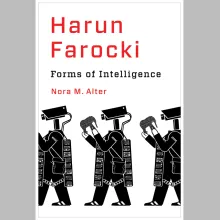
Ten years ago, on July 30th, 2014, the celebrated German filmmaker, writer, and artist Harun Farocki passed away. Farocki’s output spans short political films with an agitational edge, sharp essay films critiquing the ideologies behind image production in television from the inside, observational documentaries that extended this critique to the broader economic sphere, critical texts that both accompanied his own work and investigated that of others, editing the journal Filmkritik for a decade, teaching at Berkeley, and collaborating with Christian Petzold. Producing a study that properly

On January 24, by unanimous vote, documentary filmmakers got a big boost from Congress. The House of Representatives passed the Protect Reporters from Exploitative State Spying Act (aka the PRESS Act). It’s a journalist-protection bill that could easily have been called the Protect All Documentarians Act. Although the PRESS Act makes no specific mention of documentary filmmakers, federal courts uniformly include documentary filmmakers in their definitions of journalists. In fact, documentarians stand to be one of the bill’s biggest beneficiaries.
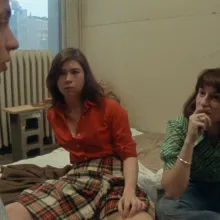
Martha Coolidge made her mark in Hollywood directing films like Valley Girl, Real Genius, and Rambling Rose, but before all that, she was breaking ground with reenactment in documentary decades before most other filmmakers broached such high concepts. Her 1976 debut feature Not a Pretty Picture sees her recreate a date rape she suffered in high school, and cuts between this film within a film and the discussions she holds with the actors about the experience, drawing out their thoughts and personal experiences within this issue. The film went under the radar for decades before being brought to

Amid industry disruption, filmmakers search for marketing and data solutions in community.
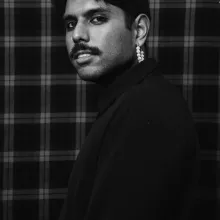
Advik Beni is a South African filmmaker and curator currently based in Los Angeles. Through a practice steeped in South African traditions of orality, their work aims to create imagined spaces for marginalized people to express grief and trauma.

Documentary brings you capsule reviews of some highly anticipated films.
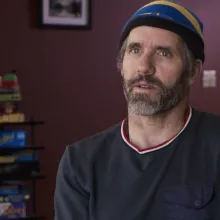
Documentary is happy to debut an exclusive clip from Holly Hardman’s As Prescribed . This feature documentary exposes the personal and social consequences of U.S. overprescription of benzodiazepine medication like Xanax. After the film’s world premiere at Sheffield DocFest in 2022, the film’s VOD release is organized by the filmmakers and is now available through Apple , Google , Tubi , and more. Regarding the clip, the director Hardman writes: “Writer Matt Samet, introduced here, is one of As Prescribed 's benzodiazepine survivors. Matt earned a reputation as a world-class rock climber who

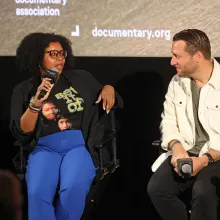
In a world rent asunder, conference speakers thrust documentary ethics into reality.
Now, while there may be greater attention to filmmakers’ proximity to their subjects and a push for more diverse directors, co-directors, producers, and crew members, there’s also a rise in what some call “cover-your-ass” hires over meaningful collaborations. If the U.S. industry, then, has accepted that documentary projects benefit from having creatives from similar races, genders, sexualities, or nationalities as their subjects, they might be included—but are they actual partners?