
Brown Girls Doc Mafia, commonly referred to as BGDM, has officially announced the 2025 cohort of the Sustainable Artist Fellowship. This year’s Sustainable Artist Fellows are Thien Dinh, Sara Husain Chishti, and Caron Creighton.
Latest Posts
Documentary is proud to debut a clip from Europe’s New Faces, directed by Sam Abbas. The film is an empathetic, unfiltered depiction of both the challenges and triumphs faced by migrants—from the harrowing journey across the Mediterranean sea from Africa to the closely-knit communities they create in the squats of Paris.
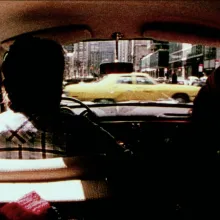
On the brink of America’s bicentennial, two filmmakers, a then-couple, filmed their cross-country road trips from the backseat of a car. The United States of America (1975) is the 27-minute product of these journeys and directors Bette Gordon and James Benning’s third and final collaboration. This short film typified the structuralist movement of avant-garde filmmaking, while also establishing documentary strategies that carry over to today.
Documentary is thrilled to debut the trailer of Divia, the latest film by Ukrainian filmmaker Dmytro Hreshko (Snow Leopard of the Carpathians, King Lear: How We Looked for Love During the War), set to celebrate its world premiere in the Crystal Globe Competition of this year’s Karlovy Vary International Film Festival on Sunday, July 6.
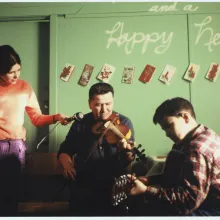
Alanis Obomsawin is one of the most important artists in the history of Canadian cinema, a major influence both on the country’s mode of documentary filmmaking and on the way its film business incorporates the voices of people from the First Nations. In 2022, Richard Hill and Hila Peleg curated the exhibition 'Alanis Obomsawin: The Children Have to Hear Another Story.' We spoke with Obomsawin about the exhibition, her films, and her practices of listening and storytelling.

Documentary is proud to unveil the trailer of A Quiet Love, a powerful new feature from acclaimed Irish filmmaker Garry Keane (GAZA, In the Shadow of Beirut), which will have its world premiere later this week at Doc Edge 2025 in the festival’s Being Oneself strand.
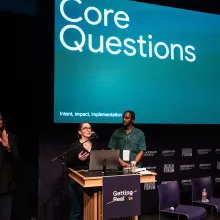
As a reviewer for a couple of documentary grants, the process is a lovely way to learn more about what stories my peers are exploring, what styles and forms are standing out from the pack, and to make some extra cash to subsidize the financially marginal existence that many of us filmmakers lead. Reviewing grant applications, like everything else, has been complicated by generative artificial intelligence (GenAI, for short). After six years of reviewing projects, this year I am regularly encountering the use of audiovisual GenAI in samples for the first time—notably, mostly in projects that

It’s only us; there’s no them. That’s the provocation at Tribeca’s 2025 Immersive exhibition, titled In Search of Us, mounted in partnership with Onassis ONX and Agog. The exhibit seeks to challenge the act of othering that is so entrenched in media landscapes with “us vs. them” ideologies. About half of the show is comprised of documentary or documentary-adjacent work. This dispatch includes review of four exemplary nonfiction works.
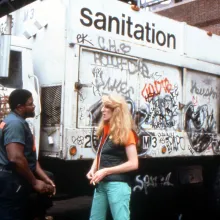
Maintenance Artist, directed by Toby Perl Freilich, is a fascinating look at Mierle Ukeles—an undeterred feminist and advocate for the working class who constantly defied labels. Just prior to the film’s documentary competition debut, Documentary caught up with Freilich to learn how she ended up collaborating with this unconventional and unusually empathetic character.
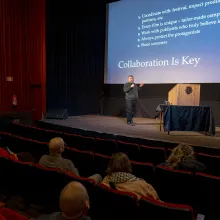
This article is a condensed and slightly adapted version of a talk I delivered on June 8, during the Skjaldborg documentary film festival in Patreksfjörður, Iceland, titled “The Press Playbook: How To Get Your Doc in the Spotlight.” What follows reflects both the structure and tone of that session—direct, personal, and grounded in real-world practice.