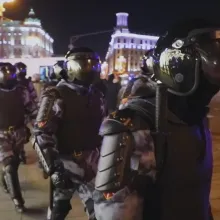
Essential Doc Reads is our curated selection of recent features and important news items about the documentary form and its processes, from around the internet, as well as from the Documentary magazine archive. We hope you enjoy! PBS’s Julia Ingram and Putin’s War at Home director and producer Gesbeen Mohammad and producer Vasiliy Kolotilov discuss how the Frontline documentary highlights the opposition to war in Ukraine within Russia. This was challenging, as in Russia, opposition to the war can result in 10 to 15 years of imprisonment. Because of this, Mohammad and Kolotilov felt it was
Latest Posts

Screen Time is your curated weekly guide to excellent documentaries and nonfiction programs that you can watch at home. In observance of Luiz Inácio Lula da Silva’s presidential win in Brazil, Petra Costa’s 2019 documentary The Edge of Democracy explores the convoluted path to democracy in Brazil. The documentary is both an IDA Award nominee and an Academy Award nominee, and is able to transform complex politics into an absorbing and interesting documentary. Watch now on Netflix. In the festivity of Halloween, many of these documentaries feature pressing issues that may forge fear. Though only

Essential Doc Reads is our curated selection of recent features and important news items about the documentary form and its processes, from around the internet, as well as from the Documentary magazine archive. We hope you enjoy! What started as a rejected book idea has evolved into Is That Black Enough For You?!?, a documentary that is rich with archival clips and embedded with interviews from Black talent from throughout the ages. From Vanity Fair, Yohana Desta reflects on how the documentary explores Black contributions to culture, specifically in cinema. Mitchell reexamines and exalts
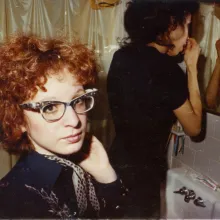
The 60th edition of the New York Film Festival presented many powerful, timely and innovative documentaries. The majority came from abroad—France, Germany, Italy, Austria, the UK, Lebanon, and India. Documentary directors from the US included Martin Scorsese, Laura Poitras, Chris Smith, Elvis Mitchell, Margaret Brown, Elisabeth Suren, and Daniel Eisenberg. The festival’s Centerpiece Selection was Laura Poitras’ All the Beauty and the Bloodshed, about the photographer Nan Goldin and her battle against the Sackler family, makers of OxyContin. This is a case where the personal is political. For
Dear Readers, For me, the biennial Getting Real conference has been such a rich and rewarding well of ideas, issues, and themes to draw from, as I continually rethink our editorial strategy—so that we are truly serving the documentary community with a robust palette of content from around the world. Getting Real has always spurred me to consider where we need to go deeper and further as a publication. With that, five of the articles we commissioned here complement the spirit of Getting Real, from different angles. Mariana Sanson talks to the programmatic masterminds behind the conference—Abby

I remember watching Shaunak Sen’s first film, Cities of Sleep, in a college auditorium in New York, where Sen and his friends walked around with DVDs in hand, distributing the film about Delhi at night, to whoever would screen it. Delhi—or Dilli, as it is called in several South Asian languages—makes cynics out of most of us who have lived there. The trite thing to ask after, often, is the “dil” (heart) in Dilli. As I watched Sen’s new film, All That Breathes, premiere at Sundance, I reacquainted myself with the city’s heart as it took flight on the wings of the black kites that dot Delhi’s
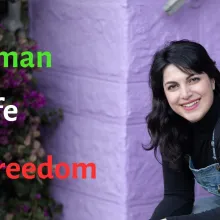
IDA: Tell us about yourself. What is your profession (or passion)? Nazanin Nematollahi: Born and raised in Iran after the Islamic revolution of 1979, which was already engaged in a war, I always felt unheard. I was raised in a family that lost two young boys in the Iran-Iraq war. All my childhood was filled with the trauma of war, uncertainty, and void. Considering the brutal and misogynistic nature of the new regime, I never felt safe as a child and young girl in that society. I survived sexual abuse and constant harassment in my years of education and later in the workforce. Experiencing all
Essential Doc Reads is our curated selection of recent features and important news items about the documentary form and its processes, from around the internet, as well as from the Documentary magazine archive. We hope you enjoy! Rebecca Green from Dear Producer discusses the ever-growing busyness of producers and the limits of producing work when streaming is devaluing documentaries in pursuit of money grabs. Through quotes from producers struggling in the industry, as well as a timeline of events in 2022, Green delves into the complexities of creating meaningful content in this climate. The

By May 2000, the fear of an impending apocalypse dimmed. The Y2K glitch, the much-hyped computer error that supposedly stemmed from the inability of computers around the world to distinguish the difference between 1900 and 2000 due to being coded to only read the last two digits of a year, was meant to usher in a Mad Max-level reset. The new millennium would usher in wiped-out bank accounts, airplanes freefalling from the skies, and self-terminating power grids once the clock struck midnight on New Year’s Eve 2000. At my conservative Christian school in John McCain’s Phoenix, Arizona, I

It was around 2005 and I stared at the TV screen in my parent's living room in awe. The credits for Tarnation—directed, produced, and edited by Jonathan Caouette, and executive-produced by John Cameron Mitchell and Gus Van Sant—rolled over black. The film’s experimental form felt like a fever dream—or nightmare. Made almost entirely out of archival photos, home videos, and first-person camera work edited on iMovie, Tarnation is Caouette’s autobiographical journey through the madness surrounding him and his profound love for his mentally ill mother, Renee Le Blanc—and a deeply personal portrait