There is something called the Paris Syndrome, under which, tourists—mostly Japanese and eastern Asian tourists—experience a deep sense of dismay and disappointment when they visit the city of Paris, because what they see doesn’t quite live up to the expectations they had had of the city. Watching Alice Diop’s documentaries does the opposite for me. They reveal something I have never known about Paris and its suburbs. And it leaves me in awe. Diop, who made her first film, La Tour du Monde, in 2005, was born to Senegalese immigrants and grew up in the banlieues—the suburbs of Paris. The world
Latest Posts
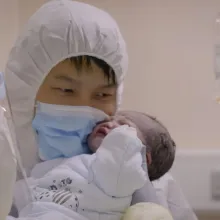
Screen Time is your curated weekly guide to excellent documentaries and nonfiction programs that you can watch at home. Kicking off POV’s 35th Season is Yung Chang’s Wuhan Wuhan, which premieres July 11, then will be available for streaming through August 11 at pbs.org. The film takes viewers to the epicenter of the COVID-19 pandemic, in its early months, through the frontline perspectives of medical workers, patients and ordinary citizens doing extraordinarily magnanimous work. Chang and his crew were afforded remarkable access to hospitals and homes alike, as doctors, nurses, patients
By Patricia Aufderheide AND Bedatri D. Choudhury The 2022 Tribeca Festival was finally back in person, and there was much hugging, partying and clustering to make up for lost time. As a FOMO machine, it’s pretty good; there’s way too much going on at any one time. Films, of course, but also games, television, immersive installations and projects, audio, live performance, and a daily round of panels. Tribeca’s huge doc selection (70 films) included plenty of celebrity and performance works, as well as films sure to attract the obsessed and sensation-seeking. Mixed in were films that left us
Margaret Byrne’s Any Given Day is a half-decade-long ride on the roller coaster that those living with a mental illness face—on “any given day”—through the stories of four distinctly riveting individuals, three of whom the director met while investigating the treatment of detainees at Chicago’s Cook County Jail, which in 2014 had the dubious distinction of being the largest single-site mental health facility in the country. And these individuals are participants in the city’s diversionary mental health court probation program. (Which, unfortunately, is itself problematic, since a guilty plea

Screen Time is your curated weekly guide to excellent documentaries and nonfiction programs that you can watch at home. July is BIPOC Mental Health Month, and it provokes us to have a conversation about mental health, of course, but specifically within the context of BIPOC communities who have been left out of the conversation. They have been denied access to mental healthcare that is administered in culture-sensitive ways, while they have had to negotiate with what is tabooed and often ignored within their communities. For this week’s Screen Time, we include some documentaries that can help

Essential Doc Reads is our curated selection of recent features and important news items about the documentary form and its processes, from around the internet, as well as from the Documentary magazine archive. We hope you enjoy!
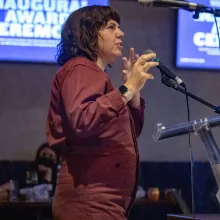
Editors’ Note: Doc10 is Chicago's only all-documentary film festival and this year, the festival honored filmmaker Jessica Devaney with its inaugural Vanguard Award, for being “at the forefront of creating and cultivating innovative and important documentary filmmaking.” We are grateful that Devaney shared her acceptance speech with us. And a very special thanks to our friends at Doc 10. The speech has been edited for length and clarity. When I first heard the name of this award, I thought, That's a lot to bite off… a “Vanguard Award”—what does that mean? As I sat with it for a little bit, I
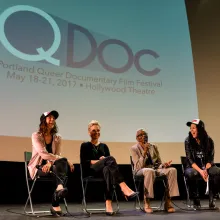
Filmmakers have a special place in their hearts for film festivals hosted in small theaters, in idyllic local neighborhoods, with thoughtful Q&As, and crowds as interesting as the films themselves. In many ways, that’s the kind of festival QDoc, The Portland Queer Documentary Film Festival offers itself as. QDoc is the only festival in the US dedicated solely to LGBTQ+ nonfiction, and it makes space, like no other, for queer and trans documentarians. As with many good things, small festivals like this one were among the most impacted by COVID, but now, after a two-year hiatus and much
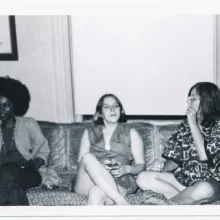
Screen Time is your curated weekly guide to excellent documentaries and nonfiction programs that you can watch at home. It’s been a hard week to fish out hope, to feel like there is a future that rests on able, progressive, equitable shoulders. As we watched Linda Goldstein Knowlton and Katie Flint’s We Are The Radical Monarchs, we drew inspiration from the young girls of color in Oakland, who are members of Radical Monarchs, “an alternative to the Scout movement for girls of color, aged 8-13.” We suggest you watch these young social activists on POV, and take heart in the fact that our world
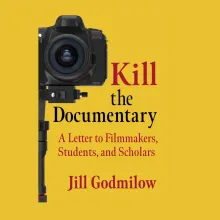
Kill the Documentary is a brilliant, angry book. An honest book. A brave book. Guggenheim Fellow and award-winning filmmaker Jill Godmilow has written a stirring call to arms in a form she calls “a letter.” I rather agree with Bill Nichols, who writes in the foreword that he prefers to call it “a manifesto.”