Screen Time is your curated weekly guide to excellent documentaries and nonfiction programs that you can watch at home. We at IDA are heartbroken at the passing of Heddy Honigmann, documentarian extraordinaire and a true master of the form. As big fans and admirers, we are dedicating this week’s Screen Time to celebrate her and her art. Honigmann’s Buddy takes an unsentimental look at six canine and human pairs to “reveal what’s really given and received.” Many critics have noted the ease with which the filmmaker would open people up to trust her and the camera. "I don't do interviews. I make
Latest Posts

By KRISTAL SOTOMAYOR and EDDIE Hustleby The 2022 IDA Documentary Awards Call For Entries (CFE) launches on Thursday, May 26! The IDA Documentary Awards are a crucial event in our field. Nominations can elevate a documentarian’s career and their project’s global impact. Last year’s nominees have gone on to win many accolades: Summer of Soul (...Or, When the Revolution Could Not Be Televised) won the Academy Award for Best Documentary Feature; Suave won the Pulitzer Prize for Audio Reporting; and nine IDA Documentary Awards nominees received Peabody Award nominations. In this post, the people
Essential Doc Reads is our curated selection of recent features and important news items about the documentary form and its processes, from around the internet, as well as from the Documentary magazine archive. We hope you enjoy! The New Yorker’s Patrick Radden Keefe listens on as filmmaker Ron Howard chats with chef José Andrés, discussing their new documentary We Feed People. Howard, who has directed more than thirty movies, sees some affinities between filmmaking and the work that Andrés does, even if the stakes are lower in Hollywood. "I love collaborators. So does he," Howard said. "He
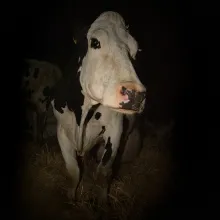
Cow opens with its protagonist, Luma, mid-labor in a cattle barn where she delivers her newborn calf, Malu. The audience observes the beauty of childbirth, and the tender moment of grooming her glistening babe clean that follows. Then, the scene quickly takes a sinister and heartbreaking turn, as Malu is whisked away to a separate section of the farm in a nearly mute scene. Cow is director Andrea Arnolds’ first feature documentary. Most notably known for narrative films such as Red Road, Fish Tank, and the narrative short Wasp, for which she won an Academy Award, Arnold worked on Cow
Local film festivals have taken some of the biggest hits during the pandemic and it’s among the many reasons that returning to the historic Castro Theater and hearing “welcome back to the movies” was so emotional for many of us in the audience. The 65th SFFILM Festival, or San Francisco International Film Festival, has endured more than most since it began in 1957, making it now the longest continuous film festival in the Americas. Their return to an in-person format, with extensive COVID protections, set a hopeful tone for the future of independent film in the Bay Area and beyond
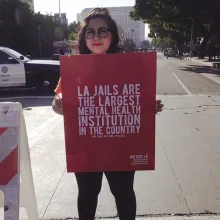
Screen Time is your curated weekly guide to excellent documentaries and nonfiction programs that you can watch at home. Over the past few years, America has been experiencing a crushing series of crises—a global pandemic; an increasingly divided citizenry; the virulence of white supremacy and its encroachment into the mainstream through media outlets, and state and federal legislations; and the rapid demise of democracy in concert with a systematic dismantling of civil rights. This past weekend, we witnessed a horrific, hate-fueled massacre of Black Americans at the alleged hands of a teenager
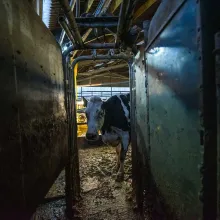
Essential Doc Reads is our curated selection of recent features and important news items about the documentary form and its processes, from around the internet, as well as from the Documentary magazine archive. We hope you enjoy! Over at The New Yorker, Richard Brody writes about how nonfiction filmmakers like Andrea Arnold often manage to "erase themselves and their processes." Scott specifically talks about Arnold’s latest, Cow. Cow filters out the basic personal element. It doesn’t show the crew’s interactions with the farm workers, who seemingly pretend that the crew and equipment aren’t
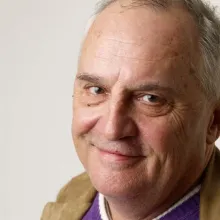
Sometimes the right people win the big awards. Certainly, that’s the case with John Zaritsky, a fiery, truth-telling filmmaker, who garnered the Best Feature Documentary Academy Award in 1982 for Just Another Missing Kid. The Oscar, which, in later years, he would use as a door-stopper for his legendary parties at a ski chalet in Whistler, British Columbia, was far more useful as a passport that got him from being an angry filmmaker at the CBC (Canadian Broadcasting Corporation) to independence as a freelancer working for PBS’ FRONTLINE and other outlets in the US, Canada and Great Britain
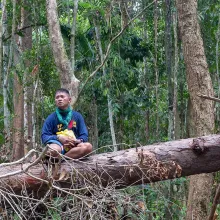
Screen Time is your curated weekly guide to excellent documentaries and nonfiction programs that you can watch at home. Right on the heels of Mother's Day, the new New Yorker documentary, artist Titus Kaphar’s I Hold Your Love, is a “quiet vignette” that reminds us just how frightening it is for women of color to give birth in the US. Kaphar’s most recognizable series shows Black mothers holding a blank space meant to symbolize their babies. Featuring Kaphar’s friend Serena Williams and others in his family, the documentary is a celebration of Black motherhood as much as it is a reminder of

In 2014, Claude Motley got shot in the face during an attempted car-jacking in Milwaukee. The shooter was 15-year-old Nathan King. A few days later, Nathan would himself get shot by Victoria Davison as he tried to steal her car. That bullet paralyzed his legs. When Claude Got Shot toggles among these three protagonists in a deep dive into the juvenile justice system and the lasting physical and psychological effects of being shot. Director Brad Lichtenstein had been close friends with Motley for 20 years when the shooting occurred. They met through a daycare center in which they both had kids