Essential Doc Reads is our curated selection of recent features and important news items about the documentary form and its processes, from around the internet, as well as from the Documentary magazine archive. We hope you enjoy! Close on the heels of the renewed media interest in Chicago’s (and the world’s, by extension) climate change crisis, Chicago Tribune’s Nina Metz draws out a game plan that involves paying heed to documentaries. Documentaries can help us better understand what’s happening around us and Fire in Paradise, also from 2019, is also worth a look. The film, which is on
Latest Posts

"You never forget your first time seeing a whale," director Joshua Zeman says in The Loneliest Whale: The Search for 52. His was as a kid working on a sailing ship. But the impetus behind this documentary came years later, after he read about a solitary whale that couldn’t communicate because his call was at a different frequency from every other whale: 52 hertz. Dubbed 52, he’d been roaming the ocean for decades, his song unanswered. Though heard on hydrophones, 52 had never been visually spotted by scientists. Zeman decided to try. Through Kickstarter, he raised enough money for a seven-day
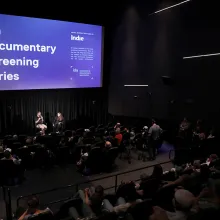
When the IDA Documentary Screening Series launched eight years ago in place of its annual DocuWeeks™ theatrical showcase, the goal was to present the most critically acclaimed documentaries of the year to awards voters and IDA members in both Los Angeles and New York City. While the purpose and goal of the Screening Series has not changed since its inception, the program has grown dramatically over the years. We went from screening 15 films in 2014 to nearly 50 films over four months in 2019. This enormous industry growth has led to an increasingly expensive and complex awards campaign model
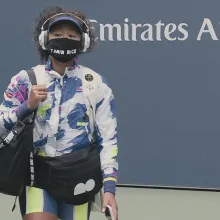
Screen Time is your curated weekly guide to excellent documentaries and nonfiction programs that you can watch at home. Carole Roussopoulos was the first woman in France to purchase a lightweight Sony Portapak camera. As a result, she and her feminist comrades were able to film the feminist agitation that took over the country post-May 1968. Along with colleagues like the French actor Delphine Seyrig, Roussopoulos made films that criticized the mainstream and called out the general patriarchal society. Catch a curation of some of these films on MUBI, as a part of their new special program
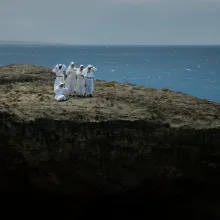
Editor’s Note: The following is a translation of Kristal Sotomayor’s article from the Summer 2020 issue, about the Puerto Rican documentary community. Thanks very much to Amaya Garcia for the translation. Read in English Parte 1: La Isla antes de María "Puerto Rico es una isla pequeña en un limbo político." Así describe la situación política de la isla caribeña la documentalista y directora del filme Ser grande, Karen Rossi. Tras décadas de trabajo como cineasta independiente, Rossi ha sido testigo de los cambios que ha experimentado la industria cinematográfica en la Isla. "Cuando invitamos a
Essential Doc Reads is our curated selection of recent features and important news items about the documentary form and its processes, from around the internet, as well as from the Documentary magazine archive. We hope you enjoy! American Documentary’s new ED, Erika Dilday, speaks to Variety’s Addie Morfoot about representation, POV, PBS and beyond. I don’t want to just count numbers. I really don’t. I want us to dig deeper. I want us to try harder. We owe a debt to our audiences to bring them content that stretches them, that enriches them and that sometimes will make them a little
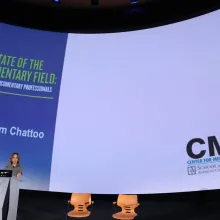
(Note: Portions of this writing are excerpted directly from the full report (global findings) as well as the "15 Key Findings" report based on US respondents, co-authored with Bill Harder. Both reports and downloadable graphs are available at cmsimpact.org) To say the documentary industry and its marketplace are changing is an understatement. In the streaming media age, we’ve never experienced so many platforms and outlets for audiences to find and view nonfiction storytelling. It’s an exciting time, from exploring genres to experimenting with new artistic ideas. In this media frenzy moment
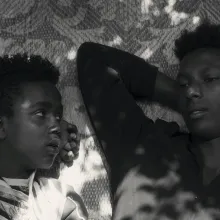
Full Frame Documentary Film Festival, now in its 24th year, has become a notable stop on the circuit, not least for its homey welcome to filmmakers, its ease of navigation, its events, and its wealth of carefully curated offerings. This virtual, pandemic version was a valiant effort to maximize the possible and dispense with what could not be substituted. It featured an eclectic mix of coming-soon-to-a-streamer-near-you work, slow cinema, and the downright experimental. As Artistic Director Sadie Tillery explained, this meant shrinking the fest strategically. The retrospective strands
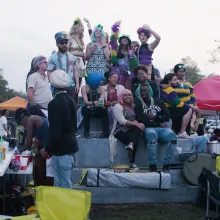
Screen Time is your curated weekly guide to excellent documentaries and nonfiction programs that you can watch at home. For your perfect post-July 4th screening, join comedian/journalist CJ Hunt as he sets out to document the New Orleans City Council’s vote to remove four Confederate monuments. His new documentary, The Neutral Ground, produced by Darcy McKinnon, took shape after Hunt’s shoot and the Council’s decision were halted by opposition and death threats. The film, playing on PBS’ POV, sets forth a conversation on racism, America and its foundational white supremacy. If you’re feeling
Essential Doc Reads is our curated selection of recent features and important news items about the documentary form and its processes, from around the internet, as well as from the Documentary magazine archive. We hope you enjoy! Variety ’s Addie Morfoot interviews IDA’s Executive Director Rick Perez, who renews his call for diverse voices in the documentary space. The question of, ‘Do we take a risk?’ would come up. And I would intentionally reverse that question by saying, ‘How can we invest in this filmmaker?’ Because that’s quite a different idea — that we are nurturing and cultivating as