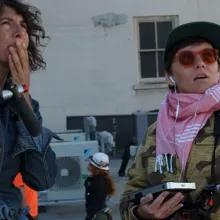
I tell myself often, “You can’t cry. You are working.”
Latest Posts
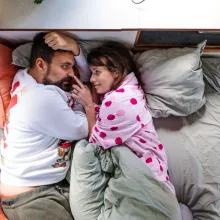
There Is No "I" in Threesome is certainly a doc I would not have predicted to have world-premiered at the WarnerMedia Lodge at this year’s Sundance Film Festival. Set for a pre-Valentine’s Day streaming debut on February 11 (as an HBO Max Original), the project is directed by and stars New Zealand-based filmmaker Jan Oliver “Ollie” Lucks. Lucks is the son of an Iranian-Indian mother and a German father, and only moved to New Zealand a decade and a half ago to pursue his craft. Once there, however, he met an actress named Zoe. Boy meets girl, boy and girl fall in love and plan a wedding. And
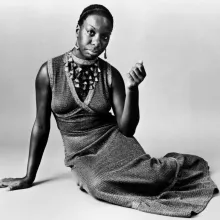
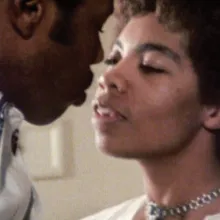
Screen Time is your curated weekly guide to excellent documentaries and nonfiction programs that you can watch at home. Streaming through February 16 on American Masters, How It Feels To Be Free, from Yoruba Richen, profiles six iconic African American female artists—Lena Horne, Abbey Lincoln, Nina Simone, Diahann Carroll, Cicely Tyson and Pam Grier—digging in to how they channeled their creativity into front-and-center civil rights activism within an industry bent on stereotyping and marginalizing them. Premiering February 15 on American Experience, Voice of Freedom, from Rob Rapley, tells
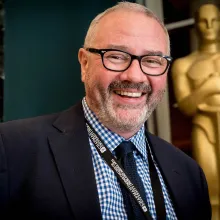
Dear Documentary Community, This past fall, I announced that I would be stepping down from IDA in 2021. Over the past few months we’ve all been living through an unprecedented pandemic, inspiring movements for racial justice, and uncertain political situations. That has caused many of us to reflect on our lives and our choices. I made my decision full of hope for IDA, the world of documentary, and whatever my role in that world may be moving forward. As I look back to how IDA has grown since 2015 and the work it is doing today, I see that IDA has become an essential institution within our
Dear Readers, The online edition of the Getting Real Documentary Conference, held last fall to a global audience of 3,100 attendees from 54 countries, catalyzed what has been one of the most tumultuous years of the past century. Within our community, the ongoing reckoning on systemic racism has spurred a collective self-examination among filmmakers, media arts organizations and the gatekeeping apparatus of programmers, funders, commissioning editors, distributors and exhibitors. Among the many takeaways from the digital confab were the keynote addresses from filmmakers Maria Agui Carter, Zeng
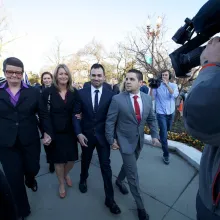
Criminal prosecutions and civil litigation can make compelling subjects for documentarians. Indeed, documentary films that have used legal cases as a vehicle to explore broader social and cultural themes, or to expose individual or systemic injustice, are legion. Ben Cotner and Ryan White’s 2014 film The Case Against 8, which told the story of the legal fight to overturn California’s Proposition 8 ban on same-sex marriage; Stephen Maing’s 2018 film Crime + Punishment, which focused on a group of whistleblowing New York Police Department officers—the “NYPD 12”—who alleged in a lawsuit that they
When I was in graduate school studying anthropology and film in the mid-2000s, the documentaries of Adam Curtis blew my mind. His playful and surprising, yet often also disturbing, historical collages were unlike anything I had seen at the time. Based at the BBC, Curtis splices gritty news and documentary archival with vintage ephemera including ads, educational films and industrials as well as Hollywood films. His cuts often highlight moments that might otherwise have been erased from official records—awkward silences, meaningful glances, unintentional camera movements. His early work such as
What role can mediation play in resolving disputes that arise during production of documentary films? Warning: producing documentaries can be hazardous to professional relationships. In the course of a typical production, collaborators may squabble over a variety of creative and business matters. Disputes could possibly involve project finance, editorial direction, distribution options, credits and, when reconciliation isn’t in the cards, the terms of a breakup. Making a documentary film entails dozens of important decisions. When the film has two or more producers, the parties sometimes enter
The documentary industry is hurtling towards transformation. The convergence of a pandemic that has destabilized the industry with endemic racism that has made visible inequities across the field has many calling for a radical reimagining, even a decolonization, of documentary. This reimagining aims to unearth the colonial roots of a form that employed extractive (sometimes nonconsensual) filmmaking, where filmmakers from outside of a community treat its stories as resources to be culled for entertaining or educational fare, rather than the community's benefit. Efforts to share power with or
Following the questions posed by my former Multitude Films producing partner Lisa Valencia-Svensson in her essay “Who's Telling Whose Stories To Whom and Why?" is: and how? If our creative methods of storytelling intend to counter the extractive, colonial heritage of documentary, then our financial and legal practices must also. Our business models can either serve as obstacles to justice or opportunities to support equity, access and representation. Despite an apparent influx of resources in the field, independent documentaries—particularly those by emerging and underrepresented filmmakers