

Suburban Fury arrived last year as the culmination of two decades of investigation by filmmakers Robinson Devor and Charles Mudede into the American myth. Since their first collaborative feature, Police Beat (2005), the two filmmakers have looked to the margins of history, finding characters on the outside looking in, and born witness to the rippling tensions between personal narratives and the narrative of the nation. Zoo, their 2007 documentary, continued these fascinations, equally present in their other work, but it would not be until Suburban Fury that these themes would find their fullest realization—the violent meeting of two strands at the heart of Devor and Mudede’s collaboration.
The film tells the story of Sara Jane Moore, a Californian housewife-turned-radical-turned-informant who, on September 22, 1975, fired a pistol shot at President Gerald Ford outside the St. Francis Hotel in San Francisco, narrowly missing. Drawn in by the media sensation of Patty Hearst’s kidnapping, Moore had departed her domestic life to seek out involvement with the Black Panthers, before being promptly enlisted as an FBI informer, connections which grew in proportion to one another before fracturing just ahead of the assassination attempt. Sifting through this narrative is complex, made no simpler by Moore’s insistence that she be the only interview used in the film, speaking as an octogenarian after being released following 32 years of a life sentence in prison.
“The idea was to have Sara Jane narrating her life freely and against history,” Devor said in the film’s press notes, and Suburban Fury unfolds along these two barely-parallel tracks: life and history. The film represents the most direct confrontation with these themes, which have been at the heart of Devor and Mudede’s project, tracing their origins in the longtime collaborators’ distinct points of departure.
From the start, filmmaker Robinson Devor has been fascinated by the allure of the screen, particularly Hollywood. Angelyne, the subject of his 1995 documentary short of the same name, immigrated to the city as a child from post-war Poland before, in 1984, erecting the first of several now-iconic Los Angeles billboards bearing only her image and adopted first name. Similarly, The Woman Chaser, Devor’s debut feature from 1999, concerns one Richard Hudson (Patrick Warburton), who moves down from San Francisco with fraught plans to make movie history. These are characters who want to make something of themselves, to join their own stories with the grand story of America for good or for ill. Devor approaches these subjects in harmony with their approach to Hollywood: one of utter fascination. His characters in documentary and fiction are viewed frequently from below, looking up, and thus made to appear larger than life. Shortly after The Woman Chaser, Devor decamped from Los Angeles for Seattle.
It was in Seattle where Devor first met journalist Charles Mudede. Born in Zimbabwe (then Rhodesia) to white-collar parents, Mudede was sent to America at age 20 to earn a respectable degree, only to land instead in a Seattle flophouse. At some point, he picked up a copy of The Stranger, a local alt-weekly, and shortly thereafter joined as a staff writer. His writing was literary, with wide-ranging insights into art and politics hailing from a Marxist education and a burgeoning interest in the chaos of post-structuralist thinkers. He gained notoriety for his “Police Beat” column, which spun poetry out of Seattle police blotters, assembling a florid mosaic of Seattle metropolitan life. When chronicling a lover’s spat, for instance, in which a bird cage is thrown across an apartment, he writes his column from the imagined perspective of the caged bird. If Devor’s focus was on the big story, Mudede liked to elaborate on all the little ones never told.
Devor and Mudede initially came together for Superpower, a co-authored script about a child soldier in Africa. When they failed to secure funding for this project in 2005, they pivoted to adapt Mudede’s column into a feature film of the same name. Starting with Police Beat (2005) and continuing with documentaries like Zoo (2007) and Suburban Fury (2024), the director-writer duo has crafted a singular constellation filled with unlikely stars that capture a surreal underbelly of the American experience. Big story and little story are in constant dialogue—Devor’s text and Mudede’s marginalia—and the films animate this conversation with growing tension and stakes in each entry in their filmography. Though Devor is typically assigned the lone directing credit, Mudede’s role begins in the earliest development stages and far exceeds that of a typical writer, extending to shot-planning and interviewing subjects. The two prefer a small number of primary sources rather than a chorus of talking heads, deploy archival footage sparingly and with great intention, and make frequent use of re-enactments and recreations. What emerges in these films is a triptych of stories in the borderlands of American history, with characters imagining themselves into the center of things, an equal source of dread and fascination.

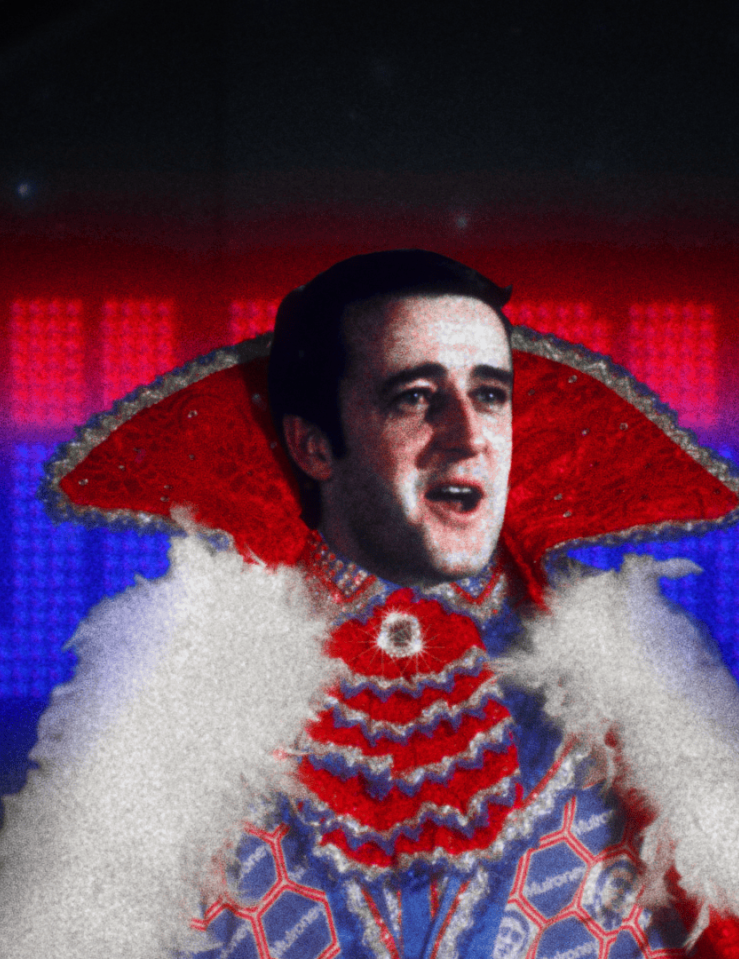
Police Beat. Courtesy of Northwest Film Forum

Robinson Devor (L) at IDA Awards 2025. Photo credit: Urbanite LA
Fiction and nonfiction, it bears emphasizing, are fluid categories in the collaborative filmography of Devor and Mudede. Their fiction films tend to take directly from real events, and their documentaries don’t hesitate to indulge their characters’ imaginations. If a sense of realism exists at all in these works, it’s to be found in between these binaries, at the manifold points where their boundaries blur into one another. Police Beat is “fiction,” but draws on the true stories transcribed in Mudede’s column, and shares much thematic ground with later documentary works.
Police Beat is anchored by Z (Pape Sidy Niang), a recent immigrant from Senegal employed with the Seattle P.D. as a bike patrol officer. Z cruises absent-mindedly through a city awash in greens and blues, and struggles each night to assimilate the day’s quotidian chaos into mandatory reports. His thoughts are preoccupied with his girlfriend, Rachel, who is spending the week camping with her male roommate. Z’s voiceover, spoken in Wolof, registers mounting suspicions and jealousy, and the film complements his overactive imagination with stagings of Rachel’s romance with her roommate.
Like Mudede’s column, the film is interested in the disjunct between popular police narratives and the vicissitudes of law enforcement. One scene finds Z helping to extricate a drunk passed out in a hedge ten feet above the ground; in another scene, he investigates the assault perpetrated by a fallen branch on a lonely woman. Abetting this dreamlike quality, the film cuts between dispatches in progress, showing neither beginning nor end, obeying only the continuity of Z’s voiceover, which is mostly concerned with Rachel. “We need you to focus more,” his commanding officer reprimands him for the inevitable imprecision of his nightly reports. “Everything you write has to hold up in court.”
As with many a character in the Devor/Mudede universe, he’s on the outside—of the camping trip as of the police force—imagining his way in. One scene foreshadows the more ominous tensions between insiders and outsiders still to come. When Z tickets a reckless cyclist, the man says he would kill George Bush if given the opportunity. Z, struggling as usual to connect his experience to something larger, responds: “Threatening the life of the president is threatening my life. There is a direct chain of command.” It’s not certain the statement would hold up in court, but such are the creative leaps one takes to envision oneself in the big story of the nation.
The year Police Beat came out, the nation’s eyes turned to Washington for an entirely different reason. On July 2, 2005, Kenneth Pinyan, a divorced father of two and high-ranking engineer with The Boeing Company, was declared dead upon arrival at the Enumclaw Community Hospital. He passed away due to “acute peritonitis [caused by] perforation of the sigmoid colon during anal intercourse with a horse.” A media circus ensued, and video of one of Pinyan’s escapades would circulate online for years after under the title “Mr. Hands.”
Fiction and nonfiction, it bears emphasizing, are fluid categories in the collaborative filmography of Devor and Mudede. Their fiction films tend to take directly from real events, and their documentaries don’t hesitate to indulge their characters’ imaginations.
In Pinyan’s death, Devor and Mudede appear to have seen the unlikely potential to place the explosive media narrative in dialogue with the many alternative readings that had been erased. In 2007, their documentary Zoo entered production under the title In the Forest There Is Every Kind of Bird. This original title hews closer to the film’s spirit of understanding. Devor and Mudede conduct their interviews almost exclusively with Pinyan’s fellow travellers, the men who organized and attended parties oriented around sex with horses on a farm outside Seattle. Sympathetic treatment notwithstanding, these men refused to show their faces on camera, and so the filmmakers recreate their recollections, not showing the sex acts in question, but rather the dreamlike (akin to Police Beat), twilit atmosphere surrounding them: cowboys dragging their hands through tall grass; the purple moonlit rhododendrons they pass en route to the barn. In this way, the film allows the men to imagine themselves into a classic American narrative form: the western. Iconic shots of horses grazing and cowboys patting their hides create an impression of a kind of paradise lost in Washington.
But if the film facilitates these men envisioning themselves as part of a grand tradition of horse-love (in various forms) in the American western project, Devor and Mudede also show history racing forward alongside them. Pinyan, the film emphasizes, was doing the work of the American empire in its more contemporary arena, engineering weapons for use in Iraq. On the TV sets and truck radios of Zoo, news of Operation Desert Storm plays constantly. When Pinyan turns up dead, the parallel America of these men’s imagination comes face to face with this running historical record, and the resultant unwanted attention destroys the lives of the men left behind. Zoo’s greatest provocation, then, is to allow these men to once more narrate their story “freely and against history,” though history had long since proscribed their version of events from the record.
The gap between Zoo and Suburban Fury spans nearly two decades, and the intervening period saw various projects come and go without coming to fruition. In 2014, the duo created North American, a site-specific installation at the Museum of Northwest Art in Washington. The work followed a pilot suffering from mental exhaustion as he escaped interrogation into the Seattle park system, vividly rendered across several rooms of the museum. Furthering this theme of escape from and to America, Devor’s solo doc-essay Pow Wow (2016) nominally tackled the story of Willie Boy, a Paiute youth who outran a mounted posse across 500 miles of desert, though the majority of the film’s runtime is spent with the Mojave’s current, mostly white, residents, who continue the project of taming the desert to this day. 2021 saw the premiere of Mudede’s directorial debut, Thin Skin, a fictionalized account of the rise of Seattle’s Ahamefule J. Oluo, a second-generation immigrant from Africa whose musical talents struggle to be realized against a mind-numbing, body-deadening day job. The film starred Oluo as himself. Finally, You Can’t Win, an adaptation of the widely influential hobo memoir classic by Jack Black, was released in early 2026 after over a decade spent in post-production hell. The film charts Black’s sordid journey across the North American west, with his lived experiences—drug addiction, jail—running directly counter to notions of the American dream during his lifetime. Each of these works, diverse as may be expected, pits the myths and expectations of America against the experiences of its individuals, with characters running toward and away from the bright lights at center stage.
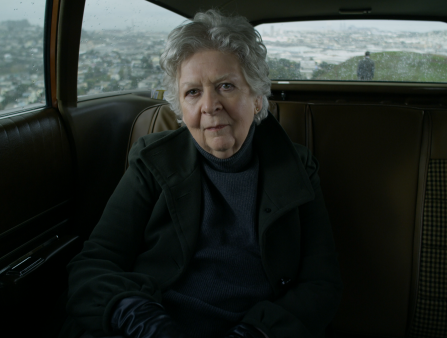
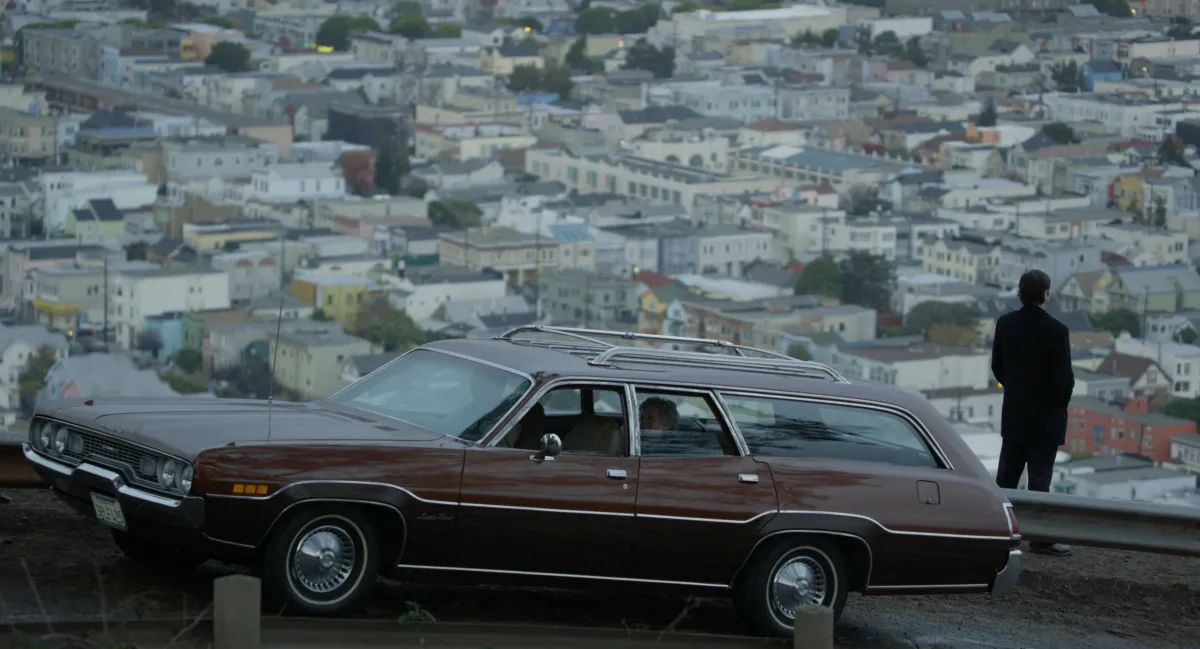
Suburban Fury. Stills courtesy of Argot Pictures

As the stakes of these confrontations inflate between Police Beat and Zoo, they balloon drastically with Suburban Fury. To tell its historical narrative of the 1970s, Devor and Mudede employ more archival footage than in any previous collaborative film. A campaign ad for Gerald Ford entitled “There’s a Change That’s Come Over America,” which never aired due to its reference to too-fresh attempts on his life, is a fitting example. History in Suburban Fury is the product of active construction—a selection from many competing narratives.
Against this cavalcade, Moore’s own recollections stumble forward and backward according to the parts she’s forgotten, the parts she wishes to be forgotten, and the allegiances she still can’t quite sort out. To dramatize their interviews, the filmmakers opt not for recreations per se, but rather stage the present-day Moore within the locales of her story. She’s interviewed in the backseat of a 1970s station wagon parked in twilit lots on the outskirts of San Francisco, recalling her liaisons with her FBI handler. In other scenes, Devor and Mudede place her in the hotel ballroom where she was interrogated by police after the assassination attempt. As in Zoo and Police Beat before it, the filmmakers facilitate their subject’s imagination, but here the uncanny distance is emphasized like never before. History, we see in these emptied spaces juxtaposed against the archival footage, has long since passed her own story by, but she is still where it left her. When she outlines her theory of the assassination (basically, Nelson Rockefeller’s ascendancy to the presidency would trigger a revolution), her belief in this thesis seems hardly to have waned. “I got the sense that she hadn’t really processed everything,” Devor told interviewers. Having trespassed too close to the big story (only a misaligned pistol sight away from succeeding from margin to text), Moore remains both drawn to and scarred by it.
As her tale jumps back and forth, contradicting itself, the nature of the interview-as-interrogation becomes clearer. Recalling Z’s commanding officer in Police Beat, Mudede, interviewing, attempts to press her on certain points of the story. “It’s a sequence!” Moore snaps back. “I can’t jump later, jump here, jump there!” Furthering this dynamic, the voice of Bertram Worthington, based on Moore’s recollections of her FBI handler, is performed by Devor himself. Like the nightly reports demanded of Z in Police Beat, or the news cameras arriving at Enumclaw County in Zoo, the documentary is another tool by which individual experience is harnessed into myth. Just as Devor and Mudede’s role is to elaborate on the vast distances between the two, the very function of the camera is to transmute experience to myth, and in this unforgiving light, Sara Jane Moore looks more alone than ever before.
The intractable measure between “America”—Devor’s Hollywood—and Americans—Mudede’s birds in cages—is the unwavering subject of each of their films. In their constellation of stars, the former appears as a white-hot source of energy, attracting, repelling, and burning the sorry individuals who crash into its radius. If, by the conclusion of Suburban Fury, one feels they have merely reiterated this tension, they’ve in turn come face to face with the fundamental limitation of their approach. Devor has reflected on his own extractive role in this process, and perhaps not unrelatedly, on Moore’s belief that his re-telling would likely not be accurate. But if inaccuracy is the inevitable fault of Devor and Mudede’s films, one would be hard pressed to find a more thorough charting of the chasm separating truth and fiction.