

May 6, 2002, is a day most Dutch citizens will never forget. After a radio appearance in Hilversum, Pim Fortuyn made his way back to the parking lot, where ultra-left-wing environmentalist Volkert van der Graaf had already been crouching behind cars for hours. When this lone assassin spotted Fortuyn, he walked up to him from behind and promptly opened fire. The controversial yet widely beloved right-wing populist died on this highly symbolic spot, in the heart of the Netherlands’ media industry, where all Dutch broadcasters house their studios.
All of this transpired nine days before the general election, triggering a frenzy of media responses that used the fringe assassination of Fortuyn to further platform his contentious political beliefs. Prime Minister Wim Kok spoke of a tragedy “for our country and our democracy.” Many people felt that “it was democracy itself that was lying on the ground,” fueling an immediate distrust in the political establishment. The upcoming election cycle was suddenly informed by emotion over policy and saturated by myriad conspiracy theories about the nature of the murder, in which a posthumous sympathy vote on Fortuyn resulted in his party, Lijst Pim Fortuyn (LPF), becoming the biggest newcomer in Dutch parliamentary history and the second-largest party in the country.
In hindsight, the first political assassination on Dutch soil since 1672 was the final push toward a new political era, in which the far-right successfully shifted public discourse, normalizing rhetoric and policies that would once have been dismissed as extremist.
The political circus that followed inevitably overshadowed the multifaceted problems the Netherlands was actually facing: a gradual economic downturn that fed mounting tensions amid shifting demographics of the inner cities. Even though Fortuyn was murdered by a white eco-activist, the tragedy primarily emboldened his relatively novel and, since then, painfully insistent political agenda: that all societal ills were the sole fault of immigrants, mostly of Turkish and Moroccan descent, whose supposed fundamentalist Islamic ideology endangered the pillars of Dutch democracy. Fortuyn was on record describing Islam as “a backward culture,” which in his eyes had “taken over the role of communism” in a new cold war between Western liberalism and Islamic doctrine. It was a genuine mask-off moment for a country that had formerly prided itself on decency and tolerance, but was eager to finally embrace its most xenophobic, resentful, and spiteful urges. In that sense, we can draw a straight line from Fortuyn’s demise to the rise of contemporary right-wing extremists like Geert Wilders and Thierry Baudet, and the electoral crisis the country finds itself in at the time of writing.
Almost 25 years later, director Menna Laura Meijer took it upon herself to confront this illusory multicultural tolerance and reexamine the very fabric of Dutch society with Fortuyn: On-Hollands (2025), a monumental eight-hour documentary series built mostly from archival material, with the occasional talking-heads interview. Powered by Dutch broadcaster KRO-NCRV, the work was shown on television, can be streamed in the Netherlands on demand, and despite its runtime even had a small theatrical run in select theaters throughout the country. Besides critical appraisal from the press, Fortuyn: On-Hollands spawned multiple think pieces by Dutch journalists and pundits, who favorably responded to the series by recollecting their own traumas stemming from the Fortuyn era.
The praise felt particularly well-earned. “If it took us much longer to drag this one over the finish line, I think we would have dropped dead,” the director and producer at the head of mint film office jokes in the bar of Het Documentaire Paviljoen, IDFA’s new cinema hub in Amsterdam’s Vondelpark. Joined by her editor, filmmaker Festus Toll, she recalls a four-year journey that entailed 340 days of editing. “I don’t even think the overall production time was that exceptionally long,” she admits about parsing hundreds of hours of archived broadcasts to sculpt a staggering composite of the Netherlands’ recent past. “The intensity, however, was something else.”
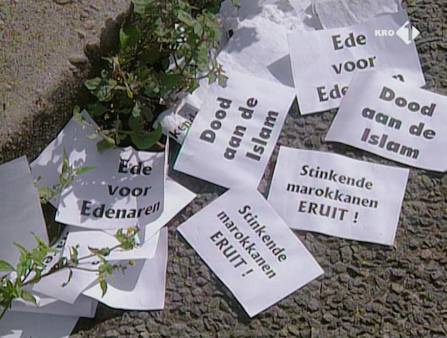
Fortuyn encouraged anti-Muslim and anti-immigrant sentiment (“Death to Islam,” “Get rid of those stinking Moroccans!”).
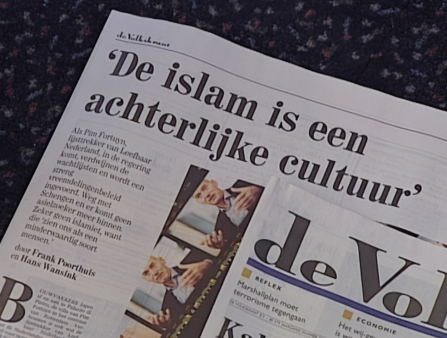
“Islam is a backward culture,” reads a de Volkskrant headline quoting Fortuyn.
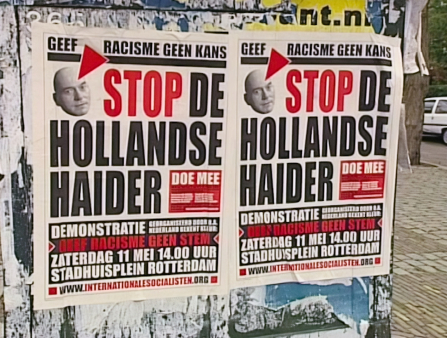
“Stop the Dutch Haider” reads a street poster comparing Fortuyn with the right-wing Austrian politician, Jörg Haider.
A true autodidact at heart, Meijer raucously rolled into the world of cinema with her first film, Tags (1997), which didn’t premiere in an actual cinema but at an illegal rave, where police burst into the venue right as the credits of the documentary on local graffiti artists started rolling. Since then, the punky filmmaker has tackled highly eclectic, yet somewhat taboo documentary subjects such as the casual misogyny of teenage boys (Girls, 2003), the troubled minds of three teens who strangled their high school friend (Sweety: The Friends, Betrayal and Murder of Maja Bradaric, 2008), and the sex lives of seniors (69: Love Sex Senior, 2013). It was at the IDFA premiere of that last film that Meijer decided to remove her own name from the credits, instead billing her directorial output under the name of her production company.
She sees the Rotterdam-based mint film office as a production company that only powers projects she is “into for 100,000%.” She produces works by talented, emerging nonfiction filmmakers, while still directing her own work. With her previous project, Now Something Is Slowly Changing (Nu verandert er langzaam iets, 2019), a film about the booming mental coaching industry, she challenged the dominant aesthetic conventions of Dutch documentaries by only using fixed, wide camera angles. For Meijer, the consciously spartan film language served as a semiobjective mirror, through which the viewer is urged to reflect on their own emotional well-being.
After seeing ESPN’s sprawling documentary series O.J.: Made in America (2016) at IDFA, Meijer realized a similar nonfiction epic could and should be made in the Netherlands. Her impetus was “to explore whether such a lengthy project could allow for a different sort of rhythm, another way of telling a story, one in which you don’t chase a polarizing narrative, but rather consistently and carefully trot along a very fine line.” In the highly politicized and widespread image of Pim Fortuyn, she found her Dutch equivalent of an O.J. Simpson-esque figure who could similarly refract the country’s simmering political tensions: a media-savvy, charismatic, gay, and quite overtly sexual man, with piercing blue eyes. Probably every person who saw him on television remembers his signature on-camera salute to the Dutch, followed by the iconic words, “At your service.”
The series kicks off in full swing with an almost suspiciously satisfying montage of some of Fortuyn’s more jovial television appearances before it suddenly crashes into news reporting on the shocking assassination and its immediate aftermath. After this whiplash opening that perfectly conveys how it felt to witness the frantic media circus in the moment, subsequent episodes jump back in time to retrace the developments that shaped Fortuyn’s political vision and sharpened his racist rhetoric. Some of that footage is surprisingly tender, like the news reports on community centers where newly arrived Turkish folks cautiously mingle with Dutch denizens. Those endearing examples of integration are offset by vox-pop shots of suspicious white people who openly express their racist concerns about how their once-homogenous neighborhoods are rapidly changing.
Meanwhile, Fortuyn: On-Hollands bears witness to the austerity policies that took hold in Rotterdam at the onset of the ’90s, resulting in a dilapidated city with vacant storefronts, increased crime rates, and an influx of Muslim butcher shops. It’s a careful look back at the city that shaped Pim Fortuyn. Scenes of him roaming the streets of his once-beloved city, now in disrepair, illustrate why the former academic turned columnist and television pundit ultimately pursued a career in politics at the dawn of the 21st century. His dissatisfaction with the center-left’s weak stance on immigration prompted him, prior to the elections of 2002, to declare on camera that he was destined to become prime minister.
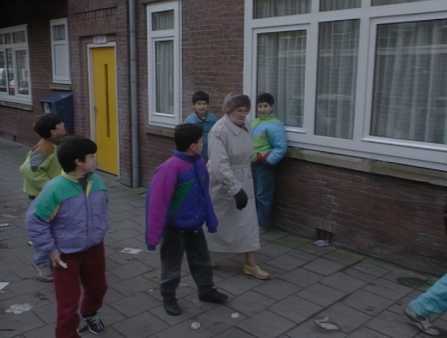
Editor Festus Toll was drawn to the innocence of the children living during Fortuyn’s rise (and later death).
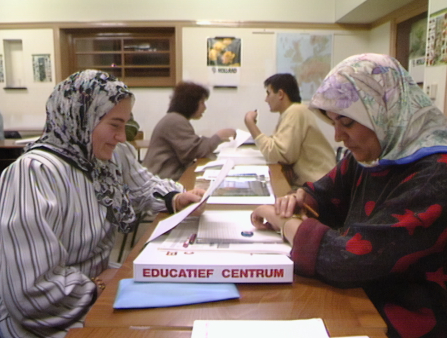
Meijer opted to focus on ordinary people “to give you the feeling that everything is rooted in daily life.”
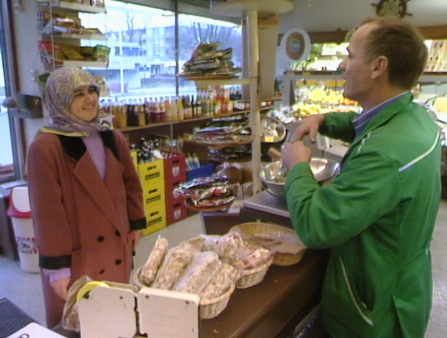
Meijer focuses on the banal yet jarring reality of life in the streets.
Such a horizontal orientation allowed Meijer’s team to construct a uniquely nuanced documentary that achieves what 25 years of extensive speculation on the supposed failure of the multicultural state never could: putting the real subjects and subsequent victims of Fortuyn’s incendiary rhetoric back in the frame.
“That explains why the process was so intense for us,” recalls Meijer. “Sure, you have a clear chronology in the form of Fortuyn’s biography, but that doesn’t give you the real subtext of what is happening on the ground.” She points to the episode that delves into the events of September 11, 2001, to illustrate the complex puzzle they were laying. In the Islamophobic response to the terrorist attacks, Fortuyn saw the opportune moment to mainstream his own extremist ideology.
“Cutting away from all that noise, we also want to show how a bicultural mother picks her child up from school and witnesses the [World Trade Center] attacks on television,” Meijer explains about bringing to the fore the blowback that brown and black people endured shortly afterward.
This tendency to prioritize ordinary people erased from the annals of recent history reveals the organizing principle of Fortuyn: On-Hollands: “to give you the feeling that everything is rooted in daily life,” Meijer states.
Festus Toll was tasked with finding such a throughline within the abundance of material Meijer and supervising editor Joost Seelen supplied him with. He explains that with every episode they “wanted to start from the streets, to show the neighborhoods and communities actually affected by the political developments.” He continues, “I was in the penultimate year of elementary school when Fortuyn’s murder happened. I don’t have a strong recollection of the collective impact of that event, which is why I was drawn to the innocence of those children, who are just trying to live in the present moment and are suddenly turned into political subjects.”
“At some point,” Meijer jokes about Toll’s editing, “we almost got sick of seeing all those kids popping up on screen. But it’s because of Festus’s sensibility that we realized what kind of montage film we were actually making. Because of him, the imagery starts to float, creating a meandering context from which the narrative emerges. It’s his sensibility that’s felt in every episode.”
Ultimately, it leads to the most critical questions this otherwise nuanced and carefully balanced documentary poses. Meijer continues: “Who has ownership of the Netherlands? Who does a territory belong to? To whom do the streets belong? For us, it’s simple: the streets belong to the kids. And that was Festus’s starting point, which I thought was incredibly moving. They make up the fabric of daily life at that moment. Back then, they were the owners of the future. Now they’re the adults of today.”
At 34, Toll is a prodigious filmmaker and editor in the Netherlands, whose graduation film, We Will Maintain (2017), is widely regarded as one of the country’s best recent documentary shorts. Flexing an incredible mastery of editing, the eclectic film employs Toll’s Dutch-Kenyan background as a critical tool for an incendiary dissection of the Netherlands’ supposed multicultural crisis. Anxiously jumping between a vast range of source material—voice messages, archival home footage, and strobing textual overlays—the propulsive film steers toward an uncanny scene in which Toll takes a selfie video right next to the current face of Dutch xenophobia: the infamous right-wing politician Geert Wilders. Looking back at his graduation work, Toll remembers, “We Will Maintain stemmed from frustrations with the specter of Wilders. I used that short to vent directly about him. While working on Fortuyn: On-Hollands, I realized that my autobiographical graduation film planted the seed for how I processed all the footage for Menna’s film. Now I see that my initial frustrations were also a product of Fortuyn’s political project.”
Meijer can vividly recollect the moment of seeing We Will Maintain for the first time alongside a scout of IDFA and saying to him, “This is the one. This is the film.” She adds, “It was the most interesting graduation film in a long time, which had everything to do with the ways politics were woven into an intimate story, all through a unique editing process and film language. It was a massive eye-opener.”
Years later, Meijer brought Toll into the mint film office. It was an immediate match, as, just like Toll, Meijer is an iconoclastic director with a bicultural background. Although white-passing, the daughter of an Indonesian father and Dutch mother identifies as a person of color. “So the unchecked racism of Fortuyn,” she shares, “is closely tied to my own memories of growing up in the Netherlands, especially when I looked at my father.”
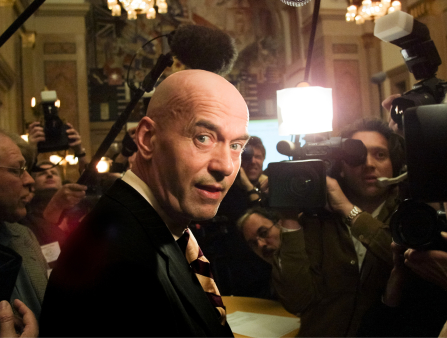
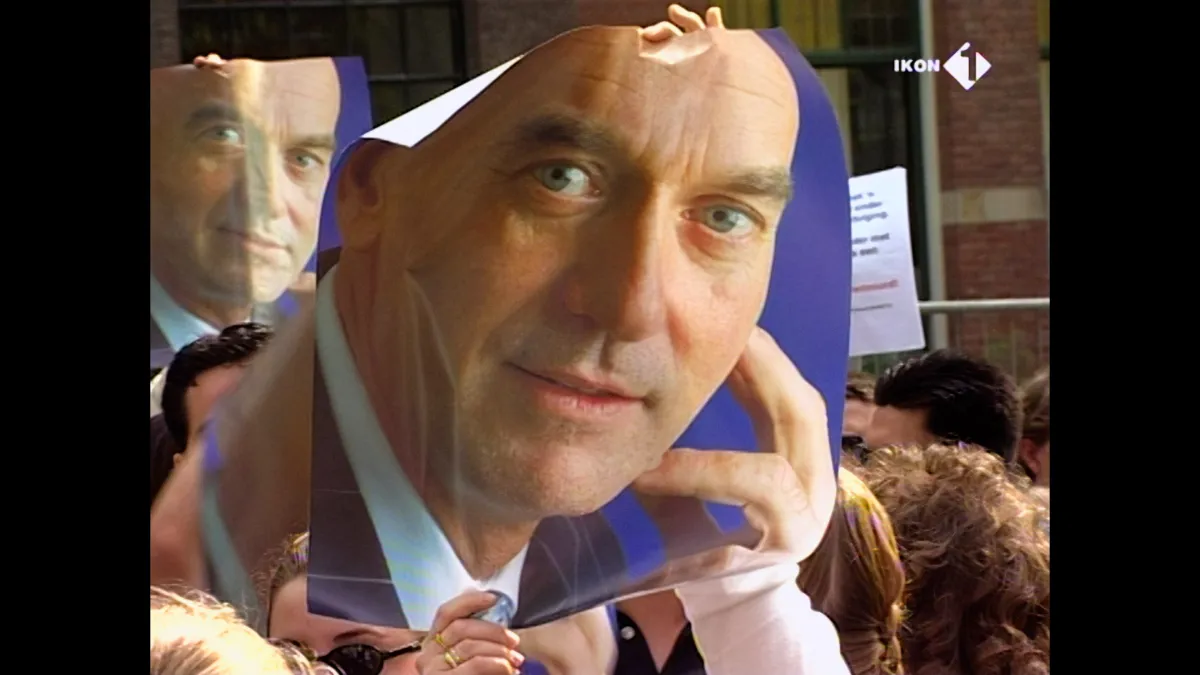
Fortuyn in the spotlight.
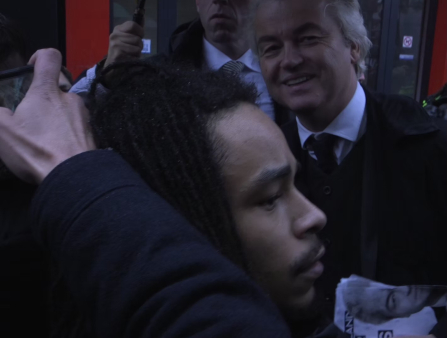
Festus Toll stands next to far-right politician Geert Wilders at a PVV rally in his short film We Will Maintain. Courtesy of the filmmaker
The vast scope of Fortuyn: On-Hollands aims to mirror Dutch society in its entirety, making the series an elaborately constructed, highly conceptual artwork with the paradoxical goal of remaining accessible to its viewers. Meijer says, “It’s important that our mothers are also able to watch it without feeling judged. Which is not an easy feat. Even just bringing the ’90s alive on screen with such clarity is not as straightforward as you might think.” That partially meant toning down Toll’s proclivity for the editorial flourishes he showcased in We Will Maintain. “The descriptor ‘normcore’ was put in our film plan from the start,” Meijer explains about the consciously unpretentious audiovisual approach she wanted to take for the project. The goal was to not alienate any possible viewer. “That’s a very tricky thing to realize,” she continues, “because normcore is not about the absence of style. It rather means thinking very deeply about how to tone things down. It’s actually a hyperconscious awareness of style.”
Because of their deep understanding of style, identity, and aesthetics, mint film office’s team seemed perfectly equipped to critically dissect the finely attuned image of Fortuyn, a man who embodied many internal contradictions. As Meijer puts it, there was “how his outwardly gay and overtly sexual sensibilities embodied the notions of Dutch open-mindedness, while weaponizing those very same identity politics to completely undermine the political system of the moment. That so-called tolerance was deployed in service of an extremely racist agenda, making him the complicated figure that he is.”
Meijer smartly utilized the checkered identity of the Dutch proto-populist as her critical lens, through which Fortuyn: On-Hollands unravels the clashing sensibilities of a country in rapid sociocultural decline. Organizing the documentary around the looming specter of Fortuyn enabled a myriad of themes to naturally seep into the narrative. “You have this political arena that is covered extensively by hundreds of cameras,” Meijer explains about her initial entry points into the overwhelming amount of archival material. “But if you go deeper, all of these other themes inevitably rise to the surface as well: not only observations on Fortuyn’s homosexuality and masculinity in general but also revealing moments that illustrate a more banal yet jarring reality of life on the streets for the neighborhood communities.”
Taking the notion of inclusivity genuinely to heart meant for Meijer and her team that their highly political work about such a controversial subject shouldn’t steer toward any overt polemics. That, in turn, required a special sensitivity toward more corrosive material, of which there was plenty. “We have footage of skinheads who proudly state they are members of the far-right neo-Nazi party,” Toll says. “One of them actually stumbles over his words when he is asked about the aftermath of 9/11, and he awkwardly mutters it’s all the fault of the Muslim fundamentalists. We argued a lot about whether to include such footage. I, for one, wanted it in the film.”
Meijer immediately interjects, “I didn’t. I thought that if you put that man in the film, you give the audience permission to laugh at the situation. And in effect, you permit viewers to distance themselves from this overtly expressed intolerance, which, honestly, can also be found in even the most moderate Dutch person. I want to show that such a skinhead is also a mirror of us all, a refraction of the Netherlands in its entirety."
Normcore is not about the absence of style. It rather means thinking very deeply about how to tone things down. It’s actually a hyperconscious awareness of style.
—Director Menna Laura Meijer on the consciously unpretentious audiovisual approach to Fortuyn: On-Hollands
She emphasizes, “Once you’re in the edit, everything becomes more complicated. You can’t state things bluntly anymore if you are going for complexity and nuance. I’ll be the first to call someone a racist, an antifeminist, or an asshole—but in the film we strive toward nuance and empathy.”
This empathy was even extended to some of the white denizens of Rotterdam, who vent on camera about the misery they observe around them. “And to be honest,” Meijer admits, “sometimes you see an old white lady walking around a rapidly changed neighborhood and think to yourself, ‘Goddamn, I see she also has a fucking point.’”
Meijer’s conscious decision to never make the right-leaning people in the film the butt of a joke factors in the strong reputation of public broadcasters in the Netherlands as being part of the “leftist church.” The previous right-wing cabinet decided to severely cut the subsidies for these pillars of Dutch television. It was all the more reason for Meijer to deeply consider how to “invite all people to simply reexperience our recent history, without giving them the feeling some extreme leftists are telling them what to think.”
Although deliberately stripped of some of its more extreme material, Fortuyn: On-Hollands can still be a jarring watch, one that, much like its subtitle—“Un-Dutch” in translation—points to an inconvenient truth at the heart of Dutch society. For Meijer and Toll, Fortuyn finally allowed the Dutch to reveal a side of their true nature that had long been suppressed in vain. Toll describes it as “the way his persona cut straight through the illusion we were a tolerant, multicultural society.”
Meijer adds that because of Fortuyn, “people can now say whatever they think out loud. What used to function as a mask is no longer necessary.” They both see the footage in the series as an ominous foreshadowing. For Meijer, it leads to the conclusion that Fortuyn: On-Hollands “tells the story of our recent past, while constantly drawing connections to where we currently are. In many ways, Fortuyn symbolizes a far more innocent, almost makeshift version of the far right we know all too well by now.”
This piece was first published in Documentary’s Spring 2026 issue.