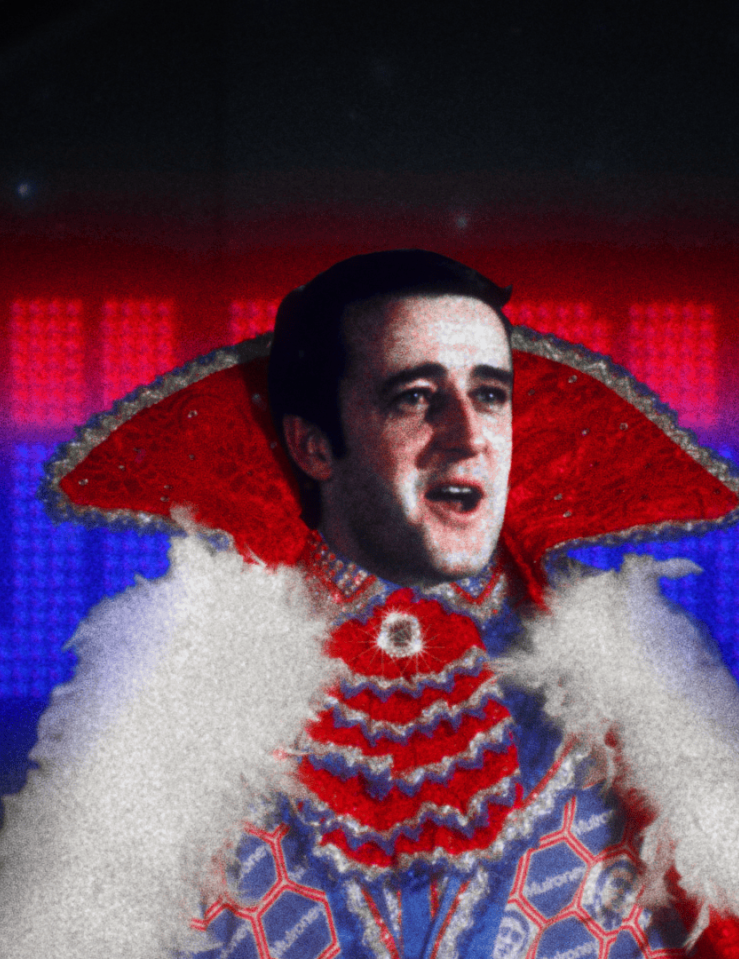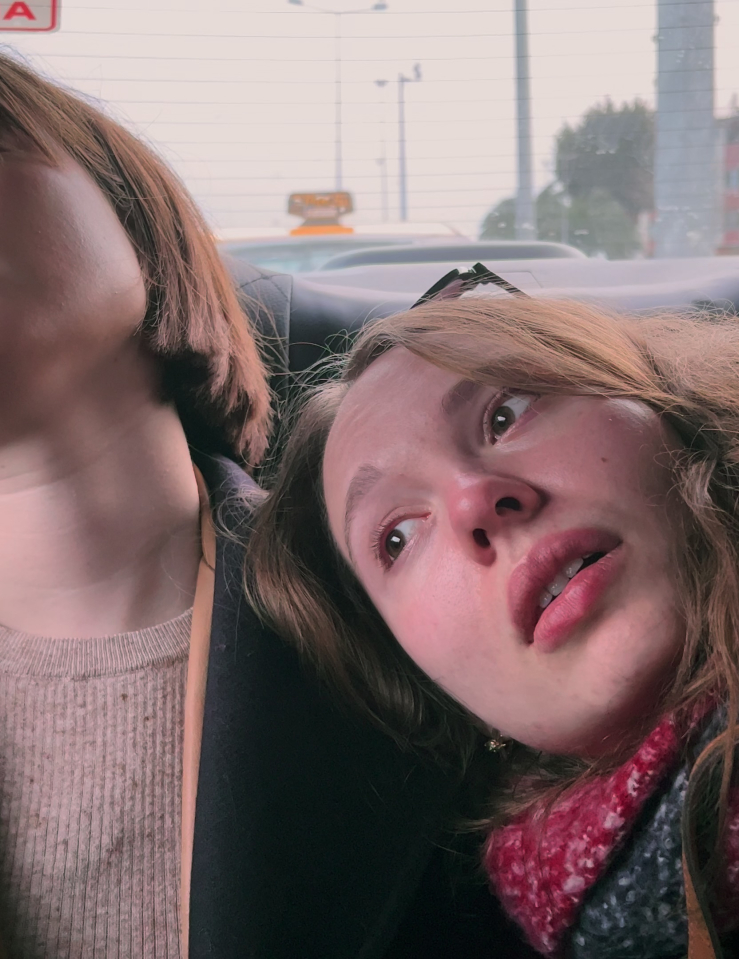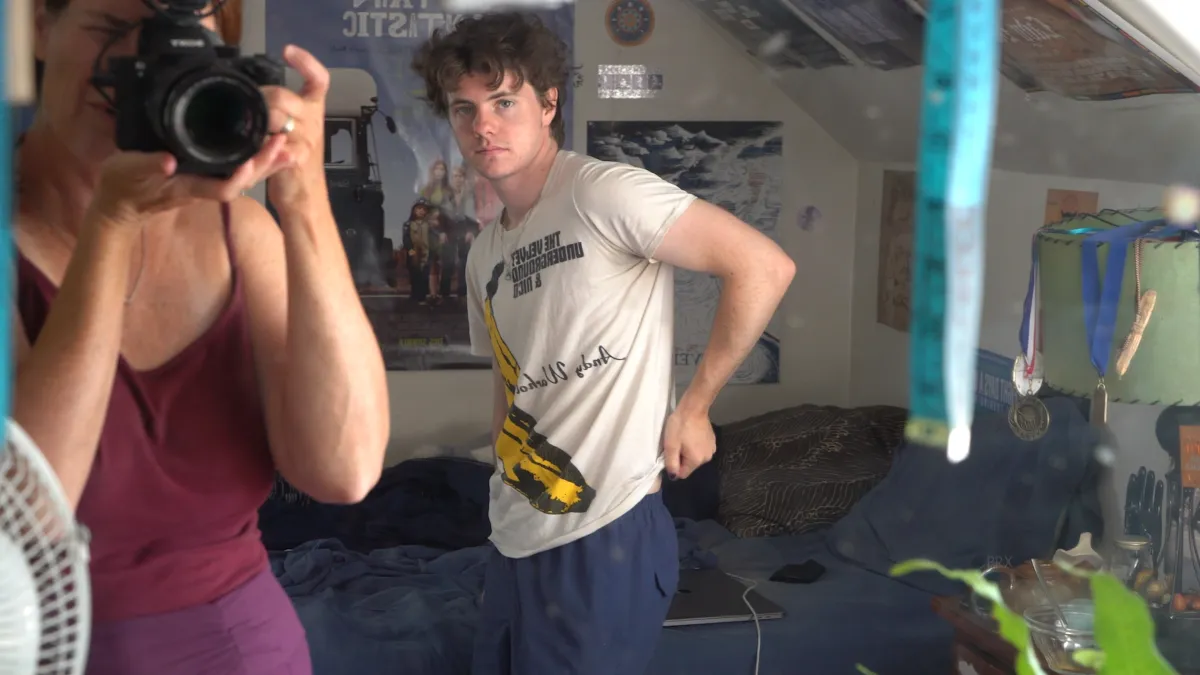


Amy Jenkins’ Adam’s Apple draws on approximately two decades of footage documenting the life of her son, Adam Sieswerda, from childhood through adolescence and transition, and later still into college. Told through their dual perspectives, the film is also a family collaboration: Sieswerda wrote it, contributed footage, and composed the score, while Jenkins drew on her practice as a visual artist to turn the family archive into an intimate, diaristic portrait. The documentary premiered at this year’s SXSW Documentary Spotlight, had its international premiere at CPH:DOX, and recently screened in Giffoni’s GexDoc strand.
Rather than reducing Adam’s transition to trauma or to a political argument, Adam’s Apple remains rooted in everyday family life: humor, music, conflict, and parents learning to let go of their expectations. At Giffoni Valle Piana, Documentary spoke with Jenkins and Sieswerda about control over the archive, making private footage public, trans joy, and how the process changed their relationship. This interview has been edited for length and clarity.
DOCUMENTARY: Amy, you began filming Adam before there was any expectation of a public film. When did the family archive become a project you wanted to make together?
AMY JENKINS: I am an archivist at heart. I have always filmed and documented my family and my life, so the transition was somewhat seamless. At first, Adam and I were filming for ourselves because so many things in the family were changing rapidly. We did not acknowledge that it might become a film for the public.
Around the time Adam was 16, I gave him his own camera. He began to have his own agency and became an integral collaborator. That was when we started discussing a project together.
ADAM SIESWERDA: There was no external audience in either of our minds when I was younger. That changed when I was around 16 or 17 and wanted to make this an actual project with her.
When I was younger, I wanted trans male role models in popular media, and there were not many. I felt compelled to contribute something I knew I would have wanted to see.
I am grateful we did not watch the footage until I was in college. We were not thinking, We need a scene of this, or constructing a narrative while living it.
—Adam Sieswerda
D: How did you shape such an extensive archive without imposing a structure on your lives while filming?
AJ: We were living our lives and not thinking about a film structure. We were not living in order to film; we were filming what we were honestly experiencing. Adam going to college became a natural endpoint because we were no longer living together. Only later did we shape the material into a narrative.
Neither of us had looked at the footage while filming it. We had more than 100 hours. I made a first pass before editor Kristina Motwani came in. Our team essentially edited by committee, discussing every scene while Adam developed his narration through his journals.
AS: I am grateful we did not watch the footage until I was in college. We were not thinking, We need a scene of this, or constructing a narrative while living it. When I returned to the material, it felt as though it represented life rather than a story we had manufactured.
The collaboration also helped me gain distance. Producer Brit Fryer and story consultant Carter Sickels are both trans men, so this primarily trans team brought other lived experiences into the process.
D: Adam, what power did you have to veto material, and how did you decide what you were prepared to make public?
AS: There was always an understanding that I could veto anything I did not want in the public sphere. In practice, I never reached a moment where I felt strongly that a particular scene could not be included.
What guided me was the desire to focus on trans joy. A common narrative in queer media concerns how difficult it is to be queer—and specifically trans—in the world. That is important, but it should not be the only narrative afforded to people like me. I wanted to show, while remaining genuine to my experience, that joy could exist alongside struggle.
D: The film is candid about Adam’s father, John, struggling with aspects of the transition. How did the family relate to these private moments becoming public?
AJ: Everyone was so accustomed to my having a camera and to Adam filming that the camera eventually disappeared. I do not think people withheld or changed things because it was present. Sometimes John or Adam’s brother, Elias, would pick it up as well.
AS: Once editing began, my dad understood that it would become a public film. He is very supportive and proud of it. Part of that pride comes from the fact that we did not hold back from showing the moments when he struggled to accept me.
The same applies to my mom, who struggles with my name change in the film, and to me, when I lack patience with my parents. The film shows that acceptance does not require everyone to be on exactly the same page at exactly the same time, as long as people are trying to understand one another and there is a foundation of care and respect.
AJ: The film is about reckoning with change, which is universal for parents. Adam being trans is one part of the narrative. It is also about learning to let go of expectations and love the child you have.
D: Adam, how did revisiting music you wrote in high school connect your younger and present selves?
AS: The songs began during the period represented onscreen. When it became clear that we needed music, my mom suggested using mine. I was nervous because they were old songs, and I had grown as a person and musician.
I revisited and improved them, but it was crucial to use those songs rather than create entirely new ones because they capture how I expressed myself emotionally and creatively at the time. Music was my main outlet then; now that has shifted more toward writing.
I brought my present understanding to those past songs and blended the two. That is also a theme of the film: using your current understanding to look back at yourself. I recently finished all 12 songs and released the score on streaming platforms.
D: The film has played to documentary, experimental, queer, and youth audiences. What have you learned from that range of responses?
AJ: I came to filmmaking as a visual artist, and the film contains passages in our yard, time-lapses, and images of time unfolding. Filming helps me hold on to something while also letting it go. The whole film is almost a time-lapse: You watch 20 years of Adam’s life pass in about an hour and a half.
AS: It matters that the film does not play only in an echo chamber of people already informed about trans issues. It should reach people who may not know anyone who is trans, or whose views have been shaped by sensationalizing and polarizing media.
The film takes a story that could be sensationalized—a trans teenager growing up and medically transitioning—and shows that it is commonplace, calm, and normal. Young people deserve the possibility of joyful experiences during transition. The positive reactions have made me hopeful.
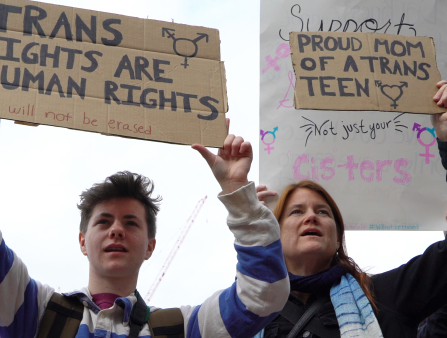
AJ: During the U.S. festival run, we have also partnered with local LGBTQ organizations and youth groups. The film contains no overt politics, but its existence is inherently political. It shows why transitioning during high school was crucial to Adam’s mental health, while his peers were also going through puberty, and how ordinary and beautiful his life could be when he was able to live as himself.
D: Looking back, how has making the film changed you as individuals and as a family?
AS: While writing, I listened to old conversations from the early years of my transition. Most did not enter the film, but they helped me reconnect with those memories. As an adult, I understood more clearly that my parents had memories and conceptions of me they needed to release, and that this could not happen immediately.
My parents remember parts of my life that I do not, and rewriting the script someone has built in their head takes time. Looking back gave me greater patience and curiosity about how they felt, rather than simply feeling that they needed to get on the same page as me.
AJ: Working with Adam has been a true privilege. Collaborating creatively with your child over many years is exceptional. It gave us a dialogue parents do not normally get to share with their children, and it deepened our relationship and understanding of each other.
Even if no one had ever seen the film, having this document of such a precious and fleeting period would be deeply valuable to us. It is a very well-made scrapbook.