

We are living through a period marked by the questioning of dominant narratives—of historical truths, institutional structures, and systems of racism, sexism, and colonialism. Against this backdrop, everyday images, amateur footage, domestic recordings, and public media have acquired renewed significance, offering perspectives long absent from official accounts. Unlike films that use archival images at the intersection of past and present, found footage films are composed of pre-existing images originally created for other purposes and guided by their visual, formal, narrative, and contextual qualities. Furthermore, they reflect broader disputes over memory and confront historical representation.
The growing prominence of these questions is evident in recent film festival curatorial trends, as seen at the 2026 Thessaloniki International Documentary Festival, where the archival tribute “All the World’s Memory” brought together films and discussions that engaged with questions of preservation, access, and the reframing of archival images. The program brought together films that reimagined history and opened new entry points into documentary practices.
As images are displaced from their original contexts, new narratives emerge, addressing absences within the archive while revealing the unexpected beauty of recombination—and, with it, new ways of seeing both the world and cinema itself. Beyond making sense of the past or uncovering hidden meanings, these films offer ways to revisit trauma, reckon with colonial legacies, and bring untold stories into view.
Objet Trouvé
Found footage practice asks us to see images anew. Originally embedded within other narratives, images are recontextualized, departing from the roles they once served. In this sense, found footage shares affinities with the artistic practice of the objet trouvé, in which discarded, abandoned, or overlooked objects acquire new meanings when rearranged and presented in new artworks.
The earliest example presented at the Thessaloniki program was Joseph Cornell. Best known for collecting and recombining found objects and curiosities—keys, shells, stones, photographs, maps, marbles—Cornell arranged them in glass-fronted shadow boxes, creating condensed, wondrous scenes structured by a poetics of juxtaposition. His first film, Rose Hobart (1936), experiments with assemblage using moving images. Constructed from fragments of East of Borneo (dir. George Melford, 1931) and unidentified footage acquired in a New Jersey warehouse, the film isolates and reframes the presence of its lead actress, Rose Hobart, using only the shots in which she appears to create a cinematic homage. Through repetition and loops, he turns Hobart’s performance into his film’s subject, gradually shifting the viewer’s attention toward the actress’s screen presence.
This gesture extends far beyond formal experimentation. Found footage filmmakers frequently return to archival materials in order to reframe historical records. Through the juxtaposition of fragments originally created for domestic or personal use, private memories may take on public significance. Reassembled through the filmmaker’s perspective, such materials can cast history in a new light, bringing into view dimensions of the past that established narratives have long overlooked.
Consider a film that brings together newsreels and radio broadcasts charting the rise of Nazism with home movies shot by a Jewish family between 1938 and 1942. In The Maelstrom: A Family Chronicle (dir. Péter Forgács, 1997), these intimate fragments gradually build toward the moment of deportation, composing a narrative that is at once lyrical and profoundly painful in its evocation of the Holocaust. By intertwining public records and private images, the film restores faces, names, and moments of joy to those often reduced to anonymous groups, re-signifying one of history’s darkest chapters through the reinterpretation of archival materials. In doing so, the film reveals the singular lives that existed within events more commonly understood on a collective scale.
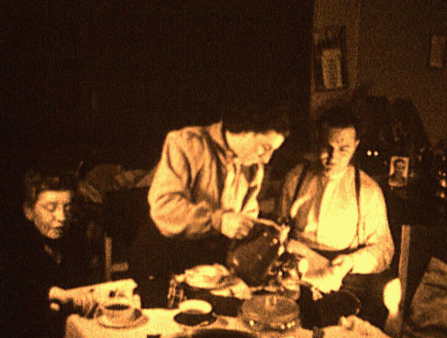
The Maelstrom: A Family Chronicle. Photo credit: Peereboom home movie. Courtesy of Péter Forgács
Colonial Archive
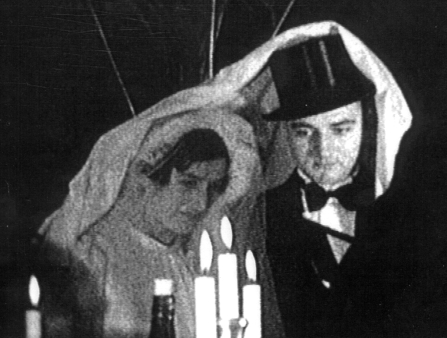
These questions become even more complex when dealing with colonial footage. Mother Dao, the Turtlelike (dir. Vincent Monnikendam, 1995) is among the films in the program that recontextualize propaganda footage, raising ethical questions about bringing violent imagery back into public view. The film reassembles material shot in what is now Indonesia under Dutch colonial rule between 1912 and 1933, pairing it with a soundscape of local chants, poems, and myths that introduces perspectives absent from the original footage.
Yet these remain contested images. They show forced labor, extreme poverty, public humiliation, and bodies displayed as ethnographic curiosities. Images once made to celebrate empire have become evidence of its violence. Thus, for the communities portrayed, their recirculation may itself constitute another chapter in a longer history of extraction. Images produced through a colonial gaze exoticized, diminished, and objectified their subjects before being preserved in institutions largely beyond their control.
Who, then, gets to tell the story of these images? The question extends to who benefits from their circulation and who gains visibility through their reinterpretation. Filmmakers participate in shaping historical meaning, a role that carries its own responsibilities. Regardless of the material’s legal status, questions of exposure and consent remain. Mother Dao’s achievement lies precisely in making these tensions impossible to ignore. Rather than resolving those embedded in colonial archives, the film brings them to the surface, reminding us that reopening an archive also means addressing the ethical implications of working with images made without the consent—or against the interests—of those depicted. As the politics of representation evolve, so too do the questions we bring to archival images.
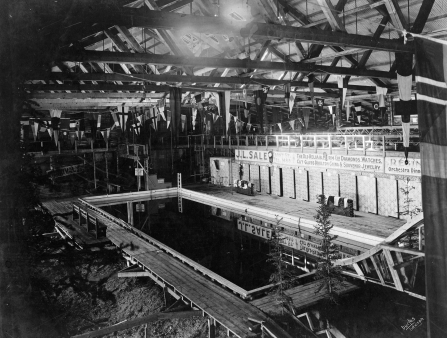
Dawson City: Frozen Time. Photo credit: Canadian Photo Archive. Courtesy of Bill Morrison/Hypnotic Pictures

Dawson City: Frozen Time. Photo credit: George W. Hill.
Orphan Films
The term “orphan film” is often used to describe works whose origins are unknown, unverified, or untraceable. When authors cannot be identified, the question becomes not only who made the images, but how they survived. Many of these records survive outside institutional collections, tucked away in attics, basements, drawers, and private archives. These may include works not produced for commercial purposes or commissioned by governments or scientists, existing instead on the margins of official histories.
This question of survival also runs through the work of Bill Morrison, a focus of the Thessaloniki Tribute, whose films push the boundaries of found footage to include materials once cataloged but ultimately lost from institutional archives. A key figure in found footage cinema, Morrison has worked with some of its most remarkable literal discoveries: films recovered from fishing nets in The Village Detective: A Song Cycle (2021), and hundreds of silent-era films and newsreels found buried beneath a swimming pool in the Yukon in Dawson City: Frozen Time (2016). In the latter, the reels survived largely by accident, preserved in permafrost long enough to reach a time when their archival value could be recognized—as Morrison reflected when we spoke in Thessaloniki:
They were thought of as newspapers—you read them for the news and then throw them away. But they were inadvertently preserved in the swimming pool and made it into an era where we archive things. So they found their way somehow mistakenly into the archive.
Not all discoveries, however, occur by chance. Filmmakers may search deliberately for particular kinds of footage while remaining open to what they might encounter along the way. Some seek out footage in domestic collections, flea markets, or online platforms such as eBay. They wander through these spaces guided by intuition or by specific themes and geographies, while navigating collections of orphan films, amateur recordings, and home movies. Morrison described this process to me as a form of “focused openness”: a search guided by particular interests while remaining receptive to unexpected discoveries.
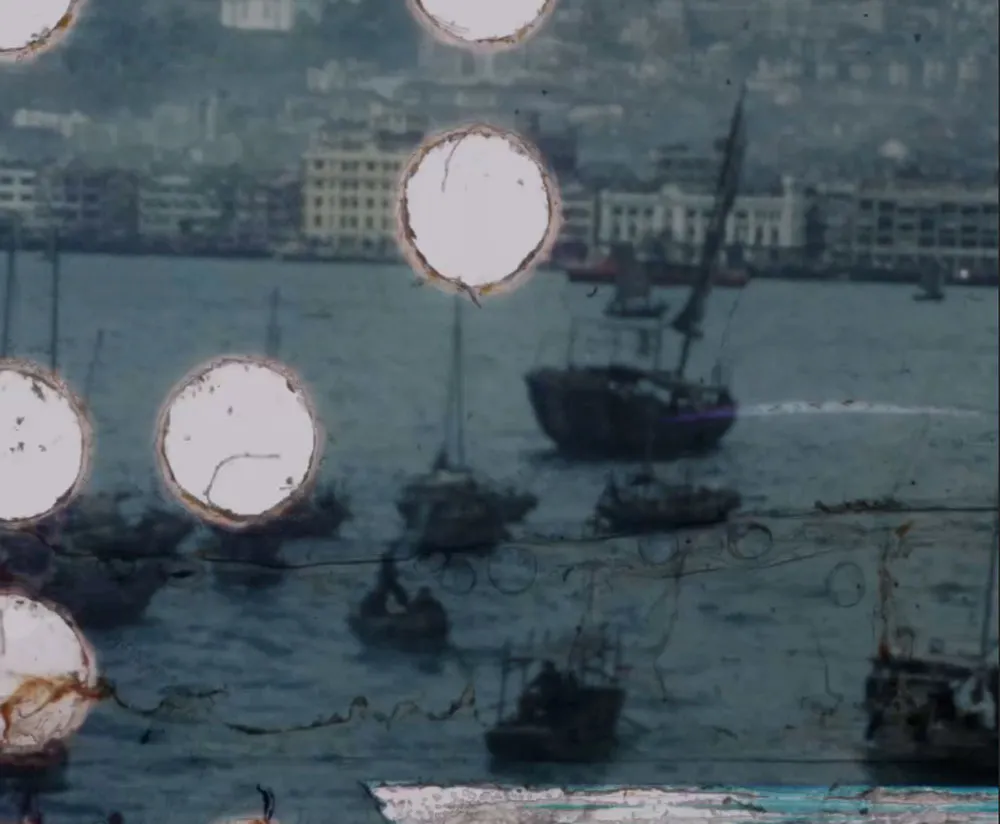
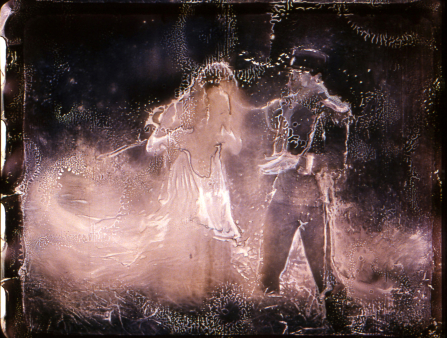
Another way footage may resurface is when audiovisual preservationists declare materials beyond recovery. When film decay reaches a point where storage or restoration is no longer viable, institutions may contact collectors willing to salvage them. Filmmakers working in this field often resemble ghost hunters, called upon to rescue images on the verge of decomposition. In such cases, these materials escape disappearance and move directly into personal archives—waiting, perhaps, for their moment on the editing table. In Light Is Calling (dir. Bill Morrison, 2004), deterioration itself becomes expressive: figures emerge and barely persist within flame-like patterns of decomposing nitrate, revealing how every archival image is also an image that escaped disappearance.
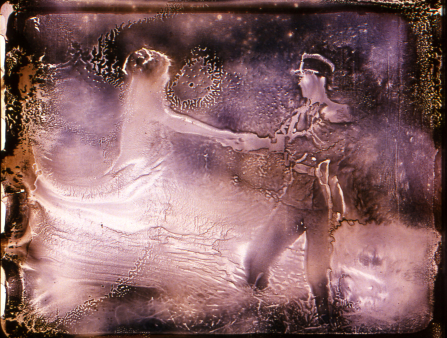
Light is Calling. Photo credit: L. William O’Connell. Courtesy of Bill Morrison/Hypnotic Pictures
Art of Montage
In many cases, it is precisely the filmmaker’s initial uncertainty about the images that sets the work in motion. The effort to understand the images—or to build meaning through the connections that arise among them—becomes both a method and a script. Rather than imposing a predetermined story, they often allow the materials themselves to guide the editing process.
Transforming found footage into films is, above all, an art of montage. This mode of filmmaking is constructed from images produced in other times, by other people, and for other purposes. Montage thus becomes both an act of narrative creation and the crucial moment of these re-emergences. Disjointed temporal fragments—lost films, scattered events, anonymous recordings—are given a new anchoring point, a center of gravity that sustains a narrative trajectory.
Through editing, footage is manipulated: images are reversed, slowed down, repainted; frames are cut, repeated, and reorganized, generating new rhythms and uncovering unexpected relationships between fragments of different origins. In doing so, filmmakers also construct new sonic layers. Voiceover may introduce an essayistic dimension, while musical scores, soundscapes, and foley either collide with the images or create atmospheres for images that once existed without sound, building sensory worlds and opening new possibilities for interpretation.
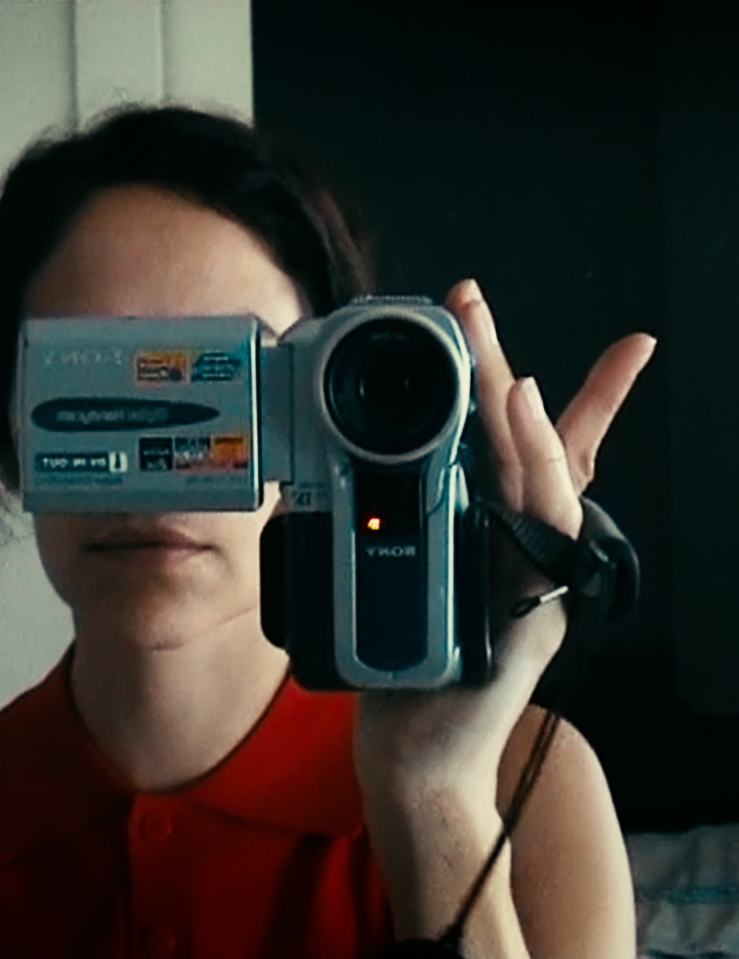
In Terra Femme (2021), Courtney Stephens excavates travelogues filmed by women between the 1920s and 1940s, part of a broader culture of amateur filmmaking that emerged with the spread of home movie cameras. She accompanies these images with an essayistic voiceover guided by a central question: Can a female gaze be inscribed in the image itself? Her narration encourages viewers to pursue questions that emerge from the images themselves. “Is there a woman behind the camera that made these images?” she asks. “And what makes you think that?”
The film also offers a particularly revealing example of how archival absences can become part of a film’s inquiry. During her research, Stephens observed that none of the travelogues collected were created by Black women. This absence led her to the African American Home Movie Archive. Significantly, in the film’s credits, the authorship of these materials remains unknown. While footage shot by white, middle-class women travelers is clearly identified, films made by African American families remain anonymous. The disparity suggests that archival preservation is not simply a matter of what survives, but also of whose authorship and experiences are recognized and carried forward.
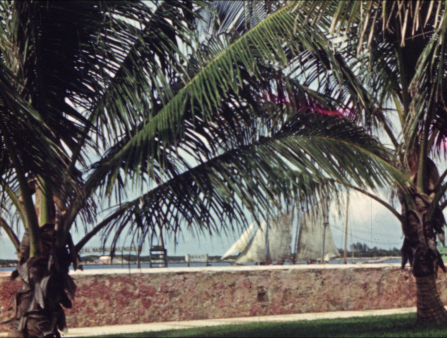
Terra Femme. Courtesy of Courtney Stephens
Future Archives
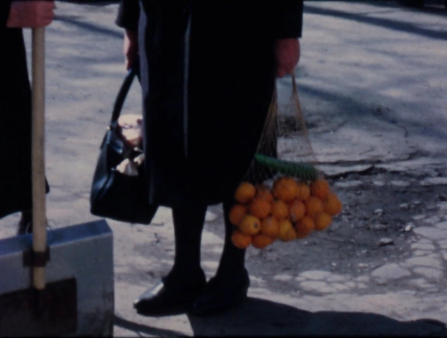
The films in the Thessaloniki Archival Tribute also trace the history of the twentieth century alongside that of the moving image itself. Tracking lines, decaying nitrate, grain, noise, and pixels foreground the materiality of images and the evolution of the medium. They also draw attention to the gaze behind the camera—how images are made, who makes them, and who has access to the means of production.
Future generations may face challenges different from those confronted by found footage filmmakers today, including the ability to distinguish between documentary records and synthetically generated images, the visibility of a file’s origin, and the preservation of the technologies through which reality was depicted. At the same time, contemporary images are increasingly shaped by filters, automated enhancements, and generative tools. Where will the memory of our digital present go? Personal archives no longer reside primarily in drawers, attics, or family albums, but across obsolete cell phones, inaccessible hard drives, and forgotten online accounts already accumulating around us.
Found footage cinema suggests that we inherit images whose meanings continue to unfold through acts of rediscovery and reinterpretation. What is not inherited so easily are the assumptions, conditions, and visual regimes that produced them. What survives through time is never the image alone, but the ongoing effort to understand it—and to imagine what new stories it might still be able to tell.