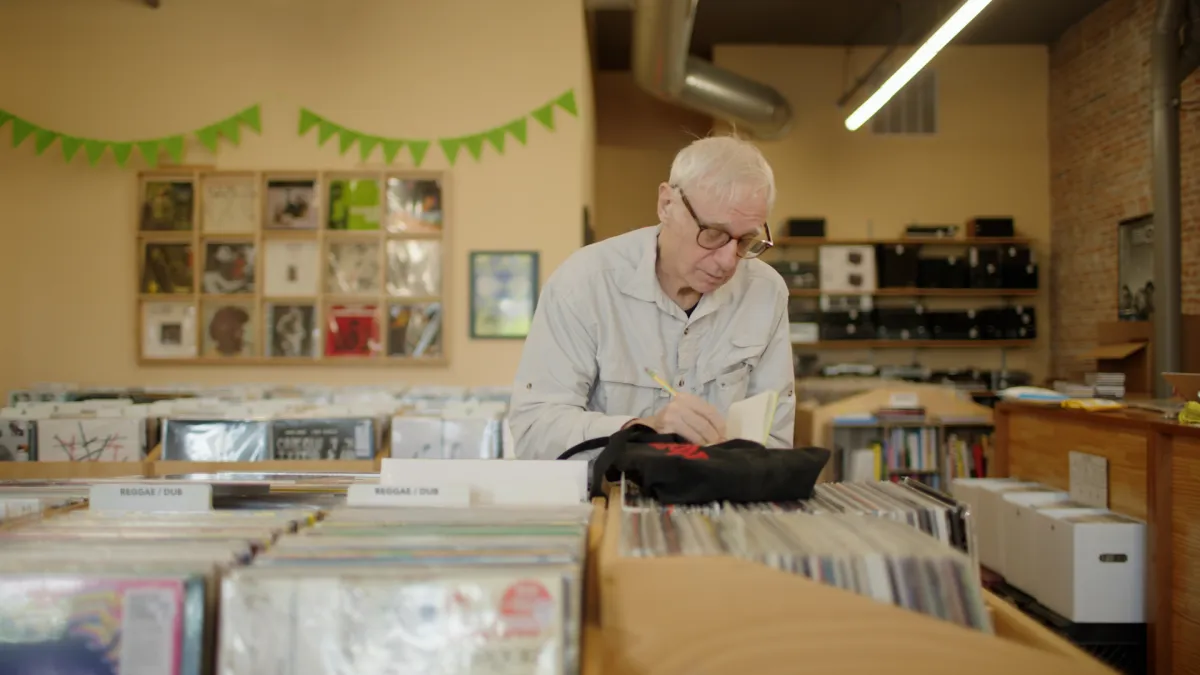


Since 1967, Robert Christgau has covered popular music voraciously, in the process absorbing more records and writing more reviews than anyone else. (He’s currently north of 18,000 album reviews.) Turning 84 in April, the venerable New York music critic and former music editor of The Village Voice continues to pen his monthly Consumer Guide column, featuring vibrant, provocative capsule reviews of rock, pop, hip-hop, country, and world music. In 2015, he published his superb memoir Going Into the City: Portrait of a Critic as a Young Man, in which he looked back, spending significant time speaking candidly about his loving relationship with fellow writer Carola Dibbell, whom he married in 1974.
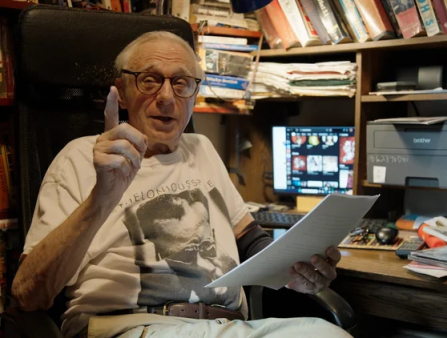
Matty Wishnow, an entrepreneur and podcaster, had never directed a documentary before The Last Critic, which recently premiered at SXSW and won a special jury prize. Mixing archival clips with new interviews from his peers, the film charts Christgau’s massive influence on music criticism while celebrating Dibbell’s crucial role in his life, both as an interlocutor and a soulmate. (As much as Christgau’s fans will savor Wishnow’s peeks into the man’s Manhattan apartment, which is overstuffed with vinyl, CDs, and books, the documentary’s constant highlights are scenes of Christgau and Dibbell going for walks, listening to music together, and just talking.) But The Last Critic is also a melancholy affair, acknowledging not just Christgau’s advanced age but the perilous state of modern arts journalism.
I spoke with Wishnow after SXSW to discuss why his film is a love story and what the future holds for the profession Christgau spent his life pursuing. This conversation has been edited and condensed for time and clarity.
DOCUMENTARY: You grew up a Robert Christgau fan. How does that turn into directing a documentary about him?
MATTY WISHNOW: I was writing a book about startups, Listening for Growth, and there was a chapter about the faculty of listening. I started asking myself, Who are the world’s greatest listeners? After getting lost in that question for a week, I was like, I actually know who the world’s greatest listener is because I’ve been reading his stuff since I was a tween.
That revelation didn’t inspire me to go make a movie. But it did inspire me to talk to my friend, Ben Wu, who is a documentary filmmaker, and say, “What if I told you the person who’s listened to more music than any person to ever walk the face of the earth is still doing it and that his story really hasn’t fully been told?” Ben said, “Let me reach out to my friend, who I think might know more about this than I do.” And this is where the crazy serendipity happens: Ben ended up being my coproducer and D.P., and his friend is a guy named Paul Lovelace. Paul, who’s my editor and coproducer, interned for Bob, and he also made his college NYU thesis film on Bob, which meant that we had dozens and dozens of hours of archival footage sitting on three-quarter-inch tapes in a house somewhere.
The more I spoke to the guys, the more they were like, “Matty, you should direct.” I had very little interest in [directing], except that I was so interested in the story. I figured if I could stand on Ben and Paul’s shoulders, I would be okay.
D: Christgau has a reputation for being intimidating. How did you sell him on the film?
MW: I held him in extremely high regard, but I was aware that he was known as being thorny or difficult. But my 25 years as an entrepreneur were helpful in this case because negotiation, empathy, and deal-making are part of that job.
Now, 80-year-old Bob is not ready to go to battle in the same way that 35-year-old Bob was. Greg Tate in the movie says, “Bob’s warm, but never fuzzy”—I found Bob to be occasionally quite fuzzy. He’s fuzziest when Carola is into something. It didn’t take me long to figure out that while this movie might be interesting to Bob, it was very attractive to Carola. She really wants Bob’s legacy to be properly accounted for. And they adore Paul, so being able to make my case to Carola reduced almost all of my anxiety within 20 minutes of meeting them. They never questioned my lack of bona fides. Bob, who’s a legendary editor, didn’t try editing.
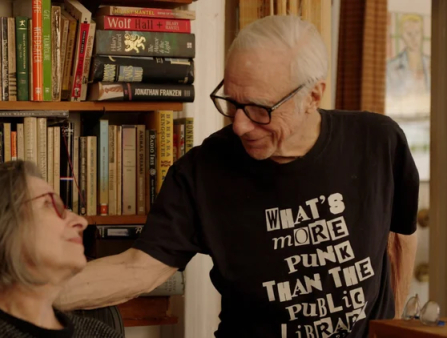
D: Anybody who loves Christgau’s writing knows how important Dibbell is to him—he talks about her and their marriage constantly in his work. We see her a lot in The Last Critic, but in a way, I feel like I’ve known her for years because of him.
MW: I can’t think of a critic who is as vulnerable and honest about his marriage, his love life, his sex life. His interest in monogamy is the throughline of his whole life; it precedes his interest in music criticism. To hear Bob talk about his relationship with [critic and former girlfriend] Ellen Willis is to hear somebody who had a dream of an egalitarian, romantic, bohemian, intellectual relationship. He realized that with Carola.
We had him talking about his piece in the 90s, “The Road Taken.” It’s very emotional. It didn’t make the final cut, but I think it’s inarguably one of the most important things he ever wrote. It’s shockingly honest. Many people who see the movie might say, “Oh, this is an ideal marriage,” but all marriages also have tremendous valleys. Bob’s very transparent about their fertility journey, the crises of confidence in the marriage.
D: You don’t explore those marital ups and downs in the documentary, or his penchant for discussing his sex life in his writing. Why not?
MW: The truth is, Bob has written an incredible memoir that pays great tribute to his romances and sex life. An early decision was to minimize redundancy with the memoir; I want people to read it. If this were a narrative feature, Carola would be the lead actress with Bob as the lead actor. I wanted to make sure that [while] we were making the movie, Carola had to be party to it. If I was veering into something that Carola was like, “I’m happy for Bob to talk about that, but I’m not going to talk about that,” a decision had to be made. Bob’s written and spoken enough about that that I don’t think this movie needs to spend much more time on it.
D: The Last Critic includes interviews with younger music critics, who discuss how perilous the profession is at the moment. Many people aspired to be Robert Christgau, but that world doesn’t seem to exist anymore.
MW: The idea that music criticism was a vocation is something that Bob invented. He wasn’t the first critic, but the idea that it could be a job is almost entirely his doing. He democratized the form.
A lot of critics who have seen the movie are like, “Oh, you’re eye-rolling with your title.” I am trying to be provocative, but I do think Bob is the last of a kind. There will be people who are paid to write music criticism, but the number is a fraction of a fraction of what it once was. People [now] think of music criticism as social media content or something that is still happening in the corners of dying media. That doesn’t mean there aren’t many thousands of critics, but it is a profession that has withered for reasons as much cultural and economic as to do with the actual job and its value.
The idea of a master in sunset—showing someone when they are not physically in their prime, but who has the wisdom and trappings of all of their former selves—was very interesting to me.
—Matty Wishnow
D: Christgau is blunt about his age: “Fuck ‘elderly,’ we’re old.” You don’t shy away from showing his frailty.
MW: Before starting this, I had watched the Robert Gottlieb, Robert Caro documentary, Turn Every Page [2022]. I’d seen the Gary Hustwit doc about Dieter Rams called Rams [2018], and the R. Crumb doc. The idea of a master in sunset—showing someone when they are not physically in their prime, but who has the wisdom and trappings of all of their former selves—was very interesting to me.
It’s always scary when you’re making a movie about people who are older. I was constantly worried: What are Bob and Carola physically able to do? What happens if there are health issues that interfere? What if life gets in the way? Ben and Paul had to say, “This is what documentary filmmaking is: You start, and you don’t know the end.” As someone who has spent his life in startups and entrepreneurship, I am extremely risk-tolerant, but I also like to set up things for success. This was a case where I had less control over that. Thankfully, Bob and Carola’s health was excellent.
D: People may be surprised to see the ferociously opinionated Christgau get weepy in the film. But fans know he gets emotional on podcasts or when he does public speaking. What made him cry when the two of you talked?
MW: Bob, at this point, is very reflective about how he was lucky enough to meet Carola and for her to fall in love with him. He is contemplative about everything, but I think he is most emotional when talking about how fortunate he feels to have shared this life with her. It is, without question, his greatest achievement, more so than the volume or quality of his writing, his reputation as an editor, or his contributions to the mainstreaming of previously subpopular music. His wife responds to music differently than he does, but in a way that inspires him and attracts him to music that maybe on his own he might not be attracted to. Bob has more than two ears constantly.
It was very clear to me that his dream in life was to have an intellectual, creative partner to share a life that was both bohemian but sufficiently middle-class that they could raise a family and have a better life. That he was able to accomplish that is a unique quirk of history. Think about that: a 50-plus-year successful marriage with a life as a working rock critic living in the same apartment in the East Village of Manhattan. At no point is he like, “I can’t believe I published eight books.” He’s like, “I worked hard for that, I deserved that on some level.” But his marriage to Carola, he feels, is a miracle.