

In this interview, Marc Isaacs discusses his latest provocation, a hybrid doc set at the fictional “Synthetic Sincerity Lab”
AI
OpenAI’s Sora 2 mainstreams the collapse between irony and information, threatening the basic conditions under which documentary can operate
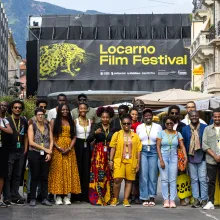
The venerable Swiss festival featured its usual boundary-pushing works alongside industry activities that showcased documentary’s capacity to adapt
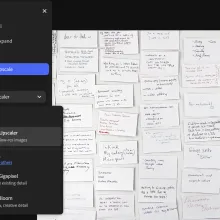
Revolutionary! Magical! Game-changing! These are some of the words being used to describe the results of AI-generated upscaling tools for archival and low-resolution footage. Some documentarians have turned to Video AI from Topaz Labs, a software featuring a suite of 30-plus AI models for video enhancement. To learn more about Video AI and the future of AI-assisted video upscaling, Documentary interviewed the Topaz CEO and Co-founder Eric Yang.
For her immersive artwork Burn From Absence, artist Emeline Courcier creates an archive where there was none. Using artificial intelligence, she recreates a family album, visualizing and verifying a history that has been hidden, documenting it from her perspective. In the four-channel installation, digitally created images illustrate an audio track layering her family members’ memories of life in Laos, the ‘Vietnam’ war, and new beginnings in France. After its premiere at IDFA last November, where it won the DocLab Special Mention for Digital Storytelling, Documentary spoke to Courcier about truth, archives, and working with deeply personal material.
It seems like the world wakes up to new information about artificial intelligence technology every day. From the lawsuits over the use of unlicensed works to train AI models, to the controversies that arise from late actors’ resurrections in Hollywood’s biggest franchises, it’s easy to see how the use of artificial intelligence can be daunting to filmmakers. To help filmmakers navigate through the tricky waters of AI, our firm has compiled a few items of practical advice that we believe can be helpful to documentary filmmakers who want to utilize AI in a cautious yet effective manner. And although these tips are based on U.S. law, we’re hopeful that their practical nature will benefit filmmakers in international jurisdictions as well.
As a reviewer for a couple of documentary grants, the process is a lovely way to learn more about what stories my peers are exploring, what styles and
This past March, we announced the launch of the Nonfiction Core Application 3.0, an update to the application template created to ease the application burden on filmmakers while reflecting evolving artistic and ethical practices. In our launch post, co-authored with Keisha Knight, we described the Nonfiction Core Application 3.0 not only as a shared resource, but also as a living document that should evolve with the field. Today, we are continuing that evolution.
When making Deepfaking Sam Altman (2025), documentary director Adam Bhala Lough (Telemarketers) found himself in deep doo doo. Despite months of trying, he still hadn’t gotten access to an interview with Sam Altman (CEO of OpenAI) for a film Lough had promised about AI. So he took a page from Altman’s own MO. The resulting film follows Lough setting about on his journey, working with deepfakers in India, meeting with lawyers, and ultimately spending a lot of time chatting and bonding with the resulting AI chatbot, called SamBot. For this edition of The Synthesis, we spoke with Lough about the film, his use of AI, and its implications for documentary.
Last year, national and international press widely reported on what The Globe and Mail described as “the most tumultuous year in the festival’s history,” complete with sweeping personnel changes, social and financial pressures, and the temporary closure of their flagship Ted Rogers Cinema. Though Hot Docs managed to pull through for its 32nd year with a new executive director (Diana Sanchez, formerly of TIFF) and a replenished staff (some of the programmers, including department head Heather Haynes, returned after their prior exodus), what frightened this hamstrung fixture of Toronto’s flailing film scene was dismally clear. Social issues don’t entirely permeate the programming, nor do their chosen films observe such issues in totality, but Hot Docs has always strived to stay in tune with urgent matters of the present, especially through films that align their audience’s point of view with what will one day be the right side of history.