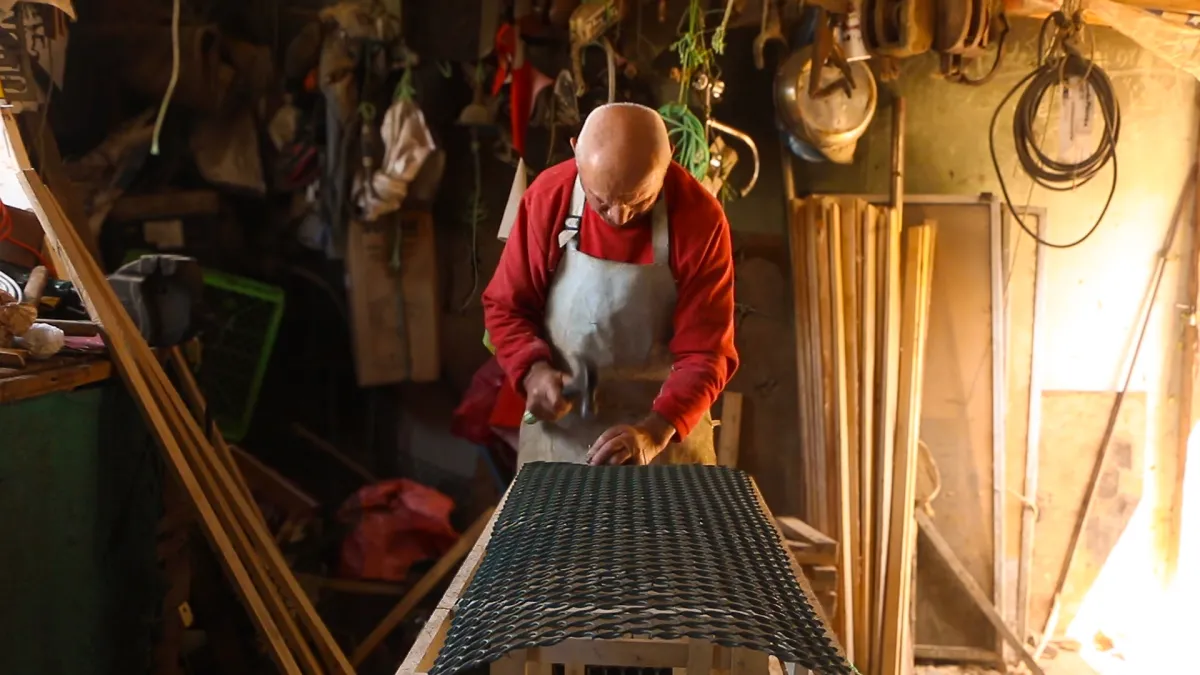
Si La Isla Quiere. Courtesy of Cece King
Fundraising for independent documentaries in the U.S. has always been difficult. As the manager of the IDA Fiscal Sponsorship Program, I have a unique vantage point on what’s working for the many documentary projects in our program. On average, projects have budgets between US$30k–$100k for shorts and US$250k–$1 million for features. Raising that amount often involves equity investments and non-recoupable funds—grants, donations, or crowdfunding.
In 2025, the documentary fundraising landscape has become even more confusing. While we can fiscally sponsor projects worldwide, we receive most project donations from U.S.-based funders and donors, as donating through a fiscal sponsor is primarily beneficial to those with a U.S. tax ID. The situation looks dire: cuts to the National Endowment for the Humanities and cascading cuts to state humanities councils; the defunding of the Corporation for Public Broadcasting and cuts to public media production funding; and tenuous economic conditions making private donors and investors more cautious about their portfolios.
It can feel like the fundraising outlook for your documentary project is dim. But there are still documentary producers raising the funds they need for their projects right now. Here are my observations about what’s working in independent documentary fundraising.
1. Foundation grants are still being granted.
Grants from foundations and non-profit film funds are still available, and the majority are being awarded in the same amounts as before 2025. Sundance Institute, Chicken & Egg Films, Ford Foundation’s Just Films, and others still have open applications, and we are seeing similar numbers and amounts of grants awarded as in previous years. The less encouraging news: many grant opportunities have reported higher-than-usual application numbers, which means grant awards are even more competitive.
For Wimblu, a nonfiction multimedia storytelling project based in Costa Rica, the opportunity for their first grant came from an introduction to a funder through a leadership course in which co-founder Alessandra Baltodano participated. The project team was new to the grant application process and was thrilled to receive their first one-year grant. The film team prepared a final report even though the foundation didn’t require one, including both qualitative and quantitative metrics of the grant's impact. As a result of their proactive update, Wimblu was invited to reapply and was awarded a three-year grant, including funds to hire a consultant grantwriter based in the U.S. With the consultant’s help, the filmmakers developed narratives and templates for applications, identified clearer expected project outcomes and impact, and built a database of dozens of aligned U.S. funding opportunities. They are currently applying for new grants.
Pro tip: Review the guidelines for the grant you are interested in, as well as the projects that have been previously awarded, and be realistic about whether your project aligns with the priorities of the funder. Has the funder selected other projects similar in theme or scope to your project? Can you request an informational meeting or email from a program officer before submitting an application to see if your project is a good fit? If you have already been awarded a grant, does that funder have suggestions for other potential opportunities?
2. Some state and local funding is still available.
The major cuts to the National Endowment for the Humanities in April 2025 have significantly impacted the humanities funding available nationwide. However, not every state or city has been impacted in the same way. Some state and local governments only re-grant federally allocated funds, while others have state and local funding that is not contingent on federal funding and therefore not impacted by federal cuts. In California, new applications for the California Humanities Council’s California Documentary Project grants are currently on hold. However, regional grants in California, such as those from the Los Angeles County Department of Arts and Culture, are primarily funded by state and local funds, so their granting programs can continue even during a federal spending cut.
A Better Way: James Lawson, Architect of Nonviolence is a feature documentary that follows civil rights leader Rev. James Lawson and his influence on nonviolent resistance movements across the country from his home base in Los Angeles. Director Karen Hayes emphasizes the project’s clear ties to Los Angeles’ equity and justice movements, and has made that connection a cornerstone of her fundraising approach. To date, she has procured Los Angeles city and county government grants, as well as funding from Los Angeles foundations and community members. These funding opportunities often began with conversations with local leaders and city officials, before an invitation to apply was extended.
Pro tip: Research the funding available at the state, county, and city levels. Determine whether their funding is primarily federal re-granting or if they also have their own funding to allocate. Many state and local grants may have broader applications than just media projects—look into local arts alliances, historical societies, and more. Who are the local leaders and officials invested in the topics and themes of your project? Can you attend office hours with them or their team to share information about your project and how it relates to local priorities?
3. Private donors are still giving.
The economic uncertainties of 2025 have impacted private donors’ giving portfolios, but filmmakers are also still receiving these donations for their current projects. We observed a decrease in giving in early 2025, but in the second half of the year, individual giving has returned to similar rates as in other years. Filmmakers who have already established relationships with individual donors are still receiving funding for their new projects. Filmmakers who have not previously received large donations from individuals are still finding ways to develop new donor relationships, though these take time to build.
When Cece King received a small university grant to work on a conservation initiative on Robinson Crusoe Island in Chile, she had no idea it would become the basis for her short film Si La Isla Quiere (“Island Willing”). On the island, she learned to scuba dive and trek with hunters and fieldwork specialists, filming from 60 feet underwater to 3,000 feet above sea level. But the bigger challenge came after: raising post-production funds. Since the story highlights community-led stewardship, King and her team designed a fundraising strategy that mirrors this ethos.
Through cold outreach, they partnered with a local bar and a pisco distiller for crowdfunding parties, while also hosting informal breakfasts and lunches for friends, friends-of-friends, mentors, and alumni groups. They let attendees know, “You don't need to come ready to give money, you just need to come ready to share an idea or a connection to help move the project forward.” They would screen the sizzle reel and share insights from their filmmaking process, while keeping prospective donors engaged with updates after events. Si La Isla Quiere is not only fully funded but the filmmakers also built a long list of supporters to invite to the world premiere.
Pro tip: For those developing new donor relationships, expect them to take time. Start building relationships with donors early in the project, but in this time of economic instability, donors may need even more assurance that the film will be completed before they donate. It’s unusual for a new donor to give to a film in development if they don’t already know the track record of that filmmaking team, so be aware that you may not see donations until you have completed a significant portion of the filming or have a first cut compiled. Alternatively, you may receive a small donation early on, and by sharing updates along the way, you could receive further donations later in the project as well.
4. Creative solutions to budgets or production timelines may be necessary.
There has never been a time in documentary filmmaking when filmmakers have not had to find creative solutions to get their projects to the finish line. While there may have been a brief period when some documentaries sold all rights for seven figures, that is not the current reality. Filmmakers need to be realistic about their fundraising abilities as they build their budgets. Lean budgets are always going to be easier to fundraise for. New filmmakers may need to complete a significant portion of their development process before they receive any donations or grants. Funders will recognize a realistic plan that takes into account a reasonable production and fundraising timeline.
Under his Paradeigm Films banner, Stephen Brucher is producing and directing two feature documentaries concurrently—Weather Women and OTUS Project. This was not the original plan when he started working on Weather Women in 2023, but as the project progressed, he also met the tornado research team profiled in OTUS Project and realized that because of the seasonal nature of both weather-oriented projects, it made sense for his team to tackle both at once. This approach has given them the flexibility to prioritize filming on the project that is more imminent, and also whichever project they are receiving funding for. They have had to slightly adjust their production and release schedule for Weather Women, but they are excited about the ability to keep their productions going and eventually release two films.
“Diversifying our brand side, video retainers, projects, and commercials allowed our own agency to fund both films when there are gaps. This storm season has been extremely and abnormally long—I thought I’d be done filming by May, but the season took us into late June and July,” Brucher explains.
Pro tip: Work your current realities into your budget and production timeline. If you need to continue your day job while you fundraise for your project, your production timeline may be longer than expected. Anticipate that there may be periods of active production intercut with slower periods of fundraising, day jobs, and other work.
5. Consider sharing your work, even while still in production.
Filmmakers and impact producers often emphasize connecting with interested communities when planning a film’s release, but developing that engagement earlier can also benefit fundraising. Unless you are developing a project that requires secrecy or extra discretion, consider how you can start sharing your work and research while still in production. Connect with the people who will be interested in your film even before it’s “finished.” You may be surprised by the donor relationships and connections to funding these communities may open up.
Sign My Name to Freedom is a feature documentary about iconic National Park Ranger Betty Reid Soskin and her hidden life as a singer/songwriter and civil rights pioneer in California. As part of their fundraising strategy, director Bryan Gibel and his team made concerted efforts to begin building relationships with various communities that will be invested in the final film. To engage the National Parks community, they hosted events in collaboration with the Parks Project and Intersectional Environmentalist, where they showed short work-in-progress clips. To engage in conversations related to Betty Reid Soskin's history with the civil rights movement, they collaborated with the NAACP and other racial justice organizations to host roundtable discussions.
These early engagement opportunities have allowed the filmmakers to begin building interest in the eventual release of the film among National Park enthusiasts and conservationists, civil rights leaders and supporters, and others invested in Betty Reid Soskin's story, while also raising some of the finishing funds from individual donors who attended these events.
Pro tip: Think through the communities that would be interested in your project and how they receive information. If you have a history-heavy documentary, consider presenting on the topic for a local history society or academic lecture series. If you have a visually extravagant project, consider cutting together a sizzle showing off the beauty or uniqueness of the work to share with potential corporate camera sponsors. If your research for the project is uncovering information that you think would be helpful to a wider audience, consider publishing options that will bring more attention to your work.
Fundraising for independent documentaries is often a lengthy process, marked by lots of rejection and wondering if anyone else sees the value in your project that you know is there. While 2025 has been particularly demoralizing for documentary makers in many ways, not all hope is lost. The headlines do not capture the full story of fundraising, and many of the avenues that filmmakers have found success in the past are still viable. The fundraising process for each film is unique and may extend through the entire project timeline. It may require creative planning and production timelines, as well as hours devoted to grant research and donor relationship development, to reach the finish line. But know that there are other documentary projects out there doing the same hard work—and succeeding
Bethany Wearden is IDA’s fiscal sponsorship program manager. She has over 10 years of experience in artist support and public programming at various organizations, including Sundance Institute, USC Pacific Asia Museum, and Define American, where she supports artists and storytellers across disciplines and career stages.