
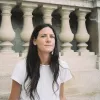
A year ago, at the 2024 Camden International Film Festival (CIFF), the festival’s organizer, Points North Institute, announced that Elise McCave was appointed the new executive director, following co-founder and previous director Ben Fowlie’s relocation to London. Paraphrasing from a friend: Documentary festivals, like political parties, tend to change leadership every few years. The turnover can be a healthy part of the process, ideally leading to fresh perspectives through new team structures.
Through recent fluctuations in the documentary film festival scene, Camden quietly emerged as one of the most reliable screening stops on the festival circuit. Its programming can be original and thoughtful, less influenced by significant SVOD sponsorship deals than splashier contemporaries that are often obligated to program films based on a combination of merit and money. This year’s program included 26 features and 28 shorts from 32 countries, cherry-picked from top-tier festivals of the past year. It’s a small program that packs big auditoriums: screenings at the Camden Opera House and the Strand Theatre in Rockland, and special events at Journey’s End, the Rockport Opera House, and Camden Hills Regional High School.
CIFF’s deep roots in the Maine community also lead to an authentic prioritization of local voices.
A documentary industry veteran, McCave started her career in London and then in New York at BritDoc, (now Doc Society), mentored by indomitable doc couple Beadie Finzi and her late partner Jess Search. McCave then moved to Kickstarter as the director of film in 2016. Her deep connections engendered support from filmmakers and executives when she landed at Camden last year.
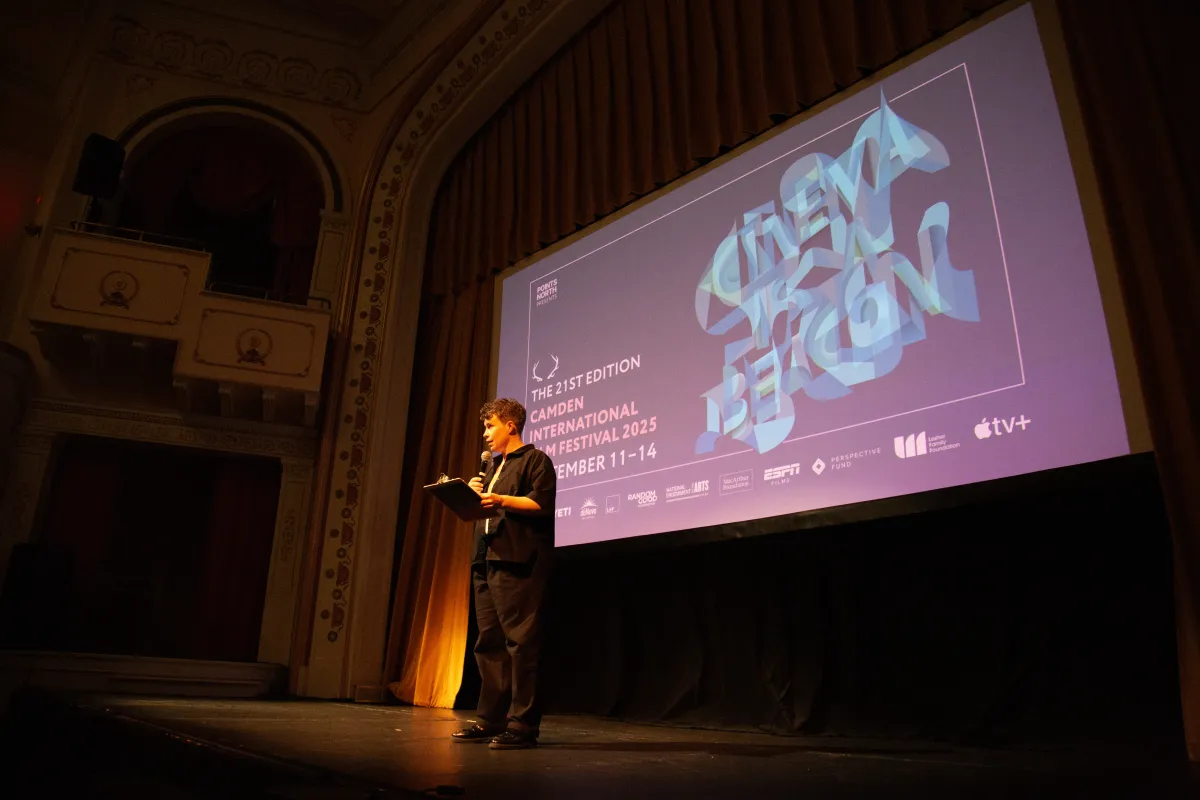
In McCave’s opening remarks to this year’s 21st edition of CIFF (September 11–14, 2025), she read the entirety of novelist Barbara Kingsolver’s poem “Hope; An Owner’s Manual.” It begins:
Look you might as know,
this device is going to take endless repair;
rubber cement, rubber bands, tapioca,
the square of the hypotenuse,
nineteenth-century novels, sunrise—
any of these could be useful. Also feathers.
Documentary spoke to McCave about her first year at the helm, her plans for CIFF, and the different types of hope that propel artistic support in challenging times. This interview has been edited.
DOCUMENTARY: In your opening remarks for this year’s CIFF, you said that running an arts nonprofit that’s committed to diversity in 2025 has not been for the faint of heart. Could you say more?
ELISE MCCAVE: I’m not sure that running an arts nonprofit in any time or place is necessarily a walk in the park. Though during the “golden age of documentary,” there was significantly more access to [other companies’] healthy marketing budgets to support the expense of running a film festival.
Running a film festival in 2025 is to witness industry consolidation effectively eliminate companies that used to provide meaningful financial support [to film festivals]. It’s to watch some of our corporate sponsors scale back their support. It’s to watch the NEA terminate our funding. It’s to watch filmmakers be unable to get visas to accompany their work, or to feel too unsafe to enter the country in the first place. And in the most general of terms, it’s to watch a high level of uncertainty be introduced into the lives of everyone in our orbit, from filmmakers right through to donors.
The devastation shaping the world—in Gaza, Ukraine, Sudan, and climate displacement—is also shaping the stories our filmmakers are telling. We can’t separate running a festival from those realities, and the discomfort that can come with talking about them and exhibiting work about them.
D: You joined Camden from Kickstarter, and before that, you had a long-running role at Doc Society. How have those past experiences led you here?
EM: I see the connective tissue between Doc Society and Points North in so much of what we do—both in practical terms, and also in spirit and ethos. I think it was the reason I felt at home here the second I walked through the door.
Doc Society has been through many iterations over the years and looks quite different now than it did when I joined the team in 2008, but so much of the work I did there paved the way for this role, from the artist support, the importance placed on filmmaker agency, to the many Good Pitch events I ran over the years. Those formative years make it all the sweeter that we deepened our working relationship [between Points North and Doc Society] this year—collaborating on the Town Hall, bringing Beadie [Finzi, Doc Society director and co-founder] on as a Q&A moderator, and having her join the jury for the Weyerman Fellowship.
Kickstarter expanded my industry relationships exponentially. I was talking to filmmakers and film industry reps all day, every day, and I hit the festival circuit pretty hard over that period as well. By the time I joined this team, I’d worked with many of our essential base of contractors in different capacities over the last many years, and I definitely know a brilliant festival from a mediocre one.
I knew I wanted to be in an organization where film was at its heart, and I wanted to be at an organization that had a strong point of view, and where I could see some big projects all the way through from start to finish—this was the perfect place to land.
D: What were a few of the first-year challenges?
EM: In no particular order…
Building the 2025 budget in less than four weeks, at the same time as designing and executing our annual appeal, all in my first six weeks.
Meeting all of our individual donors and building meaningful relationships with them. Luckily, I consider myself a people person, and these folks are very smart, lovely, and supportive, so this really wasn’t a hardship other than in the sheer volume of talking. It’s very rare for me to reach my limit when it comes to extroversion, but this job has got me pretty close at times.
Finding a replacement festival producer with just under three months until the festival. The important thing to note here is that we did it, and they are wonderful. But I’ll be honest, it felt a little hairy there for a sec.
Having a winter that stretches into early May, and the flowers I’m used to seeing in March appearing in June, was quite sobering.
D: What about first-year unexpected or expected joys?
EM: Being able to swim in lakes and in the sea whenever I like (temperature notwithstanding) has felt like an enormous privilege. In fact, I’m actually not sure that the volume of work that I’ve needed to do this year would have been possible from any other location than one like this. I’ve done a lot of hiking while dictating to-do lists into my phone, which I realize isn’t necessarily the point of getting into nature and decompressing, but whatever works.
The community has been so warm and welcoming. There’s always been someone to help me move a couch or dining table, invite me to impromptu dinners, or take me out for a boat trip. I’ve come to understand how proud this community is of the festival, and how much they want to see it continue to thrive.
For a small place, these towns are jam-packed with artists. In Rockland, there’s a disused school that’s home to the largest collection of artist studios in the state. I’ve only been used to seeing this kind of concentration of talented artists in bigger cities. It’s been really eye-opening to tap into not just Points North’s international community of filmmakers but also the community of artists that’s right on our doorstep, year-round.
D: You centered hope as a theme in your opening remarks. What are some of the highlights of the festival this year for you?
EM: To be clear, I didn’t mean hope-like-optimism, I meant the gnarly kind of hope that exists against the odds. The effortful hope that the world can discourage you from holding on to.
The Q&A after Come See Me in the Good Light, which was hosted by Beadie Finzi in conversation with [protagonist] Megan Falley—who had recently lost her partner, the poet Andrea Gibson—was incredibly moving. Beadie had been reading Megan’s writing since Andrea’s death, and invited her to read some of her poetry and Substack entries out loud. It somehow felt at once cathartic, deeply sad, and joyful, and it was all the more significant that we were in this packed theater together, in Andrea’s home state.
Other high points: the vibe amongst our staff was brilliant. Our annual Documentary Town Hall focused on media in the public good. It started with Beyoncé and ended with ice cream, and brought together a very impressive room, including a lot of people who I think will solve the catastrophe public media is facing in the coming years.
D: What does the next year hold for you and CIFF?
EM: You know, the next year is really about stability and sustainability. Continuing to shore up our team after a period of transition, deepening our relationships in Maine, and keeping CIFF the most welcoming, nourishing space for documentary filmmakers to gather.
This past festival, we tried a bunch of experiments, and almost all worked. We did a free community screening of Ian Cheney’s Observer in an 800-seat high school theater, and it was packed. We programmed films all day on opening day for the first time, not knowing if people would actually show up, and they did. And our Forum—ten sessions across three days—was the most ambitious yet, and every single room was full. That sense of packed houses and buzzing conversations was a real revelation.
So this next year is about building on those wins, refining what worked, and keeping ourselves open to new connections. I’m especially excited about reaching across the aisle — towards journalism, art, poetry, and other creative practices that both shape and are shaped by documentary. That cross-pollination is where things feel really alive to me, and I think that’s where CIFF can keep pushing forward.
D: You recently relocated to Rockland. What have you been getting into when you need a head-holiday from work?
EM: It’s true, I have been spending most of my time in Rockland, but I still have a spot in Brooklyn!
Head-holidays come in the form of swimming, swimming, swimming—Beauchamp Point, Megunticook Lake, and Rockport Harbor are my top spots. So far, Owl’s Head is my chilliest.
Hiking up to Beech Hill—it has spectacular 360º views of lakes and coastline, and we organized a 5k community run with the team behind Remaining Native during the festival, which was attended by more than 80 runners and walkers. I just took my parents up there this week!
First Fig in Camden for the wine (and the food). Cafe Grazie in Rockland for the food (and the wine). I visited (several times) the absolute best exhibition at the Farnsworth Museum by Anne Buckwalter, which was surprisingly queer and irreverent for an otherwise fairly sober institution.
And of course the cinemas—the Strand for the indies, and the local multiplex when I need a blockbuster fix.