

On August 6 of last year, the day before David Ellison’s Skydance Media formally acquired Paramount Global, it was announced Liza Burnett Fefferman, the founder and co-head of Paramount’s MTV Documentary Films, had left the company, leaving the prestige documentary unit without a leader. Now, six months later, the standalone documentary division––known for releasing such Oscar-nominated films as Ascension (2021), The Eternal Memory (2023), and Black Box Diaries (2024) and which was run from 2010 to 2024 by renowned former HBO executive Sheila Nevins—no longer exists, a company spokesperson has confirmed.
The demise of MTV Documentary Films joins a long list of other recently shuttered nonfiction units, from Showtime Documentary Films to MSNBC Films. With the looming merger between Paramount-Skydance (PSKY) and Warner Bros Discovery (WBD)—home to HBO Documentary Films—on regulators’ dockets, the phasing out of Paramount’s MTV Documentary Films is yet another worrying sign for a documentary industry that is already nervous, but nevertheless refuses to give up.
“The dinner table is getting very small.”
While MTV Documentary never took on more than one or two documentary titles per year, “having a rarified boutique label like MTV Docs gone will be missed,” says theatrical booker Michael Tuckman, who worked with the company as a consultant, functioning as their head of distribution from 2020 to earlier this year. “It was a label that dedicated an entire team to a small number of docs, from acquisition to festivals, to theatrical release and broadcast, with awards mixed in, as well. It was not dictated by any kind of algorithm–just quality,” he says. “That kind of singular focus just doesn’t happen any more.”
Paramount will continue to produce and acquire documentary programming, according to a spokesperson, citing two recent documentaries for Paramount+ (2024’s We Will Dance Again, about the Hamas attack on the Nova Music Festival, and last fall’s The Bodyguard of Lies, about how the Afghanistan War was sold to the U.S. public) along with a raft of true-crime series (The Carters: Hurts to Love You, My Nightmare Stalker: The Eva LaRue, Handsome Devil: Charming Killer).
Director David Osit, whose recent film Predators (2025) was MTV Documentary’s final film, notes the division may have been small in terms of its slate, but since “they were one of 4-5 companies to buy documentaries out of Sundance last year,” he says, “that’s 20% of the documentary market gone.”
“A lot of these documentary branches within these larger companies are surviving because of people like Liza and René,” Osit continues, referring to Fefferman and René Ridinger, the latter of whom was working as Paramount+’s VP of Awards. “They care deeply about nonfiction and were fighting for those spaces,” explains Osit.
There is a lot of concern from executives to say ‘yes’ to anything right now,” says one former executive, “because everyone is not sure what their budgets are going to be, or people are being let go, so there’s this thinking that maybe if I put my head down and don’t take any large swings on anything, I’ll be able to keep my job.
Many of the documentary industry executives we spoke to for this story echoed Osit’s sentiment: Whether Nevins or Fefferman, or Amy Entelis, who remains a top executive at CNN Films still championing docs, or Carolyn Bernstein at Disney-owned National Geographic, which is still devoting resources to a small number of docs, it is their commitment to long-form documentaries that has made them “viable” passion projects within these larger corporate entities, says one former executive. “And if you don’t have them, they are not.”
According to several sources, there are still a number of media companies looking to partner on feature documentaries, but not on nearly as many or for the same amount of funding, and also in ways that are far more cautious than in years past.
“There is a lot of concern from executives to say ‘yes’ to anything right now,” says one former executive, “because everyone is not sure what their budgets are going to be, or people are being let go, so there’s this thinking that maybe if I put my head down and don’t take any large swings on anything, I’ll be able to keep my job.”
One documentary filmmaker says it’s “kind of a nightmare” working with these companies right now, because the execs are so trepidatious. “Everyone wants to share the risk,” says the director. “No one wants to fund them on their own, and they all want to have three or four different entities to make the budget whole, and each has their own different needs–for example, one requires a theatrical window; one says we can’t have a theatrical window,” the person continues.
Echoing a wider sentiment in the nonfiction community, the filmmaker adds, “I’m frustrated to see so many media companies capitulating to the Trump administration,” they say. “I worry about a near future where funders and distributors won’t touch anything political because they’re so compromised.”
Osit acknowledges that the industry was already moving away from funding political work before Trump took office, “but now they’re horrified, petrified, of putting something out there with politics in it,” he says. “The dinner table is getting very small.”
When thinking about the Paramount merger,” continues Alex Gibney, “will programming be censored for political reasons and withheld from the American public to please an American president who is utterly transactional and the apex of crony capitalism?
Nevertheless, HBO Persisted
Despite the retrenchment from documentaries across the corporate sector, HBO Documentary Films remains one of the key players in the business. Even there, insiders suggest they’re also not as robust as they once were. As one filmmaker says, “HBO is one of the only places that buys independent documentaries, but HBO has a volume problem; they can only take so many.” (HBO declined an interview request.)
Geeta Gandbhir, who was recently nominated for an Oscar for her HBO doc short The Devil Is Busy (2024), likens the company to a “shiny prestigious jewel in this dark mine that has now become our industry,” she says. “So we pray that they remain intact and continue to do their work.”
Andrew Jarecki, the veteran director of HBO projects Capturing the Friedmans (2003) and The Jinx, season 1 (2015) and season 2 (2024), says his ongoing work with the company “has been the most significant relationship I’ve had.” Heralding the division’s “level of consistency” and “unique stability”—with longtime executives Nancy Abraham and Lisa Heller at the helm—he adds, “I’ve never run into creative differences with them, and they’re respectful of filmmakers. As a result, they’re able to have multi-year relationships with filmmakers.”
“And that’s what is at risk right now,” continues Jarecki. “We’ve seen it before where some phone company comes in and thinks they know how to slice the HBO brand better and burnish their other brands or lesser content,” he says, referring to AT&T’s 2018 acquisition of WarnerMedia. “Now the question is whether this new ownership, under David Ellison, if it goes through, are they going to do the same thing?”
Alex Gibney, another documentary luminary with a long history working with HBO, knows a thing or two about corporate interference.
While Gibney is not commenting about his upcoming Musk documentary, which is set for broadcast on HBO next year after the proposed PSKY-WBD merger, he recalls what happened to his Oscar winner Taxi to the Dark Side, an indictment of the U.S.’s torture and interrogation practices during the Afghanistan War, which was released during George W. Bush’s presidency.
After the film’s 2007 Tribeca premiere, the film’s TV window was acquired by The Discovery Channel, whose parent company Discovery Communications—run by current WBD head David Zaslav—was preparing to become a publicly traded company in 2008. “Because they wanted to curry favor with the Bush Administration, I learned they were going to shitcan it,” says Gibney. “That was an example of a network that was playing politics.” Eventually, Discovery gave up the rights, and the film landed at HBO.
“When thinking about the Paramount merger, ” continues Gibney, “will programming be censored for political reasons and withheld from the American public to please an American president who is utterly transactional and the apex of crony capitalism?”
David Osit is also worried about the fate of HBO Documentary and Warner Bros’ other property CNN. “If the merger goes through, they are done,” he says. “Why would we assume that they would survive? This is the point of it. This is why Trump wants the merger to happen; they want to continue to stamp down moderate and leftwing voices in favor of rightwing voices.”
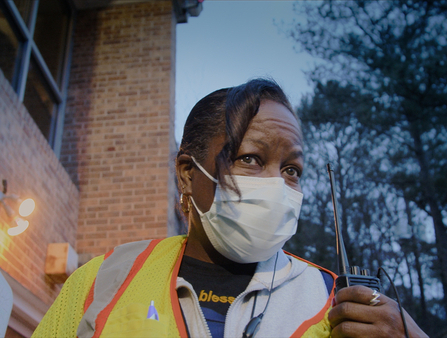
The Devil Is Busy. Courtesy of HBO
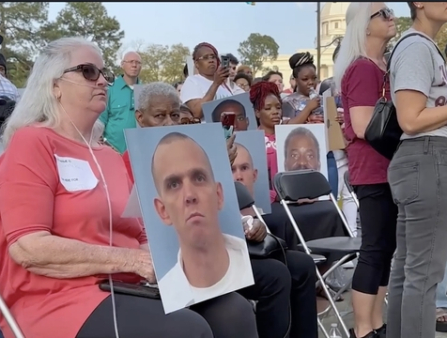
The Alabama Solution. Courtesy of HBO
How’s Your News?
Feature documentary support has also waned under the major cable and broadcast news companies, such as CNN, MSNBC (which is now MS NOW), ABC, and NBC, which all had or continue to have documentary units, but with limited capacity.
While CNN Films announced a major pullback from docs in 2022 due to cost-cutting measures at Warner Bros Discovery, CNN Films remains “very committed to feature documentary storytelling,” according to a company spokesperson. CNN’s Amy Entelis told Deadline last year that CNN Films was in the midst of a “new phase” building back its documentaries as part of CNN Originals.
According to a CNN spokesperson, “partnerships and co-financing are a much bigger part of today’s model,” they say. “For many projects, we now work with a combination of partners to share production costs. That approach allows us to continue producing ambitious documentary work.” Recent CNN feature documentary projects include The Salisbury Poisonings: A Spy Next Door, in partnership with Passion Pictures and Propagate Content, and Amelia, a portrait of the famous aviatrix from Julie Cohen and Betsy West (who made CNN Films’ RBG), made together with Imagine Documentaries, and in association with Icon International and Sandbox Films.
But industry insiders suggest there has been an almost existential rift at the major news companies between their primary reason for being–i.e. covering the news–and the acquisition and production of feature documentaries.
“Most hardcore news executives’ brains are in the 24-hour-news cycle and they don’t have the luxury of taking a look at things from the long view,” says one former executive. “When resources dwindle, they don’t see the value in long-form documentaries.”
Documentaries are seen as a “distraction,” echoes another industry insider. News executives are also often not fully aware of the process, effort, and budgets that go into documentary feature distribution and promotion, from impact campaigns to awards pushes. And increasingly so, there are concerns about the appearance of bias or advocacy with certain documentaries, which exploded during Trump’s second term, because of the fear of the Administration’s FCC reprisals. “If the election had different results,” says the insider, some of these companies “would likely have had more room to experiment.”
While the focus of such platforms ultimately appears to be episodic “retention content, because they want people to binge,” says one executive, “I think feature docs will be there from time to time.
“Now One Has to Have More Innovative Solutions”
For all of the complaints about corporate media’s abandonment of feature-length documentaries, established producers and filmmakers say the streamers—Netflix and Hulu, in particular—are still looking for nonfiction feature content, albeit within very prescribed types and topics. Some in the industry are hopeful about Amazon’s recent hire of former Netflix executive Ariane Wu (responsible for platforming such nonfiction hits as The Tinder Swindler and The Greatest Night in Pop), though her title, Senior Creative Executive of Documentary Series, doesn’t suggest an emphasis on feature-length work.
While the focus of such platforms ultimately appears to be episodic “retention content, because they want people to binge,” says one executive, “I think feature docs will be there from time to time.” And after such paralysis in the documentary market, they’re also hopeful “there’s going to be a point very soon where the companies are going to need content again.” They add, “And docs are easier to purchase than scripted projects.”
For director and producer RJ Cutler, whose This Machine banner is busy with several projects, now is the time for doc makers to be crafty and nimble. “Premium docs have shown they are a popular art form that will attract audiences, but we went from 90% of the films being corporate-fueled and streamer-funded to having to diversify,” he says. “So you just have to keep your options open and your slate has to reflect a lot of different approaches.”
Gandbhir says that she’s been able to get some development money from larger entities, but the reality these days is going to grants, investors, and “our own money,” she says. “With our company, we have a tiny fund that we’re able to tap into, so we’re developing a lot of stuff as the first investors in.”
Daniel Silver, formerly an executive at ESPN, Disney, and Netflix, and who recently launched documentary label BD4 with multinational TV giant Banijay Americas, notes “there are more dynamic distribution paths” than before, he says, “whether that’s eventizing it with a partner like Fathom, building toward a domestic SVOD window, or globalizing it across additional platforms and territories. It’s more work, but it also means I don’t have to rely solely on the traditional one-stop-shop model from platforms whose priorities are constantly changing.”
Silver adds, “I can look at these projects more like long-term investments that may not hit their margins in six months, but potentially can over 18 months or longer.”
Established filmmakers are also looking to alternative platforms. Andrew Jarecki says he’s looking to take the popular nonfiction property Catfish, which he originally produced as a 2010 documentary before it became a popular MTV show, outside of conventional media. ”Not to put it on another TV network,” he says, “but how do we create it for Instagram or YouTube, because that’s where the audience is moving.”
In Canada, earlier this month, the country’s public broadcasting network, the CBC, closed its 25-year-old Documentary Channel, as a result of declining subscribers, and is now planning to announce a new free ad-supported streaming television (FAST) alternative. Award-winning Canadian doc producer Ina Fichman (Fire of Love, The Oslo Diaries) says it’s a good thing because there wasn’t much of an audience on the channel. And now with an increased funding commitment from the Canadian government going towards documentaries, “now my films can be seen, and now there’s new money,” she says. While Fichman acknowledges that “discoverability” remains a key issue moving forward, “maybe we should all be creating our own FAST Channels,” she says.
Alex Gibney admits it’s a “more challenging environment, but we’re seeing lots of experiments,” he says. For Gibney’s last produced documentary feature, for example, The Bibi Files, an interrogation of Benjamin Netanyahu’s corruption scandals, his company Jigsaw has gotten creative. After it was originally set to show on NBC before the network “killed it, because it would have upset Bibi Netanyahu,” he says they eventually turned to a surprising option: The Tucker Carlson Network. “As a result, we got hundreds of thousands of views,” he says. “So what does that tell you about our topsy-turvy environment?"
“What’s interesting about this moment is that you have great films made by ferociously great filmmakers, and there is an audience for them,” continues Gibney. “But the media consolidation is actually blocking them, so now one has to move to more innovative approaches, whether Angel Studios’ selling directly to consumers, or what Frontline is doing on YouTube, or possibilities at Substack, and the like. That is the hope for the future.”
Editor’s Note, May 28, 2026: An earlier version of this article mistakenly indicated that CNN Films had a dedicated documentary division called CNN Documentary Films.
Editor’s Note, June 1, 2026: An earlier version of this article mistakenly listed The Mole Agent as an MTV Documentary Films release.