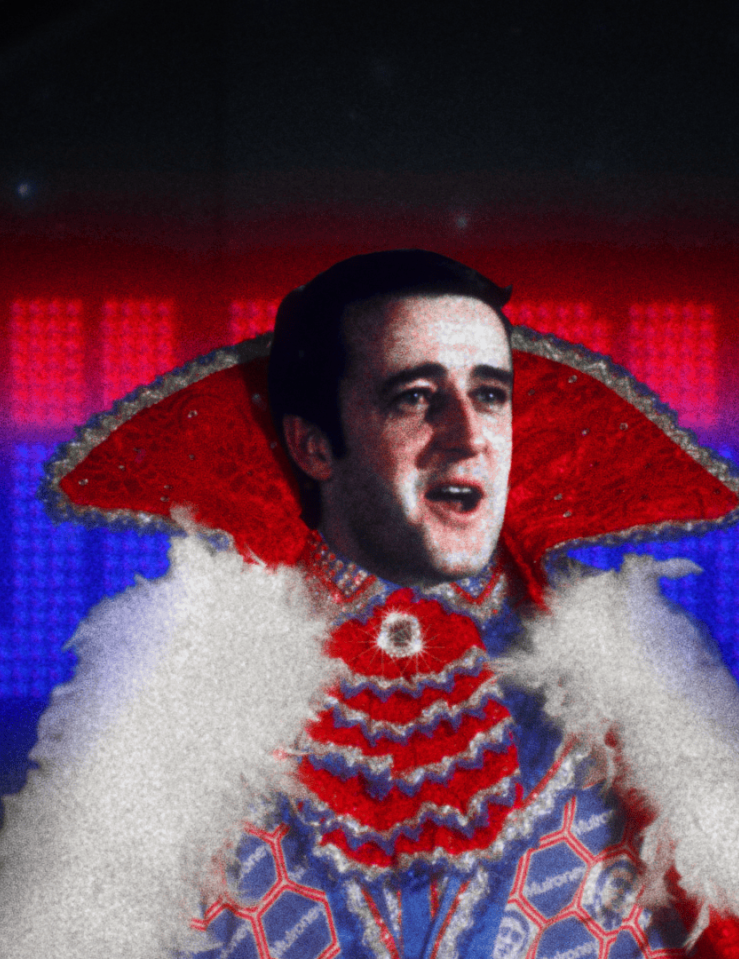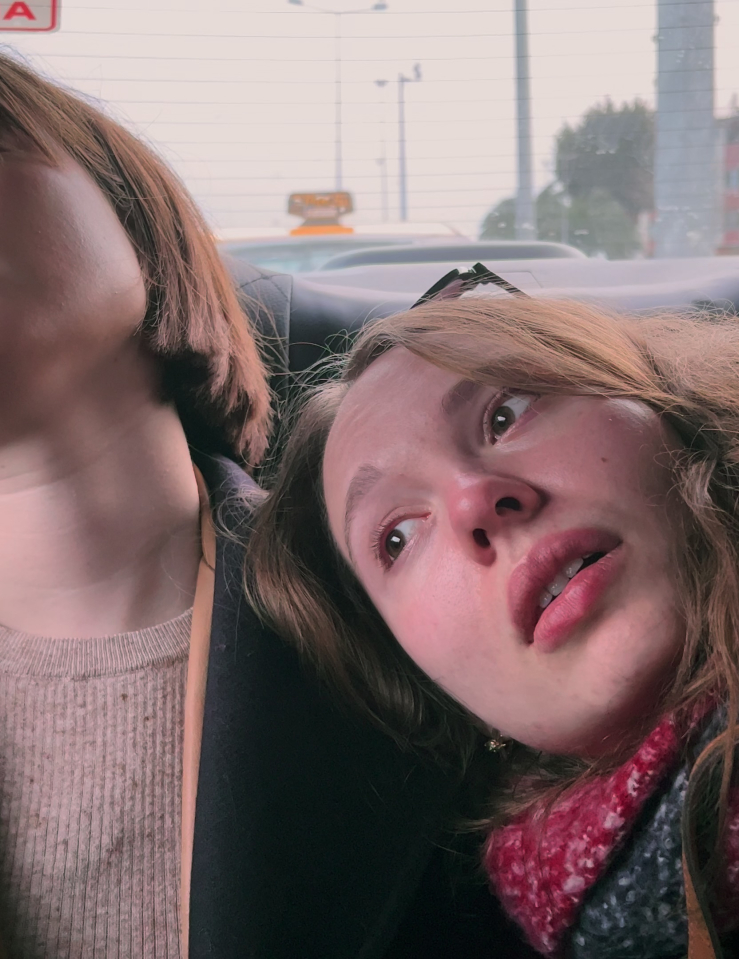


Michał Marczak’s filmography demonstrates his mastery of externalizing the most private emotions. His debut, At the Edge of Russia (2010), was noted for its poetic collaborations with its 19-year-old charge and for being filmed without authorization in a simulated remote Russian military outpost. A sophomore follow-up, Fuck for Forest (2012), has become a cult favorite for its often-dramatic observations of idealistic twenty-somethings running an environmental nonprofit funded by online amateur pornography. His breakthrough All These Sleepless Nights (2016) pushed further into this territory, following two performance art students through a year in Warsaw’s nightlife, romantic relationships, and heartbreak.
The films are all classics of the hybrid turn in documentary films through the 2010s. They showcase Marczak’s signature technical prowess as a director-cinematographer—he custom-designed camera rigs for All These Sleepless Nights that allowed him to shoot extended handheld sequences in tight quarters and intimate settings—while digging deep into how people stage their own lives for cameras, including his own documentary gaze.
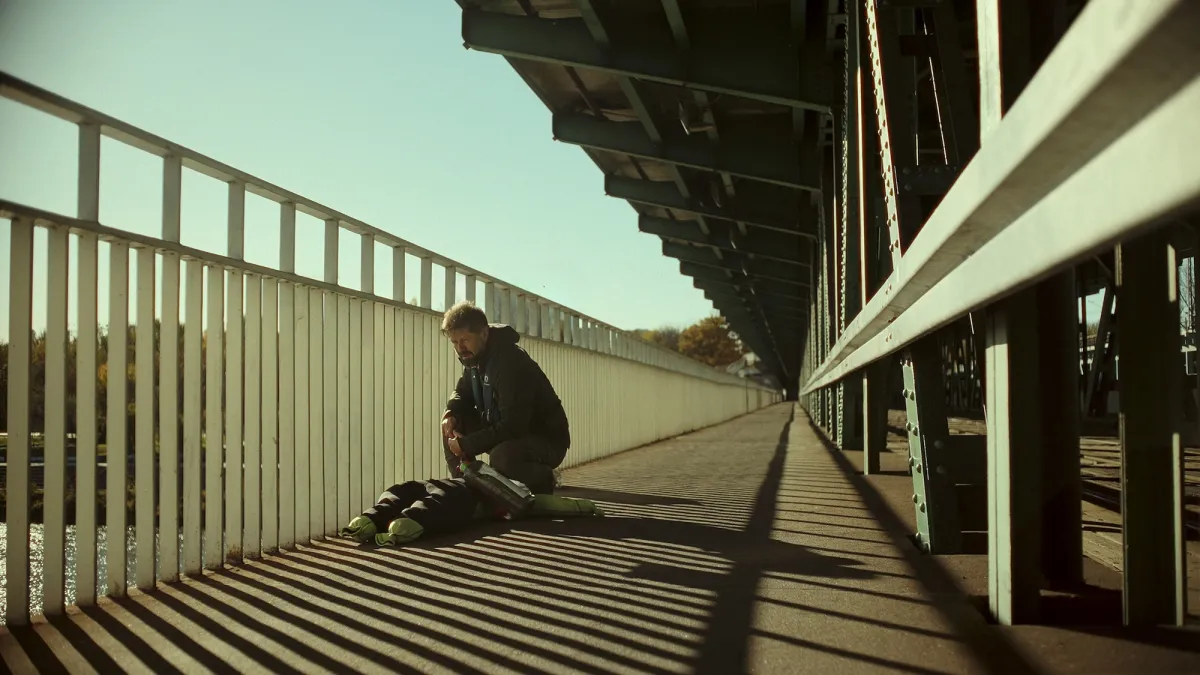
After a decade-long gap, Marczak returns to creative documentary filmmaking and Sundance with Closure. He’s grown older with his choice of subject, Daniel, a middle-aged father who has been methodically searching Poland’s largest river for his son Krzysztof, who disappeared in 2023. Instead of carefully staged situations, Marczak tails Daniel with urgent immediacy, capturing the physical labor of his dredging and the psychological weight of unresolved grief. After a bravura opening sequence that executes on suspense and mystery without stereotypes, Closure’s middle sections deploy naturalistic vérité to examine the family’s coping, modern-day information ecosystems, and introduce another father’s search for closure over his missing daughter.
Closure is Marczak’s most mature work. It’s still technically dazzling (he remains an unabashed gear-head) and cleverly balances the protagonists’ moral tensions with insightful conversations. But Sleepless Nights’ kinetic roving Steadicam is now tempered by a delicate strand of moral complexity and the limits of what cinematic proximity can resolve. Closure premieres in the Sundance World Documentary Competition later today.
In the following interview, Marczak discusses his journey back to feature documentary, starting a family, the technical innovations that allowed him to film Daniel’s searches, and the challenges of making a film that asks questions about what fathers owe their children. This interview has been edited and includes discussion of suicide.
DOCUMENTARY: It’s been a full decade since your last feature, All These Sleepless Nights. Your IMDb page has some very interesting things since then, including what looks like a stint in the writer’s room for the Polish version of The Office. What have you been up to?
MICHAŁ MARCZAK: It’s been quite difficult because Poland’s right-wing government came into power a year after I made All These Sleepless Nights, and it was very difficult for me to get funding from them. I had this big movie that we were working on that was supposed to shoot right when COVID started. The troubles with the financing on the Polish side and COVID compounded together, and that movie fell apart.
I started working on documentaries when I was 18 and continued for more than 15 years, but my dream was always to learn how to make fiction. To make a living, I moved into writing fiction for hire. I wrote a little bit in the writer’s room for The Office, some other TV, and I did some music videos. I was fortunate to work with Radiohead and Thom Yorke on short music videos that were very cinematic and told a little story.
I did this big documentary podcast [Czarny romans, 2019–2020], which was called “the Polish S-Town,” because I loved This American Life, Serial, and everything that was happening. It was stuff that I could do on a small budget here, and that was more about writing.
I also dedicated time to setting up a family. I met my wife [Karolina Marczak], who’s now my producing partner and writing partner, and my two sons were born. So it was stressful, but it was also the first time I could just relax, travel the world, and spend time with my loved ones. I could write everywhere in my spare time, so it was a good vocation. I got a lot of life lessons in this time, and four scripts ready to shoot that I’m very proud of. I also feel ready to take on a bigger set and work with people and actors and make it on time, because documentary is the opposite of that.
I realized this situation made me think so much about my decisions as a dad and about society as a whole. And I thought, if we could make a film that asks more questions than it answers, then this is worth doing.
— Michał Marczak
D: What about Daniel and his story drew you back into documentary with this project? It seems like this family’s case was quite well covered in Polish media.
MM: It was covered, but how I learned about it was completely the opposite. I finally got one of these fiction films off the ground. It’s a coming-of-age story of a young guy meeting an older woman and their crazy adventure down the Vistula River. When we were scouting locations with my wife, my then five-year-old, and the rest of the crew, one night our flashlights went out, there were some rapids, and it became dangerous. And all of a sudden, a man appeared with a flashlight, and he helped us dock safely. This was Daniel, the main protagonist of Closure.
In the morning, I saw all his gear, the cameras, drones, and I was like, “Who is this guy? Treasure hunter or something? Definitely not a fisherman.”
He told us why he’s there and that he’s searching for his son. This story moved me immensely. Looking at him alone on that island, and the energy and the emotions he was putting into it, The Old Man and the Sea and Fitzcarraldo came to mind. I only later learned that Kris’s disappearance was very well-known in Poland.
It coincided with conversations my wife and I were having: How do you bring up kids in this strange world? How do you navigate all the troubles they could potentially have? I reached out, and I said, “Can I join you on the next search?” I realized this situation made me think so much about my decisions as a dad and about society as a whole. And I thought, if we could make a film that asks more questions than it answers, then this is worth doing.
We put in our own money at the beginning, and just filmed. More people came on board later. That’s how the film came to be very organically. We put off that fiction film.
D: You mentioned Daniel’s story as Fitzcarraldo-esque. That reminds of the way you’ve described how you made your previous films, including casting good performers or staging situations where the protagonists could perform their most authentic selves. You’d create super controlled situations, introducing characters or setting up lighting. But it is harder to describe Closure as performance, which would undercut Daniel’s grief and why he’s driven to do all of these searches. How did you think about working with Daniel?
MM: This movie is completely different because nothing was staged. I felt that in order to get those emotions across, it would be good if the audience really feels they’re with Daniel on this search, that the camera’s close and a participant. Many times we were shooting on this little boat and we couldn’t even fit the sound recordist in, so I would do the sound and film on those days.
The searches had a certain rhythm, so I could more or less anticipate what could happen, and know where I have to be in order to tell it in a very cinematic way. For my previous films, I worked with this amazing editor Dorota Wardeszkiewicz, who worked with [Krzysztof] Kieslowski (we didn’t edit this movie together just because of the logistics), who taught me that the most important part of being the cinematographer is to really remember what you have and remember how long you have it. Then you know, okay, so I have this part, but I’m missing this part, so then I’m going to get it in a little while, and it has to fit what I already have.
There’s one shot in that opening sequence where there’s a drone. I knew that I needed an overhead shot, and I didn’t have a drone with me, but Daniel had his drone so I just borrowed his drone. I was holding my camera in one hand, and then I was controlling the drone with the other, and then I used VFX to paint myself out of those shots.
— Michał Marczak
D: Closure includes a couple of search sequences. When you open with the super mysterious opening search, is that footage from the same shoot, or are you doing things like editing things together from multiple trips?
MM: It depends. Anna Garncarczyk edited and was awesome. In the montage sequences, I am mixing stuff up because it wouldn’t be possible to get it all in one go. But if you’re referring to the first sequence where they [Ed. Note: the rest of this sentence is a spoiler] find the body, that was all done in one go. There’s one shot in that opening sequence where there’s a drone. I knew that I needed an overhead shot, and I didn’t have a drone with me, but Daniel had his drone so I just borrowed his drone. I was holding my camera in one hand, and then I was controlling the drone with the other, and then I used VFX to paint myself out of those shots.
I always wanted the drone to be a part of the action. [In other shoots,] Katarina would have my GPS tag, and she would just drive along the banks of the river. And when she would see that we stopped somewhere, then they would get out with the drone operator, walk to the banks of the river, and fly the drone up to where we were. I would control the drone and get those shots. Then I would put the controller down and quickly pick up the camera, and then continue with their search in the water.
We had a super elaborate technical setup. I redesigned the rig that I built for All These Sleepless Nights and amped it up with the highest tech you can find.
D: You had engineers modify this rig with lighter-weight materials. Where do these collaborators come from?
MM: These engineers are film people who have also built drones. They have a lot of experience using carbon fiber and 3D printers to build lightweight and very compact stuff. It’s about making the rig as small and as lightweight as possible because sometimes we would go out and we wouldn’t come back to base for 12 hours. I have to have a big enough card to shoot enough hours without changing, batteries that I can really quickly change and carry in my backpack that last a whole day.
In that sequence of the search with the other father, I had the camera in my hands for literally four and a half hours. Now I have an Easyrig that’s modified. It allows me to shoot by myself and to focus by myself because I don’t have a focus puller. This time, I used LiDAR, a laser focus system, but it didn’t work perfectly, so we also had to modify it.
D: Focusing in the dark is very difficult.
MM: LiDAR just does an insanely good job. Every single day after shooting, you have to clean the equipment and recalibrate it and make sure that it works. It also allows me to change lenses superfast. My downtime is maximum 30 seconds. It’s like an F1 pit stop, because in those very emotional moments, there’s no way you could do a second take.
That’s the reason I want to have the search and the gruesome parts of this movie to be as real as possible, maybe for some young person who watches—to, in some way, compensate for the over-idealization and the romanticization of suicide that is happening in popular culture.
— Michał Marczak
D: The setup serves the film incredibly well because we are able to see Daniel processing and trying to reach an understanding. He also starts addressing you directly. There’s this really beautiful late sequence when you’re camping together, and you’re having a drink by the river. We can see your left hand holding your cup while your right hand is holding the camera that’s recording what we’re seeing, and he makes a small request of you. You had yourself painted out of the drone shots, but you didn’t remove yourself entirely from Closure.
MM: This movie was over 70 shooting days over one calendar year, so we spent a lot of time together, and we would spend the night together on these islands for one, two, or even three days. He would help me with my gear, I would help him with his gear, pack the boat, get everything out. Sometimes it was just the two of us or the three of us with the sound recordist.
At a certain point, we are having these conversations. I’m asking him stuff, like what I should do better in my life. The setting lends itself to more philosophical or emotional moments. After our first sincere conversation, sometimes I would not even look at the camera, hoping that maybe it’s registering and focusing in a proper way, but really I was more into the conversation than the filming. But fortunately, somehow instinctually, the footage was okay. Hiding my presence there just would feel unnatural, and do a disservice to Daniel and to the fact that we did help each other.
D: This film is about young people, but in their absence. I’m curious about the introduction of social media and TikTok in Closure, both the visual treatment of Daniel sitting down to discover TikToks and short vertical videos that reference suicide, which is an incredible scene and so sad at the same time. How was this type of social media introduced to Daniel?
MM: We did a lot of research to understand the story better, but Daniel said he’d accessed Kris’s Instagram and Facebook, and that they looked through his emails and messages, and that apart from an unreciprocated love interest, there was nothing else. It’s how it unfolded in the film. When we stumbled upon these TikTok posts, I said, “Daniel, did you see the TikToks?”
He really got a closer look at them during that moment, and I think that’s why it’s so powerful. I was also extremely moved and worried by all this weird content. Some of these videos, they’ve got three, four million views. In a country of 35 million people, that’s probably every third young person.
That’s the reason I want to have the search and the gruesome parts of this movie to be as real as possible, maybe for some young person who watches—to, in some way, compensate for the over-idealization and the romanticization of suicide that is happening in popular culture.
D: There’s a montage in the middle of Closure that explains how Kris’s disappearance is known all over Poland. It’s become this whodunit. People are reporting supposed sightings of Kris. Globally, the prevalence of right-wing parties pushing out truth, the popularity of true crime podcasts, and amateur cold case solvers on the internet have all contributed to this thing where people align reality to what they want to believe is happening. With that backdrop, do you find any political importance in Closure?
MM: On a certain level, it is about how the truth is so much more complex and nuanced that there’s no simple answer. That’s the problem with these podcasts. They always try to get to a quick answer, and reality is rarely like that.
I was actually extremely shocked by just how much damage this media caused the family. There were countless commentaries or interviews where the family said, “Listen, we are looking,” but other people started putting their own little ideas in. Of course, there were also a lot of supportive people helping, who helped fund a lot of the equipment that Daniel was using for the search, or who gave their time to search.
I never thought a family that is going through what I think is the worst thing that a family can go through could get such hatred from people from the little snippets of facts that they get on internet clips that are cut and pasted to social media, reedited, or reinterpreted by podcasters that give it a true crime spin. In their true crime spin, they always try to insinuate blame, such as on the family. People don’t think about it and just copy it, and that’s where the hate comes from.
For a long time, I thought maybe I could tackle this at the end of Closure. I decided not to because it’s a different type of story, but I do tackle it by making this film. I hope that once people see, with a much larger resolution, what this family’s going through and feeling, maybe some of those people who posted stupid shit will think they’re idiots, right? Maybe at least one. I hope to rebalance the scales a little bit. Documentary cinema is nothing compared to the power of clickbait social media, but that’s the least I could do.