Darius Clark Monroe has been on my radar for a decade, ever since his feature debut Evolution of a Criminal , a revisitation of the robbery the filmmaker committed when he was a teenager and its impact on both loved ones and victims, which world premiered at SXSW back in 2014. (Later that year it took top honors at the Hot Springs Documentary Film Festival, where I programmed the film.) Since then Monroe has been on an artistic evolution as well, continuing with such unconventional projects as the 2018 Tribeca-debuting short Black 14 , once again EP’d by Evolution executive producer Spike Lee
Latest Posts

Dear Readers, No Other Land is both narratively explosive and achingly personal. In terms of craft, it’s one of the most impressive examples of verité scene-making in recent years—though its directors, a collective of four Israeli and Palestinian journalists, aren’t format purists in their story of how Israeli state legal machinations and individual soldiers force expulsions of Palestinian villagers in the West Bank. Mackenzie Lukenbill examines how the quartet of Basel Adra, Yuval Abraham, Hamdan Billal, and Rachel Szor made the film their story in every mutual way possible. After No Other
Dear IDA Community, At the time of writing, there has been a recent spate of momentous elections in the U.S., Taiwan, India, Mexico, France, Georgia, and many other corners of the world. Political change always brings uncertainty, but IDA will be here, as always, to support and defend the interests and voices of documentary makers. As the IDA Board Co-Chairs, we are stepping in to give you updates while Dominic Willsdon is on brief medical leave. We expect Dominic to make a quick recovery and be back soon. In this column last time, Dominic described the strategic planning that IDA staff and

In 2008 and 2019, in Documentary magazine, I published documentary budgeting articles and budget templates that have been read and used widely all over the world. I’m thrilled to return with a big update that includes: (1) a fully revised budget template that has been updated for 4K and streamer deliveries; (2) for the first time, a schedule template; (3) numerous new budget line items related to accessibility for film crews, participants, and audiences; and (4) a bigger reorganization to make the template more flexible and universal. The article has also been expanded and extensively rewritten.

The Oscar Shortlists for ten categories, including documentary and shorts, were released on December 17 before the March 2, 2025, Academy Awards ceremony. We are excited to have four IDA Enterprise Grantees shortlisted for Best Documentary Feature at the 2025 Oscars. Congratulations to the 2022 IDA Enterprise Grantees Black Box Diaries , Queendom , Sugarcane , and 2020 and 2022 IDA Enterprise Grantee Union . Fifteen films will advance in the Documentary Feature Film category for the 97th Academy Awards —169 films were eligible in the category. Members of the Documentary Branch vote to
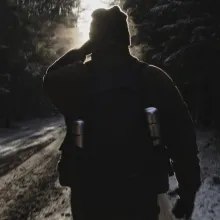
The 2024 edition of the International Documentary Festival Amsterdam opened shortly after the world learned of two changes in leadership. One was at IDFA: Artistic Director Orwa Nyrabia’s decision to step down at the end of his term, next summer, capping seven years as the festival’s second chief since its founding in 1988. (Nyrabia is also a board member of IDA, which publishes Documentary.) The other change took place thousands of miles away from the Netherlands but with global consequences: the election of Donald Trump as U.S. president, a little over a week before the festival opened. Even
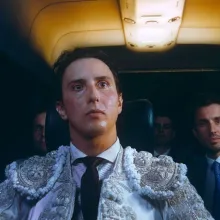
There is a certain spectacle to which the bullfight—or the corrida de toros , the sport’s less colloquial Spanish name—lends itself, which is at once literary, artistic, operatic, cinematic. Irish-born artist Francis Bacon produced one of his most well-known works in 1970, Study for Bullfight No. 1 , one that parallels the corrida’s own three stages. Against a backdrop of golden ochre, both toreador and toro are a whirl of movement, man and beast entangled in a dance of death. Though Bacon’s focus would largely remain with such thematic motifs as religious figures and mythological furies, he

Reed Martin is a documentary filmmaker from Carlsbad, California. While completing his BFA in Film & TV Production at USC, he directed A Hand to Hold, an award-winning documentary short aired on PBS SoCal.
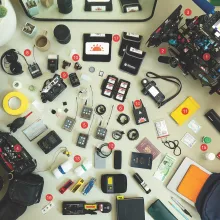
Victor Tadashi Suárez’s essential tools span run-and-gun shoots to intricate sound stages.

State restrictions in Cuba have turned independent filmmaking into a challenge, but with Chronicles of the Absurd, Miguel Coyula and Lynn Cruz show that where there’s a will, there’s a way. Coyula, the director, uses clandestine recordings of Cruz and others in encounters with authorities inside Cuba, whether when trying to hold a screening, or when asking evasive hospital staff for information about her father’s sudden decline in health. Instead of relying on video or explanatory interviews, Coyula lets the riveting audio tell the story, augmented with speakers’ avatars, text, stills of Cruz, and a little animation, plus music ranging from Cuban classical composer Ignacio Cervantes to the punk rock band Porno Para Ricardo. After its world premiere at IDFA, Chronicles of the Absurd was awarded the Best Film in the Envision Competition. Earlier in the festival, I spoke to Coyula and Cruz earlier in their first interview about the film.