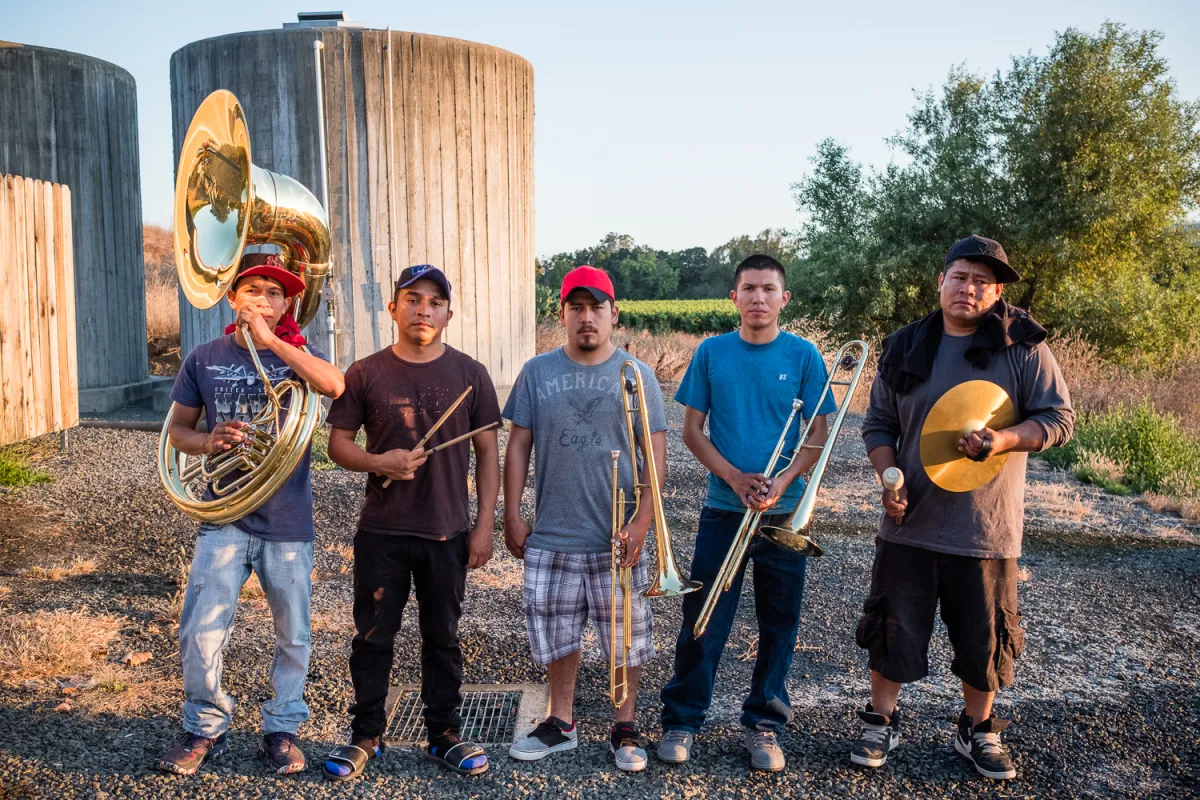


From Reportero (2012) and Kingdom of Shadows (2015) to Harvest Season (2018) and El Equipo (2023), Bernardo Ruiz’s films have been preoccupied with the way people and stories transcend the places that contain them. Whether tackling violent threats to a free press in Tijuana, migrant workers’ rights in Napa Valley, or the bloodied legacy of authoritarian governments in Argentina, the Mexican American filmmaker is interested in, as he puts it, “that kind of love-hate relationship between the U.S. and Latin America.” It’s fitting, then, that a retrospective of his work across different theaters in New York City, presented by Color Congress in partnership with Cinema Tropical, is titled “Between Borders & Voices.”
Ruiz is a consummate portraitist. He captures his subjects with warm candor, allowing their everyday lives (in the fields, in a crowded newsroom, in their homes) to illustrate broader sociopolitical concerns. The personal is inherently political in his films, with an empathetic social justice bent that allows issues of labor, immigration, and freedom of expression to emerge organically from his keen-eyed observational approach. Rather than merely sketching how institutions or governments affect people’s lives and livelihoods, Ruiz stresses instead the agency of those wishing to dismantle those very systems, not with outsized feats of heroism but with quiet moments of defiance and rebellion.
Taken together, these projects also establish Ruiz as a community-driven filmmaker. Ruiz’s ethos is not just reflected by the subjects he has tackled, but also in the way he has developed his films and sought to distribute them. Ruiz has not eschewed the whims of the market or the siren call of more commercial prospects (2020’s Infinite Race was part of ESPN’s storied 30 for 30 series; he directed the 2023 Marvel docuseries, Voices Rising: The Music of Wakanda Forever). However, he has long favored a scrappy, resourceful approach that allows him to produce docs with modest budgets and the creative freedom he prefers. It’s why he’s most at home in the public media space (broadcasting his work as part of POV and Independent Lens, among others) and why he currently finds himself wondering the best way to navigate a landscape where such spaces continue to be under attack.
Documentary chatted with Ruiz over Zoom to talk about what he discovered about his work when seeing it through the retrospective’s curatorial lens, why he’s a firm believer in the value of public media, and why he’s committed to his “humblecore” mode of filmmaking. This interview has been edited.
DOCUMENTARY: Let’s start with the name of this retrospective: “Between Borders & Voices.” What does that mean to you as a way to define your career?
BERNARDO RUIZ: I’m an old timer now. I’ve been working in independent film and documentary for almost two decades, and Carlos [Gutiérrez from Cinema Tropical, the retrospective’s programmer] made some connections between my films that I had never had anyone so fully articulate. He touched on something that I am very interested in: that kind of love-hate relationship between the U.S. and Latin America. But doing so by making films done in a small way, that can still reach audiences and travel.
D: I want to hear more about making films in a “small way.” You’ve worked outside of legacy media, creating many of your projects as independent productions; where does that come from? Is it a philosophical orientation with regard to your work?
BR: My filmmaking, I’d say, is “humblecore.” Sometimes that is circumstantial. But it’s also an interest of mine to focus on stories or people or ideas that are not driven entirely by the commercial marketplace. Some of these films were made in spite of it, actually. The best metaphor for me is a family-run restaurant with three tables. I’m doing a little bit of everything: I’m doing the cooking, mopping the floors, and running the cash register. That means the food I make (with many collaborators) is not going to be for everybody’s taste. But for the people who like it, it’s like visiting a mom-and-pop shop they keep going to over and over again.
D: In a recent piece titled “Independents, PBS, and the Fight for Free Speech,” you connect this current moment in public media with those 1980s hearings about the future of public broadcasting. You end by writing, “As the general public, elected officials, and philanthropy step up to defend public media, the system itself must also evolve. It will benefit from fresh approaches and forward-thinking leadership.” How do you see that working?
BR: We’re in a very precarious time for media. You’re seeing the capitulation of these big media outlets to power and to this administration. At the same time, we’re also seeing resourcefulness and creativity. As difficult a time as this is, it is also an opportunity to work in different ways.
There’s a generational need that is unfulfilled. When it comes to the PBS history I highlighted, it was the history of independents, including Marlon Riggs, who got plenty of pushback, who drove the early innovations in series like POV and at ITVS. There was this real opening of independent film and independent media, and it wasn’t driven by market dictates. It was artist-driven.
There’s this idea on the part of some legacy makers that if they simply pivot—if they learn how to make TikToks—that somehow that will build audience and community. If you look at public media, it is an incredibly bureaucratic and slow-to-respond system. It is also very scared to do anything that’s controversial. The irony is that by playing it safe, it was still defunded. The question I have, and I think many others have, is: Was there an opportunity to be bold?
We have to hold these public media funders and foundations accountable. It’s our job as independent makers to do some advocacy work to ensure that there are resources to create independent art.
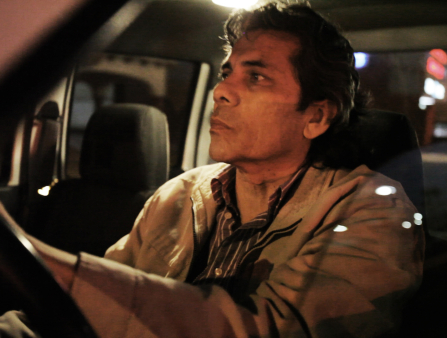
Reportero.
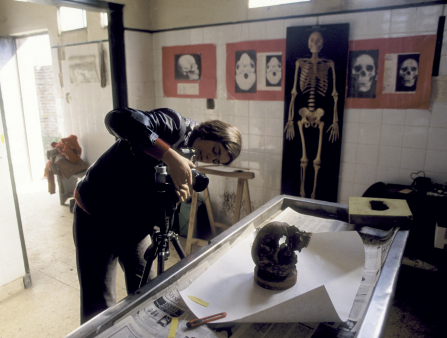
El Equipo.
D: Rewatching some of your films, like Reportero and El Equipo, what struck me is how timely they feel. It’s like the world has caught up with them. Obviously, they were not made about the current moment, nor about the U.S., in particular. When you’re developing these projects and trying to get them off the ground, how much is “relevance” or that sense of “urgency” factored in when pitching them for funding or even later for distribution?
BR: Streamers, networks, and funders can sometimes have a short-term view and think, How does the story speak to this exact moment? I had that experience developing El Equipo. It took me ten years to raise enough funding to complete it and get it out into the world. Some funders and streamers questioned how it could connect to the present. When I’ve developed things, I’ve tried to take a longer-term view, sometimes probably to my own detriment.
I think about telling a very specific story. But what are the universal themes? And authoritarianism and fascism and crackdowns on the press that kind of never go out of style. Reportero, for example, is about the price you pay for being an independent journalist, and I think the press is very aware of that these days.
Many people have come up to me after El Equipo screenings, haunted by the eerie images of masked agents snatching people off the streets and shoving them into unmarked vehicles. All the credit is due to Cinema Tropical for the timing of this. These films took years to make, but the themes, unfortunately, are perennial.
D: Your upcoming project, Low Season, feels like a pivot. You describe it as a hybrid fiction-documentary about a woman from the future who possesses an uncanny ability to soothe people by listening to their stories. How did it come together? What prompted the decision to create a hybrid piece?
BR: I live in Queens, New York, just off of Roosevelt Avenue. For anyone who hasn’t spent time there, it’s a 24/7 avenue with immigrant vendors, sex workers, delivery app workers. And it’s become a target of anti-immigrant backlash. At the beginning of the year, I began developing what probably would have been a more straightforward vérité documentary about the avenue. But as time went on and I began speaking to people, just the practical reality of participants not wanting to be on camera because of their immigration status, or just for fear of being targeted politically, made me feel like there was no way to really get at a deeper story.
I began talking to potential participants and collaborators about designing a speculative fiction. I looked at two models for inspiration: The Brother from Another Planet [1984], the John Sayles film, and then Hombre mirando al sudeste [1986], the Argentine film. The filmmaker Eliseo Subiella has a great term for that type of filmmaking: “suspicious realism,” realismo sospechoso. I love that idea.
D: That does feel like an apt form for these times.
BR: It does. I have a draft. We’re collaborating with a Mexican actor, Iazua Larios. The idea is that she would play a woman from another planet, from some future world, who arrives in present-day Jackson Heights, Queens, and has a series of interactions with residents about the fear they’re experiencing in this moment of heightened crackdowns and raids, while also imagining other futures with them. It's a playful film, getting at some of these deeper horrors unfolding right now.
Part of it is intuition. Part of it is also this reality that I don’t have finite time. If I’m going to do something, I want it to be more concentrated, like an espresso shot of a story. I’m also kind of exhausted by some of the conventions of old-fashioned legacy documentary and journalism, where there’s a kind of knee-jerk idea that you have to get the other side.
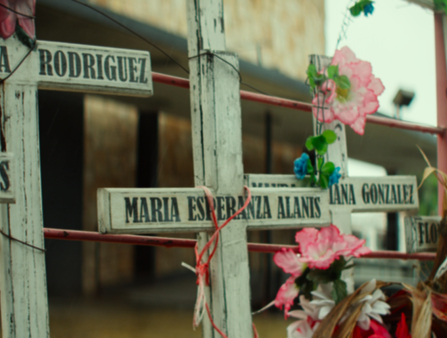
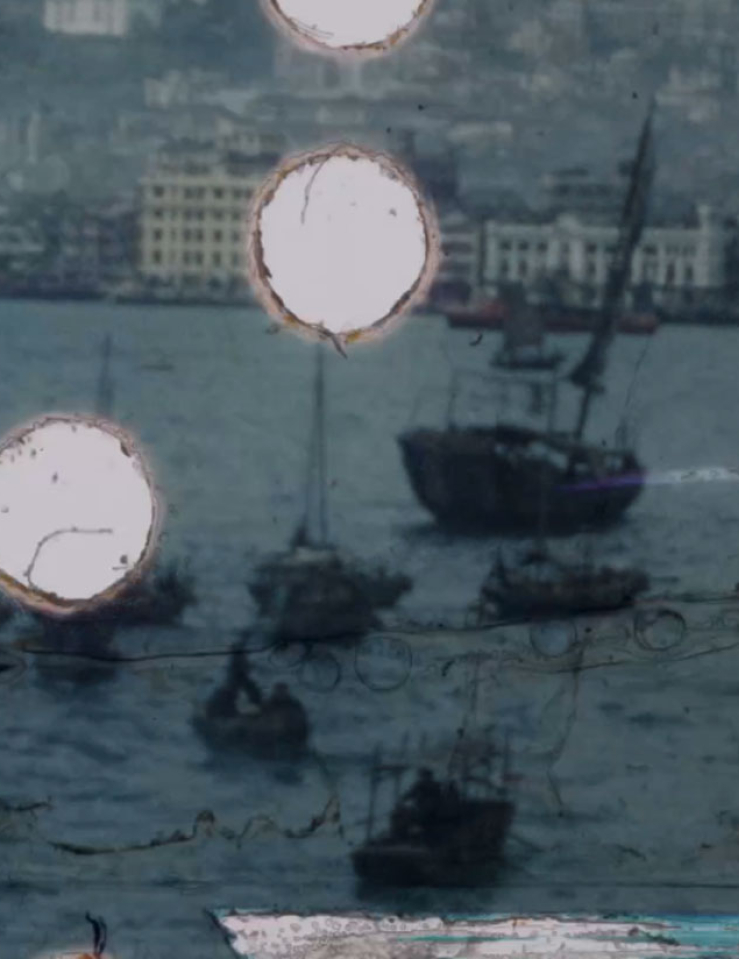
Kingdom of Shadows.
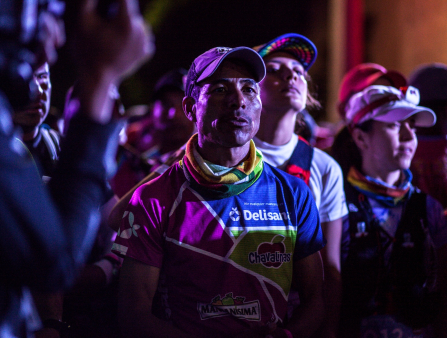
The Infinite Race.
D: As you look back with this retrospective and examine the landscape we’ve been describing, what’s the role of the documentary filmmaker in 2025?
BR: That’s the million-dollar question. The exciting thing is that there’s such a wide variety of what documentary is. In the last few years, we’ve seen really strong commercial pressures. I don’t say that as a purist; I have done those projects, and I’ve done lots of uncredited work on these bigger, more commercial things. One of the reasons why I was excited to make films for public media is that there was an important way to reach a broad, diverse audience within the United States.
If there’s a role now, it’s to make the work. With the loss of this important distribution mechanism [Ed. note: this interview occurred after the defunding of CPB], many of us are thinking about how to take models like the Works Progress Administration and make documentary more broadly accessible.
One of the best models that I saw and experienced as a filmmaker was Ambulante in Mexico for Reportero, which screened in 12 cities throughout Mexico. It was this great project, which was a reinvention of an older idea to just take films to public spaces where people already are, and maybe eliminate some of that rarefied, arguably more elite, distribution channel. To open it up to the public and let the public react. Thinking about how to do that in the U.S. would be a kind of thrilling proposition.