


On the surface, we were humbled this week to learn that our film, Holding Liat, is the #2 documentary at the box office in America. Over four weeks, it has earned US$33,000, which is respectable for a self-distributed independent documentary.
But that #2 only tells part of the story: the #1 documentary in America, Melania, is distributed by a major streaming company, reportedly has a marketing budget of US$35 million, and earned north of US$7 million in its opening weekend.
The rapidly elevated global interest in American documentary box office numbers this week, which is usually relegated to niche industry conversation, once again proves that the frustrating adage “no one goes to the theaters to watch documentaries” may not be true. At the same time, as this phenomenon inevitably leads decision makers to look for signs of the next trend, it is critical we ask questions about what makes a theatrical documentary successful, in terms of financing, ethics, and audience building.
All of the attention this week in our genre also drives the question, What is a documentary in the first place and what kind of documentary gets the privilege of being platformed in 2026?
At their best, documentaries reveal our shared humanity and are a core part of the democratic process.
At their worst, documentaries can be used as tools of propaganda, manipulation, and division, and can further totalitarian power consolidation, which is why the art form must be safeguarded as a precious resource.
Given the crossroads facing our field and our country, we felt it was essential to open up about our own journey navigating the current distribution landscape while we are in the thick of rolling out our self-distributed film. It’s our hope that greater transparency around what is working, what is not working—and who it is all working for—might help contribute to new and strengthened approaches for independent filmmakers to get work made and seen in an increasingly fraught ecosystem.
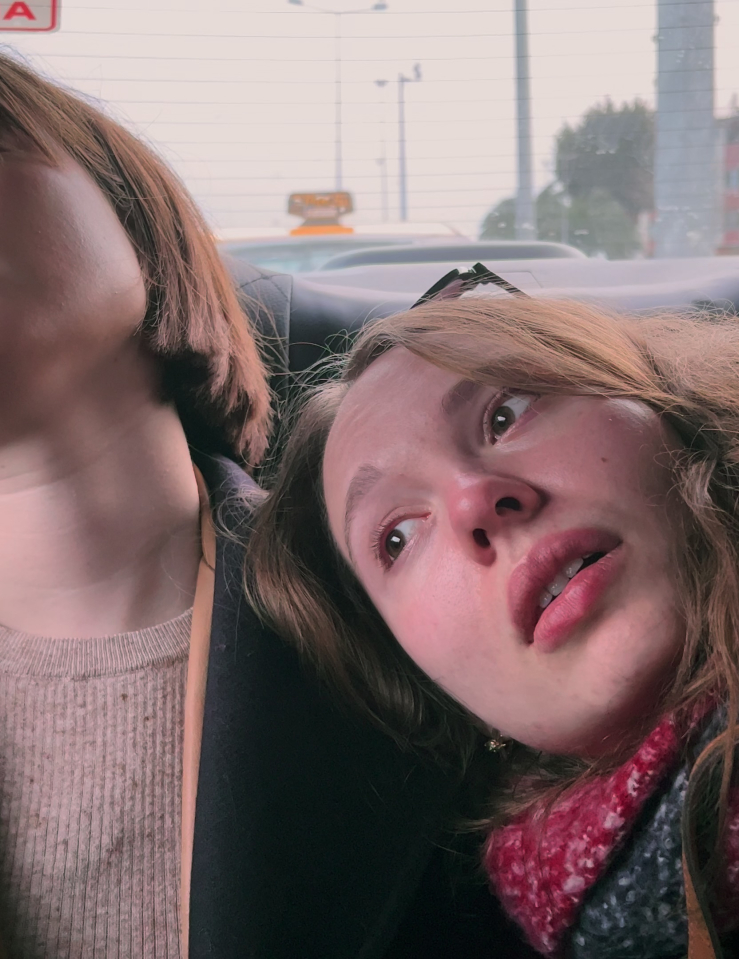
Holding Liat is an observational documentary chronicling the days and weeks after two of our relatives were kidnapped from their kibbutz in Israel by the Gaza border. The film intimately documents the crisis from each family members’ perspective, representing a surprising diversity of emotional and political responses to the conflict within three generations of one family who resisted efforts to use their pain to justify escalating violence in Gaza.
All of the attention this week in our genre also drives the question, What is a documentary in the first place and what kind of documentary gets the privilege of being platformed in 2026?
We grew up inspired by filmmakers like Robert Drew and D.A. Pennebaker and their seminal works like Crisis: Behind a Presidential Commitment. Our close mentors for nearly two decades are the filmmakers at Kartemquin, who have trained hundreds of filmmakers over the years in a kind of sensitive, ethical approach to chronicling the real lived experiences of everyday people to help audiences more deeply engage with the democratic process. Neither hagiography nor traditional journalism, our filmmaking captures people’s lives at their highs and lows, warts and all, while respecting each protagonist’s innate humanity. We have always sought to explore divergent perspectives and experiences within a narrative, leading from a place of inquiry and giving audiences with different backgrounds and ideologies the space to watch the same film and come to their own conclusions.
In the immediate aftermath of October 7th, when our relatives were pulled into the epicenter of a geopolitical crisis, we felt a responsibility to pick up our cameras and begin documenting what was unfolding directly within our family. There was no time for pre-production, pitches, or even planning. Although we desperately needed outside support in order to embark on this journey from the onset, our attempts to seek early-stage support from a number of leading broadcasters and streaming companies were all met with a series of passes.
Nearly every outlet we met praised the merits and integrity of the film in progress, but expressed concern about the corporate ramifications of supporting a film that touched such a hot “third rail” as the Israeli-Palestinian conflict, particularly with any degree of nuance or complexity. They asked us how the film would end (we had no way of knowing as our relative Liat was still in captivity) or what kind of angle we were taking (we had no angle other than to better understand and empathize). They told us to come back once the film was complete, so they could evaluate the finished work rather than the promise of what the film might become.
We were deeply committed to making the film, so we pursued a path to make the film independently, which really just means making the film interdependently (or as Ted Hope has championed, with the idea of “NonDē”), supported through grassroots individual donations and eventually a small number of grants from foundations like Jewish Story Partners and in-kind support from Film Independent’s Fast Track. Collectively, we raised over US$1 million to cover the costs of making the film from more than 100 individual donors. All contributions were philanthropic, and none came with any editorial strings attached, which was our own precondition for receiving any contribution.
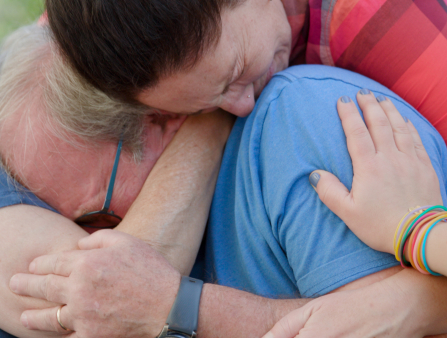
Holding Liat.
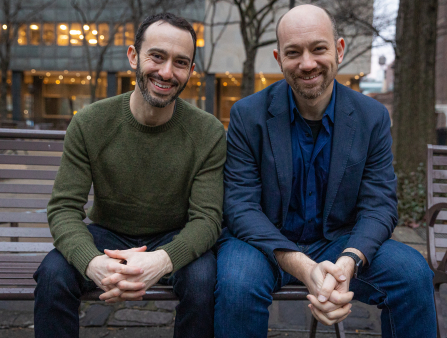
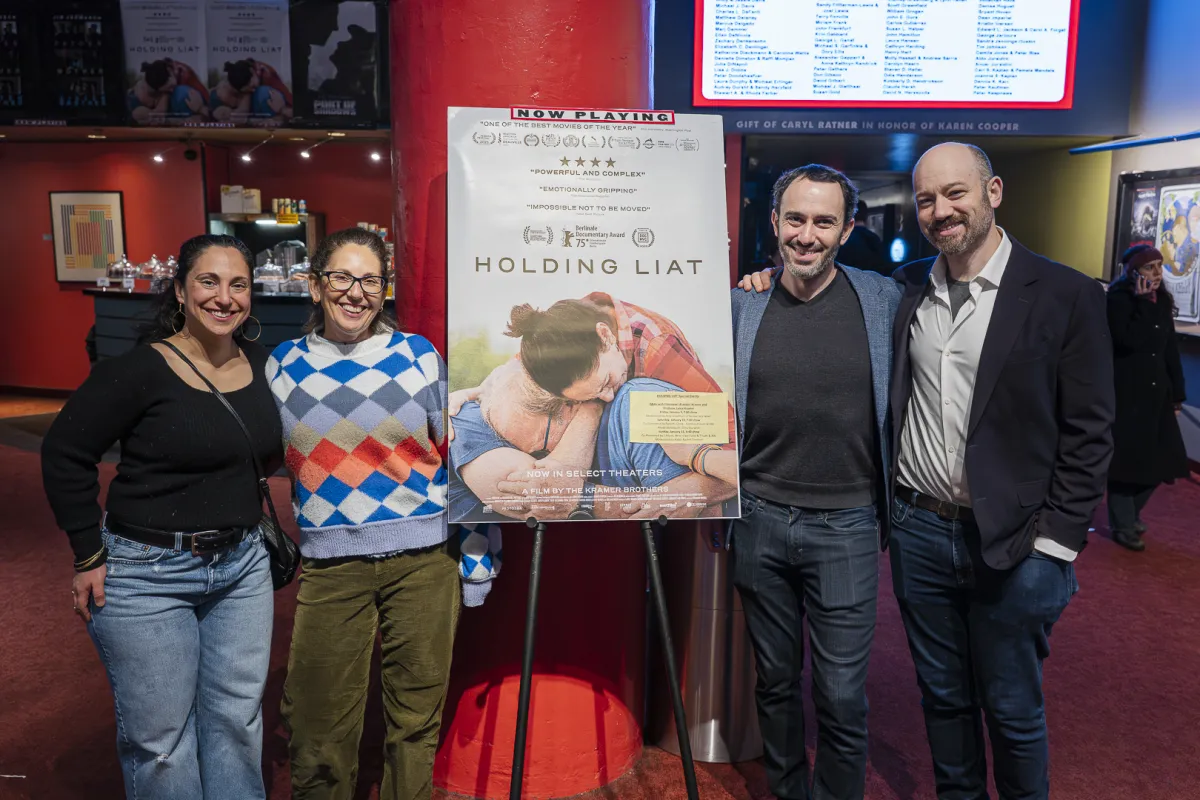
Brandon (L) and Lance (R) Kramer. Photo credit: Lou Aguilar
Holding Liat played more than 40 film festivals worldwide in more than 20 countries and was named one of the top films of the year by the Guardian and the Washington Post, received critical acclaim, and was shortlisted for the 2026 Academy Awards for Best Documentary Feature. After more than 100 screenings, the film has demonstrated an ability to engage audiences from a range of backgrounds—Israeli and Palestinian, Jewish, Muslim, Christian and secular, progressive and conservative, American and international—and shows that a film can broach even the most divisive subject matter of our times in a way that could bring people together to connect rather than divide, and to start to heal rather than inflame.
The film has secured international distribution in nearly a dozen countries, including Japan, France, Spain, Israel, Germany, the Netherlands, and the United Kingdom (where it was released theatrically and broadcast on the BBC’s signature documentary series Storyville).
Whereas we thought some combination of those accolades and audiences would demonstrate sufficient interest to lead to a distribution opportunity in our own home country, our experience has in fact shown the opposite: there is not (yet) a distribution or streaming company in America that exists to commercially release a film like ours—and many others.
After winning the best documentary award at the Berlinale, the same award bestowed on No Other Land the prior year, we approached more than 30 U.S. streamers and distributors, including those we previously approached in the fall of 2023. All entities once again passed on the film, often citing political concerns, so we made the decision to release the film ourselves in the U.S. We partnered with the Film Collaborative, a Los Angeles-based nonprofit who helps independent filmmakers with all aspects of distribution, without taking any rights themselves. Working with team at the Film Collaborative to book the film in theaters, and the team at Albi to engage a network of national and regional grassroots partners, we recently had our U.S. theatrical opening at NYC’s Film Forum, followed by the Laemmle Theaters in Los Angeles, Jacob Burns Center in Westchester County. Holding Liat is opening this coming weekend in the DC area, Montclair, New Jersey, and later this month in Boston, Atlanta, Portland, Oregon, in altogether more than 20 cities nationwide.
With a marketing budget of well under US$100K (.003% percent of the reported marketing budget of the current #1 documentary), all raised through independent donations, Holding Liat’s $33,000 gross from nearly 3,000 tickets sold might appear meager. But to even to achieve the results worthy of the #2 spot this past weekend, both of us and our small but mighty team have worked 16+ hour days for months, travelled around the country to screenings, collectively written thousands of individual emails and texts to friends to encourage them to buy tickets, rallied community groups to come together to screenings, attended more than 50 screenings ourselves, and dipped into our own funds to pay for tickets for those who cannot afford to buy their own.
We hold deep concern for the disturbing trend that pours even more resources into making and marketing celebrity-driven narratives that use the nonfiction format and precious resources to further ingratiate those with preexisting power.
While we are proud of our accomplishments, there is nothing about our path that is sustainable. With the support of a marketing budget even just .01% of the investment on the current #1 documentary in America, our work would be supercharged, let alone that of countless other independent filmmakers. Without a retooling of investment, we hold deep concern for all of the opportunities missed, audiences overlooked, and stories that will go untold with the current trajectory of the corporate decision-making calculus for what gets platformed.
We firmly believe in the theatrical experience, particularly for documentaries, as an almost sacred remaining third space to experience meaningful stories in the presence of community. Documentaries are made to be viscerally felt, wrestled with, and discussed with others, especially those we may disagree with. While we love to stream films at home, nothing beats the experience of watching a documentary with friends and strangers all in the same room, with the lights off and no distractions, and the opportunity to ask questions and share reflections afterwards in structured Q&A’s and dialogues.
At the same time, we hold deep concern for the disturbing trend that pours even more resources into making and marketing celebrity-driven narratives that use the nonfiction format and precious resources to further ingratiate those with preexisting power, without reinvesting profits into the same form and community that made it possible for those films to exist in the first place.
We are concerned that decision-makers will look at this week’s numbers and invest in more expensive corporate copycat versions of Melania, rather than platform all the vital documentaries profiling stories that impact everyday people.
In a more perfect world, streaming companies and distributors would invest more in films that call attention to the most pressing issues of our time, and films that shine a light on powerful human stories from untold perspectives, and those films would in turn perform well at the box office. Companies would pay attention to self-released documentaries that are breaking through and demonstrating theatrical audiences, like last year’s No Other Land and Secret Mall Apartment. The evidence is clear that the audiences are out there craving for these stories. The films just need more platforms and marketing support to reach these audiences.
As independent filmmakers, we know not to hold our breath for someone to save the day. We will keep taking distribution into our own hands, making sure our films reach audiences meaningfully with the tools and limited resources at our disposal. We hope more companies take a closer look at the full data set and not just what drives the current #1 spot—and make investments in the Davids and not just the Goliaths. Our industry and democracy depends on it.